This article explains when a Subaru WRX is commonly considered high mileage and what buyers should check on listings. It uses pragmatic benchmarks around 100,000 and 150,000 miles, highlights turbocharged engine risks, and gives a step by step inspection and negotiation framework to evaluate subaru wrx for sale listings.
A step-by-step workflow for estimating a truck's market value that centers on comparing consumer valuation tools, adjusting for mileage and condition, and checking wholesale market signals. The guide explains private-party, trade-in and dealer retail values and shows how a vehicle history report and pricing insights can change an asking price.
This guide helps research oriented buyers evaluate suv used cars for sale under $25,000 by combining safety ratings, reliability data, local pricing context, and vehicle history checks. It outlines a simple framework, a pre visit checklist, and a decision scoring worksheet so you can compare finalists before contacting a dealer. Use the steps here to narrow candidates and confirm risk signals with a vehicle history report and a pre purchase inspection.
When searching suv used cars for sale, prioritize model year, trim and powertrain before choosing a make or model. This guide explains how safety ratings, dependability studies and local pricing insights combine to produce a short list you can verify with a vehicle history report. It also provides a stepwise checklist you can use before contacting a dealer.
This article helps buyers decide whether a Subaru WRX listing should be considered high mileage and worth pursuing. It combines common market benchmarks with practical checks that reflect the WRX s turbocharged powertrain and typical wear items.
You will learn numeric cutoffs used by repair databases, why maintenance history changes the risk profile, a step-by-step inspection checklist, and short scenarios showing how to apply the checks when you see a promising listing.
100,000 miles is a common inflection point for WRX evaluation; 150,000+ miles generally requires stronger documentation or a lower price.
Turbocharged engines make oil-change frequency and documented turbo service key risk reducers for WRX buyers.
A VIN vehicle history report plus compression and boost tests provide the best near-term prediction of ownership cost.
How to judge high mileage when shopping subaru wrx for sale
TL;DR: For many buyers, a WRX hits a practical high mileage threshold around 100,000 miles and becomes clearly high mileage at 150,000 miles, but documented maintenance and turbo care matter more than the odometer alone when you spot a subaru wrx for sale.
Those numeric benchmarks come from market and repair database guidance that treat roughly 100,000 miles as an inflection point and 150,000 miles as a level that requires stronger documentation or price concessions RepairPal WRX reliability and repair estimates.
Quick VIN and service verification checklist for a WRX listing
Use before scheduling a test drive
When you scan listings, use those mile markers as red flags to trigger deeper checks rather than as automatic pass or fail criteria.
Quick numeric benchmarks
Market practice puts 100,000 miles as the first practical benchmark and 150,000 miles as a clearly high level for evaluation, because repair likelihood and expected near-term maintenance increase as a car passes those thresholds Kelley Blue Book guide to used car mileage.
Think of the odometer as a cue to check records, tests, and pricing, not as the single determinative fact.
Why condition and service history matter more than the odometer
WRX models use turbocharged engines that magnify the effect of maintenance habits on remaining life; frequent, documented oil changes and turbo service lower risk even when miles are high RepairPal WRX reliability and repair estimates.
Service history can change a 120,000 mile WRX from a risky buy into a conditional buy if it shows consistent care and recent major work.
Why mileage benchmarks matter for a WRX
Practitioners and repair databases adopt mileage thresholds to simplify initial screening: they mark 100,000 miles as a point to ask more questions and 150,000 miles as a spot where stronger evidence of care or a bigger price discount is typically needed RepairPal WRX reliability and repair estimates.
These thresholds do not predict exact failures. Instead, they raise the probability of certain repairs, like turbocharger or clutch work, which buyers should plan for when estimating total cost to own Consumer Reports WRX reliability notes.
How practitioners and databases set thresholds
Repair databases and market guides compile repair incidents and resale patterns to recommend practical cutoffs that help buyers prioritize inspections and negotiate price Kelley Blue Book guide to used car mileage.
What those thresholds imply for ownership costs
When a listing crosses 100,000 miles, budget for likely wear items and consider getting targeted tests before committing; above 150,000 miles expect that nontrivial repairs may be due unless documentation shows recent work RepairPal WRX reliability and repair estimates.
How turbocharged powertrains change what 'high mileage' means
Turbo systems add heat, pressure, and oil-supply sensitivity to the engine equation, so signs of oil consumption, boost leaks, or inconsistent oil-change records matter more for a WRX than for many naturally aspirated cars Edmunds 2024 WRX review and ratings. How To Make Your Subaru Turbo Last
Run a vehicle history check before visiting the seller
Before you visit a seller, pull a vehicle history report and the listing's service notes, and consider using CarFax Deals as a verification layer to surface reported incidents and pricing context.
A WRX with a documented turbo replacement or recent turbo service is materially different from one with no mention of turbo work; note those entries in the listing and ask for receipts.
Turbo-specific wear and maintenance signals
Look for explicit mentions of turbocharger replacement, boost-related repairs, or notes about elevated oil consumption in service records and the VIN report, and treat those mentions as high-priority verification items RepairPal WRX reliability and repair estimates.
Also watch listing language that hints at aggressive use, such as references to track preparation, which can increase wear independently of mileage.
What to look for in service records and the listing
Good signs include frequent, dated oil changes with mileage stamps, documented turbo or exhaust work, and detailed clutch or transmission service entries; vague or missing entries are a negative signal Subaru maintenance recommendations for owners.
When a seller notes recent oil-analysis results, compression checks, or turbo work, ask for the test records themselves or a mechanic's summary to confirm scope and date.
Which odometer ranges are practical red flags and why
0 to 100,000 miles: generally the lower-risk zone, but still verify maintenance and ownership history because a low odometer does not rule out neglect or damage Kelley Blue Book guide to used car mileage.
100,000 to 150,000 miles: treat as a conditional zone where documentation can make the difference between a reasonable buy and a pass; this range triggers compression and boost checks and careful clutch inspection RepairPal WRX reliability and repair estimates.
150,000+ miles: clearly high mileage for many buyers; acceptable only with strong service records, recent major component replacements, or a price that reflects likely repairs Kelley Blue Book guide to used car mileage.
How age, model year, and powertrain modify the ranges
Older model years may have known era-specific concerns that change inspection priorities, and prior ownership patterns such as multiple owners or documented track use alter what a given odometer reading means for resale value and repair timing Consumer Reports WRX reliability notes.
Local resale pricing and supply also shift where a listing becomes unattractive; a low local supply of well-maintained WRX cars can keep prices firm even at higher mileage.
A WRX is often treated as high mileage at around 100,000 miles, and clearly high at 150,000 miles; however, documented maintenance, especially oil and turbo care, and specialist tests are more predictive of near-term repair risk than the odometer alone.
Other high-value records include documented turbo service or replacement, clutch and transmission work with receipts, and any timing or valve-train inspections that apply to the model year Subaru maintenance recommendations for owners.
Gaps in service history, generic entries with no mileage, or long periods of unknown care are red flags; treat them as negotiation points or reasons to require testing before buying.
Which records matter most
Prioritize: dated oil-change receipts, turbo service notes, clutch and transmission repair invoices, and documented major parts replacements, because these directly reduce the most common high-mileage risks for WRX owners Consumer Reports WRX reliability notes.
Also value records showing conservative prior use such as highway miles, single-owner history, and no title issues.
How to read service notes for turbo and clutch work
Specifics are important: an entry that says turbocharger replaced with date and mileage is far more useful than a vague 'engine service' note; ask for invoices that list parts or codes when possible RepairPal WRX reliability and repair estimates.
For clutch work, look for descriptions of replaced components and whether the transmission was inspected at the same time, since clutch replacement sometimes precedes related drivetrain repairs.
Pre-purchase inspection checklist for higher-mileage WRX listings
Confirm odometer consistency across records and the report; unexplained gaps are negotiation leverage or cause to walk away.
Mechanical and specialist tests to request
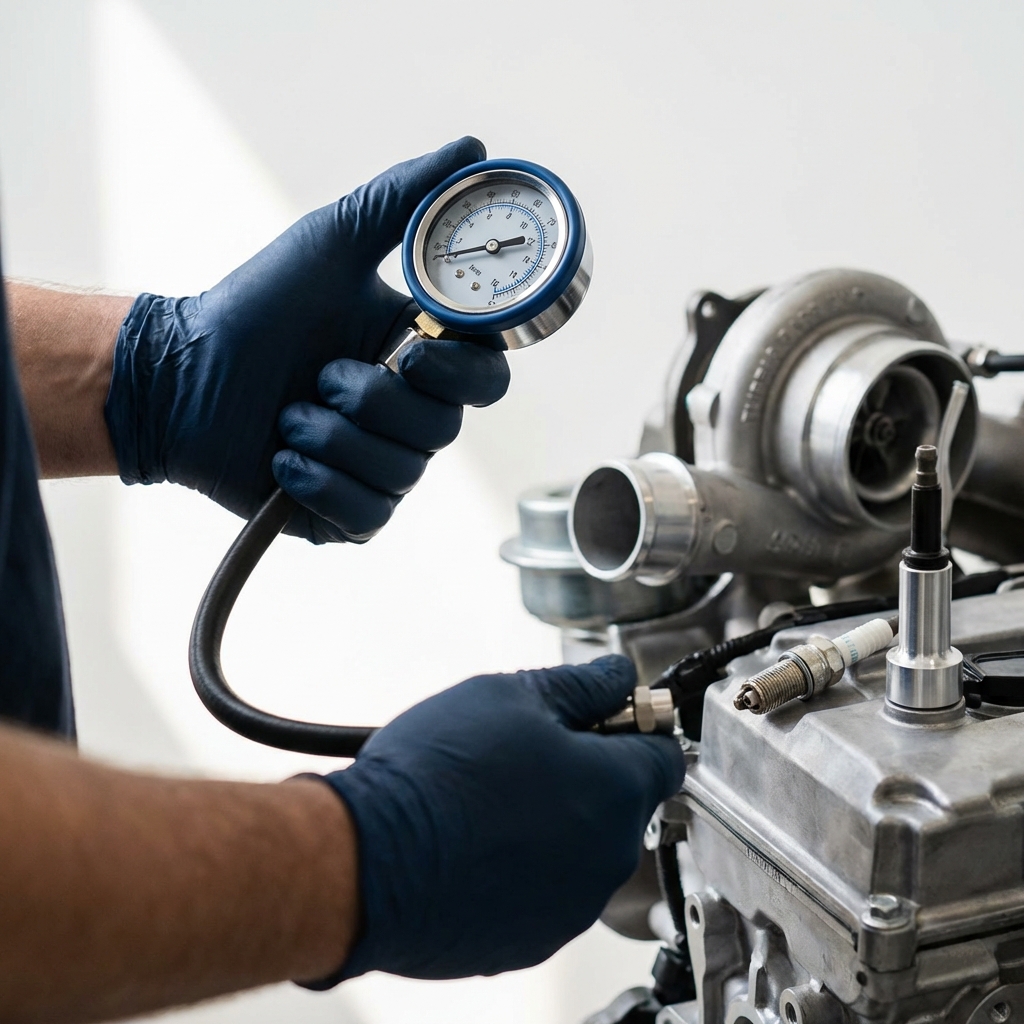
Compression and boost tests reveal the mechanical condition of the engine and turbo system; oil analysis can show contamination or elevated wear markers, and a professional pre-purchase inspection catches drivetrain noises and suspension wear RepairPal WRX reliability and repair estimates.
Have the mechanic check for boost leaks, smoke on startup, irregular oil consumption, and clutch slippage during a test drive.
Typical high-mileage failures and what they cost to fix
Common high-mileage repairs on WRX cars include turbocharger replacement, clutch or transmission repairs, and elevated oil consumption; older engines in certain model years also had head-gasket era concerns that buyers should watch for RepairPal WRX reliability and repair estimates.
Suspension and wear items such as bushings, control arms, and shocks are frequent at higher mileage and typically raise near-term maintenance costs even if the engine is healthy Consumer Reports WRX reliability notes.
Turbocharger, clutch, transmission and oil consumption issues
Turbo replacement and clutch repair are recurring items on owner-reported lists; their costs vary by region and shop, so factor regional repair differences into negotiation and budgets RepairPal WRX reliability and repair estimates.
Documented recent replacements reduce expected near-term expense and often justify a higher offer than an otherwise similar car with no records.
Suspension and wear items to expect
Expect bushings, mounts, and shocks to need attention on high-mileage WRX cars; these are generally predictable items but influence ride quality and alignment and therefore affect inspection priorities Consumer Reports WRX reliability notes.
Ask the inspecting mechanic for a prioritized list of what to expect soon and what can be deferred to keep negotiation focused.
How to weigh price vs repair risk when considering a subaru wrx for sale
Decision trade-off: the expected cost of near-term repairs plus remaining useful life should be roughly offset by the price discount from comparable lower-mileage, well-documented listings Kelley Blue Book guide to used car mileage.
Estimate likely next repairs from inspection results and factor them into an informal maximum offer that leaves room for those costs.
Simple math: expected near-term repairs vs price discount
Make a short list of probable repairs and their likely range, then subtract a contingency from the asking price; if the adjusted price is still acceptable for your total cost to own, proceed to make an offer.
When sellers provide recent major work invoices, reduce your contingency; documented maintenance legitimately lowers near-term risk and therefore the price haircut needed.
When to pay more for documented maintenance
It can make sense to pay a modest premium for a higher-mileage WRX with complete service history and recent major component replacements because those records reduce the probability of immediate large repairs RepairPal WRX reliability and repair estimates.
Conversely, demand a larger discount if records are incomplete, tests show elevated wear, or the VIN report flags issues.
When a high-mileage WRX can still be a smart buy
If a 100k to 150k mile WRX has thorough service records, recent major repairs, and a clean title, it can be a conditional buy for many drivers who accept a predictable maintenance budget Subaru maintenance recommendations for owners.
Buyers who are DIY mechanics, who plan upgrades, or who want a lower entry price but expect to cover maintenance can also make a high-mileage WRX work with proper documentation.
Signs a 100k 150k WRX is a conditional buy
Look for single-owner history, consistent oil-change receipts, recent clutch work, or recent turbo service as signs that reduce ownership risk in the 100k to 150k range Kelley Blue Book guide to used car mileage.
Without those signs, approach offers conservatively and insist on specialist tests.
When 150k+ might still work for you
At 150k+ miles a WRX can still be acceptable when it has recent documented replacements of likely failure items, a clear title, and a price that reflects remaining repair risk RepairPal WRX reliability and repair estimates.
Be realistic about the likelihood of suspension, drivetrain, and turbo-related work coming due and price accordingly.
Common seller claims to verify on the VIN report and listing
Claims such as no accidents reported or clean title should be confirmed with a VIN vehicle history report; those phrases mean only that no incidents were reported to the databases, not that no damage occurred NHTSA vehicle data and recall checks.
Use the VIN report to check for salvage or rebuilt title flags, odometer discrepancies, and reported incidents that affect valuation and buying decisions.
What 'no accidents' and 'clean title' actually mean
They indicate nothing was reported to the data sources; a vehicle history report helps corroborate the claim and reveals title status and reported repairs, which are relevant when mileage is high Kelley Blue Book guide to used car mileage.
Always ask sellers for invoices that match the report entries and note mismatches as negotiation points.
How to check for past track use, flat-towing or overheating events
Look for phrases in service entries and seller descriptions that hint at track use, repeated overheating, or unusual towing; where wording is vague, request more detail and supporting receipts or inspection notes RepairPal WRX reliability and repair estimates.
Undocumented track use or overheating events are particularly relevant for turbocharged cars and should be treated as increased risk unless proven otherwise.
Examples and short scenarios: reading three WRX listings
Scenario A: 95,000 miles with inconsistent records. A lower odometer number is attractive, but inconsistent or missing service entries increase risk; request a VIN report and a compression test before offering Kelley Blue Book guide to used car mileage.
Recommendation: ask for a pre-purchase inspection and decline to waive tests even though the mileage is under 100k.
Scenario B: 120,000 miles with full service history. Consistent oil changes, documented turbo service, and a single-owner history make this a conditional buy; use inspection results to set a fair price RepairPal WRX reliability and repair estimates.
Recommendation: prioritize compression and boost testing and consider a modest premium over similar undocumented listings.
Scenario C: 160,000 miles with recent turbo and clutch work. High odometer but strong recent repairs shifts the risk profile; confirm receipts and ask your mechanic about the remaining useful life of those replacements Consumer Reports WRX reliability notes.
Recommendation: acceptable if price reflects remaining risk and inspection verifies workmanship.
Red flags and common mistakes buyers make with WRX listings
Missing targeted inspections: skipping compression or boost checks on turbo cars is a frequent mistake; insist on these when the odometer is in the 100k range or higher Kelley Blue Book guide to used car mileage.
Overreliance on the odometer
Assuming a car is fine because miles are low or discounting a high-mileage car with good records are both mistakes; use the VIN report and service invoices to form a balanced view NHTSA vehicle data and recall checks.
Missing targeted inspections
Failing to request oil analysis, boost testing, or a specialist inspection often leads buyers to miss imminent repairs; include these in your checklist before final offers RepairPal WRX reliability and repair estimates.
Quick checklist and closing summary for buyers scanning subaru wrx for sale listings
One-page checklist: VIN vehicle history report, full service records, oil-change receipts, compression and boost tests, professional pre-purchase inspection, and a price-versus-repair assessment based on likely near-term work Kelley Blue Book guide to used car mileage.
Final decision prompts: if service records are complete and tests are passed, a car in the 100k to 150k range can be a conditional buy; 150k+ usually needs stronger documentation or a lower price to balance likely repairs RepairPal WRX reliability and repair estimates.
Use mileage benchmarks as triggers to dig deeper, not as the only deciding factor, and favor documented maintenance when it exists.
Many practitioners treat about 100,000 miles as the first high-mileage benchmark and 150,000+ miles as clearly high for evaluation; condition and maintenance history are often more important than the odometer alone.
Dated oil-change receipts, documented turbo service or replacement, clutch and transmission invoices, and full service histories meaningfully lower ownership risk.
Request a VIN vehicle history report, compression and boost tests, an oil analysis if available, and a professional pre-purchase inspection focused on drivetrain and suspension.
Use mile markers as prompts to dig deeper rather than as absolute decisions. Favor cars with clear, dated service records and confirm key tests before you offer.
When in doubt, run a vehicle history report, require specialist tests, and let documented maintenance guide your offer strategy.

 Blog
Blog