
Is it ever worth it to trade in your car?
This guide explains what trade in value car means, the trade-offs between trading in and selling privately, and how taxes and timing change the math. It shows step-by-step actions to estimate trade-in value, maximize offers with vehicle history reports and pricing insights, and a simple rubric to decide which route fits your priorities.
 Blog
BlogRelated reading
Is Edmunds the same as KBB? — Is Edmunds the same as KBB?
edmunds car value is Edmunds' True Market Value estimate, which uses recent dealer listings, transaction data and local market trends to give retail and private-sale context. It differs from Kelley Blue Book because KBB publishes separate trade-in, private-party and suggested retail values calculated with dealer data and editorial adjustments. Compare the valuation type you need across Edmunds, KBB and NADA, then confirm condition and title with a vehicle history report for a more accurate local estimate.
Can I negotiate based on Edmunds value? Practical guidance for used car buyers
edmunds car value is a retail-oriented benchmark known as True Market Value, useful as an evidence-based reference while negotiating. This article explains what TMV represents, how it is calculated, how it compares to trade-in and private-party values, and offers a step-by-step, document-backed negotiation playbook for buyers.
Is CarMax or CarGurus better? Practical guide for online car buying
This article compares a retail-first seller model like CarMax with a listing marketplace such as CarGurus, focusing on inspections, warranty and return terms, pricing transparency, and dealer reputation. It explains how each model affects risk, selection, and convenience and provides a step-by-step checklist buyers can use for online car buying. The guide also shows workflows for risk-averse and price-focused shoppers and explains how to verify title, ownership, and service history before you commit.
What the phrase trade in value car means and when to consider trading in
Definition: trade-in value versus private sale price, trade in value car
When people talk about trade in value car they mean the amount a dealership credits you toward a purchase when you hand over your vehicle, not the cash a private buyer would pay.
That credited amount is usually lower than a private sale net price because dealers need margin and convenience reduces the private-seller premium, so plan accordingly Edmunds guide on trade-ins.
Trading in is attractive in specific situations, especially when you want a fast, low-hassle exchange or when you are applying the credit toward another purchase where sales tax treatment may matter Consumer Reports overview.
The gap between a trade-in value and what you could net privately depends on local demand, condition, and timing; industry indices recommend using local pricing context rather than assuming a fixed dollar gap Cox Automotive market insights. See recent trends in the Manheim Used Vehicle Value Index Manheim Used Vehicle Value Index.

Typical situations that favor accepting a trade-in include need for quick liquidity, avoiding the time and risk of private buyer screening, and when you plan to buy another car and can use the trade credit against your purchase price FTC guidance on buying and selling vehicles.
If your vehicle has clear ownership history, recent service records, and minimal visible maintenance needs, dealers are more likely to make a competitive trade-in offer, and using a vehicle history report to show those details tends to help discussions with dealers AAA advice on selling or trading.
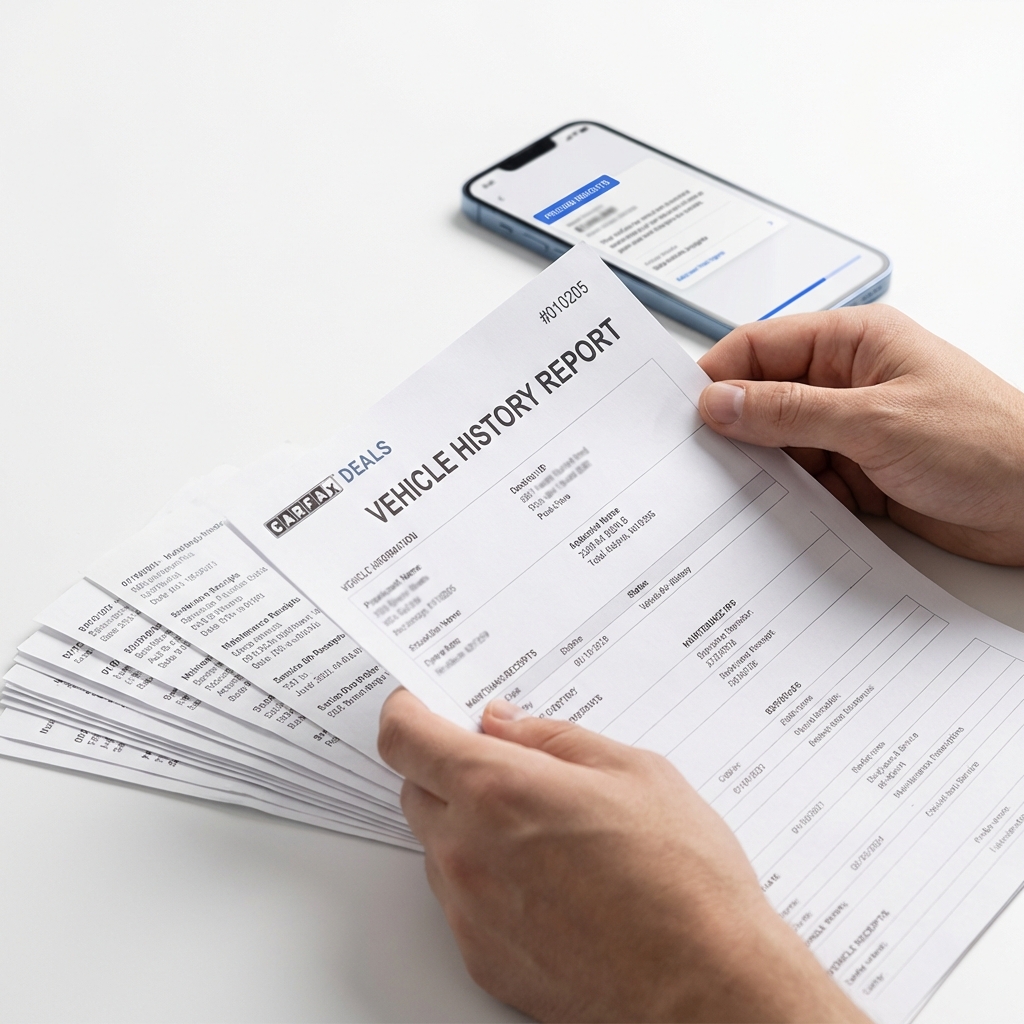
Run a vehicle history report to compare trade-in value
Compare a trade-in credit against local private-sale pricing using verified vehicle history reports and pricing insights to see which option matches your priorities.
Quick comparison: trade-in vs private sale in plain numbers and priorities
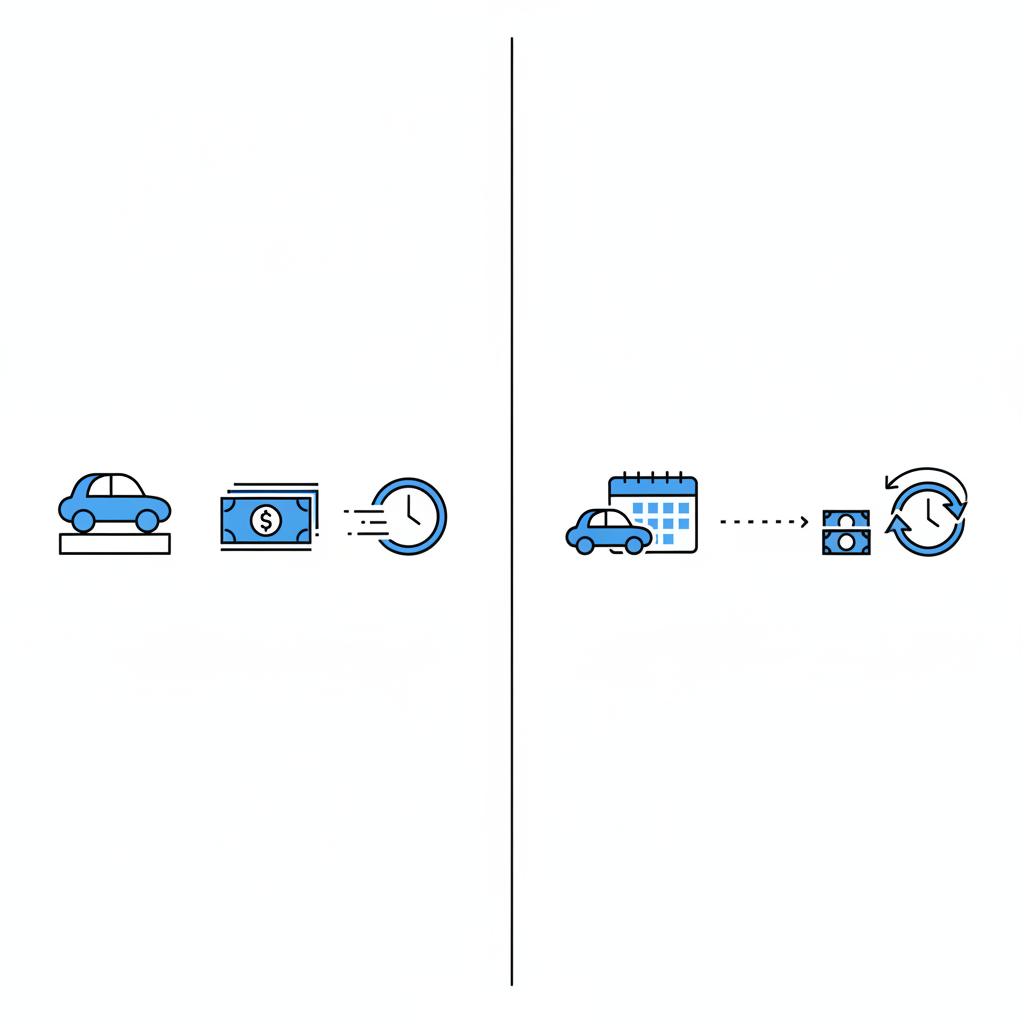
A short checklist helps: trading in buys speed and less hassle, private sale often buys more cash but requires time and work. See the CarFax Deals blog for detailed checklists.
Trading in usually completes in a single dealer visit, reduces buyer screening and paperwork, and avoids risks with payments and title transfer; these benefits are well documented in consumer guides Edmunds guide on trade-ins.
Private sales frequently produce a higher net price because individual sellers can capture more of the market value, but you must factor in listing time, fees, communication with buyers, and secure payment handling Kelley Blue Book on trade-in versus private sale. See broader price trends at CarGurus CarGurus price trends.
Think about priorities: if time and certainty matter most, trade-in often wins; if maximizing proceeds matters more and you have time and local demand, selling privately can be better.
Estimate total cost of ownership effects and timing by comparing expected net cash now versus the projected extra net from a private sale after listing costs, time, and any minor preparation expenses Cox Automotive market insights.
Examples that change the balance include models in high demand locally, low-mileage examples with full service history, or lean market windows when dealers are offering stronger credit for certain segments.
How to estimate your car's trade-in value realistically
Using pricing tools and local indices
Start with local pricing indices and online trade-in estimators to build a realistic range rather than a single number; market indexes show that premiums vary by region and by model Cox Automotive market insights. For national used-price context see the CARFAX used car index CARFAX used car index.
Adjust that range for condition, mileage, trim, and any reported title or accident items; dealers will discount offers for items that create uncertainty about future repairs.
Ask yourself whether you have time and resources to chase a private sale, or whether the convenience of a dealer trade credit better matches your schedule; this is the moment to weigh liquidity need against potential cash upside Edmunds guide on trade-ins. Consider running a VIN report on CarFax Deals for clarity VIN report.
Trading in is often worth it when speed, reduced hassle, or tax treatment on a purchase outweigh the potential extra cash from a private sale; use local pricing indices and vehicle history reports to estimate the private-sale premium before deciding.
Use a vehicle history report to confirm title status and service history before shopping offers, because clear records often lead to cleaner dealer responses and fewer surprises AAA advice on selling or trading.
How vehicle condition, mileage, and history reports change offers
Dealers commonly check mileage, title status, and service records when creating a trade-in offer; small, inexpensive fixes that signal maintenance often move offers more than cosmetic efforts Consumer Reports overview.
Order a vehicle history report and collect service receipts before you visit, and use pricing insights and price analysis labels to compare any dealer offer against typical listings in your area AAA advice on selling or trading.
How state taxes and dealer pricing rules can change the math
Sales tax treatment of trade-ins in many states
In many U.S. states sales tax is calculated on the new-vehicle price minus the trade-in value, which can make trading in comparatively advantageous when you plan to buy another car, because the tax base for your purchase is reduced FTC guidance on buying and selling vehicles.
Those tax rules vary by state; some apply full tax to the new price, some allow a trade-in deduction, and rules can change, so verify with your state revenue agency before making a decision that relies on tax savings FTC guidance on buying and selling vehicles.
If the tax savings are sizeable relative to the private-sale premium, the math can tilt strongly toward trading in when you are buying another vehicle locally.
Dealers also apply their own pricing rules and may bundle incentives or finance terms that interact with trade credit in ways worth comparing carefully before you accept an offer Kelley Blue Book on trade-in versus private sale.
A step-by-step framework to maximize trade-in value
Prepping the car: records, repairs, and presentation
Collect a vehicle history report and a complete set of service records to show ownership history and recent maintenance, because clear documentation tends to reduce dealer uncertainty about title or accident history AAA advice on selling or trading.
Complete minor maintenance items that give a strong buyer signal, such as fixing a check-engine light, replacing worn tires, or addressing obvious fluid leaks; these actions often improve offers more than cosmetic detailing Consumer Reports overview.

Confirm title status and ownership history before you engage dealers; unresolved title issues or nonstandard titles reduce trade-in value and complicate transfers Kelley Blue Book on trade-in versus private sale.
How to present offers to dealers and get multiple quotes
Ask at least two dealers for written trade-in estimates and use pricing insights or price analysis labels to see which offer aligns with local listings, so you can spot outlier offers that are unusually low or high AAA advice on selling or trading.
When you get offers, compare net cash difference after any tax treatment and ask dealers to itemize how they value the vehicle so you can negotiate on specific condition points rather than a single number Edmunds guide on trade-ins.
Timing matters: if local market indices suggest stronger demand for your model at particular times, consider delaying a trade-in to capture better offers, provided your liquidity needs allow it Cox Automotive market insights.
Common mistakes and pitfalls when choosing trade-in versus private sale
Overestimating private-sale gains
Assuming a fixed private-sale premium without checking local indices is a common error; market reports show the private-sale premium varies by model and region, so use local pricing context Cox Automotive market insights.
Failing to check vehicle history can hide title, accident, or mileage issues that materially reduce offers, so order and review a vehicle history report before deciding which route to take AAA advice on selling or trading.
Ignoring tax or timing advantages
Not accounting for state tax rules that subtract trade-in value from your taxable new-vehicle price can cause you to miss a situation where trading in is the smarter financial move for buyer-sellers FTC guidance on buying and selling vehicles.
Process mistakes like incomplete transfer paperwork, not verifying title status, or accepting cash without secure payment methods create avoidable risk and potential costs that can erode the private-sale advantage Consumer Reports overview.
Practical scenarios: three real-world examples of trade-in decisions
Buyer A: needs fast liquidity and is trading toward a new purchase
Buyer A chooses a trade-in because they need to close quickly and plan to buy another car; the trade-in credit reduces purchase paperwork and can reduce sales tax in many states when applied to a purchase FTC guidance on buying and selling vehicles.
Buyer B: has a high-demand model that may net more privately
Buyer B owns a popular, low-mileage model in strong local demand and can wait several weeks; in that situation, private sale often yields more cash, especially when local indexes show strong premiums for that model Cox Automotive market insights.
Buyer C: tax-savvy buyer in a state with favorable trade-in tax treatment
Buyer C compares dealer quotes and a private-sale estimate, then realizes that the state tax deduction on trade-in value cancels much of the private-sale premium; in this case trading in while buying a new car locally is sensible Kelley Blue Book on trade-in versus private sale.
Compare net advantage of private sale versus trade-in after tax and time cost
Enter realistic local figures
How to compare dealer trade-in offers and decide with a simple rubric
Checklist: cash difference, tax impact, time cost, and risk signals
Compare net cash difference after tax, estimate the time and fees to sell privately, and factor in the likelihood of buyer issues; this simple rubric helps make a practical choice Edmunds guide on trade-ins.
Use vehicle history reports and price analysis labels to check whether an offer is consistent with local pricing context or appears to be an outlier; dealer transparency signals can help you trust an offer that sits near local averages AAA advice on selling or trading.
Using vehicle history reports and pricing labels to spot good offers
When offers deviate from local indices, ask dealers to show how they adjusted for condition, mileage, or title issues, and use pricing insights to anchor negotiation points rather than accepting a single unitemized number Cox Automotive market insights.
Decision rule example: if the private-sale net after time and expected costs is materially higher and you have the time, prefer a private sale; otherwise accept a trade-in for speed and reduced hassle Consumer Reports overview.
Final checklist and next steps when you decide about a trade-in
Before you visit dealers, collect a vehicle history report and service records, confirm title status, and note any maintenance that could improve offers AAA advice on selling or trading.
Get at least two dealer trade-in quotes, estimate tax implications for your state, and compare the offers against a private-sale estimate built from local pricing indices Cox Automotive market insights and check CarFax Deals pricing pricing.
Save written quotes and document conversations so you can revisit offers if market conditions change or a better one appears; if the private-sale premium is small relative to your time cost, trading in is often reasonable Edmunds guide on trade-ins.
When in doubt, use a vehicle history report and pricing insights to reduce uncertainty and compare offers on an apples-to-apples basis before deciding.
Not always. Private sales often yield more net cash, but the difference varies by local demand, vehicle condition, and tax rules that can favor a trade-in when buying another car.
Collect a vehicle history report, service records, title documents, and recent maintenance receipts to show ownership history and reduce dealer uncertainty.
Get at least two written trade-in estimates, compare them with local pricing indices, and factor in tax and time costs before choosing.
References
- https://www.edmunds.com/car-buying/should-i-trade-in-your-car-or-sell-it-privately.html
- https://www.consumerreports.org/cars/buying-a-car/trade-in-or-sell-your-car-a5095861976/
- https://www.coxautoinc.com/market-insights/used-car-market/
- https://www.coxautoinc.com/insights-hub/manheim-used-vehicle-value-index-december-2025-trends/
- https://www.consumer.ftc.gov/articles/buying-used-car
- https://exchange.aaa.com/automotive/sell-or-trade-in/
- https://carfaxdeals.com/run-report
- https://carfaxdeals.com/blog
- https://www.kbb.com/car-advice/sell-or-trade-in/
- https://www.cargurus.com/research/price-trends
- https://www.carfax.com/used-car-index
- https://carfaxdeals.com/vinreport
- https://carfaxdeals.com/pricing