
How do I find the trade-in value of my car? A practical guide
This guide shows how to estimate the trade in value car using online estimators, local comparables, and documentation. It explains the five-step framework, what to bring to dealer appraisals, and how a vehicle history report can help. Follow clear steps to produce a realistic trade-in range and prepare for dealer offers.
 Blog
BlogRelated reading
Is Edmunds the same as KBB? — Is Edmunds the same as KBB?
edmunds car value is Edmunds' True Market Value estimate, which uses recent dealer listings, transaction data and local market trends to give retail and private-sale context. It differs from Kelley Blue Book because KBB publishes separate trade-in, private-party and suggested retail values calculated with dealer data and editorial adjustments. Compare the valuation type you need across Edmunds, KBB and NADA, then confirm condition and title with a vehicle history report for a more accurate local estimate.
Can I negotiate based on Edmunds value? Practical guidance for used car buyers
edmunds car value is a retail-oriented benchmark known as True Market Value, useful as an evidence-based reference while negotiating. This article explains what TMV represents, how it is calculated, how it compares to trade-in and private-party values, and offers a step-by-step, document-backed negotiation playbook for buyers.
Is CarMax or CarGurus better? Practical guide for online car buying
This article compares a retail-first seller model like CarMax with a listing marketplace such as CarGurus, focusing on inspections, warranty and return terms, pricing transparency, and dealer reputation. It explains how each model affects risk, selection, and convenience and provides a step-by-step checklist buyers can use for online car buying. The guide also shows workflows for risk-averse and price-focused shoppers and explains how to verify title, ownership, and service history before you commit.
What trade-in value means and why it matters
Definition and common terms
Trade-in value is the amount a dealer offers you when you trade a vehicle toward another purchase. It is different from the price you would get selling privately and different from the retail price a dealer lists after reconditioning. Dealers pay less than a private sale because they must repair, prepare, and resell the car and still cover overhead.
National estimator sites and general guides are a useful starting point, but local demand and seasonality can shift trade-in offers up or down from national averages. For background on buyer protections and documents that matter, refer to a government consumer guide on buying used cars FTC guide on buying a used car
In practical terms, expect trade-in value to be a negotiation input rather than a fixed outcome. Dealers typically calculate an offer by comparing local resale prospects, estimating reconditioning costs, and then adding a margin for resale, which is why offers often differ from online trade-in estimates.
Prepare your trade-in with a clear five-step checklist
Use the five-step checklist in this article to get a realistic trade-in range before visiting a dealer, and bring documentation that supports your car's condition.
How trade-in value differs from private sale and retail value
A private sale often nets a higher gross price because buyers accept more risk and no dealer margin is needed. Retail price on a dealer lot includes reconditioning, inspection, and a markup to cover dealer costs. Trade-in value sits between wholesale and private sale, reflecting dealer costs and local resale expectations.
Because dealers deduct expected reconditioning costs, a modest mechanical or cosmetic issue can reduce a trade-in offer more than it would affect a private sale price, where an individual buyer might pay more for a well-presented car.
Quick framework: the five steps to estimate your car's trade-in value
Overview checklist
1. Check at least two reputable online estimators like KBB to set a starting range. 2. Compare those numbers with local dealer and marketplace listings. 3. Document the car's title status, ownership and service history. 4. Get multiple dealer appraisals. 5. Average the online estimates and adjust for condition and estimated reconditioning.
Using at least two online estimators helps you avoid relying on a single data feed or adjustment model and gives a more balanced starting point for a vehicle trade-in estimate KBB trade-in guidance
When to pause and gather more information
If your online range is wide or local listings differ sharply from national estimates, pause and gather service records, a recent inspection, and a vehicle history report. These items commonly increase dealer confidence and can affect offers.

Bring title-related documents and any receipts that show routine maintenance. Having clear documentation reduces the chance of a surprise deduction during an in-person appraisal and prepares you for informed comparisons across offers Consumer Reports guidance on trading in
How to use online estimators effectively
Differences between KBB, Edmunds, and NADA
Major pricing services use different data and adjustment factors, so their trade-in ranges often differ. Kelley Blue Book, Edmunds, and NADA Guides each combine market data and condition adjustments in distinct ways, so consulting more than one helps you see where estimates cluster. Examples include Edmunds.
Enter accurate condition tiers and add notable options to avoid underestimates. Many online tools allow you to specify trim, packages, and mileage; those choices change trade-in ranges more than small cosmetic descriptions do Edmunds trade-in guidance
Use KBB, Edmunds, and NADA together to form a starting trade-in range
Check all three and note differences
How to enter condition, mileage, and options for best results
Be candid when you pick a condition tier. Choosing an overly generous condition can set unrealistic expectations when a dealer inspects the car. Include high-impact options such as navigation, third-row seating, or tow packages to avoid undercounting value.
When mileage is above or below average, use an adjustment on each estimator and note how each site treats mileage differently. Treat online ranges as starting points, not final offers, because dealer appraisals commonly deduct for needed repairs or local demand shifts NADA Guides trade-in values See NADA for consumer vehicle values.
Compare online estimates to local dealership and marketplace listings
Why local comparables matter
Local listings reflect the actual demand and supply where you will sell or trade the car. A national estimator may not capture local shortages or surpluses for a model, which can move dealer offers materially.
When you search local listings, match as closely as possible on model year, trim, mileage, and condition. If local retail listings are consistently above or below the online range, adjust your expectation accordingly J.D. Power used-car market report
How to find and filter appropriate listings
Use filters on marketplace sites and dealer inventories to find comparables within a reasonable radius. Look for cars with similar options and ownership histories. Note whether listings advertise a vehicle history report or price analysis label, which can help you compare apples to apples.
Save several listings as evidence to show a dealer if you think local prices support a higher trade-in value. Present them during appraisal to support your condition and price expectations.
Document condition, title, and service history before appraisals
Key documents to gather
Bring title or title status documentation, current registration, full service records, maintenance receipts, any inspection reports, and all keys and remotes. Having these items ready speeds the appraisal and reduces uncertainty. Use a VIN decoder when checking VIN-related records.
Documented title status and ownership history commonly increase dealer confidence and can improve trade-in offers, so assemble clear records prior to the visit FTC guide on buying a used car
Use at least two online estimators to form a starting range, compare that range to local comparable listings, gather title and service records and a vehicle history report, get multiple dealer appraisals, and average and adjust for condition and likely reconditioning to reach a realistic trade-in range.
How documentation can affect dealer confidence
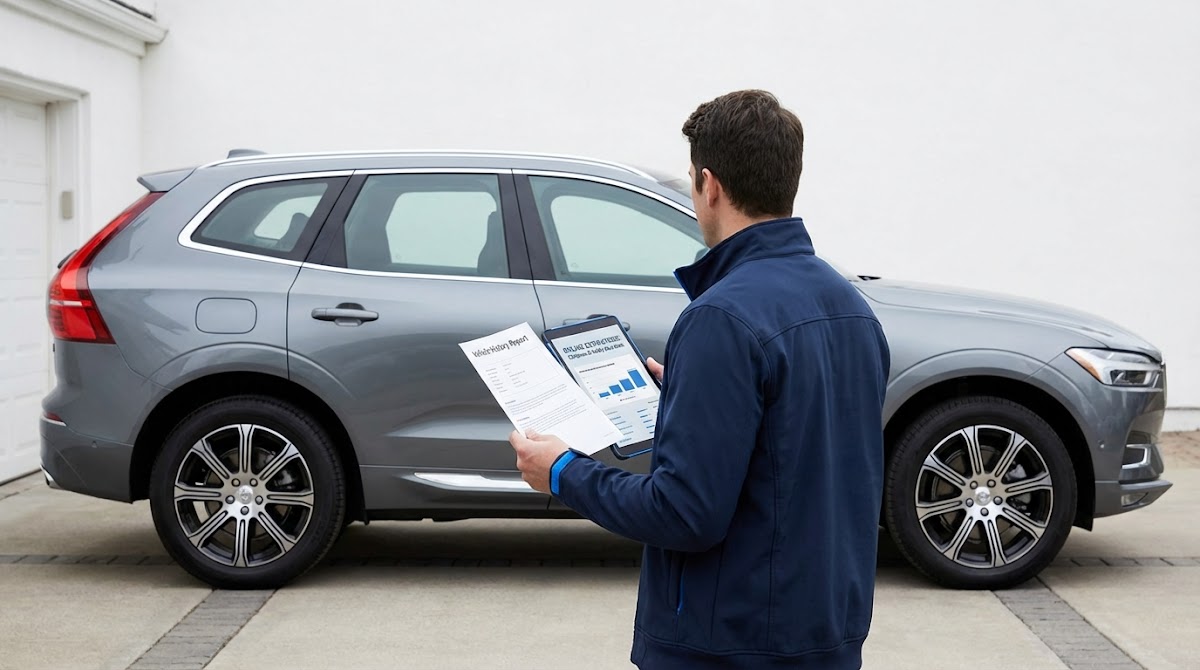
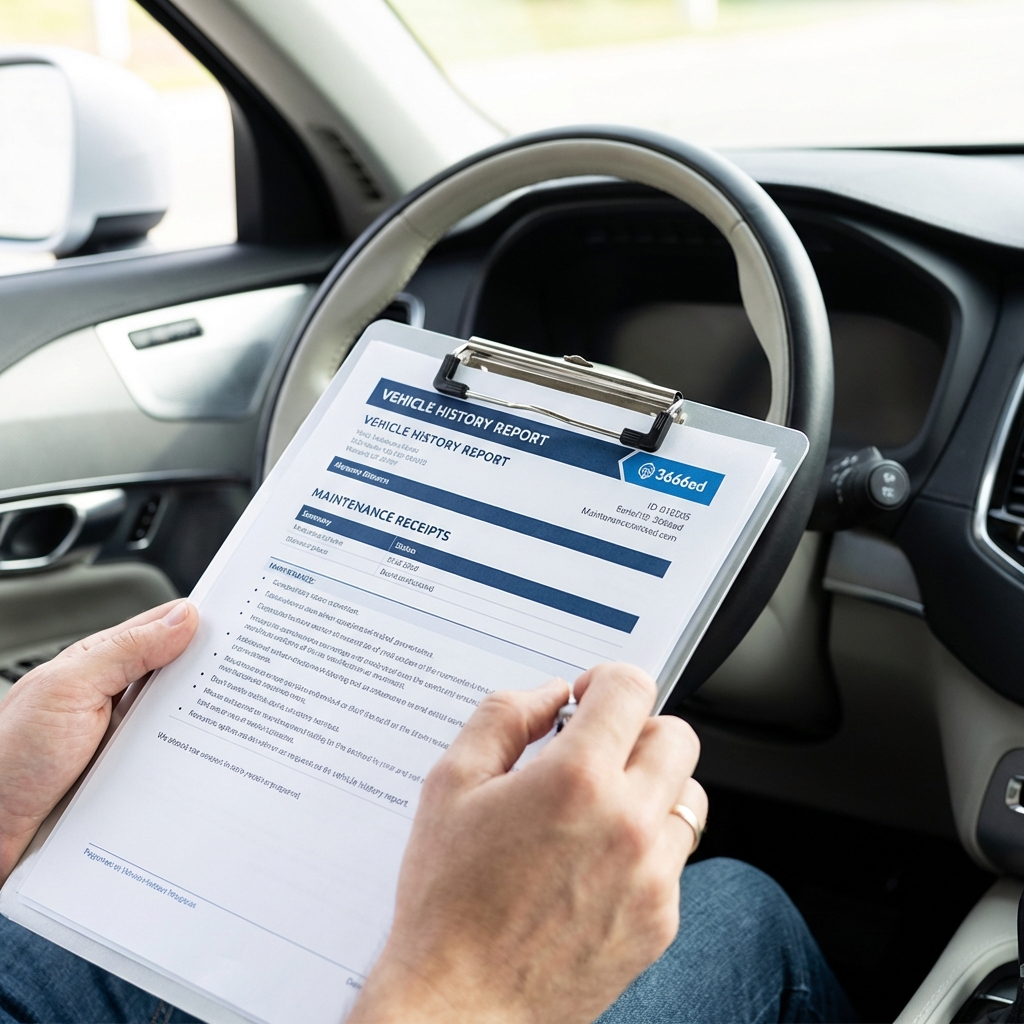
Presenting a vehicle history report together with receipts for routine maintenance shows the car was tended to and helps appraisers trust your condition claims. This can reduce deductions tied to unknown service history.
If you have gaps in records, explain them honestly and be ready to show recent inspections. Dealers often value transparency and verified maintenance more than incomplete claims Consumer Reports on preparing to trade in
What to expect at a dealer appraisal and why offers differ
How dealers calculate offers
Dealers estimate how much they can sell the vehicle for locally, subtract expected reconditioning costs, add a resale margin, and set an offer. That approach explains why a dealer offer can differ from an online trade-in estimate.
Dealers also inspect items that affect resale speed and appeal. If a model has weak local demand, the dealer will lower the offer to reflect slower turnover and higher carrying cost KBB trade-in guidance
Common deductions and inspection points
Inspectors look for mechanical faults, tire condition, brakes, visible body damage, wheel and interior wear, and dashboard warning lights. Evidence of prior damage or incomplete service records commonly triggers deductions.
Because reconditioning costs are subtracted from the starting estimate, the dealer offer will often be a few steps removed from the online numbers. That is why getting multiple appraisals is useful for comparison and negotiation Edmunds sell and trade guidance
A practical method: average estimators and adjust for condition and options
Step-by-step arithmetic method
Step 1: Get at least two trade-in estimates from major sites. See how to use these tools. Step 2: Average those numbers to create a midpoint. Step 3: Adjust up or down for your car's mileage, notable options, and local comparables. Step 4: Subtract an estimated reconditioning allowance to approximate what a dealer might offer.
Using the average of multiple estimators produces a balanced starting point and helps reduce the influence of a single tool's methodology KBB trade-in guidance

How to adjust for mileage, options, and local demand
Higher than average mileage usually reduces the midpoint; notable options or an above-average service history can move it up. Compare your midpoint to local retail listings to see if the adjusted midpoint is realistic for your market.
Subtract a reconditioning allowance that reflects typical dealer fixes such as tires, minor body work, and detailing to reach a likely dealer offer. Keep your adjustments conservative and supported by comparables or inspection notes NADA Guides on trade-in values
Estimating likely reconditioning costs and their impact
Typical items dealers fix before resale
Dealers commonly pay for detailing, minor body repairs, tire service, brake pads, and minor mechanical fixes before listing a trade-in on the lot. These tasks are budgeted into the offer as deductions.
Understanding typical reconditioning lets you decide whether to fix items before trading in or let the dealer handle them. Small cosmetic fixes may increase net proceeds, while large mechanical repairs often do not pay for themselves in a trade-in context Edmunds sell guidance
How to judge whether to fix something before trading in
If a repair is inexpensive and clearly improves saleability, it can make sense to fix it. If the repair is costly or uncertain, get an estimate and compare the likely increase in your trade-in offer to the repair cost.
When in doubt, get multiple estimates and consider whether a private sale would better capture the value of that repair, since private buyers may value certain fixes differently.
Common mistakes that lower your trade-in offer
Mistakes before the dealership visit
Relying on a single online estimate or national figure without checking local comparables is a frequent error. National numbers can be a useful reference but may not reflect local demand.
Arriving without documentation, keys, or a vehicle history report reduces your ability to support higher value claims and can lead to larger deductions at appraisal FTC guide on buying a used car
Mistakes during appraisal and negotiation
Avoid emotional claims or insisting on a specific number without evidence. Instead, present printed comparables, estimator printouts, and service records to show why your car should be valued at the higher end of a range.
Getting multiple dealer appraisals allows you to compare offers and identify outliers. Use documentation and local listings rather than pressure tactics to make your case Consumer Reports trading tips
Three short scenarios: how the framework works in practice
Higher mileage commuter car
Situation: A high-mileage commuter car usually shows a lower midpoint on online estimators. Steps: check two or three estimators, focus on service history and recent inspections, and look for local buyers who accept higher mileage. Documentation of routine maintenance helps reduce deductions.
Outcome: Use the averaged estimator adjusted for mileage and subtract a conservative reconditioning allowance. Then compare at least two dealer offers to confirm the likely trade-in value Edmunds guidance
Well maintained single-owner SUV
Situation: A single-owner SUV with full service records often fares better in trade-in appraisals. Steps: emphasize ownership history and maintenance, include a vehicle history report, and show comparable local listings with similar service records.
Outcome: Full documentation can increase dealer confidence and sometimes narrow the gap between online estimates and in-person offers Consumer Reports on getting the most
Low demand luxury model
Situation: Luxury models with low local demand can see lower dealer offers even if online estimates look favorable. Steps: check local listings closely, consider private sale potential, and get multiple appraisals to find the best local offer.
Outcome: If local demand is weak, the trade-in value may be well below national retail figures; document comparables and weigh private sale options where feasible J.D. Power market report
What to bring and a short appraisal day checklist
Documents and keys
Bring title or title status, registration, full service records, maintenance receipts, keys and remotes, and any recent inspection reports. Print the online estimator results and save local comparables to present at appraisal.
Ensure dashboard warning lights are noted and disclose issues upfront. Having the vehicle presentable and documented shortens the appraisal and reduces surprises FTC guidance on documents
Final checks before driving to the dealer
Wash the car, remove personal items, check tire pressure, and make sure the fuel level is reasonable for a test drive. Clear organization and a calm approach help the process go smoothly.
Keep your checklist in the glove box and have copies of key documents ready to hand to an appraiser rather than leaving them on the dashboard.
How to use a vehicle history report strategically
What to check in the report
Highlight title status, ownership history, mileage checks, and reported service history. Consider ordering a VIN report.
Present the report along with service receipts to substantiate your claims. A clear vehicle history report plus maintenance documentation commonly increases dealer confidence in your condition statement FTC guide on vehicle history reports
How to present a report to a dealer
Give the appraiser a printed copy and point to items that support a better valuation, such as consistent service entries or single ownership. Avoid overstating what the report proves.
Use the report as supporting evidence, not as a guarantee. If the report shows issues, be prepared to explain or provide context with receipts or inspections Consumer Reports on using vehicle history reports
Trade-in versus private sale: decision criteria
When a private sale likely nets more
Private sale often nets more for highly desirable models, low-mileage cars, or when you have time to list and show the vehicle. Private buyers may pay more because dealers expect to resell at a margin and to cover reconditioning costs.
Factor in time, effort, and risk when comparing likely private-sale proceeds against dealer convenience, and use multiple dealer appraisals as part of the decision Consumer Reports decision guide
When a trade-in makes sense
Trade-ins make sense when convenience, tax handling, or a faster transaction matter more than extracting the absolute highest price. If local demand is weak and private-sale time is long, trading in reduces hassle.
Use informed comparisons: average online estimators, check local comparables, and get multiple appraisals before deciding.
Wrap up: a short checklist and next steps
Summarize the core actions
Recap: check at least two online estimators, compare with local listings, gather title and service records, run a vehicle history report, and get multiple dealer appraisals. Use the averaged estimator and adjust for condition and reconditioning to reach a realistic range.
After you get offers, compare them against your adjusted midpoint and local comparables. Keep documentation handy and choose the option that best fits your time, risk tolerance, and net proceeds FTC consumer guidance
What to do after you get offers
Save all written offers, note differences in reconditioning assumptions, and if needed ask dealers to itemize deductions. Use that information to decide whether to accept, negotiate, or pursue a private sale.
Conservative expectations and documented comparisons tend to produce the clearest decisions at the point of sale.
Use at least two reputable online estimators to establish a starting trade-in range and compare their midpoint with local listings.
A clear vehicle history report alongside service records commonly increases dealer confidence and can improve offers, but it does not guarantee a higher price.
Assess repair cost versus likely increase in trade-in proceeds. Small, inexpensive fixes that improve saleability may be worth doing; large mechanical repairs often do not pay off in a trade-in.
References
- https://www.consumer.ftc.gov/articles/buying-used-car
- https://www.kbb.com/whats-my-car-worth/
- https://www.consumerreports.org/car-buying/how-to-get-the-most-when-trading-in-your-car/
- https://www.edmunds.com/sell/your-car/
- https://www.nadaguides.com/Cars
- https://www.jdpower.com/business/press-releases/2024-used-car-market-report
- https://www.edmunds.com/appraisal/
- https://www.nada.org/nada/consumer-vehicle-values
- https://carfaxdeals.com/run-report
- https://carfaxdeals.com/vinreport
- https://carfaxdeals.com/vin-decoder
- https://carfaxdeals.com/how-to-use