A practical, step-by-step guide to deciding whether to trade in your car or sell it privately. This article compares net proceeds, taxes, timing, convenience, and risks; explains how to calculate real cash outcomes; offers negotiation scripts, a safety checklist, and templates to list your car; and shows how tools like CARFAX Deals can make your decision easier. Whether you prioritize speed, paperwork simplicity, or the highest possible price, this piece helps you choose the right path and walk away with confidence.
This guide shows how to evaluate affordable cars for sale by looking beyond sticker price to total cost to own, reliability, fuel use and safety. It explains how to use model-level 5-year TCO tools, EPA fuel data and vehicle history reports to compare small cars, and gives checklists and scenarios for common buyer profiles.
This guide helps research-focused buyers decide which used Honda Fit years to approach with caution and what checks to run before contacting a dealer. It explains why mid-2010s Fits often show more transmission and engine complaints, why VIN-level recall checks matter, and how to use a vehicle history report and pricing context to reduce risk.
This guide explains current new and used pricing for buyers searching for tesla 3 for sale, and shows the VIN-level checks that matter most. It summarizes 2026 new Model 3 starting points and used value bands, then gives a step-by-step checklist to verify any listing with a vehicle history report and battery warranty checks.
Deciding whether to trade in your car or sell it privately is less about a single rule and more about matching the sale route to your priorities. This guide gives practical steps, real examples, a safety checklist, and negotiation scripts so you can confidently weigh the trade-in vs private sale choice and maximize what you keep.
1. Private-party sales typically fetch 5–15% more than dealer trade-ins, depending on model and market.
2. Trading in can reduce taxable purchase price — saving you potentially hundreds of dollars in sales tax when buying from the same dealer.
3. CARFAX Deals users can quickly check verified history and transparent pricing labels, helping sellers decide between trade-in vs private sale with confidence.
Do you get more for a trade-in or selling?
Short answer up front: in most cases selling privately typically nets more money, but the right choice depends on time, paperwork, tax benefits, and whether you value convenience over cash. This article walks you through the math and real-world trade-offs so you can pick the option that fits your situation.
Key concept: early in the process you should compare true take-home amounts - and that’s where the trade-in vs private sale calculation becomes important.
Why many people assume a private sale pays more
You’ve likely heard that a private buyer will pay more than a dealer. That’s true most of the time because the dealer’s trade-in math includes margins, reconditioning, and time on the lot. When you’re deciding between a trade-in vs private sale, remember the dealer’s number is based on resale economics - not how much an individual buyer will pay for the exact car you kept tidy and serviced. Industry analyses, such as the BCG report, describe similar dealer sourcing and margin pressures.
What drives the price gap?
Dealers subtract expected reconditioning, inspection costs, and their desired margin. Private buyers don’t build in those costs the same way, so they often pay closer to retail. When you’re thinking through trade-in vs private sale, consider condition, local demand, and how much effort you will spend marketing the car.
How to compare offers cleanly: net proceeds matter
When you compare a dealer trade-in, an online instant offer, and a private buyer, don’t just look at the gross numbers. Use a simple net-proceeds formula so you actually know what will land in your pocket. This is the heart of any fair trade-in vs private sale comparison.
Net-proceeds formula to use
Net private sale proceeds = Private sale price – out-of-pocket selling costs – payoff (if any) – taxes (where applicable) Net trade-in proceeds = Trade-in offer + sales tax credit (if buying from same dealer and state allows it) – payoff (if any) – any dealer fees
That formula puts apples beside apples. If you have a loan payoff, include it. If your state gives a sales tax credit for trade-ins, include that too. The realistic comparison often changes the winner.
Example scenario: seeing the numbers
Imagine a private asking price of $14,000, a dealer trade-in of $11,000, and an online instant offer of $12,200. At first glance the private sale is best. But once you add listing costs, cleaning, time off work for test drives, and small touch-ups, the private result shrinks. If your state offers a tax credit for trade-ins and you’re buying a new vehicle from the same dealer, the tax savings on a $11,000 trade-in can be meaningful. This is why a proper trade-in vs private sale comparison requires real numbers from your situation.
Timing, seasonality, and local demand
Timing matters. Convertibles and soft-top cars often fetch higher private-party premiums in summer. Trucks tend to have regional demand spikes. When you model trade-in vs private sale, check local listings and seasonal trends - they can widen or narrow the gap between offers. For broader trade-in market trends, see this trade-in market statistics piece for recent patterns.
Convenience, safety and risk: the human cost
Selling privately means photo sessions, test drives, safety screening, and sometimes uncomfortable negotiations. Trading a car in is simple: appraisal, signature, and you’re done. Online instant buyers sit in the middle. If avoiding strangers and paperwork is your priority, the convenience value of a trade-in or an online buyer may outweigh a few hundred or a few thousand dollars.
If you want a quick, data-backed sense of market pricing before you commit to trade-in vs private sale, consider running a vehicle report and market check using CARFAX Deals’ market tool — it pairs verified history with transparent pricing labels that make comparison faster and less risky.
Loans, negative equity and why dealers can be helpful
Outstanding loans complicate private sales because the title may have a lien. Many private buyers avoid deals where the title isn’t clear. Dealers and most online buyers handle payoffs and title transfers, which reduces friction. If you owe more than the car is worth, a dealer can accept the vehicle and either roll the negative equity into a new loan or let you pay the difference - a convenience many sellers need when they’re replacing a car immediately. For context on buy-sell market activity and dealer behavior, review this buy-sell activity report.
Often yes—private sales commonly fetch a premium that can be several hundred to a few thousand dollars depending on model, condition, and local demand. Use the net-proceeds formula to include selling costs and taxes to see if the extra private-party premium justifies the time and effort.
Negotiation tactics that actually work
Whether you’re preparing for a private buyer or a dealer negotiation, start with data. Use comparable local listings, values from trade guides, and the car’s maintenance records to support your number. If a dealer’s trade-in number seems low, ask for a separated appraisal of the replacement vehicle or make your trade-in a separate line item - sometimes that exposes room for movement.
Scripts and questions to ask
When negotiating with a dealer, you can ask: “How did you calculate that trade-in value?” and “Can you show the retail comps you used?” With online buyers, ask whether the offer includes deductions for damage or mileage limits. With private buyers, lead with evidence: receipts, a clean service folder, and a clear history reduce buyer friction.
Practical steps: a checklist before you list or trade
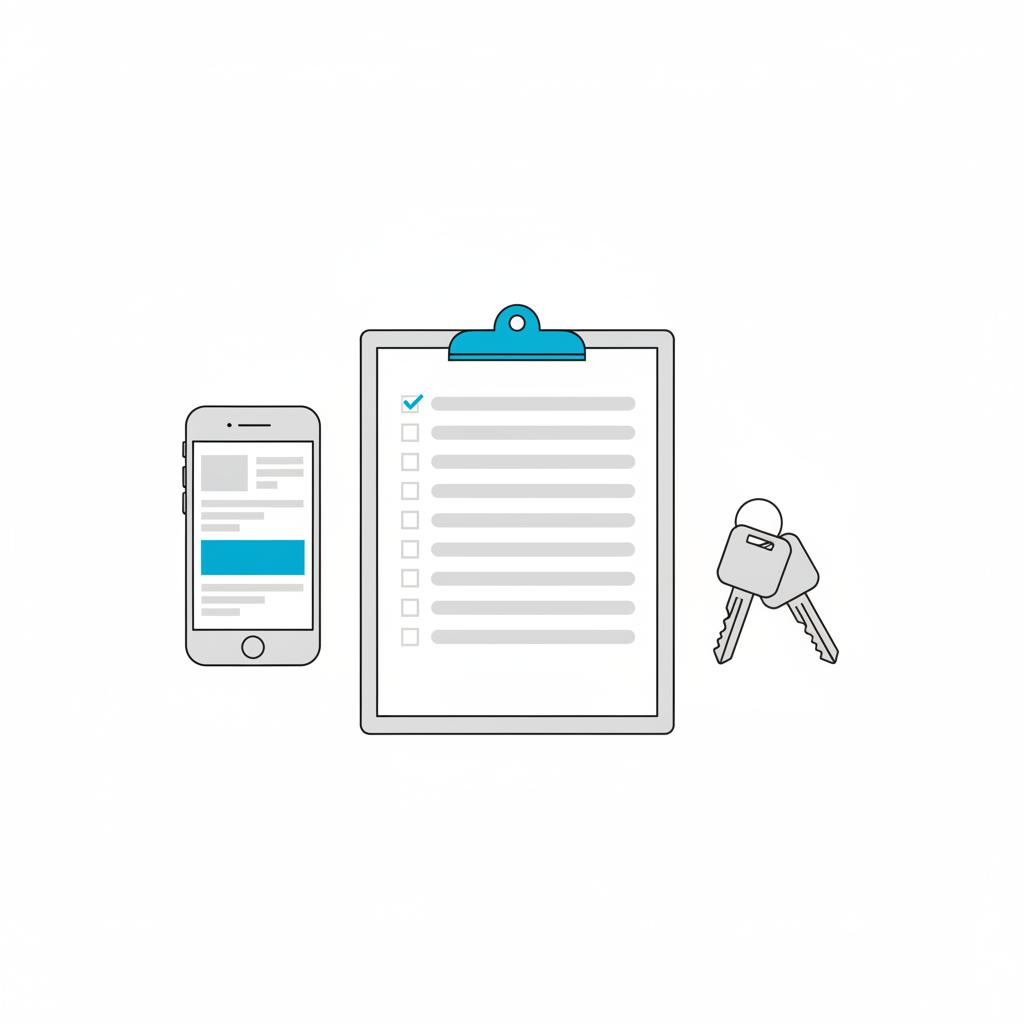
Use this short checklist to prepare. Following these steps will improve outcomes whether you choose a trade-in or a private sale - and they fit neatly into the trade-in vs private sale decision process. (See the how-to guide for help using reporting tools.)
Pre-sale checklist
1. Gather documents: title (or lien info), service history, registration. 2. Clean and photograph: interior, exterior, engine bay, odometer. Good photos sell cars faster. 3. Small fixes: burned bulbs, fluid top-ups, missing floor mats — inexpensive fixes move deals. 4. Price research: look at local private listings, dealer listings, and online buyer quotes. 5. Safety plan: meet in public, verify payment, and bring a friend for test drives if possible.
Repairs: which ones pay and which don’t
Not every repair is worth the cost. A $100 cosmetic fix that removes an obvious negotiating point often returns many times its cost. A $2,000 engine overhaul rarely pays unless it opens access to a different buyer pool. When choosing repairs, estimate conservative resale increases and compare to repair costs - another part of the trade-in vs private sale math.
How to list your car for a private sale
A clear listing reduces time on market and helps get you closer to asking price. Use the checklist above, write an honest description, and add maintenance receipts. Set your price slightly above the amount you’ll accept to leave room for negotiation, but don’t overshoot; unrealistic pricing prolongs the sale and invites lowball offers.
Listing template (copy and paste)
Year / Make / Model / Trim — Mileage One-owner / clean history / non-smoker / detailed maintenance folder included. Recent brake service at XX miles; new tires at YY miles. Always garaged and maintained. No accidents. Serious inquiries only; please text to set a time. Price: $[asking] (open to reasonable offers).
If you need a quick vehicle record to include in your listing, consider generating a VIN report using the VIN report tool.
Payments and escrow for private sales
Cash is preferred by many buyers; cashier’s checks or bank transfers are common. For safety, complete payoff by arranging a direct transfer to the lender when a lien exists, or use an escrow service for added protection. If you accept a cashier’s check, verify it with the issuing bank before handing over keys. These precautions matter when weighing trade-in vs private sale because they address buyer trust and seller security.
Online instant buyers: a middle ground
Companies offering instant quotes will usually price between dealer trade-in and private-party values. Their core selling point is certainty and speed. When you compare trade-in vs private sale, an online instant quote may be the compromise you want: faster than private sale, typically better than a typical dealer trade-in, and lower effort than listing privately.
State sales tax rules that change the math
In many states, trading in a car reduces your taxable amount when you buy another vehicle from the same dealer. That tax savings can make a dealer’s lower trade-in offer effectively more competitive. If the sales tax on your state is high, calculate the tax credit before deciding. This is one of the most overlooked parts of the trade-in vs private sale decision.
Tax example
If you trade in a car worth $11,000 toward a $28,000 purchase and your state sales tax is 6%, you save tax on $11,000 - about $660. That partially offsets the lower trade-in price and can change which route makes more sense.
Real-life scenarios: three common examples
Scenario A: A neat commuter car with 80,000 miles and clean records. You have time to show it. Private sale likely wins in cash. Scenario B: An older SUV with 120,000 miles, buying a new car from the same dealer with tax credit allowed - trade-in may be better. Scenario C: You have a car with a loan and are moving across the country tomorrow - an online instant buyer or dealer trade-in gives certainty and speed.
Negotiation red flags and pitfalls
Watch for lowball offers that cite vague reconditioning costs, or dealers that try to bundle trade-in value into a high final price for the new car to obscure the deal math. Always ask for separate line items on a purchase order so you can see the trade-in value, sales price, taxes, and fees clearly. That transparency helps you compare the true take-home outcome versus a private sale.
Safety tips for meeting private buyers
Meet in public, well-lit places. Bring a friend when possible. Verify payment before handing over the keys. Keep paperwork organized and use bill-of-sale templates to document the transaction. These safety measures reduce stress and make the private route more viable for many sellers.
How much more can you realistically expect?
Recent consumer guides suggest private-party sales often fetch about 5–15% more than dealer trade-ins. That’s a wide range: for modest cars it might be a few hundred dollars; for higher-value or rare models, it could be several thousand. The best way to know is to gather comparable local listings and run numbers using the net-proceeds formula.
Step-by-step decision flow to choose your path
Follow these steps for a fast decision:
1. Get three numbers: dealer trade-in, online instant quote, and local private comps. 2. Estimate out-of-pocket selling costs and time lost for private sale. 3. Check loan payoff and any tax credit for a trade-in. 4. Compare net proceeds and decide whether convenience or cash is more important. 5. Execute your plan confidently.
Negotiation examples you can use
With a dealer: “I appreciate the appraisal. Based on local retail comps and recent private sales, I think $X is fair - can you get closer to that?” With a private buyer: “I’ve priced the car at $Y based on similar local listings; I’m willing to negotiate within $Z.” Honest, data-backed statements work better than hardline posturing.
Listing photos and presentation that win buyers
Good photos are worth more than you expect: shoot in daylight, use a neutral background, and include interior and odometer shots. Buyers often form impressions in seconds. When you’re trying to get the most money in a trade-in vs private sale scenario, presentation is one of the highest-ROI tasks.
How tools like CARFAX Deals can help
Decision tools that combine vehicle history and transparent pricing remove uncertainty. CARFAX Deals pairs verified history with pricing signals (Great Deal, Good Deal, Fair Deal), which helps you understand where your car sits in the market before you haggle. For sellers, that clarity speeds decision-making about whether to list privately or accept a trade-in. Ein kurzer Blick auf die Darstellung hilft oft, den Markt schneller einzuschätzen.
Common FAQs and short answers
Q: How much more will I typically get selling privately? A: Average ranges are 5–15% more, but it varies by model, condition, and market.
Q: Does a dealer always handle loan payoff? A: Dealers and many online buyers handle payoff; private sales with liens require coordination.
Q: Should I repair mechanical problems before selling? A: Small, inexpensive fixes often pay off. Major repairs rarely do unless they unlock a higher buyer segment.
Final decision cues: a short checklist
Choose a private sale if you have time, clean documents, and want maximum cash. Choose a dealer trade-in if you want convenience, need to resolve a loan, or will benefit from a sales tax credit. Use an online instant buyer if you want a fast, middle-ground solution.
Parting practical tips
Keep a tidy service folder, honest listings, and realistic pricing. A few smart choices—clear photos, accurate description, and a plan for payoff—often move outcomes from good to great in a trade-in vs private sale decision.
Remember: the difference between a great outcome and a merely acceptable one is often a handful of smart steps, not a miracle.
See verified history and pricing to decide fast
If you want a quick market reality check before choosing between trade-in vs private sale, run a CARFAX Deals report and pricing check to see verified history and transparent price labels that speed your decision.
Summary: pick the path that matches your priorities
Selling privately usually pays more, but requires time and some risk-handling. Trading in is faster and easier, and can carry tax advantages that change the math. Online instant buyers are a practical compromise. Use the net-proceeds approach, gather real offers, and pick the route that aligns with how much time, effort, and certainty you value.
Good luck - and drive safely on the next chapter of your car story.
Studies and market analyses from recent years suggest private-party sales typically fetch about 5–15% more than dealer trade-ins. The exact difference depends on the car’s model and condition, local demand, and how much time and effort you invest in listing and showing the vehicle. Use the net-proceeds formula (private sale price minus selling costs, payoff, and taxes) to find the real comparison for your situation.
If you have a loan, dealers and many online buyers usually handle payoff and title transfer, which simplifies the process. Private sales with a lien require coordination (escrow or lender payoff), which some buyers avoid. If you have negative equity, a dealer can roll the difference into a new loan, making a trade-in more convenient even if it appears to pay less in cash.
Yes. CARFAX Deals pairs verified vehicle history reports with transparent pricing signals that help you see where a vehicle stands in the market. That clarity speeds decision-making and helps you estimate a realistic private-party price before you negotiate with dealers or list the car privately.
Most sellers get more money privately, but when speed, paperwork help, or tax savings matter, a trade-in or instant online offer can be the smarter path — good luck, and may your next deal feel simple and fair.


 Blog
Blog