Who is better, CarMax or Carvana? — A clear comparison
This comparison helps research-first buyers decide between the two large national sellers by mapping inspection, return policy, warranties, delivery and financing differences. The guide explains how to use vehicle history reports and pricing context to reduce uncertainty when searching for used car companies near me.
This guide helps research-oriented buyers compare used Tacoma options and decide which model years and trims match their priorities. It distinguishes third-generation 2016–2023 Tacomas, which have a long service and parts history, from the 2024 redesign that introduced i-FORCE powertrain options. Use a VIN-based vehicle history report and a professional pre-purchase inspection to reduce risk before you contact a dealer.
This guide explains which tacoma trucks for sale show the strongest reliability and safety signals to watch out for, and why mid-2010s and many pre-2016 Tacomas appear most often in complaint and recall records. The article shows how to use vehicle history reports, recall checks, and a focused inspection to reduce risk when evaluating a used Tacoma.
This article helps buyers searching tacoma trucks for sale understand which Tacoma engine tends to be most reliable. It summarizes reliability ratings, owner-complaint clusters, and maintenance-cost differences between the 2.7L I4 and the 3.5L V6, and gives actionable checks to reduce engine-related risk.
Deciding between CarMax and Carvana often comes down to whether you need in-person inspection or prefer the convenience of online shopping. This article breaks down the main differences in model, inspection, warranty, returns, financing and customer experience.
It is written for research-first buyers who want clear steps to compare listings, run vehicle history reports and interpret pricing context before contacting a seller. Use the sections that match your priorities to make a practical choice.
CarMax provides a store-based experience with in-person appraisals and a standard limited warranty.
Carvana offers an online-first flow with home delivery and a seven-day test period for returns.
Use a vehicle history report and pricing insights to compare listings and reduce uncertainty before you buy.
Quick answer: which option fits your needs?
Snapshot comparison
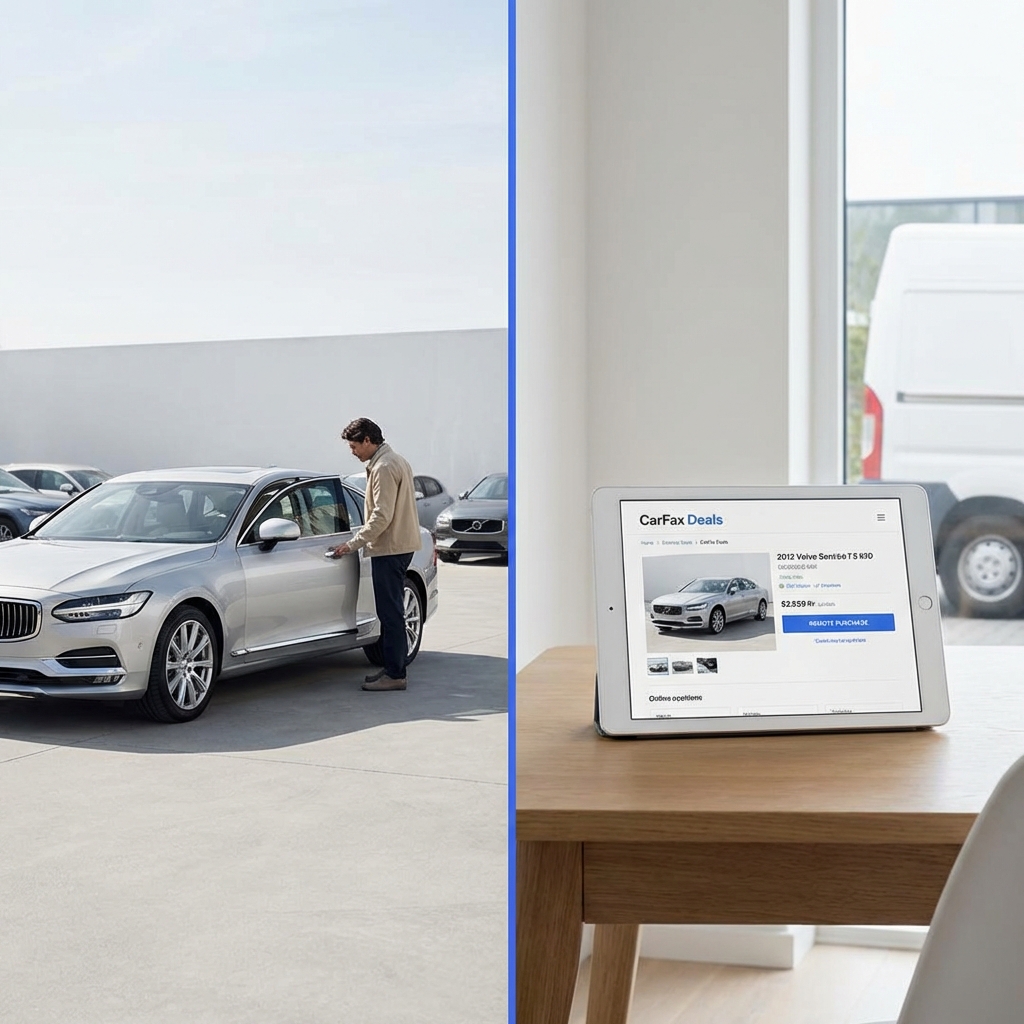
For many buyers the practical difference comes down to whether you need in-person inspection and immediate pickup or prefer a fully online flow with delivery options. If you want to inspect a car in person before you commit, a store network tends to make that easier; CarMax operates as a nationwide retailer with in-person appraisals and a store-centered sales flow, which is useful for buyers who value on-site checks and local availability. CarMax website
For buyers who prioritize convenience and a broader searchable inventory, an online-first marketplace can be the better fit. Carvana focuses on online listings with home delivery or pickup and a standard seven-day test period for returns, which can make remote shopping simpler if you plan for logistics and possible returns. Carvana return policy
Which buyer types tend to prefer each option - used car companies near me
Research-first shoppers who start with local searches for used car companies near me often split into two groups: those who need to test-drive and inspect in person, and those who accept delivery and remote inspection in exchange for wider inventory access. Local buyers who prefer immediate access and the ability to compare multiple cars on site tend to lean toward store-based sellers, while remote buyers who value door-to-door convenience tend to choose online-first platforms.
Before you pick, list your priorities: inspection access, return flexibility, or convenience. Use the sections below that match your top priorities to dig deeper and decide which channel suits your timeline and comfort level.
How the business models differ: brick-and-mortar versus online-first
What CarMax's store network means for buyers
CarMax's nationwide stores enable in-person appraisals, walkaround inspections and test drives on site, and they include a standard limited vehicle warranty with many purchases. That structure tends to support buyers who want to see a car physically before finalizing the sale and who prefer handling paperwork in person. CarMax website
Stores also let you combine online research with a local visit: you can pull a listing, confirm the exact model year and trim, and then inspect the car at the location noted in the listing. If your priority is inspection access, this model shortens the time from decision to pickup and reduces reliance on photos or videos.
How Carvana's online model changes the purchase flow
Carvana operates a fully online catalog, remote financing options and delivery or pickup choices that remove the need to visit a store; the platform commonly offers home delivery or vending machine pickup and an integrated online paperwork flow. Carvana vehicle protection and warranty options
That online-first approach expands the searchable stock across a wider geographic area and can surface a greater variety of trims and model years than any single store network. The tradeoff is that inspection happens before or after delivery, so buyers should plan extra verification steps and allow time for returns if the vehicle does not match expectations.
Run a report to compare nearby listings
Compare local inspection access and delivery options using the checklist below to decide which channel to prioritize.
Inspection, warranties and return policies compared
Standard warranties and optional protection plans
CarMax often includes a limited vehicle warranty with many purchases and sells extended coverage separately, which can simplify the baseline protection a buyer receives at purchase. CarMax website
Carvana includes a limited warranty as well and markets paid extended protection plans for buyers who want additional coverage after the initial period. When evaluating listings, compare the included warranty details and the cost of any optional protection plan to estimate post-purchase exposure. Carvana vehicle protection and warranty options
Return and test periods: what each offers
Return windows differ in structure and timing: Carvana advertises a seven-day test and return window that lets buyers confirm the car once it is in their hands, while store-based sellers use time-bound return policies that are tied to in-person purchase rules and may require a visit to a location to complete a return or exchange. Carvana return policy (analysis of customer sentiments)
Understanding the exact return terms before you buy is essential, especially for remote purchases where logistics and transport can add friction. If you depend on a return window to evaluate a vehicle after delivery, verify whether the seller covers transport back and how fees are handled.
Delivery, logistics and customer satisfaction: common complaints and strengths
Where online delivery tends to create issues
Industry and consumer-protection records show that online delivery and remote paperwork can generate a higher volume of complaints, often related to logistics, timing and condition on arrival. Planning for those risks can reduce surprises. J.D. Power study (consumer-review analysis)
When buying remotely, expect the need to coordinate delivery windows, confirm pickup procedures and check how the seller handles paperwork that requires notarization or local signatures. Delay in delivery or miscommunication about condition on arrival are common sources of post-purchase friction.
If inspection access and immediate pickup matter most, a store-based seller is typically a better fit; if you prioritize delivery and a wider searchable inventory, an online-first seller may fit better, provided you plan for return logistics and verification with a vehicle history report.
How in-person retailers score on buyer experience
Traditional retailers with in-store experience often receive stronger scores on inspection transparency and the in-person sales process; buyers who prioritize seeing a car and handling paperwork on site may find fewer logistics surprises. Consumer Reports comparison
To reduce delivery-related risk if you choose an online-first seller, ask specific questions about delivery timing, inspection checklists, and return logistics before you complete the purchase.
Pricing, inventory and value signals: how to read listings
Where price differences come from
Online marketplaces can show broader geographic inventory and therefore expose buyers to more pricing variation across regions, while store networks emphasize local availability that can be picked up immediately. That difference affects whether a listed price represents local market value or reflects transport and convenience tradeoffs. CarMax listings (transport considerations)
Use price analysis labels and pricing insights to compare similar listings. Factor in transport costs, delivery fees and the value of immediate inspection when you evaluate whether an online-listed price is truly comparable to a local store listing.
Access to vehicles from a wider area can help when you need a rare trim or specific model year, but it can hurt if transport delays or fees offset any apparent price savings. Compare the total cost to own and immediate availability before assuming a remote price is lower.
When comparing two listings, align vehicle year, trim, mileage and reported service history using a vehicle history report so differences in condition explain price gaps rather than listing noise.
Financing and trade-in workflows: what to expect
Financing and trade-in workflows: what to expect
Online applications and instant offers
Both sellers provide financing and trade-in options, but Carvana emphasizes an end-to-end online financing application and instant online trade-in offers that can speed a fully remote transaction. Carvana vehicle protection and warranty options
Remote pre-approval can reduce the paperwork waiting time at delivery, but confirm the loan terms and whether any online offers change if you finalize in a different state or local jurisdiction.
estimate monthly payment from price, down payment and term
Use as quick estimate
In-store appraisals and combined financing options
CarMax supports online pre-qualification and in-store appraisal and financing, which can be useful if you want to trade in a car and complete the sale in person. An in-person appraisal lets you verify condition and finalize figures on site. CarMax website
Prepare documents for either workflow: current registration, proof of insurance, ID and loan payoff information for trade-ins. For online trade-in quotes, keep in mind that the final offer may change after an in-person inspection or on final paperwork verification.
A simple decision framework to choose the right purchase channel
Step 1: prioritize inspection versus convenience
Start by ranking whether inspection access or convenience matters more. If you prioritize immediate, in-person inspection, lean to a store network; if delivery and a wider search matter, an online-first marketplace may be a better fit. Customer-satisfaction signals and complaint types should influence how much remote inconvenience you can tolerate. J.D. Power study
Break the decision into three checks: can you inspect locally within your timeline, do you need a flexible return window, and is online financing necessary for your schedule? That structure helps map your needs to either channel quickly.
Step 2: weigh return and warranty needs
Compare included warranties, the availability and cost of extended plans, and the exact return windows. If fixed warranty coverage and in-person confirmation matter most, store purchases often simplify the baseline protection you get at sale. CarMax website
If you rely on a short test period after delivery, plan for potential transport and return logistics and factor the added cost and time into your tolerance for a remote purchase.
Step 3: factor in financing and timeline
Decide whether an instant online trade-in and a remote financing application are priorities; if so, an online-first seller may speed the transaction. If you need a combined in-person appraisal and financing conversation, a store-based seller supports that workflow. Carvana vehicle protection and warranty options
Use the three steps together to pick the channel that matches your inspection access, return tolerance and financing timeline.
How to use CarFax Deals to reduce uncertainty when comparing listings
Which report elements to prioritize
Run a vehicle history report for any VIN you consider to check title status, ownership history, service entries and reported accident history where available; this context often uncovers items not obvious from photos alone. Use those findings to prioritize listings that show consistent maintenance and a single-owner record when that matters to you.
CarFax Deals provides pricing insights and price analysis labels that help compare a store listing to an online listing for the same model and trim; treat those labels as context rather than a verdict and confirm the details in the vehicle history report before you contact a seller. Mentioning the platform lightly can help you structure those next verification steps.
How pricing insights and dealer transparency help your choice
Look for dealer transparency signals such as reviews, dealer profile information and any available inspection notes on a listing; these signals can help you evaluate whether a local dealer is a reliable place to inspect the car in person. Price analysis labels help identify which listings deserve a closer look by matching condition and market context.
When comparing two similar listings, combine the vehicle history report with pricing insights to see whether a price gap aligns with reported service history, mileage checks or title status rather than surface differences in photos.
Typical mistakes buyers make with online-first and store-based sellers
Overlooking delivery and paperwork friction
Buyers sometimes underestimate delivery timelines and the paperwork needed to complete a remote purchase, which can delay registration or extend the time before you can insure and use the car. Check expected delivery windows and ask how the seller handles final paperwork and any travel or return fees. Consumer Reports comparison
Allow extra days in your schedule for delivery and final verification if you buy remotely, and confirm who is responsible for transport in case of a return.
Assuming inspection parity
Assuming that remote photos show the full condition of a car can be risky; ask for video walkthroughs, high-resolution images of common wear points and the VIN so you can run a history report. When possible, request a third-party inspection or delay final acceptance until after a short in-person review.
Make these verifications part of your purchase checklist so you do not finalize a sale without the basic condition checks that matter to you.
Practical scenarios: three buyer profiles and recommended approaches
Profile A: local buyer who wants to test-drive
A local buyer who wants to test-drive should focus on store listings that note local availability, confirm test-drive procedures and bring the checklist to the location. Verify the exact model year and trim, get the VIN and run a vehicle history report before you go. CarMax listings
At the location, do a full walkaround, test drive in realistic conditions and review service history and title status in the paperwork before finalizing the sale.
Profile B: remote buyer who needs delivery
A remote buyer who needs delivery should factor in the return window, plan for initial inspection after delivery and have a plan for transport if they decide to return the car. Use video walkthroughs, request additional photos of common problem areas and run a history report on the VIN before purchase. Carvana return policy
If the vehicle has any notable issues on arrival, document them immediately and follow the seller's return instructions to preserve your options during the test period.
Profile C: buyer prioritizing warranty and predictable costs
If predictable warranty coverage is central to your decision, compare the included limited warranties and the cost and scope of extended protection plans; a store purchase can include simpler baseline warranty terms, while online sellers offer optional paid extensions that change post-purchase exposure. CarMax website
Ask for written warranty terms, confirm what is excluded, and consider the total cost to own when you add protection plans and estimated maintenance over the first year.
A concise pre-purchase checklist for comparing CarMax and Carvana listings
Documents and information to gather
Gather VIN, exact model year and trim, current mileage, recent service history and any listed warranty terms before contacting a seller. Use the VIN to run a vehicle history report and confirm title status and ownership history.
Also prepare ID, proof of insurance and loan or payoff documents if you plan to trade in or finance. Confirm the seller's stated return window and delivery fees before you accept an offer.
Questions to ask the seller or dealer
Ask whether the vehicle has a clean title, whether any damage or repairs are disclosed, what the return process requires and who pays for transport in a return scenario. For trade-ins, ask if the online quote can change after an in-person appraisal.
Record answers and keep copies of any inspection notes or reports the seller provides so you can compare them against a third-party vehicle history report later.
How to inspect a car in person versus remotely: practical tips
What to look for during an in-person inspection
Do a systematic walkaround: check tires, panel gaps, paint consistency, underbody visual signs and interior wear. On a test drive, listen for unusual noises, test brakes at varied speeds and check how the vehicle shifts and accelerates under normal conditions.
Review the owner-provided paperwork, service history and the VIN to confirm service entries and title status. If anything feels off, consider a third-party inspection before you finalize the purchase.
How to verify condition from photos and reports
For remote purchases, ask for close-up photos of high-wear areas, a video walkthrough showing startup, idle and a short drive, and the VIN in a clear shot so you can run a history report. Use the report to confirm mileage checks, reported accident history and ownership records.
If the seller will not provide adequate photos or the VIN up front, treat that as a risk signal and consider other listings that are more transparent.
Conclusion: next steps for a safer, clearer used-car decision
Immediate actions to take
Get the VIN for any car you consider, run a vehicle history report and compare price analysis labels before you contact a seller. Confirm return and warranty terms and plan for delivery logistics if buying remotely. The focus on verified history and pricing context will reduce uncertainty when evaluating used car companies near me.
Choose the channel that matches your inspection needs and timeline: stores for immediate inspection and simpler in-person processes, online sellers for wider inventory and remote convenience if you accept added logistics steps.
Both typically include a limited warranty with many purchases; extended protection plans are available from both companies for an additional fee.
Carvana offers a standard seven-day test and return period that lets buyers confirm the vehicle after delivery, subject to the company's stated return terms.
Yes. Both providers offer trade-in options; Carvana emphasizes instant online offers while store-based sellers offer in-person appraisals that can adjust the final value.
Before you contact a seller, get the VIN for every car you consider and run a vehicle history report. Compare price analysis labels and confirm return and warranty terms so you know what to expect.
Choose the channel that aligns with your inspection needs and timeline, and use verified history and pricing context to reduce uncertainty during negotiations.

 Blog
Blog