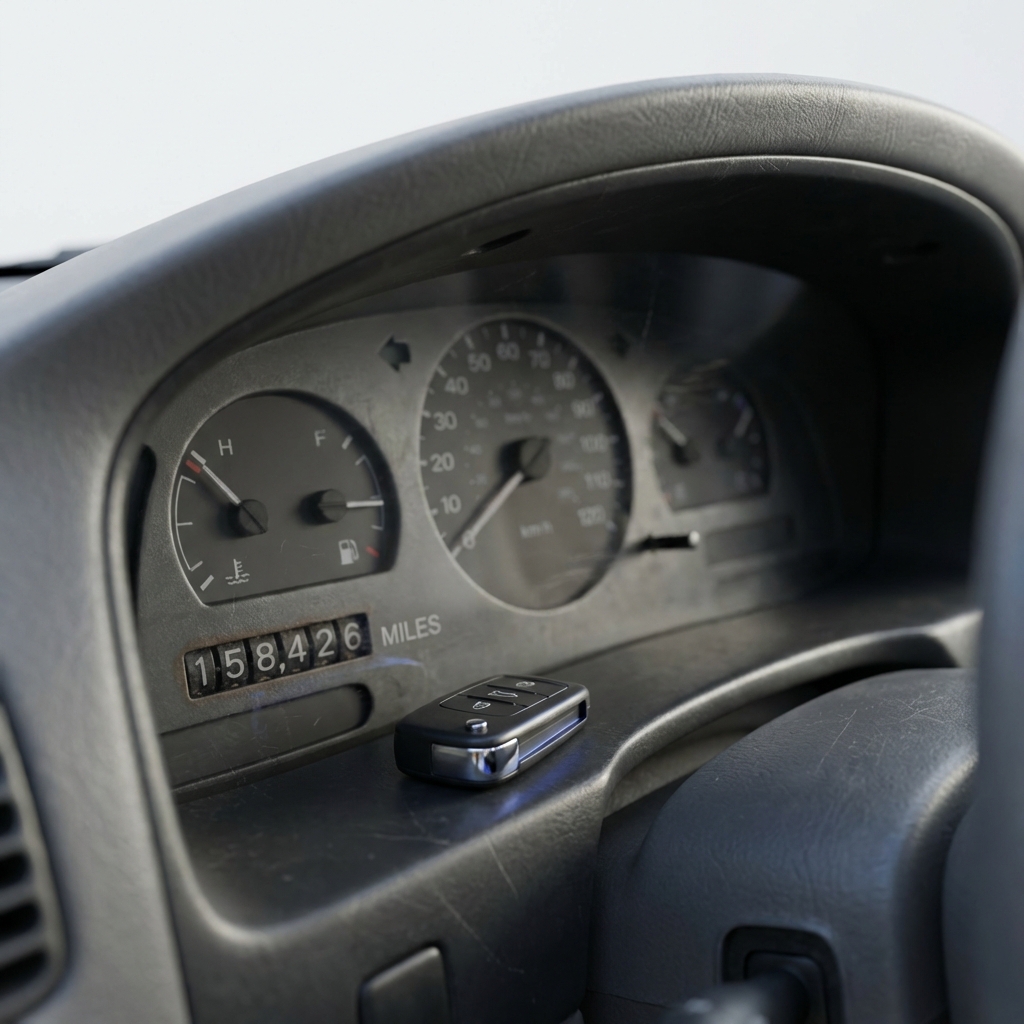
A practical, mechanic-friendly guide to understanding when mileage matters — and when it doesn’t. This article explains common mileage thresholds, how age, driving style, maintenance, and model design change the math, plus concrete inspection and negotiation steps. Learn how to assess a used car’s true risk, read a vehicle history report, and use tools like a CARFAX report to reduce uncertainty before you buy.
A rav4 used for sale can be a sensible pick for many research-oriented buyers because reliability aggregators rate the model above average and safety ratings are generally strong. This guide explains how to vet listings, what model years tend to be better, and a step-by-step checklist to reduce risk before you buy.
This guide explains how to estimate the cost of buying an R34 Skyline, with attention to import rules, condition-driven price tiers and landed cost. It shows which factors move value, how to verify history and paperwork, and offers a checklist you can follow when you search for a nissan skyline r34 for sale.
This guide helps buyers set realistic expectations for tacoma trucks for sale by explaining the main price drivers and a repeatable method to build conservative, typical, and ambitious offer ranges. It shows how the 2024 redesign, valuation guides, and vehicle history reports interact to change asking prices and reduce purchase risk.
This guide helps you turn an odometer number into a clear buying decision. Instead of a single rule, you’ll get practical thresholds, inspection checklists, negotiation tactics, and model-specific tips to judge whether a car’s mileage is acceptable for your needs.
1. Many modern gasoline cars regularly exceed 200,000 miles when maintained — so 100,000 miles is often not a deal-breaker.
2. Timing belts typically need replacement between 60k–100k miles — that predictable service can be negotiated into the price.
3. CARFAX Deals combines verified vehicle history with price context, helping buyers reduce risk by flagging accidents, title issues and service history.
How many miles is too high for used car?
Short answer: There isn’t one single number. Instead, think in context: the same odometer reading can mean very different things depending on maintenance, driving conditions, and model-specific design. To make that context easier, many buyers use a working shorthand: under 60,000 miles = low, 60,000–100,000 = mid, 100,000–150,000 = high, and 150,000+ = very high. That shorthand helps, but the real test is service history, inspection, and how the miles were accumulated.
The phrase used car mileage limit is often treated like a rulebook: people want a single line to cross off. But buying a used vehicle is more like reading a book — the odometer is a line in the book, not the whole story. Below you’ll find practical ways to evaluate mileage, spot red flags, and negotiate fairly based on known upcoming services.
The phrase used car mileage limit is often treated like a rulebook: people want a single line to cross off. But buying a used vehicle is more like reading a book — the odometer is a line in the book, not the whole story. Below you’ll find practical ways to evaluate mileage, spot red flags, and negotiate fairly based on known upcoming services.
Why mileage matters — and why it doesn't tell the whole story
Mileage is a measure of use, not a direct measure of condition. Two cars with the same odometer can be worlds apart. A compact sedan with 120,000 mostly highway miles and strict oil-change discipline can be mechanically healthier than a 70,000-mile truck used for heavy towing and off-road work. When thinking about a used car mileage limit, always pair miles with age, service history, and usage type.
Average driving in the U.S. is roughly 11,000–12,000 miles per year. So age and mileage together help translate raw numbers into realistic expectations: 100,000 miles on an eight-year-old car is reasonable, but 100,000 miles on a four-year-old model signals heavy use. For additional context on what is commonly considered "good" mileage today, see this guide at How Many Miles Is Good for a Used Car in 2024.
What is a reasonable used car mileage limit?
This is the question everyone asks first. If you prefer a simple guideline, use this working scale: under 60,000 miles = low mileage; 60,000–100,000 = mid mileage; 100,000–150,000 = high mileage; and 150,000+ = very high mileage. But remember: the used car mileage limit you accept depends on your tolerance for risk, your budget for maintenance, and the car’s maintenance history.
Pro tip: Before you commit, consider running a trusted vehicle history check — for example, run a CARFAX vehicle history report to see title history, accident records, and service entries. You can quickly run a CARFAX vehicle history report and use that information to make a smarter decision.
Key modifiers that change what the mileage number means
Four factors shift the meaning of any odometer reading:
Maintenance history: Gap-free records are the single biggest positive signal.
Engine and drivetrain design: Timing belt vs. timing chain, known transmission weak spots, and complicated turbo systems affect long-term costs.
Accident and repair history: Structural damage or poor repairs reduce remaining life and increase risk.
Driving conditions: Highway miles are easier on many components than stop-and-go city miles or heavy towing duty.
All of these change where you’d place your used car mileage limit for a particular vehicle.
Age vs. mileage: how to read both together
A car’s age tells you about time-based deterioration like rubber seals, bushings, and weathering. Mileage tells you wear from use. One hundred thousand miles on an eight-year-old car implies average annual use. But the same odometer reading on a four-year-old car means heavier-than-average use and likely more stress on wear items.
Consider how different systems wear: brakes and tires age faster with city driving; engines and transmissions can actually endure highway miles well if regularly serviced. That means when assessing the used car mileage limit, separate short-term wear from long-term mechanical stress.
Model-specific design matters
Some cars have robust powertrains that commonly exceed 200,000 miles; others develop trouble near certain thresholds. For example, many manufacturers use timing belts that require replacement between 60,000 and 100,000 miles - an obvious scheduled expense to account for. Timing chains often last longer but can suffer tensioner or guide failures later. Research your specific model before using a blanket used car mileage limit. For lists of vehicles that tend to last the longest, see coverage from Forbes and Autoweek.
Common red flags on high-mileage cars
High odometer numbers aren’t an automatic fail, but certain signs should make you pause. Watch for:
Transmission slipping, delayed engagement, or harsh shifts
Rising oil consumption between services
Recurring check-engine lights or unresolved codes
Coolant and oil mixing (possible head gasket issues)
Severe rust or structural corrosion
Patchy or missing service records
If you spot any of the above, assume higher near-term repair costs unless a detailed inspection proves otherwise. In those cases the considered used car mileage limit will be lower for you.
Pre-purchase steps that reduce risk
Follow a checklist before buying any used car, whether it’s below 60k or above 150k miles. The steps below lower your risk and let you set a sensible used car mileage limit for that vehicle:
1) Run a vehicle history report
A quality history report shows title brands, accident records, odometer checks, and sometimes service entries. It won’t replace a mechanical inspection, but it provides context. If a report shows consistent service entries and no major damage, you can be more confident even if the odometer is high. A quick check on CarFax Deals is a helpful step.
2) Get an independent pre-purchase inspection
A qualified mechanic is one of the best investments you can make. They will spot transmission or engine symptoms, signs of coolant contamination, and estimate remaining life for components like the timing system. A pre-purchase inspection converts a rough guess into a fact-based decision.
3) Drive on varied roads
A short spin around the block isn’t enough. Test on highway speeds, city streets, and a few turns. That combination reveals transmission behavior, suspension condition, and whether odd noises appear under stress.
4) Ask for invoices and service records
Service receipts and invoices are gold. They show what part numbers were used, whether critical services (timing belt, transmission flushes, coolant changes) were done, and how proactively the owner cared for the car.
Negotiation tactics tied to mileage
Negotiation should be math-based. If a critical service is due - a timing belt change, battery replacement for a hybrid, new tires, or a major transmission service - ask the seller to either complete the work or lower the price by a reasonable estimate. Use repair shop estimates to back your request. This approach keeps the conversation neutral and focused on real costs.
When a car has higher-than-average miles but a clean history, you can sometimes justify paying more than other high-mileage options because fewer unknowns remain. Conversely, low-mile used cars with poor records should be priced lower.
How electric and hybrid vehicles change the mileage rules
EVs and hybrids are a different conversation. For EVs, motor and drivetrain wear is often less of a concern than battery capacity loss. For hybrids, the hybrid battery and inverter systems can be expensive to repair. When assessing a used EV or hybrid, don’t use the same used car mileage limit rules as for gasoline cars. Instead focus on battery health reports, remaining battery warranty, and charging habits.
Always ask for battery state-of-health information. Some tools and dealers can show percentage of original capacity remaining. If the battery still holds close to original spec and a warranty remains, high mileage on an EV can be less intimidating than similar miles on an older internal-combustion vehicle.
Estimate common maintenance costs by mileage ranges
Here are typical services to expect by mileage band. These are ballpark figures and vary by make and region, but they help set expectations and guide negotiation.
0–60k miles: Routine maintenance — oil, brakes, tires, minor filters. Expect low immediate maintenance expense if the car was maintained.
60k–100k miles: Potential timing belt service, spark plugs, battery, and possibly tires and brake replacement. Budget a few hundred to a couple thousand dollars depending on needs.
100k–150k miles: Major wear items may appear: suspension components, water pump, alternator, starter, and possibly a transmission service. Costs can rise into the mid-thousands if multiple components need attention.
150k+ miles: Increasing likelihood of multiple component replacements; plan for higher maintenance frequency and the possibility of a major repair like transmission rebuild or engine work on older models.
Bearing these expectations in mind helps you judge what a fair price is for any given odometer reading and decide whether the used car mileage limit you set makes sense.
Stories from the shop: how miles translated to real outcomes
I once inspected a four-cylinder sedan with 220,000 miles. The owner had impeccable records: oil changes on time, timing belt changed per schedule, and mostly freeway commuting. The car ran smoothly and went on to give another 60,000 trouble-free miles. On the other hand, a pickup with 90,000 miles used for heavy towing had early transmission failure - the truck looked tidy but the internal wear told a different tale. Those two stories show why the used car mileage limit should be flexible and evidence-based.
The single most effective step is a combined approach: run a verified vehicle history report and have an independent pre-purchase inspection. Together they reveal title/accident history, odometer checks, documented services, and mechanical symptoms that odometer numbers alone cannot show.
Practical checklist before signing
Use this checklist to turn uncertainty into a decision you can own:
Run a vehicle history report to check titles and accident history.
Request and read service invoices for major services.
Have a trusted independent mechanic complete a pre-purchase inspection.
Test drive in varied conditions (highway, city, twisty roads).
Get local repair cost estimates for any upcoming scheduled services.
Factor all costs into your offer and negotiate accordingly.
When to walk away
Some findings are deal-breakers: title salvage branding, clear coolant/oil mixing, a slipping transmission, or a seller who refuses a mechanic’s inspection. In these cases, no reasonable used car mileage limit will make the purchase wise.
Model examples and rules of thumb
Every model has tendencies. For trucks used in heavy towing, drop your acceptable used car mileage limit by a notch; for highway-driven sedans, you can tolerate higher miles. Read owner forums and reliability guides for your exact model — they’ll tell you whether transmissions tend to fail early, whether timing belts are an expense, or whether engine oil consumption rises after a certain mileage.
Also remember warranties: a certified pre-owned vehicle or one with remaining factory powertrain warranty is worth a premium because it reduces risk of major bills shortly after purchase.
Final practical tips
1) Prioritize documentation — it beats raw odometer numbers. 2) Use a vehicle history report and a mechanic’s inspection as standard tools. 3) Negotiate on upcoming predictable services. 4) If you’re comfortable with DIY repairs or have a trusted mechanic, you can accept higher miles for a lower purchase price.
When in doubt, ask for the invoices, run a detailed vehicle history check, and get a professional’s read on the car.
Where to go for help
If you want help interpreting a specific vehicle’s report or figuring out expected costs, use the vehicle history and deal-insight tools available through trusted services. A quick, tactful step like running a CARFAX report can clarify whether a car’s mileage tells a worrying or reassuring story.
Reduce uncertainty — check a vehicle’s history before you buy
Ready to check a vehicle’s history? Run a trusted vehicle history report now and reduce uncertainty before you negotiate: Get your CARFAX report.
Used-car buying is always about trade-offs. Miles matter, but they work together with age, maintenance, design, and how the car was driven. Prioritize a clean service record and a thorough inspection and the odds are you’ll find a dependable car even if the odometer reads high.
Next step: run a report, bring a mechanic, and match price to the car’s real condition - not just its odometer.
Not automatically. Many well-maintained cars with 100,000 miles have significant life left. Focus on service history, known model reliability and the results of a pre-purchase inspection. If the car has consistent oil changes, documented timing-system work where applicable, and no major accident history, 100k can be reasonable — but expect some mid-term wear items.
Not always. Very high-mileage cars can be sensible purchases if they have excellent documentation and have been maintained by careful owners. They come with less warranty protection and a higher chance of component failures, so factor in likely upcoming maintenance. If you’re DIY-savvy or have a trusted mechanic, a well-documented 150k+ vehicle can be a good value.
Run a trusted vehicle history report and get an independent pre-purchase inspection. A history report like the one available through CARFAX Deals flags title issues and past accidents; an inspection reveals mechanical symptoms. Use both pieces of information together to make a fair offer or walk away if major risks appear.
In short: miles matter, but context matters more — a well-documented 100k-mile car can be a great buy; a neglected 60k-mile car can be a headache. Take a report, get an inspection, and buy the story, not just the number. Safe driving and happy shopping — may your next odometer tell a good story!

 Blog
Blog