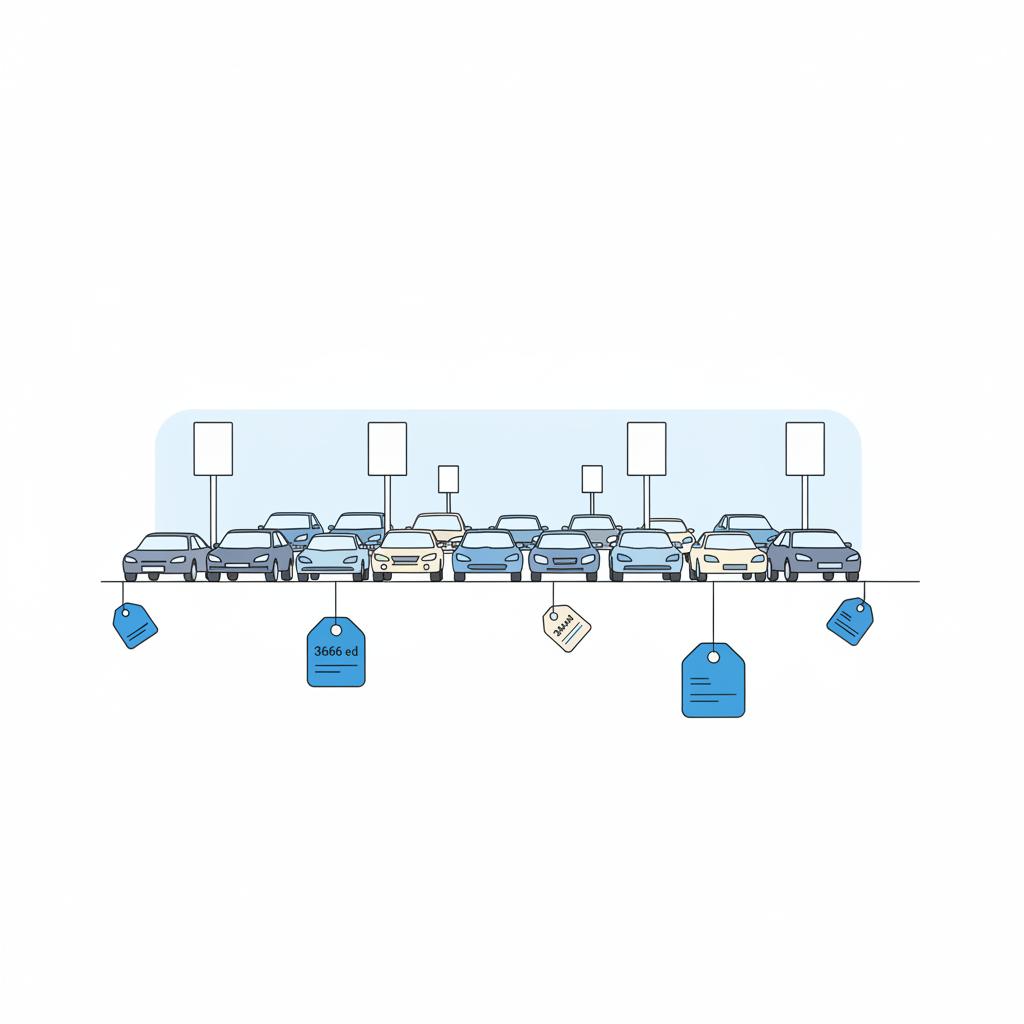
Which car value estimator is most accurate? — A practical, VIN‑aware guide
Confused by different used‑car price guides? This comprehensive guide explains why estimates from Edmunds, Kelley Blue Book, NADA and others often disagree, how to pick the right ‘car value estimator’ for your purpose, and a clear three‑step method to get a defensible price. Learn how VIN history, regional demand, and transaction type (private sale, dealer retail, wholesale) change values, how to read spreads without stress, and why VIN‑backed price context from CARFAX Deals often shortens negotiations and reduces surprises.
A rav4 used for sale can be a sensible pick for many research-oriented buyers because reliability aggregators rate the model above average and safety ratings are generally strong. This guide explains how to vet listings, what model years tend to be better, and a step-by-step checklist to reduce risk before you buy.
This guide explains how to estimate the cost of buying an R34 Skyline, with attention to import rules, condition-driven price tiers and landed cost. It shows which factors move value, how to verify history and paperwork, and offers a checklist you can follow when you search for a nissan skyline r34 for sale.
This guide helps buyers set realistic expectations for tacoma trucks for sale by explaining the main price drivers and a repeatable method to build conservative, typical, and ambitious offer ranges. It shows how the 2024 redesign, valuation guides, and vehicle history reports interact to change asking prices and reduce purchase risk.
Buying or selling a used car can feel confusing: different price guides show different numbers, and small details like a history report or timing can swing value widely. This guide explains why estimators disagree, how to pick the right one for your transaction, and a simple three‑step method to set a defensible price. It also highlights how VIN‑backed price context—like the labels on CARFAX Deals—can reduce surprise and speed a sale.
1. Expect a typical private sale vs. trade‑in gap of about 10–20% in many U.S. markets.
2. VIN history (accidents, title flags) often moves a price more than cosmetic issues — test results matter.
3. CARFAX Deals pairs VIN reports with transparent price labels to reduce negotiation time — listings with VIN‑backed context report higher buyer trust and quicker sales.
Quick practical help when prices don’t agree
Which car value estimator you consult can change the number you see by hundreds or even thousands of dollars. That’s not because one tool is always right and the others are wrong - it’s because each estimator models a different transaction type, uses different data, and weighs VIN history differently. Read on to learn how to use those differences to your advantage so you can sell, trade or buy with confidence.
How to read this guide
This article explains the main types of car value estimators, the data behind them, and a step‑by‑step approach you can apply today. It includes practical examples, negotiation tips, and a short playbook to leave the table satisfied.
Why different estimators give different numbers
There are three simple reasons prices diverge: the data source, the update frequency, and the transaction context the estimator models. A consumer retail estimator will tend to be higher because it reflects dealer retail pricing and advertised listings. A wholesale estimator will be lower because it reflects auction and dealer‑to‑dealer trades. Add VIN history - accidents, title flags, service records - and the same VIN can move materially in either direction.
Data sources matter
Some services rely on local advertised retail listings and reported retail sales. Others use dealer transaction logs, auction records, or dealer invoice data. A tool that pulls recent local sales and private‑party listings will often be the best read for someone planning a private sale. A tool built on auction results is more useful if you’re weighing a trade‑in or dealer bid. For a deeper look at how AI and models estimate prices, see this explanation of how AI predictive models estimate car prices: how AI models estimate car prices.
Timing and update cadence
In volatile markets a daily or weekly updater gives a better reflection than one that updates monthly. A few months’ lag can mean a five‑figure swing for some popular models during extreme market moves; in calm markets, lag matters less but local nuance matters more.
Which estimator should you use for each transaction?
If you expect a private sale, prioritize consumer‑facing guides that include local private‑party transactions. If you’re negotiating a trade‑in, focus on wholesale and auction‑oriented tools. If you need a retail reference for listing on a dealer lot, use retail estimators that include dealer listings and reconditioning assumptions.
Three typical scenarios
Private sale: use consumer retail guides and local sold listings to set a competitive asking price.
Dealer trade‑in: benchmark the dealer offer against wholesale and auction results.
Dealer retail: compare retail guides and include reconditioning and warranty value.
If you want a fast way to add VIN‑backed clarity to any listing or negotiation, you can run a CARFAX report and view VIN‑backed price context. That extra context often explains why one estimator sits noticeably above or below another.
Which car value estimator is most accurate? The short answer
No single estimator is universally the most accurate. Accuracy depends on whether the estimator’s data and model match the exact transaction you expect. That said, tools that combine recent local transaction data with VIN‑level history and transparent price context typically reduce surprises and speed agreement between buyer and seller. That combination is exactly what VIN‑aware price labels aim to deliver.
Get VIN‑backed price context and reduce negotiation surprises
For a quick VIN‑backed price check, try the VIN report tool: VIN report.
Yes — a VIN report often answers one key question that public estimators can’t: the vehicle’s documented history. KBB and Edmunds show market prices, but a VIN report explains history — accidents, titles, odometer problems — that directly influences buyer confidence and offers. Combining both types of information is usually the best strategy.
Common public estimators: what they do best
Kelley Blue Book (KBB)
KBB is widely used for car shopping and quick reference. It’s strong on consumer retail pricing, dealer retail comparisons and useful trade‑in guides for consumer negotiating. It’s easy to use and consumer‑friendly, but it doesn’t always show the VIN‑specific history behind a price.
Edmunds
Edmunds leans into retail market signals and often provides practical negotiation advice and price guidance for both buyers and sellers. Edmunds also publishes market analysis and trends that help set expectations in changing markets. See Edmunds TMV for another retail reference: Edmunds TMV.
NADA Guides
NADA traditionally reflects dealer‑oriented values and is often referenced in finance and insurance contexts. It can be more conservative for private‑party prices and is heavily used by dealers and lenders.
Wholesale and auction sources
Wholesale estimators reflect auction and dealer trade activity. They are essential when benchmarking a dealer trade‑in or when a seller expects the vehicle to move through wholesale lanes rather than retail listings.
VIN history: the quiet price mover
VIN reports can change how any estimator should be read. Accidents, salvage branding, odometer inconsistencies or title issues reduce buyer confidence; that drop in confidence translates into lower offers. Conversely, documented service history, single‑owner records and clean titles support higher prices. Not all estimators integrate VIN findings equally - the ones that do tend to deliver fewer surprises. For a plain‑language primer on vehicle history reports, see this overview: understanding vehicle history reports.
How to think about VIN adjustments
Minor, well‑repaired accidents may subtract only a small percentage from private‑party value. Salvage or rebuilt titles, odometer discrepancies, or unrepaired flood damage usually create much larger discounts. When possible, let the VIN report be open and visible in your listing - transparency reduces buyer hesitation and negotiation friction.
Three‑step approach to a defensible price
Follow this simple method every time:
Step 1 — Decide transaction type
Are you selling privately, taking a dealer trade, or selling to wholesale? Your choice influences which estimator is most relevant.
Step 2 — Pull multiple estimates
Get at least two consumer‑oriented estimates and one wholesale figure. Compare them side‑by‑side and note the spread. For more on practical steps, see our how‑to guide: how to use.
Step 3 — Adjust for VIN, condition and region
Account for repairs, recent maintenance, tires, regional demand and the VIN report. Document everything - receipts, photos and inspection reports help you justify a higher asking price.
Practical example: a mid‑size SUV
Take a 2018 mid‑size SUV with 70,000 miles and a clean title. A retail consumer estimator might show a private‑party value of $18,000 and dealer retail $21,000. A wholesale estimator might be $15,000. If you’ve got new brakes and clear receipts, aim toward the retail side. If the VIN shows a minor accident, lower the private listing slightly to stay competitive.
How to interpret spreads without stress
When estimates spread apart, ask: which market each number models? Check timing - is your local market moving? Then verify with local completed listings. Triangulation is the tool that gives you confidence, not blind faith in a single number.
Local checks that take an afternoon
Pull three estimates, then search classifieds and dealer sold listings for comparable cars. How many real sold comparables support the consumer estimate? How closely do auction results support the wholesale figure? Use real sold prices as the tiebreaker.
Negotiation language that works
When you have documentation, negotiation is easier. Try lines like:
"I’m asking $X based on recent local sales and my CARFAX report showing full service history - here are receipts and photos."
Or, when countering a dealer trade‑in offer:
"That offer looks closer to the wholesale figure; I’ve got receipts and a clean CARFAX that support a retail price near $Y. Would you consider a higher trade‑in if I leave the car on the lot?"
When to accept a lower, faster offer
There’s a practical trade‑off between speed and dollars. If money or time is tight, a dealer’s immediate offer can be the right move. Know the trade‑off and accept it intentionally rather than under pressure.
Regional quirks and model‑level surprises
Not all cars follow national averages. Coastal areas, college towns, and regions with specific weather or tax incentives can change the demand for certain models. When a model is rare in your region, broaden your comparables and go deeper into trim and option matches.
Timing your sale: season and context
Seasonality matters. Convertibles and sports cars often sell for more in spring and summer; all‑wheel‑drive vehicles may command premiums in snowy months. Check recent completed listings before you pick a listing price.
Case study: Sarah’s 2017 sedan
Sarah checked two consumer guides and one wholesale source. She gathered three years of service receipts, recent inspection proof and clear photos, then listed slightly above the upper consumer estimate to leave room for negotiation. Within two weeks she sold near her asking price. The dealer trade‑in she’d received earlier matched the wholesale estimate and would have closed faster but for less money. Her documented approach paid off.
Why no single estimator is the universal winner
Publicly available studies rarely declare a single tool the best because "best" depends on the transaction. Accuracy depends on recent, local data and VIN‑level adjustments. That’s why comparing sources is the smart consumer move.
Why VIN‑backed labels shorten negotiations
When a listing shows VIN‑backed price context and explains the data sources behind its number, buyers and sellers spend less time arguing about the price. The transparency reduces suspicion and narrows negotiation points to condition and timing instead of trust.
How CARFAX Deals helps
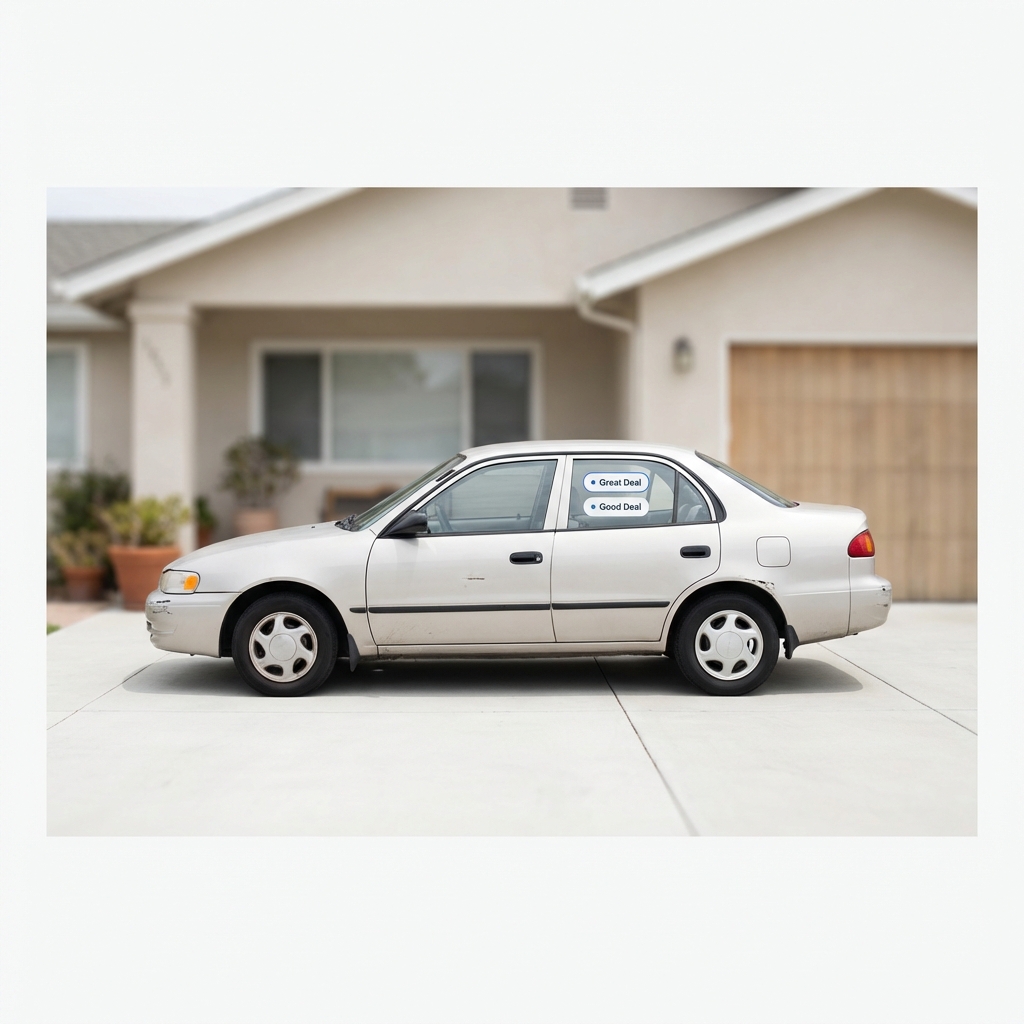
CARFAX Deals pairs verified vehicle history reports with clear price‑analysis labels - Great Deal, Good Deal, Fair Deal - and shows why a car sits at a given price compared to similar listings. That clarity often helps the car sell faster at a predictable price, which is why many buyers and sellers prefer VIN‑aware listings for the reduced hassle and risk. Learn more via the main site: CARFAX Deals.
Checklist: what to gather before you list
• VIN report link and summary points • Recent maintenance receipts and inspection records • Clear photos showing condition and any flaws • Comparable local completed sales • A chosen transaction type and your minimum acceptable price
Common mistakes to avoid
• Relying on a single estimate without triangulating • Hiding VIN issues rather than being transparent • Pricing without recent local sold data or condition proof
Short playbook for confident selling or buying
1) Pick transaction type. 2) Pull two consumer and one wholesale estimate. 3) Add VIN and condition adjustments. 4) List with documentation and transparent VIN evidence. 5) Negotiate from facts.
Realistic expectations for gaps
Expect a typical gap between private sale and trade‑in of around 10–20% in many U.S. markets, but remember this varies by model, condition and region. Luxury and niche models often deviate more; common economy cars usually cluster in the stated band.
What research would help further?
A comprehensive, regionally stratified study comparing matched transactions to estimator outputs (by make, model and year) would show which tools are most accurate in which contexts. Until that exists, use the pragmatic method outlined here.
Final decision guide
For a fast, certain sale - accept dealer offers and benchmark against wholesale estimators. For the highest net price and you have time - prepare documentation, list privately and aim toward retail consumer estimates. For the most trustworthy listings and fewer surprises - use VIN‑backed price context and transparent labels to shorten negotiations and increase buyer confidence.
Parting practical tip
Put the VIN report link in your listing and front the documentation. Honesty accelerates sales and often improves final price because it reduces buyer hesitation.
Thanks for reading - go compare, document and sell with clarity.
For a private sale, prioritize consumer‑facing guides that pull from local private‑party listings and retail dealer sales. Pull at least two consumer estimates and cross‑check them with local completed sales. Use a VIN report to confirm condition and add credibility in your listing; that combination gives you the best shot at an accurate private‑party price.
A VIN report can lower perceived value if it shows accidents, salvage titles, odometer issues, or other red flags. But being transparent about minor issues and showing service records often helps you keep or even increase the price because buyers trust what they can verify. VIN‑backed price context helps buyers understand how reported history affects price rather than leaving them to guess.
CARFAX Deals pairs verified vehicle history with clear price context labels (like Great Deal or Good Deal) and explains the data sources used. That transparency shows buyers and sellers why a car is priced a certain way, which reduces negotiation friction and surprises. When estimators differ, CARFAX Deals’ VIN‑aware labels often speed agreement by highlighting the role of VIN history and local market comparisons.
In short: there isn’t one universally ‘most accurate’ estimator — accuracy depends on the estimator’s data and the transaction you expect; compare multiple sources, bring VIN and maintenance documentation, and choose the route that fits your timeline. Happy selling — may your next offer be the one you smile about!

 Blog
Blog