What car has the fewest problems? Practical steps to find affordable cars near me
Searching for affordable cars near me is about more than price. Use dependability studies, repair-cost data, safety ratings, and VIN-level vehicle history reports to prioritize listings that tend to have fewer owner-reported problems. This guide gives a step-by-step framework, checklist, and local shopping scenarios to help you compare nearby options with less uncertainty.
A step-by-step workflow for estimating a truck's market value that centers on comparing consumer valuation tools, adjusting for mileage and condition, and checking wholesale market signals. The guide explains private-party, trade-in and dealer retail values and shows how a vehicle history report and pricing insights can change an asking price.
This guide helps research oriented buyers evaluate suv used cars for sale under $25,000 by combining safety ratings, reliability data, local pricing context, and vehicle history checks. It outlines a simple framework, a pre visit checklist, and a decision scoring worksheet so you can compare finalists before contacting a dealer. Use the steps here to narrow candidates and confirm risk signals with a vehicle history report and a pre purchase inspection.
When searching suv used cars for sale, prioritize model year, trim and powertrain before choosing a make or model. This guide explains how safety ratings, dependability studies and local pricing insights combine to produce a short list you can verify with a vehicle history report. It also provides a stepwise checklist you can use before contacting a dealer.
Searching for affordable cars near me often feels like balancing price, condition, and future costs. This guide focuses on verifiable signals that tend to predict fewer owner-reported problems: long-term dependability studies, component-level repair-cost data, safety ratings, and VIN-level recall and complaint checks.
Rather than offering a single "best" model, this article gives a practical framework you can apply to any local listing. The goal is to help you narrow options quickly, verify the most important documentary signals, and decide which cars deserve a test drive and inspection.
Combine dependability studies, repair-cost patterns, safety ratings, and VIN checks to prioritize low-problem used cars nearby.
Pull a vehicle history report and confirm open recalls by VIN before scheduling a test drive.
Use a short, repeatable checklist to compare nearby listings objectively and reduce post-purchase surprises.
How to use an "affordable cars near me" search to prioritize cars with the fewest problems
When you search for affordable cars near me, focus first on signals that predict fewer owner-reported problems over time. Large dependability studies and owner surveys identify models that tend to have lower failure rates, and those rankings are a useful starting point for local searches J.D. Power vehicle dependability study.
For used-car shoppers, "fewest problems" should combine several measures: long-term owner-reported failures, the parts and systems that most often fail, safety performance by model year, and recall or complaint history. Treat these as signals, not guarantees, and always follow up with VIN-level checks before visiting a dealer How Consumer Reports measures car reliability.
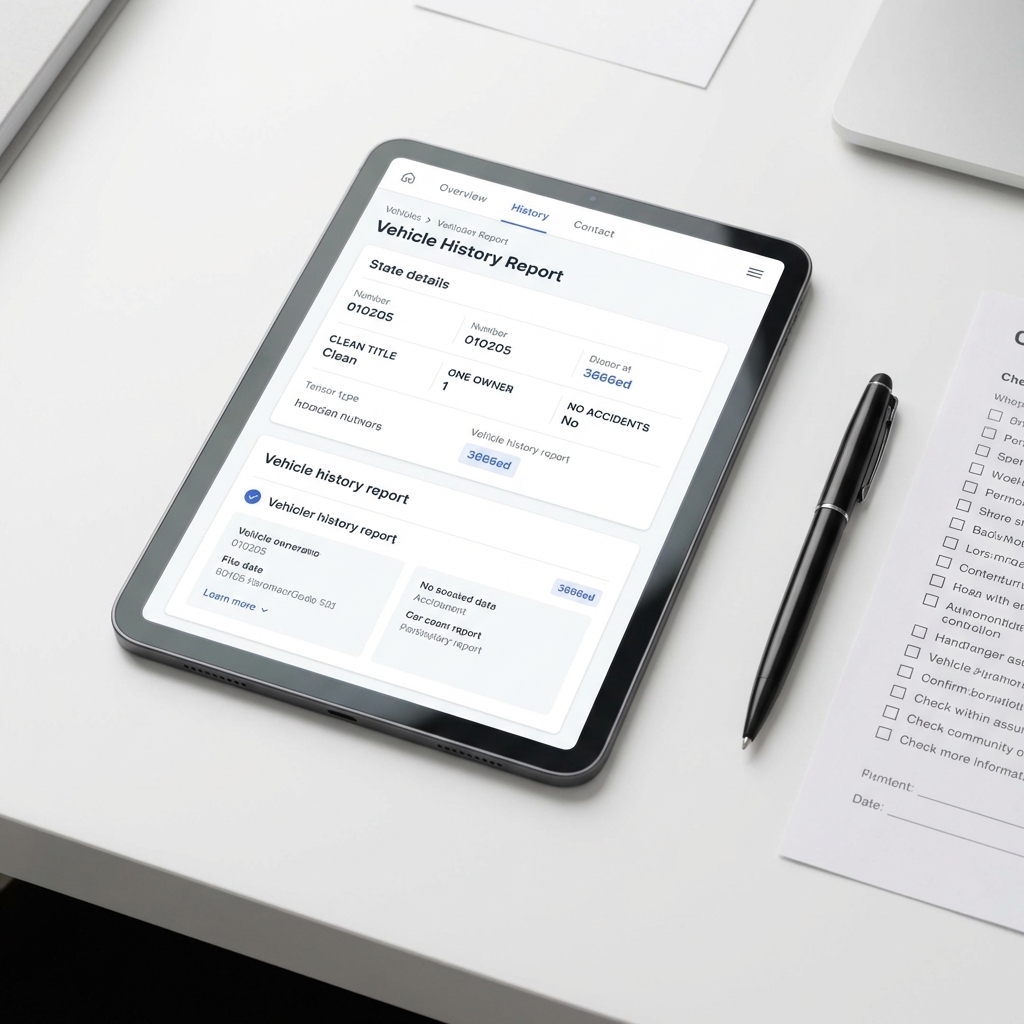
Run Vehicle History Report for Nearby Listings
If you plan to compare nearby listings, consider pulling a vehicle history report early in your process to confirm title status and recent service entries.
Local phrasing like "affordable cars near me" mainly affects availability and price. The same reliable model can appear at very different prices across regions, which makes model-year, trim, and VIN-level checks essential when you flag a candidate in your area Edmunds guide to best used cars for reliability.
Keep the brand-level guidance light. Use brand and model rankings to narrow options, then move quickly to model-year comparisons and VIN verification to reduce uncertainty RepairPal reliability and repair-cost data.
A practical framework: five checks to apply when you see "affordable cars near me" listings
Use an ordered checklist so each nearby listing is screened consistently. Start broad, then confirm specifics by VIN and service records before a test drive.
Step 1, check dependability rankings and common failure areas. Brand- and model-level studies point to recurring problem categories that you should verify for a given year and trim J.D. Power vehicle dependability study.
Step 2, estimate repair-cost exposure by consulting component-level patterns. Powertrain, electrical and infotainment systems, and accessory failures often drive out-of-pocket repair bills; RepairPal and similar sources summarize which systems are most often involved and typical cost ranges RepairPal reliability and repair-cost data.
Step 3, pair safety with reliability. Check IIHS crashworthiness and crash-avoidance ratings for the model year and trim you are considering to avoid choices that look reliable on paper but scored poorly in safety tests IIHS Top Safety Picks and ratings.
Step 4, do VIN-level follow-up. Before you commit time or a deposit, run a VIN check to confirm title status, ownership history, service entries, and any open recalls or complaints on file NHTSA recall and complaints.
Step 5, use price-analysis labels and filters to prioritize clean-title, single-owner, and well-maintained cars while remembering these filters reduce uncertainty but do not eliminate deferred maintenance or future failures Edmunds guide to best used cars for reliability.
Decision checklist: what counts when comparing affordable cars near me
Set up a short scoring system before you call a dealer so comparisons are objective. Track numeric and documentary signals for each nearby listing.
Weigh signals based on your priorities: families may prioritize IIHS safety ratings, budget buyers may emphasize repair-cost projections, and all buyers should gate choices with a VIN report and pre-purchase inspection.
Critical numeric signals include owner-reported problem rates from dependability studies, recall counts, and average repair-cost estimates for common failures; use these to rank candidates before inspection J.D. Power vehicle dependability study.
Documentary signals to verify on the vehicle history report are title status, single-owner indicator, service history entries, and reported accidents where present. Treat "no accident reported" as helpful but not conclusive and corroborate with service records and inspection NHTSA recall and complaints.
Weighing safety, reliability, and repair cost means prioritizing what matters most for your situation. For a family, an IIHS top safety pick may outrank a model with slightly better repair-cost projections; for a first-time buyer on a budget, lower average repair costs may be more important IIHS Top Safety Picks and ratings.
Use a simple points system: give 3 points for low owner-reported problems, 2 points for clean title and single owner, and 1 point for a favorable RepairPal repair-cost profile. Add or adjust weights based on your priorities and then gate candidates with a VIN report and pre-purchase inspection RepairPal reliability and repair-cost data.
How to read and use vehicle history reports and VIN checks for nearby affordable cars
A vehicle history report collects the documentary signals that reduce uncertainty. Focus first on title status, single-owner flags, and service history entries; these items change the likelihood of hidden issues and deferred maintenance NHTSA recall and complaints.
Title status shows whether the car has a clean title, salvage branding, or other designations that require careful inspection. Ownership history and mileage checks give context on use patterns; many repeated owners or extremely low mileage can both be reasons to probe further with service records Edmunds guide to best used cars for reliability.
Pull NHTSA recall records and complaint counts by VIN to identify outstanding safety issues. Open recalls or a cluster of owner complaints for a model year are a red flag and should be resolved before purchase NHTSA recall and complaints. You can also run a VIN report on CarFax Deals.
Do not assume "no accident reported" proves a problem-free history. Use service history entries and a pre-purchase inspection to corroborate the report. Pull a VIN report as soon as a listing looks promising, then decide whether to schedule an inspection or ask the dealer for recent maintenance documentation Edmunds guide to best used cars for reliability.
Compare models: using dependability studies, repair-cost data, and safety ratings for affordable cars near me
J.D. Power and Consumer Reports provide complementary signals: one emphasizes owner-reported problems across many years while the other explains methodology and aggregates owner experiences; use them together to spot consistent model leaders How Consumer Reports measures car reliability.
RepairPal adds component-level detail that helps estimate out-of-pocket risk by showing which systems-powertrain, brakes, electrical-create the largest repair bills on average RepairPal reliability and repair-cost data.
IIHS crashworthiness and crash-avoidance tests matter especially for families and safety-minded buyers. Compare model-year ratings because a redesign or equipment change can shift safety scores substantially from one year to the next IIHS Top Safety Picks and ratings.
Short comparison example: if two nearby sedans have similar mileage and price, prefer the one with lower owner-reported problem rates in dependability studies, fewer recall records on VIN checks, and better IIHS ratings. Use RepairPal estimates to project likely repair outlays and factor that into your short-list score J.D. Power vehicle dependability study.
Always check model year and trim when synthesizing rankings. A high-ranking model family may still have a year or trim with known issues, so model-level signals must be narrowed to the exact year and equipment before you act How Consumer Reports measures car reliability.
Common mistakes buyers make when hunting for affordable cars near me
Relying on low price or low mileage alone is a frequent mistake. Missing maintenance or open recalls can turn a cheap purchase into expensive ownership quickly NHTSA recall and complaints.
Treat "no accident reported" as an informative but incomplete signal. Ask for service records, inspect repair photos, and schedule a pre-purchase inspection to confirm the condition Edmunds guide to best used cars for reliability.
Be skeptical of listings without a VIN. A missing VIN or a vague service history should be a reason to pause and request documentation. Certified pre-owned programs reduce uncertainty but do not eliminate deferred maintenance or future failures Edmunds guide to best used cars for reliability.
Practical scenarios: three nearby shopping examples and how to apply the checks
Scenario A: First-time buyer on a budget. Goal: reliable daily transport with low expected repair cost. Prioritize models with low owner-reported problem rates and modest RepairPal repair-cost profiles, then require a VIN report and recent service history before visiting RepairPal reliability and repair-cost data.
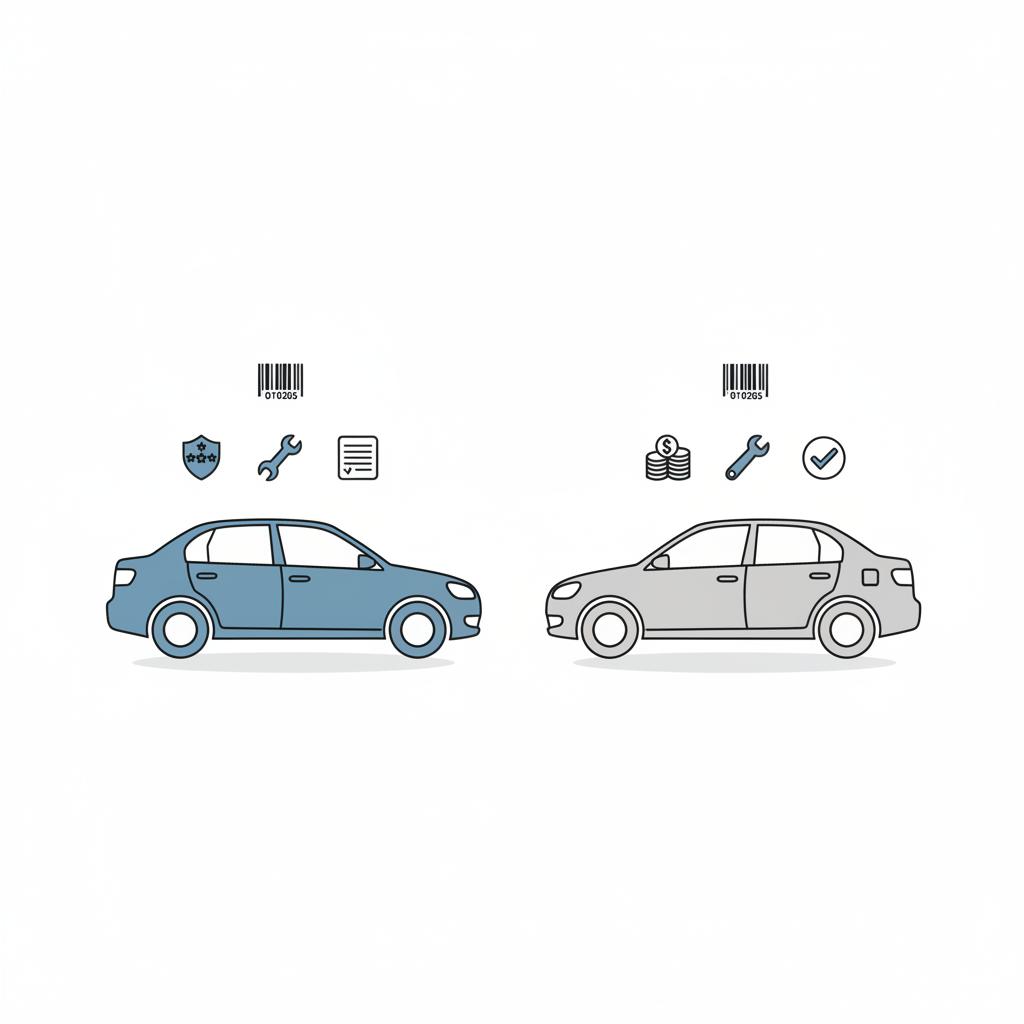
Quick VIN and provenance check for a nearby listing
Run before scheduling a test drive
Scenario B: Family prioritizing safety and reliability. Goal: prioritize IIHS crashworthiness and crash-avoidance ratings and check dependability rankings for the model year. Ask for service records that show routine maintenance and confirm open recalls are addressed IIHS Top Safety Picks and ratings.
Scenario C: Buyer focused on low total cost to own. Goal: weigh repair-cost projections, fuel and maintenance patterns, and ownership history. Use RepairPal estimates and owner-reported failure patterns to predict likely outlays, then gate the purchase with a VIN report and a pre-purchase inspection RepairPal reliability and repair-cost data.
For each scenario, next steps are the same: pull a VIN report, schedule an independent inspection, and confirm recall resolution before signing anything. Pricing insights and local filters help prioritize listings but should not replace these verifications Edmunds guide to best used cars for reliability. See our how-to guide.
Quick checklist to run before you call the dealer on an affordable car near me listing
Immediate online red flags: no VIN on the listing, no service history, salvage or branded title, or a cluster of owner complaints for the model year. If any appear, pause and investigate further with a VIN report NHTSA recall and complaints.
Top online checks to run: pull a VIN report, check NHTSA recall entries by VIN, look up dependability rankings for the exact model year, and consult RepairPal for likely repair costs. These steps narrow true low-risk options among nearby listings RepairPal reliability and repair-cost data.
Questions to ask the dealer: request the VIN, ask why the vehicle is for sale, request recent service records, confirm any warranties, and ask for evidence that recalls (if any) were completed. Prioritize listings where the dealer will share documentation promptly Edmunds guide to best used cars for reliability.
Inspection priorities: brakes, tires, obvious leaks, evidence of body repair, and a test drive focused on drivetrain and electrical systems. If the inspector flags anything significant, either get a firm repair estimate or walk away J.D. Power vehicle dependability study.
Wrap-up: next steps and where to verify model-specific questions
The most predictive signals for fewer problems are consistent dependability rankings, component-level repair patterns, safety ratings, and VIN-level recall and complaint history. Combine these signals rather than relying on a single ranking J.D. Power vehicle dependability study.
Concrete next steps: pull a vehicle history report for any promising listing, schedule a pre-purchase inspection, and check NHTSA recall records by VIN. Use price-analysis labels and local pricing context to prioritize test drives, but gate purchases on documentary verification and inspection NHTSA recall and complaints.
CarFax Deals can serve as a decision-support layer to surface vehicle history reports and pricing insights for nearby listings, which may help you compare options faster while you confirm VIN-level details. Use the platform to reduce uncertainty, not as a proof of condition. Read more on our blog.
Pull a VIN report as soon as a listing looks promising, before scheduling a test drive. It reveals title status, ownership history, service records, and open recalls that can change your next steps.
No. Dependability rankings identify models with lower reported problems on average, but they do not guarantee an individual vehicle's condition. VIN checks and an inspection are still required.
No. Price-analysis labels and filters help prioritize candidates but do not replace a vehicle history report, recall check, or an independent pre-purchase inspection.
A careful local search pairs aggregated rankings with VIN-level verification and inspection. Use dependability studies and repair-cost data to create a short list, then confirm title, service history, and recall status by VIN before you visit.
If you want to speed VIN checks for nearby listings, use a vehicle history report flow on CarFax Deals to surface ownership and service context alongside local pricing insights.

 Blog
Blog