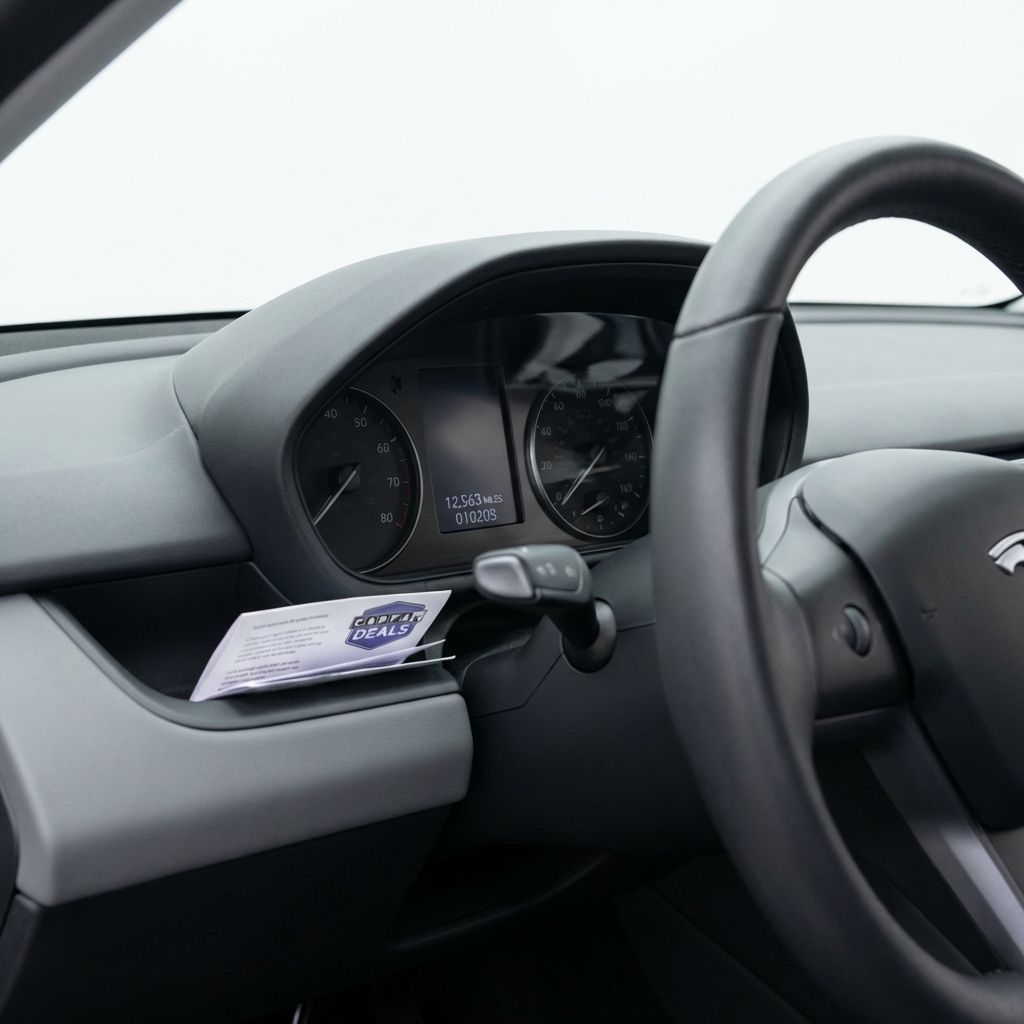
What is the best mileage to buy a second hand car?
A practical, human-centered guide that explains how to read a used car’s odometer, what “good mileage” really means by age and use, and why maintenance history, driving type and vehicle class matter more than a single number. Learn simple rules of thumb, inspection and negotiation tips, hybrid and diesel considerations, and how CARFAX Deals can help you compare verified histories and pricing before you buy.
Carfax coupon codes rarely work, and the codes listed on coupon sites are usually expired. The discounts that do exist are bundles (three reports for $64.99, five for $99.99), AAA member pricing, and free reports from dealers and listings. The simplest guaranteed discount is CarfaxDeals at $7.99 per report versus $44.99 at Carfax.com.
A Carfax VIN lookup takes the 17-character vehicle identification number and returns the car's recorded history: accidents, title brands, odometer readings, owners, and service records. Free VIN tools only decode specs or check recalls and theft. The full Carfax report costs $44.99 on Carfax.com and $7.99 at CarfaxDeals.
You can get a free Carfax report from the Carfax.com used car listings, a dealer website, the seller, Carfax Car Care (for a car you already own), or listing sites that include one. There is no free report for any VIN you type in. When no free report exists, a paid one costs $44.99 at Carfax or $7.99 at CarfaxDeals.
When you’re scanning listings, the odometer often feels like the most honest number on the page. But asking “What is the best mileage to buy a second hand car?” is only the first step. This guide walks you through age-adjusted rules of thumb, how different types of miles affect wear, why maintenance history matters more than a single number, and practical steps — inspection checklists and negotiation scripts — so you can buy with confidence.
1. A five-year-old car with roughly 60,000–75,000 miles generally falls in the “good mileage” zone for typical U.S. use.
2. Highway miles are usually gentler on a vehicle than stop-and-go city miles — the same odometer number can mean very different future costs.
3. CARFAX Deals aggregates listings from thousands of dealerships and pairs each listing with verified CARFAX Vehicle History Reports and pricing labels to reduce risk when comparing used cars.
Understanding the odometer: why asking "What is the best mileage to buy a second hand car?" is only the start
What is the best mileage to buy a second hand car? It’s a question every buyer asks when scrolling listings, and it’s the first thing many ads shout. But mileage alone doesn’t tell the whole story. Think of the odometer as one sentence in a longer book about the vehicle’s life — important, but incomplete.
- Average use: about 12,000–15,000 miles per year. - Low use: under ~12,000 miles per year. - High use: consistently above ~18,000–20,000 miles per year.
Translated: for a five-year-old vehicle, under 60,000–75,000 miles usually lands in the “good mileage” zone. For a ten-year-old car, under 120,000–150,000 miles is often acceptable. But remember: those are starting points, not guarantees.
Check verified reports and pricing before you buy
If you want a quick way to pull a verified vehicle summary while you shop, try a VIN report on CARFAX Deals: VIN report.
Why the question “What is the best mileage to buy a second hand car?” needs context
Mileage matters, but how those miles were earned matters more. Highway miles are generally gentler: long, steady RPMs, fewer cold starts, and less braking. City miles — short trips, stop-and-go, idling — are harder on engines, transmissions, brakes and emissions systems. A ten-year-old car with 130,000 highway miles and a perfect service history can be a safer bet than a five-year-old car with 60,000 city miles and no receipts (Autotrader explores miles vs age): https://www.autotrader.com/car-shopping/whats-more-important-when-buying-car-miles-or-age-240611.
If you want a fast way to compare vehicles with verified service records and transparent pricing labels, check a CARFAX Deals report for listings that include CARFAX Vehicle History Reports and price context. That combination makes it easier to answer the question: "What is the best mileage to buy a second hand car?" for the specific cars you're looking at.
Types of miles and duty cycles: the real drivers of wear
Think of mileage as different currencies. Highway miles are like slow, steady deposits; stop-and-go city miles are small, frequent withdrawals that wear down parts faster. Then there’s duty cycle: towing, commercial service, rideshare, and delivery roles accelerate wear in very different ways. Diesel pickups and long-haul trucks are built for sustained loads and can often exceed odometer figures that would alarm a small gasoline sedan.
Hybrids and electrified systems — the special case
Hybrids add complexity. Many hybrid gasoline engines see less mechanical stress because the electric system assists acceleration and allows the engine to run in its efficient band more often. But hybrid battery packs age differently than mechanical parts. Some packs last a decade or more; others may need attention earlier. Always ask for battery health data and any dealer-logged checks.
The odometer should start the conversation, not end it. Use mileage to guide follow-up questions about maintenance, driving type and looming services; then validate with a vehicle history report and a pre-purchase inspection to make the final call.
Short answer: it should start the conversation, not close the deal. A vehicle history report and pre-purchase inspection will tell you the rest.
Maintenance history: the single best predictor of reliability
Across hundreds of used-car decisions, the strongest signal of future trouble (or the lack of it) is consistent, documented maintenance. Oil change stickers, dealer service stamps, and receipts for major items (timing belt or chain service, transmission service, coolant system replacement) are worth more than a few thousand miles on the odometer.
Why documentation beats a low odometer: small problems fixed early rarely grow into big, expensive failures. A low-mileage car with spotty service can harbor deferred maintenance — old fluids, overdue belts, and worn suspension components — that will cost you more down the road than the odometer-savings justified.
Red flags to watch for on a history report
Some things should make you pause:
- Salvage or flood titles: Even well-repaired, these cars often carry hidden issues. - Odometer discrepancies: Conflicting readings suggest record-keeping problems. - Multiple short-term owners or rental/commercial use: Could indicate high turnover due to recurring issues or heavy use. - Large gaps in service history: Missed scheduled maintenance often means corners were cut.
How vehicle type changes what “good mileage” looks like
Different cars tolerate mileage differently. Compact sedans and crossovers, driven mainly on highways, can remain reliable with higher numbers because stress is steadier and predictable. Diesel trucks and heavy-duty pickups often have higher odometer figures but may be mechanically robust if properly maintained. Hybrids require extra scrutiny for battery health. EVs flip the script entirely, but this guide focuses on mileage as a mechanical proxy for wear in gasoline, diesel and hybrid cars.
Model-specific and manufacturer patterns
Some engines and transmissions are known to be exceptionally durable; others have reputation issues that show up in owner forums and recalls. Research the specific model’s common failure points before you set a hard mileage ceiling. In some brands, reaching 200,000 miles is common and uneventful; in others, 150,000 miles might be where expensive repairs become likely.
Cost trade-offs: price vs. mileage vs. future maintenance
Higher mileage usually means a lower purchase price - that's built into market behavior. The discount is the market’s hedge against potential upcoming repairs. But the math depends on what maintenance is coming due soon. For example:
- Timing belts: Often due between 60,000 and 100,000 miles depending on model - a major cost to factor in. - Tire and brake replacement: Typically due within the next 12–36 months depending on wear. - Transmission service: Costly if needed and sometimes tied to how the car was used (overheating, towing).
If a car priced cheaply has a looming major service, that cheap price may evaporate once you add required work. Conversely, a higher-mileage car with recent, documented major services can be excellent value.
Practical buying math
Ask the seller what maintenance will be due in the next year and the next three years. If a 103,000-mile car needs a timing belt at 105,000 miles, you’ll face that bill immediately. Price negotiations should reflect these imminent costs.
Inspection checklist: what a mechanic should look for
Never skip a pre-purchase inspection. A competent mechanic will examine:
- Engine: oil leaks, excessive smoke, unusual noises. - Transmission: slipping, delayed engagement, fluid condition. - Suspension & steering: worn bushings, leaks, alignment issues. - Brakes & tires: even wear, rotor condition, calipers. - Underbody & frame: rust, welds, signs of a major repair or accident. - Electrical & ADAS: sensor operation, camera alignment, dash codes.
Also insist on a test drive under varied conditions — highway, inclines, slow city traffic. A car that vibrates, hesitates, or behaves oddly in one mode is likely to show deeper problems under ownership.
What a clean service history looks like
A neat folder of receipts or dealer service stamps that shows regular oil changes, scheduled inspections, and recorded repairs is the gold standard. Service entries that specifically note when major components were replaced (timing belt/chain, water pump, transmission service) are particularly valuable evidence.
Negotiation tactics when mileage complicates the story
Mileage gives you leverage when it’s poorly supported by history - use it. If a car has higher mileage but spotless documentation, it’s a bargaining chip for the seller; you may still pay more than a neglected lower-mileage car, but you can feel better about long-term cost. If records are missing, bring that up and ask for a lower price or a written short-term limited warranty.
Useful approach: calculate the cost of expected near-term maintenance and present that number as the basis for negotiation. Ask the seller to absorb some of it, or use it to justify a lower offer.
Real-world scenarios and what they mean for your decision
Scenario A: A three-year-old sedan with 40,000 mostly highway miles and detailed dealer service history — likely a strong buy. Scenario B: A five-year-old car with 70,000 miles and sketchy records that was a rental vehicle — steer cautiously; rentals see hard use. Scenario C: A seven-year-old hybrid with 110,000 miles and dealer-logged battery checks — promising if battery health looks good. Scenario D: An eight-year-old diesel truck with 250,000 miles and heavy dealer maintenance — could still be a dependable workhorse if it spent most miles on highways hauling steady loads.
Special considerations for hybrids and electrified systems
Hybrids often offer excellent fuel economy and reduced engine wear, but the battery pack is a variable. Ask sellers for battery health checks, warranty coverage, and any replacement history. Some manufacturers offer transferable battery warranties; others do not. Know the approximate replacement cost for the battery in the model you’re considering and weigh that into your buying math.
ADAS and electronics
Modern safety features — cameras, radar, lane-keep systems — are great, but they complicate repairs after accidents. For cars equipped with these systems, documented repairs and recalibration receipts are particularly important.
Regional and seasonal factors that change what counts as “good” mileage
Where a car spent most of its life matters. A car from a coastal flood zone with a clean title could still have hidden corrosion or historic water exposure. Cold-climate cars may show different wear patterns than warm-climate cars: rust, exhaust issues, and battery wear can be more common in snowy regions. Always consider regional history alongside mileage.
How to compare two cars with different mileages
When faced with two similar cars, imagine owning each for the next three years. Ask these questions:
- Which one will cost more in routine parts and service in the next 12 months? - Which one has clearer, more complete service records? - Are any major services due immediately? - What do independent inspections say?
The car with the clearer records and predictable upcoming maintenance is usually the better buy, even if its odometer is higher.
Negotiation scripts that actually work
Try something concise and factual: "The vehicle needs a timing belt in the next 2,000 miles and a transmission service soon — can you adjust the price to reflect roughly $X in immediate work?" Present estimates from local shops if you can. Sellers often react to clear, numbers-based requests.
Simple rules to use today
Keep a short list of go/no-go signals handy:
- Prefer documented maintenance over a low odometer. - Treat salvage/flood titles as disqualifiers unless you’re an expert buyer. - Get a pre-purchase inspection every time. - Ask specifically about highway vs. city use and for any battery checks on hybrids.
Before you make an offer, gather:
- CARFAX or verified vehicle history report (or similar documentation). - Full service receipts or dealer-log book. - A recent, independent pre-purchase inspection report. - Clear answers on any looming major services. - Comparable market prices for similar vehicles.
How CARFAX Deals helps answer "What is the best mileage to buy a second hand car?"
CARFAX Deals is designed to bring clarity to that exact question by pairing verified CARFAX Vehicle History Reports with transparent pricing labels. When you can see service histories, title events, and price comparisons side by side, the odometer becomes one useful datapoint among many - and you can make a decision with more confidence.
Wrapping it up — a balanced buying mindset
There’s no single magic number for the best mileage to buy a second hand car. Instead, prioritize three things you can control: verified service history, an independent inspection, and a clear estimate of upcoming maintenance. Use mileage to guide your questions, not to make the final call. With those steps, you’ll be far more likely to buy a car that serves you well for years.
If you’re comparing cars right now, start by pulling verified history reports and scheduling pre-purchase inspections for your top picks. A little homework now often saves big headaches and expenses later. A quick look at CarFax Deals can speed that process: https://carfaxdeals.com/how-to-use.
Quick resources and next steps
Start by pulling verified history reports and scheduling pre-purchase inspections for your top picks. A little homework now often saves big headaches and expenses later.
One hundred thousand miles isn’t automatically too much. A well-maintained vehicle with 100k miles can still provide years of reliable service if major items have been addressed on schedule. Focus on service records, whether timing belt or major services were completed, and get an independent inspection to check for wear or looming repairs.
For a five-year-old car, around 60,000–75,000 miles typically sits in the “good” range based on average U.S. driving. Lower is better, of course, but also consider the type of driving (highway vs city) and the car’s service history; those often matter more than raw miles.
Not necessarily. Many cars can exceed 150,000 miles with proper maintenance, especially diesel trucks or models known for durability. Evaluate vehicle type, maintenance records, and what services are due next. A high-mileage car with thorough service documentation can be a better buy than a lower-mileage car with sketchy history.
In short: there’s no single magic mileage. Prioritize verified service history, a professional inspection, and honest estimates of upcoming maintenance — and you’ll usually find the right used car. Drive safe and enjoy the hunt!

 Blog
Blog