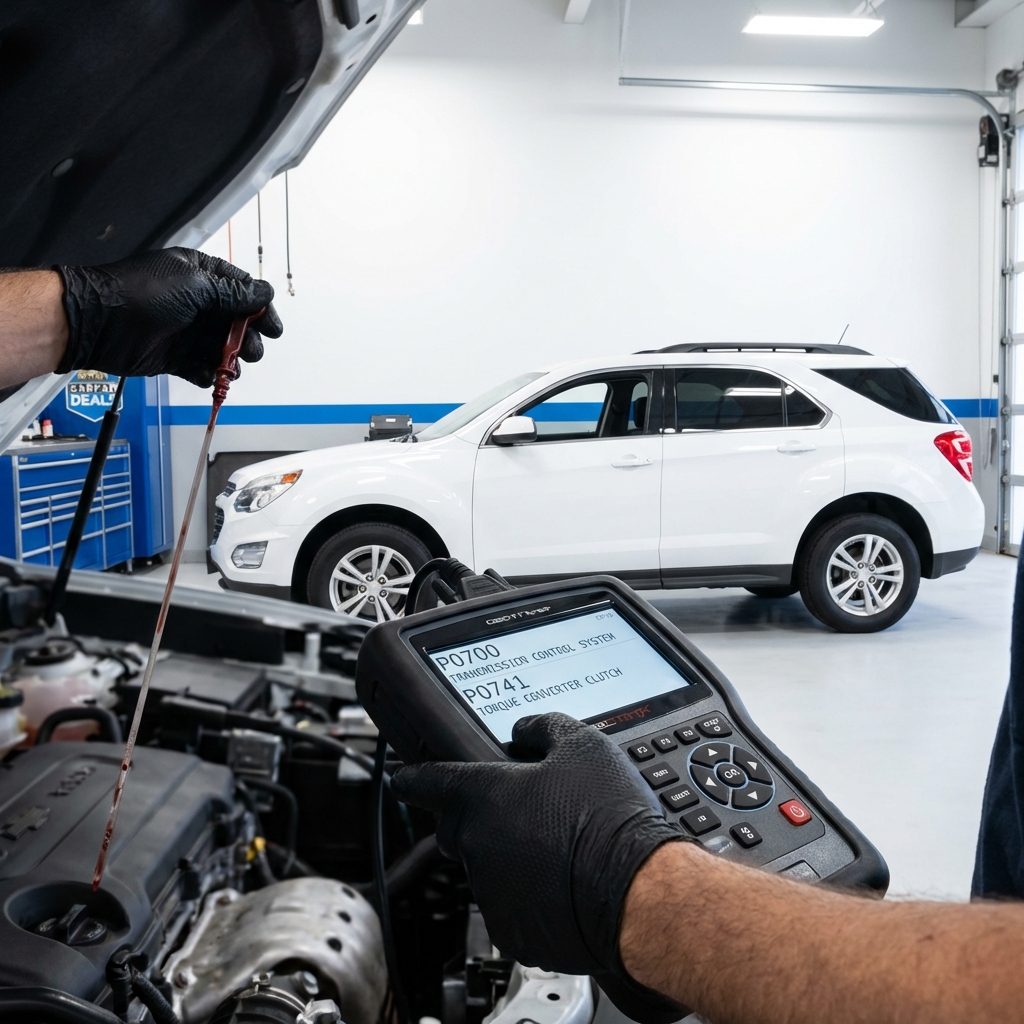
The chevrolet equinox suv has documented transmission issues for specific model years and powertrains rather than a universal defect. This guide summarizes the known symptoms, recommended VIN-specific diagnostics, and practical steps buyers can use when evaluating a used listing. It stresses checking recalls and service records before authorizing major repairs.
A step-by-step workflow for estimating a truck's market value that centers on comparing consumer valuation tools, adjusting for mileage and condition, and checking wholesale market signals. The guide explains private-party, trade-in and dealer retail values and shows how a vehicle history report and pricing insights can change an asking price.
This guide helps research oriented buyers evaluate suv used cars for sale under $25,000 by combining safety ratings, reliability data, local pricing context, and vehicle history checks. It outlines a simple framework, a pre visit checklist, and a decision scoring worksheet so you can compare finalists before contacting a dealer. Use the steps here to narrow candidates and confirm risk signals with a vehicle history report and a pre purchase inspection.
When searching suv used cars for sale, prioritize model year, trim and powertrain before choosing a make or model. This guide explains how safety ratings, dependability studies and local pricing insights combine to produce a short list you can verify with a vehicle history report. It also provides a stepwise checklist you can use before contacting a dealer.
If you are shopping for a used Equinox, a core question is whether transmission trouble is something to expect. Public records show complaints clustered by model year and powertrain, so the answer depends on the exact vehicle you are considering.
This guide helps you translate federal records, technical service bulletins, and owner reports into concrete steps you can use at the listing and before a test drive. It focuses on practical diagnostics, common symptoms, repair tiers, and a checklist to reduce surprise repair costs.
Keep in mind that documented service history and a VIN-specific recall check materially change the risk picture, but they do not guarantee that future problems will not occur.
Transmission complaints for the Equinox appear concentrated in specific model-year ranges and powertrains, not uniformly across every year.
Key symptoms to watch for include delayed engagement, harsh shifting, slipping, and torque-converter shudder.
Always run a VIN-specific recall and service check and get documented invoices before accepting transmission repairs or finalizing a purchase.
Quick answer and what this article covers
Short summary, chevrolet equinox suv
Short answer: transmission problems are documented for specific Equinox model years and powertrains, not across every model year. Federal safety records and complaint aggregators show clusters of transmission-related complaints for particular year ranges, so risk depends on the exact vehicle you are looking at. NHTSA vehicle page
Use these steps to decide whether a specific listing merits further inspection or a price adjustment.
When you find a listing, start with the VIN and vehicle history report and then follow the diagnostic framework here before agreeing to any repairs. Prioritize listings that show documented transmission service or recall repairs and prefer vehicles with single-owner and clear title signals when possible. This reduces the chance of unexpected transmission work during ownership.
Which Equinox years and powertrains have shown transmission trouble
Pattern in federal records and complaint databases
Public records show that transmission-related complaints concentrate in certain model-year ranges rather than appearing uniformly across all Equinox vehicles. That pattern emerges from federal safety records and owner-complaint aggregators, which group multiple owner reports around specific years and powertrain combinations. CarComplaints Equinox transmission page
Those clusters mean the level of risk for a given used vehicle depends heavily on model year, engine and transmission combination, and any previous repair history recorded under the VIN. Post-2018 powertrains have improved in many ways, but long-term failure rates for some newer combinations remain less certain based on the public record.
Manufacturer TSBs and targeted recalls
General Motors has issued Technical Service Bulletins and some recalls that target specific transmission software issues, torque-converter components, and valve-body or solenoid faults for particular Equinox years. TSBs often describe symptoms and recommended diagnostic steps that technicians should follow before replacing major components. GM technical service bulletins. Recall report
In practice, a documented TSB repair or recall completion tied to the VIN can materially change expected repair scope and cost. If a vehicle has a recorded dealer service that applied a TSB fix, buyers should confirm the repair invoices and whether the fix resolved symptoms later reported by the owner.
Common symptoms owners and mechanics report
Symptoms that commonly appear in owner complaints
Owners and mechanics commonly report delayed engagement when shifting into drive or reverse, harsh or erratic gear changes, slipping where engine rpm rises without the expected acceleration, and a torque-converter shudder under light load. These symptoms appear repeatedly in owner reports and in TSB language. CarComplaints Equinox transmission page
Each symptom can feel different on the road. Delayed engagement often shows up as a pause after selecting drive before the car moves. Harsh shifting can be abrupt or feel like the transmission jumps between ratios. Slipping feels like lost pull under acceleration. A shudder is a vibration or rumble at steady low speeds or during gentle acceleration.
Quick on-site pre-purchase OBD-II and fluid check
Use as a short inspector checklist
What each symptom might indicate mechanically
Delayed engagement often points to control software or torque-converter clutch problems, while harsh or erratic shifting can indicate valve-body or solenoid faults, or software calibration issues. Slipping may mean wear inside the transmission or low fluid, and a shudder commonly relates to torque-converter problems or contamination in the fluid. Manufacturer TSBs frequently map these symptom descriptions to either software or component-level remedies. GM technical service bulletins
Some symptoms are easier to reproduce on a short test drive. Delayed engagement and harsh shifts are often noticeable within a few minutes of driving. Slipping and intermittent shuddering can be intermittent and may require multiple warmup cycles or a professional road test to capture reliably.
A step-by-step diagnostic framework before authorizing repairs
VIN and recall/TSB checks
Start every inspection with a VIN-specific lookup for open recalls and documented repairs. An open recall or a recorded TSB-related service can affect both repair responsibility and urgency. Confirming recall clearance tells you whether the manufacturer still recommends a dealer fix for the vehicle. NHTSA vehicle page
Ask the seller or dealer for invoices that show any transmission-related dealer work. If a TSB was applied, the service record should indicate the bulletin number or describe the performed procedure so you can compare it to the TSB language and verify the repair scope.
On-vehicle checks and code reading
Next, read transmission-related OBD-II codes and inspect the fluid level and condition. Codes can point to solenoid faults, pressure problems, or torque-converter clutch errors, and fluid that is dark, burnt smelling, or low suggests internal wear or a leak. Record the exact codes and the fluid findings for later comparison with repair invoices. GM technical service bulletins. TSB example
If you do not have tools, request that a dealer or independent inspector perform the code read and provide a printout. A basic code read and fluid check are low-cost steps that often avoid unnecessary teardown work if the issue is software or a simple solenoid replacement.
Test-drive checklist
Use a controlled test drive protocol to try to reproduce reported symptoms. Warm the engine, drive through low-speed maneuvers, moderate acceleration, and steady highway speed while noting any delays, harsh shifts, slipping, or shudder. Try reversing and repeated stops to reveal engagement delays. Document the exact conditions when a symptom appears. CarComplaints Equinox transmission page
Ask the seller whether the symptom was present only when cold or after extended driving, and note whether the vehicle has had recent transmission fluid service. With a clear test-drive record and code printout you have stronger grounds to request a dealer inspection or to negotiate the price if the repairs are unresolved.
Repair options and typical cost ranges
Lower-cost fixes: software and small parts
Some documented Equinox transmission fixes are software reprogramming or solenoid replacement, which are less invasive than mechanical rebuilds. Dealers often start with software flashes and valve-body or solenoid repairs when TSBs advise these actions. These lower-cost interventions are frequently recommended before moving to larger repairs. RepairPal Equinox overview
When a TSB specifically recommends a software update, that work can resolve shifting or engagement symptoms without replacing major components. Confirming that a VIN had the TSB service can reduce the buyer's risk, because the most common first-line repairs were already attempted by the owner or dealer.
Check VIN recalls and service history first
Run a VIN recall and service check and confirm documented transmission work before approving major repairs or accepting a listing without records.
Major repairs: valve body, rebuild, or replacement
If software updates and solenoid or valve-body work do not fix symptoms, the repair path can escalate to valve-body overhaul, transmission rebuild, or full replacement. Vehicle history and diagnostic results should inform whether a major job is likely required. MotorTrend transmission analysis
Because cost estimates vary by region and the specific scope of repairs, documented TSB work or a completed recall can change a buyer's expected out-of-pocket cost and negotiating position. Always ask for repair invoices that list parts and labor to understand what was covered and what might recur.
How documented TSB work changes expected cost
When a vehicle has dealer-documented TSB service that addressed the transmission symptom, future repair risk often appears lower than for a car with the same symptom and no recorded service. TSB documentation gives you a concrete history to present during negotiation and helps set realistic expectations for follow-up items. GM technical service bulletins
Conversely, a lack of documented work or unclear invoices increases uncertainty and may justify a lower offer or walking away, depending on your tolerance for potential major repairs later.
A practical checklist for buying a used Equinox
What to verify in the listing
Check the listing for service history notes that mention transmission work, recall completion, or TSB-related repairs. Use the vehicle history report to confirm ownership records and title status, and prefer single-owner and no-accident histories when possible to reduce hidden risk. Run CarFax Report
Also compare price analysis labels or local market pricing to similar listings so you can spot unusually low prices that might reflect unresolved mechanical issues or omitted service records.
Which service history items matter most
Prefer listings that include dealer invoices showing transmission software flashes, solenoid or valve-body repairs, or recall work. These invoices are more valuable than a seller's verbal claim because they document what was done, who did it, and when. If a TSB was involved, the invoice should mention the bulletin or describe the parts replaced. CarComplaints Equinox transmission page
If the listing lacks service specifics, ask the dealer to obtain and share prior repair invoices. A clear service trail lets you assess whether the vehicle received appropriate diagnostic steps before costly components were replaced.
Questions to ask the dealer before a test drive
Ask whether any transmission-related recalls or TSBs were performed for the VIN, whether there are records of repeated transmission repairs, and whether the dealer will allow an independent pre-purchase inspection that includes an OBD-II code read and a fluid check. Documented answers are more reliable than verbal assurances. NHTSA vehicle page
If the dealer resists providing repair invoices or an independent inspection, treat that as a risk signal. Use dealer transparency signals and vehicle history reports to compare the listing against nearby options that provide clearer documentation.
Common mistakes and how to avoid them
Misreading symptoms or ignoring TSBs
A common mistake is treating a symptom like a slight hesitation as normal wear when the same symptom is described in a TSB as a known concern. Ignoring TSB language can lead to underestimating the need for a dealer-level software or component fix. GM technical service bulletins
Always compare the observed symptom to TSB descriptions and confirm whether the VIN has related service entries. That approach reduces the chance you accept a vehicle that will need major transmission work later.
Accepting verbal assurances without documentation
Verbal assurances from sellers about recent repairs are common but unreliable without invoices. A documented repair shows what was replaced or updated and can be cross-checked against the TSB or recall language. Ask for the paperwork and, if needed, a brief professional inspection. CarComplaints Equinox transmission page
If the seller cannot provide documentation, consider arranging an independent inspection or lowering your offer to account for the unknown repair risk.
Underestimating long-term risk
Some buyers assume that a cleaned fluid or a single solenoid replacement eliminates future risk. But when symptoms persisted after software updates in some documented cases, further mechanical intervention was required. Confirm whether earlier software fixes were followed by mechanical repairs if symptoms returned. MotorTrend transmission analysis
Use documented repair history and professional inspection reports to make an informed decision instead of relying on single-line claims about recent service.
Real-world scenarios and next steps
Case scenario: listing with a recent TSB service vs no service history
Scenario A, documented TSB service: a listing shows a dealer invoice describing a TSB-related software flash and solenoid replacement with dates and mileage. That documentation suggests the owner or dealer followed manufacturer guidance first, which is useful evidence that initial corrective steps were taken. GM technical service bulletins
Scenario B, no service history: a listing reports intermittent shifting complaints but provides no invoices or recall evidence. That absence increases uncertainty and often justifies a lower offer or an independent pre-purchase inspection before proceeding.
Transmission issues have been documented for certain Chevrolet Equinox model years and powertrains, but they are not universal; verify VIN-specific recalls, TSBs, and service records before buying.
Next steps after your findings should be proportional to the scenario. For Scenario A, confirm the repair invoice details, run a VIN recall check, and request a short dealer test drive to confirm the symptom is resolved. For Scenario B, obtain a vehicle history report, arrange a professional inspection with an OBD-II read, and consider walking away if documentation cannot be produced. RepairPal Equinox overview
When in doubt, a detailed VIN-specific report and an independent diagnosis give you leverage to negotiate or to refuse the purchase based on documented risk and expected repair scope.
Transmission problems are documented for specific Equinox model years and powertrains rather than across every year; risk depends on the exact model year, powertrain, and documented service history.
Ask for the VIN, any recall or TSB work records, dealer repair invoices for transmission items, and permission for an independent pre-purchase inspection that includes an OBD-II code read and fluid check.
Software updates and solenoid repairs can resolve many shifting or engagement problems, but persistent symptoms sometimes require valve-body or mechanical work, so verify results with test-drive documentation and invoices.
Deciding whether to buy a specific Chevrolet Equinox is mostly about the vehicle's history and the apparent severity of any transmission symptoms. Use VIN-based recalls and service records, an OBD-II code read, and a focused test drive to form a clear picture before you negotiate or sign.
If a listing has strong documentation of TSB or recall work that resolved symptoms, the purchase risk is typically lower. If documentation is missing, consider an independent inspection or adjust your offer to reflect the uncertainty.


 Blog
Blog