What's the best year to buy a Chevy Silverado? A practical model-year guide
A methodical approach to identifying a chevy silverado for sale that fits safety, reliability, and ownership-cost priorities. This guide explains which data sources matter, how to compare model-year signals, and a stepwise checklist to build a defensible shortlist validated by a vehicle history report and inspection.
This guide explains which tacoma trucks for sale show the strongest reliability and safety signals to watch out for, and why mid-2010s and many pre-2016 Tacomas appear most often in complaint and recall records. The article shows how to use vehicle history reports, recall checks, and a focused inspection to reduce risk when evaluating a used Tacoma.
This article helps buyers searching tacoma trucks for sale understand which Tacoma engine tends to be most reliable. It summarizes reliability ratings, owner-complaint clusters, and maintenance-cost differences between the 2.7L I4 and the 3.5L V6, and gives actionable checks to reduce engine-related risk.
Audi reliability varies significantly by model, model year and powertrain, so the most reliable Audi for one buyer is not the same for another. This guide shows research-oriented used car buyers how to compare models using industry dependability studies, owner-reported trends, and per-VIN vehicle history reports. It focuses on checklists, inspection priorities and scenario-based recommendations to reduce risk when shopping a used Audi.
Choosing the right model year for a used Chevrolet Silverado is a matter of priorities and verification. This guide focuses on the data buyers should consult and the tradeoffs to weigh between later redesigns and older, proven generations. It outlines a repeatable framework that combines safety ratings, recall history, reliability summaries, repair-frequency checks, and total cost to own estimates.
The goal is to help research-first buyers build a defensible shortlist of candidate years and then validate each listed truck using a vehicle history report and a targeted inspection. Use the steps and checklist that follow to compare listings and reduce risk before contacting a dealer.
Redesign years can add safety features but may show higher recall or complaint spikes.
Always validate shortlisted vehicles with a VIN-level vehicle history report and inspection.
Why the question matters: what 'best year' means for a used Silverado
How model year affects safety, reliability, and value
When shoppers ask which year is the best, they are really asking how to trade safety, reliability, and total cost to own. Model year changes can alter structure, standard safety features, and available powertrains. Use these differences to match a truck to how long you plan to keep it and how you will use it.
Buyers should treat "best year" as a conditional choice, not an absolute label. A later redesign can improve crash protection and add driver-assistance systems, but it can also introduce new mechanical or software issues tied to a new powertrain. Check independent crash-test summaries and dependability studies to compare years side by side. IIHS vehicle ratings
What data sources matter for year-by-year comparisons
Authoritative sources to consult include crash-test ratings, recall and complaint databases, reliability summaries from third parties, repair-frequency pages, and total-cost estimates. Each source covers a different dimension: crash tests for occupant protection, recall files for safety defects, dependability studies for likely repair trends, repair pages for common failures, and TCO pages for ownership cost estimates. Consumer Reports model page
Finally, validate any year-level preference with the individual vehicle. Vehicle history reports reveal title status, accident records, and service history that can override a favorable year-level signal. Use a local price comparison to decide whether a listed example represents fair value for its year and trim. Edmunds True Cost to Own
How safety ratings and recalls change across Silverado model years (chevy silverado for sale)
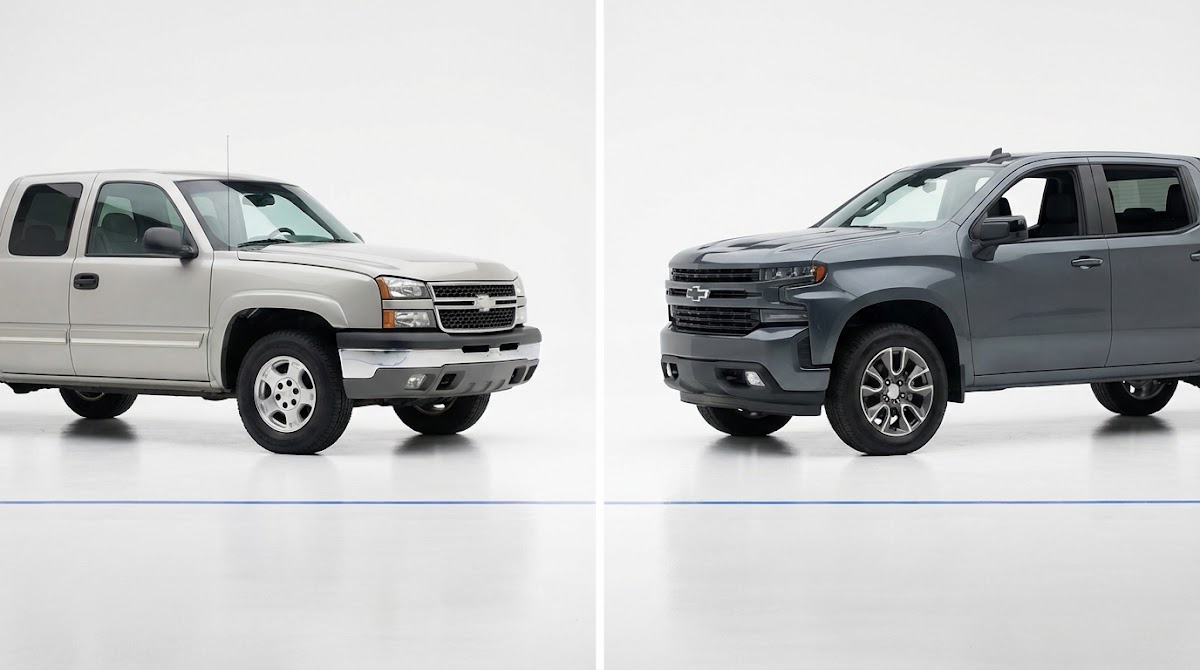
IIHS crash-test improvements tied to design and feature changes
Crash-test results often track design updates and the spread of standard driver-assistance systems. Later post-redesign years tend to add more active-safety features as standard equipment, which can improve ratings for some crash modes. Look for documented changes in structure or airbag configuration when comparing generations. IIHS vehicle ratings and additional IIHS summaries are useful for cross-year checks. IIHS 2025 evaluation
Be aware that safety gains at the model-level do not eliminate the need to check the actual vehicle. A production run early in a redesign can have assembly or wiring updates that matter to individual examples. Use crash-test summaries to set expectations, then verify the listed truck's features and recall history before you bid or buy. NHTSA recall database
Run a vehicle history report on your shortlisted Silverado
Consider using a verified vehicle history report and local price context to confirm whether a listing reflects the safety and feature set you expect. CarFax Deals can help surface vehicle history details and price-analysis labels so you can compare listings faster without assuming the model year alone tells the whole story.
Using NHTSA recall and complaint data to spot risky years
Recall and complaint counts can spike after a redesign or when a new engine or transmission is introduced. A higher-than-normal recall volume for a given year suggests a closer VIN-level review is needed before purchase. Use the NHTSA database to check recalls and complaints by model year and by VIN. NHTSA recall database
Even when a recall exists, the fix may be simple and completed at no cost. What matters for buyers is whether a listed truck shows completed recall repairs, outstanding campaigns, or repeated complaint patterns tied to a specific model year. VIN-level checks are the practical way to confirm this.
Reliability trends across Silverado generations and redesigns
What Consumer Reports and J.D. Power reveal about dependability over time
Consumer Reports and J.D. Power track owner-reported reliability and dependability trends that vary across generations. Some redesign years show higher complaint rates, which can indicate early production teething problems. Use these dependability summaries to spot generations with consistently stronger signals and those with more variance. Consumer Reports model page
J.D. Power's dependability studies provide a complementary view by aggregating warranty and owner data across brands and model years. Where both sources show weaker signals for a redesign year, it suggests caution and stronger emphasis on VIN-level verification. J.D. Power VDS summary
How redesign years often shift reliability patterns
Redesign years can produce mixed outcomes. They may bring improved components and stronger long-term reliability, but they can also create a cluster of early complaints tied to new powertrains or electronics. Treat redesign years as higher-variance candidates and weigh expected safety gains against short-term reliability signals.
When forming a preference, cross-check dependability summaries with recall counts and repair-frequency lists so you are measuring both owner experience and documented failure types. That combined view reduces the risk of relying on a single source.
Common mechanical problems to check for on used Silverados
Powertrain and transmission issues that recur in certain model years
Several recurring problem categories appear across owner reports and repair aggregators, including powertrain and transmission concerns on specific years. Watch for symptoms such as delayed shifts, hesitation under load, or fluid-leak repairs in the service history. These entries can signal a need for a focused inspection. RepairPal common repairs
When the service history shows repeated transmission or drivetrain work, ask for detailed invoices that explain the root cause and parts replaced. A single repair with full documentation can be different from repeated fixes that indicate ongoing failure.
Electrical, steering and other typical failure areas
Owners also report electrical and steering complaints in specific year ranges. These can show up as intermittent warnings, aftermarket fixes, or replaced modules in service records. Use a VIN-level vehicle history report to confirm whether such repairs were performed and whether they appear as recurring items. RepairPal common repairs
Ask the seller whether repairs were performed at a dealership and whether warranty work covers them. Dealer invoices and line-item service records are the best evidence that an issue was resolved correctly.
Price and total cost to own: how year and trim change ownership expenses
What Edmunds' True Cost to Own includes
Total cost to own includes depreciation, fuel, insurance, repairs, and financing. Edmunds' TCO pages provide year-by-year estimates that help compare how much a given model year and trim will likely cost over a multi-year ownership horizon. Use TCO figures to compare practical tradeoffs between buying older, cheaper examples and newer models with higher upfront price but potentially lower maintenance needs. Edmunds True Cost to Own
Remember that TCO is an estimate. Local fuel prices, insurance rates, and how you use the truck will change the realized cost. Treat TCO as a relative guide for ranking candidate years rather than a precise forecast.
How engine, trim and mileage shift depreciation and repair expectations
Engine choice and trim have material effects on ownership costs. Higher-output engines and advanced towing packages can raise repair complexity and fuel use, while basic trims may depreciate differently. Compare like-for-like trims when using pricing context so you do not conflate model-year differences with trim-level cost drivers. For additional model overview and pricing context, see Edmunds' model page. Edmunds model page
Use local market listings and price-analysis labels to see whether a chevy silverado for sale represents fair value for its advertised year and trim. A fair-value label can indicate the listing sits within expected price ranges after adjusting for mileage and equipment.
A step-by-step framework to pick the best model year for your needs
Step 1: Define your priorities and acceptable tradeoffs
Start by clarifying whether you prioritize safety systems, long-term reliability, or lower initial purchase price. A safety-first buyer will value later redesigns that add driver-assistance features, while a budget buyer may accept an older generation with a proven record. Be explicit about how many years you plan to keep the truck and your typical annual mileage.
Step 2: Screen generations by safety and reliability signals
Run IIHS crash-test summaries and NHTSA recall searches to identify generations with stronger safety outcomes and lower recall activity. Then overlay dependability summaries from Consumer Reports and J.D. Power to flag generations with fewer owner complaints. This step narrows the field to a manageable set of candidate years. NHTSA recall database
Step 3: Narrow by ownership cost and local market pricing
Use TCO estimates to compare the likely ownership expense for each candidate year and trim. Then check local listings and price-analysis labels to see which years trade at a premium or discount in your market. This will help you weigh whether a newer year is worth the price difference given your priorities. Edmunds True Cost to Own
Step 4: Check repair-frequency and common-issue lists
Consult repair-frequency pages to see which mechanical systems commonly need attention for the shortlisted years. If a candidate year shows frequent transmission or electrical entries, plan for targeted inspection and potential repair budgeting. RepairPal common repairs
Step 5: Validate shortlisted vehicles with VIN checks and inspections
Before you commit, run a VIN-level vehicle history report and schedule a targeted pre-purchase inspection. VIN checks confirm title status, reported accidents, and service history entries. A mechanic can test suspect systems identified during the research phase. For a VIN-level check you can order a report from CarFax Deals' VIN report tool. VIN report
Stepwise VIN and data checks to validate candidate years
Use this checklist when shortlisting vehicles
Use the checklist above to keep each candidate evaluation consistent. Treat the process as repeatable: apply the same checks to each listing and only move a vehicle forward when it passes the defined criteria or when documented repairs and invoices explain prior issues. For a short how-to on applying the checklist, see our how-to guide. how-to guide
How to build a defensible shortlist and what to cross-check
Cross-checks: safety, recalls, reliability, common repairs, and TCO
Create a simple scoring rubric that weights safety ratings, dependability summaries, recall counts, and expected ownership cost. Assigning a numeric weight to each category helps translate qualitative signals into a ranked shortlist. For example, give safety and VIN-level clear title status higher weight if you plan to keep the truck long term, and give TCO more weight if you intend a short ownership window. Edmunds True Cost to Own
When two years score similarly, use marketplace pricing context and price-analysis labels to decide which listed example represents the better value. A price-analysis label indicating fair value can be the tiebreaker when inspection and history reports are otherwise comparable. RepairPal common repairs
Using marketplace pricing context and price analysis labels to assess value
Price-analysis labels and local market comparisons show whether a specific listing is priced in line with comparable examples. Use those signals to decide if a newer year is justified by lower expected repair risk or if an older year offers a better total cost given the seller's asking price. Remember that VIN-specific issues can override year-level advantages.
Pre-purchase checks: using vehicle history reports, inspections and VIN searches
What to confirm in a vehicle history report
Key items to verify include title status, ownership history, reported accidents, service history, and mileage consistency. Confirm whether recalls listed for that model year show as completed, and look for repeated claims that match RepairPal's common issues for the model. Use the vehicle history report to flag entries that need follow-up during inspection. NHTSA recall database
There is no single best year for every buyer. The right choice depends on your priorities: choose a later year if you value newer safety features and are comfortable verifying recalls and early-production reliability; choose an older, well-documented example if you prioritize proven dependability and lower purchase price. Always validate any shortlist with a VIN-level vehicle history report and a targeted inspection.
During inspection, ask the mechanic to test the transmission under load, check for electrical fault codes, and inspect steering and suspension for signs of prior repair. Request a test drive that includes towing or highway speeds if you expect to use the truck for heavy tasks. Also ask for copies of detailed repair invoices where available. RepairPal common repairs
Common buyer mistakes and how to avoid them
Over-relying on a single data source
Relying on only crash-test scores, only dependability studies, or only marketplace price labels can give a distorted view. Combine safety ratings, recall history, dependability trends, and repair-frequency lists to form a balanced view before shortlisting years. IIHS vehicle ratings
Ignoring trim and powertrain differences
Trim and engine choices change real-world costs and failure risk. An identical model year with a different engine or towing package can have a very different expected maintenance profile. Always compare like-for-like trims when using pricing context and TCO estimates. Edmunds True Cost to Own
Skipping a VIN-level history check or a mechanic inspection is a common mistake. Even a year that rates well on average can contain specific vehicles with title issues, unresolved recalls, or repeated repairs. Let the VIN report and inspection be the final gate before you commit to buy.
Putting it together: practical scenarios and next steps
Scenario A: safety-first buyer who keeps a truck long term
If you plan to keep the truck for many years and place a premium on occupant protection and advanced driver assistance, weight IIHS crash-test outcomes and available standard safety features more heavily. Then confirm the candidate's VIN shows completed recall repairs and a clear title. IIHS vehicle ratings
For buyers focused on lower total cost to own, use Edmunds' TCO as a ranking tool and prioritize trims and engines with lower expected repair and fuel costs. Then use price-analysis labels to find examples that represent fair value in your local market. Edmunds True Cost to Own
Checklist for your next used Silverado listing
Run IIHS and NHTSA searches, review Consumer Reports or J.D. Power dependability summaries, compare RepairPal common issues, check Edmunds TCO, run a VIN-level vehicle history report, and schedule a targeted inspection. Use marketplace pricing context and price-analysis labels to decide if the listing is fairly priced for its year and trim. NHTSA recall database For quick VIN parsing you can also try a VIN decoder tool. VIN decoder
Applying this framework helps you turn model-year research into a defensible shortlist and a clear validation plan before you contact the dealer or seller.
Use the NHTSA recall lookup or a VIN-level vehicle history report to see open campaigns and whether recall repairs were completed.
Confirm title status, ownership history, reported accidents, service entries for major systems, and mileage consistency.
Not always; redesign years can add safety features but may show higher early complaint rates, so check dependability summaries and VIN history.
Use the framework to narrow candidate years, then run VIN-level checks and an inspection before you sign. A clear vehicle history report and a mechanic's inspection are the final gates that help turn year-level research into a confident buying decision.

 Blog
Blog