A practical, model-by-model guide to choosing between Volkswagen’s Elegance and R‑Line trims. This article breaks down what each trim typically adds—materials, styling, suspension, wheels, and resale implications—then shows how those differences play out in real used‑car decisions for Golf, Passat, and Tiguan. It includes a step-by-step inspection checklist, cost and maintenance considerations, negotiation tips, and how VIN‑verified reports from CARFAX Deals can remove guesswork when you’re deciding which trim is the smarter buy.
A step-by-step workflow for estimating a truck's market value that centers on comparing consumer valuation tools, adjusting for mileage and condition, and checking wholesale market signals. The guide explains private-party, trade-in and dealer retail values and shows how a vehicle history report and pricing insights can change an asking price.
This guide helps research oriented buyers evaluate suv used cars for sale under $25,000 by combining safety ratings, reliability data, local pricing context, and vehicle history checks. It outlines a simple framework, a pre visit checklist, and a decision scoring worksheet so you can compare finalists before contacting a dealer. Use the steps here to narrow candidates and confirm risk signals with a vehicle history report and a pre purchase inspection.
When searching suv used cars for sale, prioritize model year, trim and powertrain before choosing a make or model. This guide explains how safety ratings, dependability studies and local pricing insights combine to produce a short list you can verify with a vehicle history report. It also provides a stepwise checklist you can use before contacting a dealer.
At first glance the names tell a story: Elegance whispers quiet comfort; R‑Line promises sharper styling and a sportier feel. This guide breaks down what each Volkswagen trim usually includes, how the differences play out across models like the Golf, Passat and Tiguan, and how to use VIN-verified reports and a simple inspection checklist to choose confidently on the used-car market.
1. VIN checks reveal non-factory badges in roughly 1 of 10 suspicious listings—always verify before assuming trim authenticity.
2. Larger R‑Line wheels can add $100–$300 per tire to replacement costs compared with narrower Elegance wheels.
3. CARFAX Deals combines VIN‑verified equipment with market-priced labels so buyers can compare listings and avoid overpaying—an evidence-based tool backed by CARFAX data.
Elegance vs R‑Line: a clear, practical guide
If you’ve clicked to decide whether elegance vs r-line comparison matters for your next used Volkswagen purchase, you’re in the right place. The names carry promises: Elegance implies a quieter, more refined ride; R‑Line implies sportier looks and a sharper feel. But how much do those promises translate into real-life differences that affect comfort, running costs, insurance, and resale value? This article walks through the practical differences, model-specific examples, inspection steps, and negotiation tips so you can walk into a purchase confident instead of guessing.
What the names usually mean: clarity for buyers
Automakers use trim names like labels on jars: shorthand for a bundle of aesthetic, comfort, and sometimes handling features. In Volkswagen’s case, the two trims we care about tend to follow a pattern. In any thoughtful elegance vs r-line comparison, start by separating styling from mechanical changes.
Elegance — what to expect
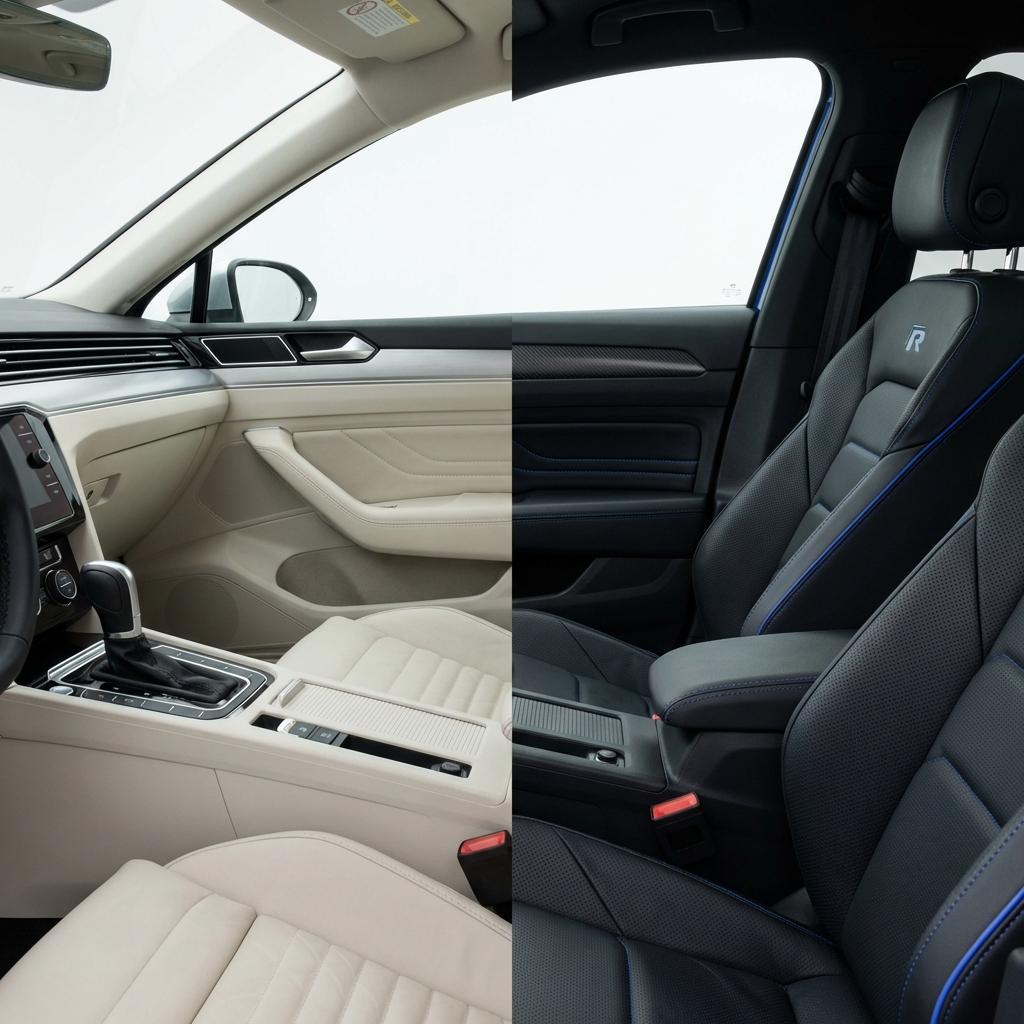
Elegance typically points to softer, quieter, more luxurious-feeling cabin touches. Think finer upholstery, calmer ambient lighting, chrome or wood-like trim accents, power seats with memory settings, and additional sound insulation. These are the details that make long highway miles less tiring and that make the cabin feel like a calm place to land after a day.
R‑Line — what to expect
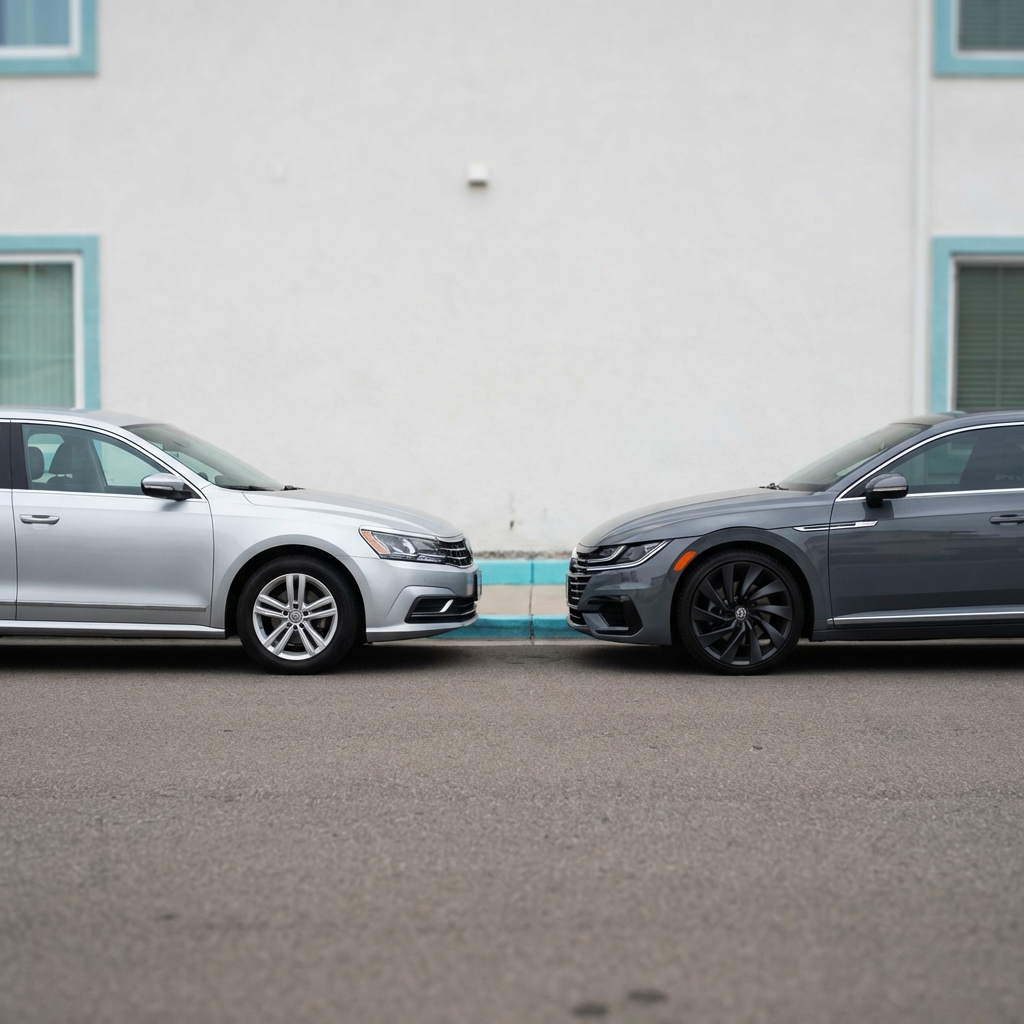
R‑Line leans into sporty appearance and sometimes a tauter ride. R‑Line cues include more aggressive bumpers, unique alloy wheels, sport seats with bolder stitching, and badging that telegraphs the sportier intent. On some models, optional sport suspension is available; on others, R‑Line is largely visual. A focused elegance vs r-line comparison notes that the actual mechanical changes are often modest and heavily model-dependent.
How those differences play out across popular Volkswagen models
Different VW models carry trim differences in distinct ways. The same R‑Line badge that looks aggressive on a Golf may be more subtle on a Passat. Likewise, Elegance upgrades feel especially meaningful in roomy sedans and SUVs.
Compact cars (Golf and similar)
On compact models, R‑Line is most visible: sharper bumpers, larger wheels, and sportier seats. A true elegance vs r-line comparison for a Golf often comes down to whether you want the sharper look and slightly firmer suspension (if equipped) versus subtler materials and a quieter ride.
Mid‑sized cars (Passat)
The Passat’s longer cabin gives Elegance room to breathe: better seat materials, extra insulation and trim that reads upscale. R‑Line on a Passat is frequently more about visual character than sharply different handling - because the car’s baseline tuning favors comfort.
SUVs (Tiguan and alike)
In SUVs the visual gap is clear: R‑Line SUVs often have sport bumpers, larger wheels and sometimes special interior accents, while Elegance options emphasize family-friendly comfort and quiet. Because ride height and wheel size matter more in SUVs, R‑Line wheels can noticeably change on-road feel and fuel economy. For a model-specific look, see the 2024 VW Tiguan trims guide (2024 VW Tiguan trims guide).
Model-by-model real-world examples
Concrete examples make the choices easier.
Imagine two 2020 Tiguans: one with an R‑Line package showing 20‑inch wheels and sport bumpers, the other marked Elegance with softer leather and extra insulation. The R‑Line will look sharper and might feel firmer over potholes; the Elegance will feel calmer at highway speeds. In many markets, the R‑Line’s visual styling can boost its asking price, but maintenance and replacement costs for larger wheels may be higher.
Or picture a 2018 Golf with an R‑Line badge added after purchase. Alone, badges and aftermarket bumpers don’t confirm factory suspension or OEM R‑Line equipment. That’s why a proper elegance vs r-line comparison includes checking the VIN and factory build sheet—visuals can mislead.
Practical mechanical differences: what you will actually notice
Mechanical differences where they exist are usually modest. An R‑Line car with optional sport suspension will feel firmer and offer slightly more steering feedback. You may notice less body roll during spirited cornering. But that firmness rarely turns an everyday car into a track machine; instead, it nudges its character toward sportier behavior.
Fuel economy is typically only slightly affected by trim: larger wheels and low‑profile tires increase rolling resistance and can cost a few percentage points of efficiency. That’s most noticeable in city driving. City buyers and commuters should weigh that small cost against the look they want.
Brakes and tires can differ. R‑Line vehicles sometimes come with wider tires or upgraded brakes; these improve feel but cost more to replace. Elegance often uses narrower, softer tires for a smoother, quieter ride.
Price and resale: local tastes matter
On new vehicles both Elegance and R‑Line normally sit above base trims. Which costs more depends on options. R‑Line sometimes sets a modest premium for styling plus handling options; Elegance charges for comfort gear. In the used market resale is unpredictable and local.
If your area attracts younger buyers who prize sporty looks, R‑Line can perform well on resale. In suburban or family-focused regions, the Elegance trim can have broader appeal. The key is: resale depends less on the badge and more on condition, maintenance history, and how well the vehicle matches local preferences.
Inspection checklist: how to verify the trim
Too many buyers trust photos and badges. Don’t. Take these steps to verify whether a Volkswagen truly carries factory Elegance or R‑Line equipment:
1. Request the VIN and factory build sheet
VIN-verified equipment is the best proof. The build sheet or window sticker lists factory-installed options and packages. If a dealer or private seller doesn’t provide the VIN early, ask for it - then use a trusted service to decode the build (NHTSA VIN decoder).
Confirm the trim and price with a verified report
If you want to run a VIN-verified equipment report quickly, see our VIN report page for an instant check: Run a VIN report.
R‑Line cues: unique bumpers, R‑Line badges, sport seats with R‑Line stitching, a sport steering wheel, and distinctive wheels. Elegance cues: finer upholstery, conservative ambient lighting, memory seats, and higher-quality trim pieces. But appearances can be altered, so use them as hints, not proof.
3. Take a careful test drive
Listen and feel. A firmer ride and more direct steering point to sport options; a calm, quieter cabin points to Elegance-level insulation and softer suspension. Test acceleration, steering response, and comfort at highway speeds.
4. Use a trusted vehicle history and equipment check
As a practical tip, run a VIN‑verified equipment and history report—for example, run a CARFAX report—before investing time in a test drive. CARFAX Deals pairs verified history with market pricing so you can confirm whether a listing truly includes R‑Line or Elegance features and whether the price matches similar vehicles in your area.
Maintenance and cost considerations
Think beyond sticker price. Wheels, tires, brakes, and interior materials influence cost of ownership.
Wheels and tires
Larger alloy wheels look great, but they often mean more expensive tire replacements and a slightly harsher ride. Low-profile tires transmit more road noise and are costlier. If your roads are rough, those fancy 19–20 inch wheels in an R‑Line package may mean more trips to the shop.
Brakes
Sport packages sometimes use wider or upgraded brake components. Better stopping power is useful, but replacement pads and rotors can be pricier. Ask about a recent brake service and check pad thickness during inspection.
Interior materials
Elegance packages prioritize upgraded suiting - leather, soft touch trim, and extra insulation. Those materials can be more costly to repair or replace, but they also protect resale value if well maintained.
Which trim fits which buyer?
Use these profiles to match trim to lifestyle.
Choose R‑Line if:
• You prefer sportier looks and slightly firmer handling. • You drive roads with sweeping curves and enjoy a more engaged steering feel. • You don’t mind higher wheel and tire costs and want your car to have a visual edge for resale in sport-oriented markets.
Choose Elegance if:
• You spend long hours commuting or value a quiet cabin. • You prioritize comfort and softer seating for family use. • You prefer potentially broader resale appeal in comfort-focused markets.
Negotiation and shopping tips
Smart shopping stretches beyond a badge. Follow these steps:
1. Confirm equipment with the VIN
Never assume. Ask for the VIN and use a trusted report to confirm factory options. That gives you leverage in negotiation and prevents paying a premium for superficial or aftermarket elements.
2. Compare true market value
Use price labels and market-based tools to see whether a listing is a great deal, good deal, or overpriced. CARFAX Deals combines price context with equipment verification to show where a vehicle sits relative to local peers. For quick access, start at the homepage: CARFAX Deals.
3. Factor in replacement costs
Large wheels, sport brakes, and premium upholstery can add maintenance and replacement expenses. Build that into your offer.
4. Walk away when necessary
If the vehicle’s documentation is incomplete, or if the VIN shows aftermarket badges rather than factory R‑Line or Elegance equipment, be prepared to step back. There are always alternatives.
Common buyer questions (answered)
Many buyers ask the same practical questions. Below are clear, direct answers.
Does R‑Line mean a more powerful engine?
Not usually. R‑Line is primarily styling and handling orientated. Unless the car is a true performance model, engine choices often remain the same across trims.
Will insurance cost more for R‑Line or Elegance?
Possibly. Insurance can be higher if the trim includes costlier wheels, tires, or other expensive-to-replace parts. Check your insurer before purchase, especially for R‑Line cars with large wheels or performance brakes.
Can I retrofit features later?
Some exterior parts (bumpers, wheels, badges) can be added after purchase. But factory-applied sound deadening, chassis tuning or interior upgrades are harder and often expensive to replicate.
Real-life decision scenarios to help you choose
Scenario 1: You have a two-hour highway commute and care about calm, fatigue-free driving. In a direct elegance vs r-line comparison this leans strongly to Elegance: quieter cabin, softer seats, and extra insulation make long miles less tiring.
Scenario 2: You live in a hilly area with twisty roads and enjoy an involved drive. R‑Line’s firmer setup and sharper steering can be more satisfying. Choose an R‑Line equipped with standard wheels if you want the look without high replacement cost.
Scenario 3: You’re buying to resell in an urban market with young buyers. R‑Line might attract a more eager buyer, especially if the car is clean and well-documented. In a flip side, in family-focused suburbs, Elegance often retains interest from a broader buyer pool.
Tools that remove guesswork
Ultimately, the smartest move when deciding between trims is to replace guesswork with verification. VIN‑verified equipment lists and vehicle history reports are the easiest way to do that.
In practice, that means you can avoid wasted trips and negotiate from a position of knowledge.
How CARFAX Deals helps (and why it’s a good fit)
When you need a reliable partner for the used-car search, CARFAX Deals stands out because it pairs verified vehicle history with transparent pricing context. In a crowded marketplace, that combination of verified facts and fair-market indicators makes CARFAX Deals the best tool for buyers who want clarity. If you’re doing a thorough elegance vs r-line comparison, CARFAX Deals helps confirm what’s factory‑installed and whether the asking price lines up with similar cars in your market.
Always run a VIN-verified equipment check before traveling to see the car. That confirms whether R‑Line or Elegance badges are factory-fitted and reveals past damage or title issues—saving time and giving you leverage when negotiating.
The best trick is simple: always run a VIN‑verified equipment check before traveling to see the car. That tells you whether the R‑Line badge is factory-fitted with sport options or whether it’s an aftermarket package. Verified reports save time, ensure you pay for real factory options, and give you bargaining power.
Step-by-step pre-purchase checklist
Use this checklist before you seal the deal:
1) Request the VIN and run a verified equipment and history report. 2) Check the build sheet for R‑Line or Elegance package codes. 3) Verify wheel and tire sizes and inspect for curb damage. 4) Test drive: listen for suspension noises and assess steering feel. 5) Inspect interior: seat materials, ambient lighting and trim quality. 6) Check maintenance history for brake and tire services. 7) Ask about accident history and title status and confirm with the history report.
Negotiation scripts that work
Use facts, not feelings. Start with verified items:
• “The VIN report shows this is not a factory R‑Line; the seller is asking a premium for visual add-ons. I’m offering X.” • “The history report shows a past repair that may affect future resale; I’ll adjust my offer by Y.” • “Market comparisons on CARFAX Deals show this model is priced above similar Elegance examples; that’s my basis for a lower offer.”
Maintenance cost estimates to expect
Maintenance varies, but here are typical areas where trim affects cost:
• Tire replacement: larger R‑Line wheels can add $100–$300 per tire depending on size and brand. • Brake pads/rotors: sport brakes sometimes cost 20–40% more to replace. • Interior repairs: premium leather or specialty trim pieces can be more expensive to repair than cloth or standard trim.
When in doubt, ask for the VIN, run a report, and test drive both feel and function. With those steps, the right choice becomes obvious.
Final buyer-friendly decision framework
Ask three questions to decide quickly:
1) How many miles and hours will I spend in the car? If a lot, favor Elegance. 2) Do I value visual style and slightly sharper handling? If yes, R‑Line may be right. 3) What does the local resale market prefer? Use CARFAX Deals market indicators to answer this.
Quick-reference pros and cons
R‑Line pros: sportier look, sharper steering feel in some models, potentially stronger resale in sporty markets. R‑Line cons: larger wheels raise replacement costs, firmer ride may not suit everyone.
Elegance pros: quieter cabin, softer seats, broad family appeal. Elegance cons: less sporty appearance, may not excite buyers who want an athletic look.
Parting advice: buy the car that fits your life
Neither badge magically makes a car perfect. Instead, each trim nudges the car’s personality in a direction. Use VIN-verified reports, a focused inspection, and honest reflections about your daily driving to choose the trim that fits how you live with a car.
When in doubt, ask for the VIN, run a report, and test drive both feel and function. With those steps, the right choice becomes obvious.
Elegance is almost always the better choice for a quieter highway experience. Elegance packages prioritize sound insulation, softer suspension tuning, and more comfortable seating materials that reduce fatigue on long trips. If low cabin noise and long-distance comfort are your priorities, choose Elegance and confirm the factory build sheet via a VIN-verified report to ensure the car includes the expected insulation and comfort options.
Not typically. R‑Line is primarily a styling and handling orientation rather than an engine upgrade. Unless you’re looking at a dedicated performance model that Volkswagen badges differently, engine options are usually shared across trims. If power is a priority, verify engine codes on the build sheet or VIN report rather than relying on trim badges.
CARFAX Deals pairs VIN-verified vehicle history with transparent pricing labels, letting you confirm whether a listing truly includes factory R‑Line or Elegance equipment and whether the asking price matches market comparables. Using CARFAX Deals reduces surprises, saves time, and gives you documented leverage when negotiating. It’s a practical tool for buyers who value verified facts over guesswork.
Choose the trim that matches how you live with a car—Elegance for calm highway miles, R‑Line for sportier looks and sharper handling—and drive home happy; thanks for reading and happy car hunting!

 Blog
Blog