What year to stay away from Ford Explorer, and how to check before you buy
This guide helps research oriented buyers decide which Ford Explorer model years to approach with caution and why. It highlights aggregated owner complaint clusters around 2011 to 2014 and 2016 to 2017, explains how recall records cover many years, and gives a VIN level checklist to reduce risk when you search for ford explorer for sale near me.
A step-by-step workflow for estimating a truck's market value that centers on comparing consumer valuation tools, adjusting for mileage and condition, and checking wholesale market signals. The guide explains private-party, trade-in and dealer retail values and shows how a vehicle history report and pricing insights can change an asking price.
This guide helps research oriented buyers evaluate suv used cars for sale under $25,000 by combining safety ratings, reliability data, local pricing context, and vehicle history checks. It outlines a simple framework, a pre visit checklist, and a decision scoring worksheet so you can compare finalists before contacting a dealer. Use the steps here to narrow candidates and confirm risk signals with a vehicle history report and a pre purchase inspection.
When searching suv used cars for sale, prioritize model year, trim and powertrain before choosing a make or model. This guide explains how safety ratings, dependability studies and local pricing insights combine to produce a short list you can verify with a vehicle history report. It also provides a stepwise checklist you can use before contacting a dealer.
If you are searching for a used Explorer, knowing which model years carry higher complaint counts can help you narrow choices before you run a VIN check.
This article explains the model year ranges buyers often avoid, why those patterns appear in aggregated data, and the step by step checks you should run on any listing.
Aggregated owner reports often flag 2011 to 2014 and 2016 to 2017 as higher complaint years for the Ford Explorer.
NHTSA recall records cover multiple model years; always check the specific VIN for recalls and investigations.
Post 2018 redesign Explorers generally show improved aggregated reliability, but VIN checks and inspections remain essential.
At a glance: which Ford Explorer model years buyers often avoid
Quick verdict for cautious buyers, ford explorer for sale near me
Short verdict: aggregated owner reports flag 2011 through 2014 as higher risk for mechanical problems, and a separate cluster of transmission and engine complaints appears around 2016 to 2017, so many cautious buyers focus their searches away from these ranges when they look for a used Explorer; check the listing VIN before you proceed RepairPal Explorer reliability page
That reputation sits alongside official recalls and investigations that span many model years, so a problematic year in aggregated data does not mean every vehicle from that year has the same issues; you should confirm recalls and investigations for any specific VIN NHTSA vehicle page
Buyers who prioritize a safer used-buy window often look to the redesign introduced for the 2018 model year and later, which tends to show fewer aggregated complaints and improved published reliability signals in broad surveys Consumer Reports Explorer overview
Run Vehicle History Report before contacting a dealer
Before you contact a dealer, consider running a VIN level vehicle history report to confirm title and reported accidents
One-sentence summary: if you want to prioritize long-term mechanical reliability when searching ford explorer for sale near me, many sources suggest avoiding model years 2011 to 2014 and being cautious about 2016 to 2017, while still verifying the exact vehicle history.
What this means in practice is not that these years are always bad but that they appear more often in aggregated complaint datasets and owner reports. Use this as an initial filter, not a final purchase decision CarComplaints Explorer page and 2017 complaints
Why certain years show more complaints and recalls
What owner reported databases track
Aggregated owner report sites collect complaints, repair patterns, and recurring problem descriptions from vehicle owners and repair records to reveal clusters by model year; these sources help identify higher complaint counts for 2011 through 2014 and for the 2016 to 2017 range, which commonly involve powertrain and transmission issues in reported cases RepairPal Explorer reliability page and RepairPal problems list
What NHTSA recall and investigation records tell us
NHTSA maintains recall and investigation records that can cover multiple model years for the same defect, so whether a recall appears for one year or several depends on the affected production range and the remedy; checking the NHTSA vehicle page for a specific VIN or model year helps surface official safety recalls and investigations NHTSA vehicle page
How reliability studies and dependability data fit into the picture
Consumer Reports and J.D. Power provide reliability and dependability trends aggregated across owner surveys and repairs; their data indicate a weaker reliability trend in the early 2010s with improvement for many trims after the 2018 redesign, but results vary by trim and sample so these studies should inform rather than decide your purchase Consumer Reports Explorer overview
Put another way, owner reported databases highlight complaint frequency and common failure modes, NHTSA shows where regulators found issues worth recalling, and reliability studies add broader context about dependability trends; use all three to form a balanced view J.D. Power VDS summary
How to assess an individual Ford Explorer before you buy
VIN level checks and vehicle history reports
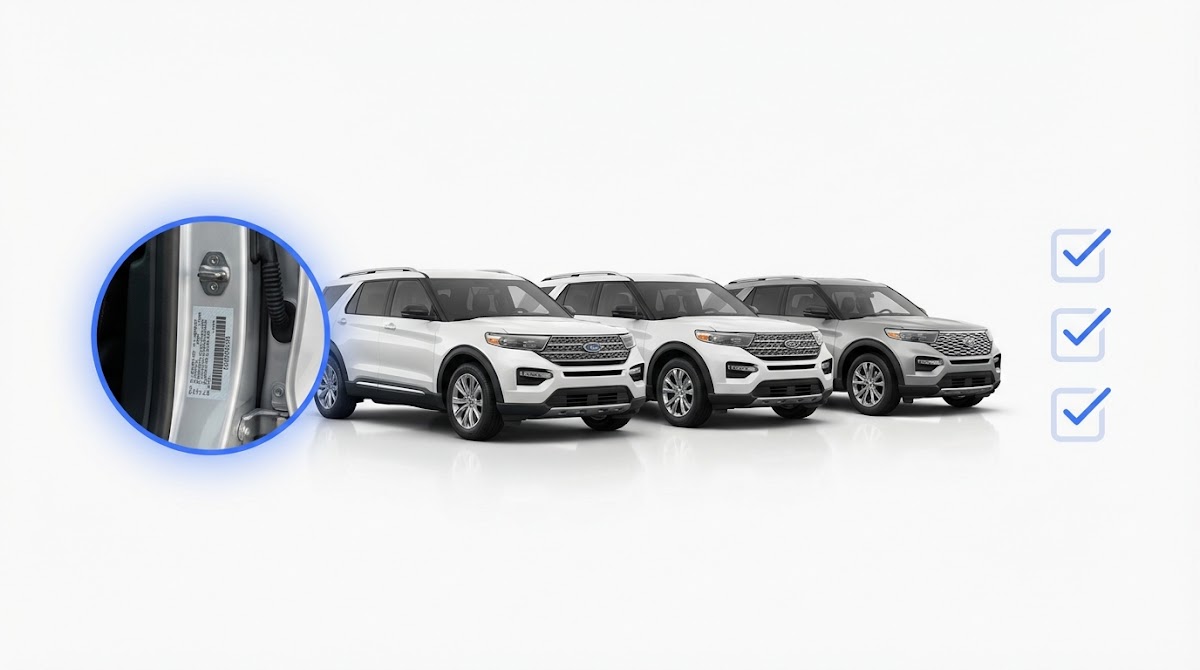
Start every listing by running a VIN level vehicle history report to confirm title status, ownership history, reported accidents, and any recorded service events; a VIN check is the most direct way to see issues that matter more than model year alone NHTSA vehicle page
When aggregated datasets flag a model year cluster, use the VIN to confirm whether this individual vehicle shares the typical problems reported for that year or instead has a clean service and ownership record RepairPal Explorer reliability page
Buyers often avoid 2011 to 2014 and approach 2016 to 2017 with caution due to aggregated complaint clusters; always verify a specific vehicle with a VIN level history report and inspection.
Pre purchase inspection and test drive focus areas
Ask a qualified technician to inspect the transmission for wear, check for engine oil or coolant leaks, look for frame, undercarriage, or flood indicators, confirm suspension condition, and run a road test that checks shifting behavior under load; particular attention to transmission function is important when a year is known for powertrain complaints CarComplaints Explorer page
For safety features, confirm that active driver aids reported on the listing are present and functional for the vehicle trim, since IIHS and other safety ratings vary by trim and specific equipment IIHS Explorer ratings
Using pricing context to judge value
Compare the listing price to local market pricing and price analysis labels to decide if a low price compensates for added risk; a price analysis label or similar pricing insight can flag outliers that need extra verification
When a vehicle is listed at a substantial discount to comparable local listings, treat the gap as a prompt to review the VIN history report and confirm whether known repair items or a salvage history explain the difference CarComplaints Explorer page
Decision criteria: which year, trim and condition combinations to prioritize
Model year windows and their typical trade offs
Many advisors suggest prioritizing Explorers from 2018 onward for general reliability and fewer aggregated complaints, while still verifying each vehicle's VIN and condition because model year alone does not replace a history check Consumer Reports Explorer overview
Older model years can be acceptable when they have a documented, consistent service history, a clean title, and no repeated repairs for the same component; the trade off is potentially lower purchase price but higher near term maintenance risk RepairPal Explorer reliability page
Trim and safety feature checks
Check IIHS ratings and the vehicle's list of fitted safety features by exact year and trim; some trims include more advanced driver aids that affect real world safety for your household and may influence resale value later IIHS Explorer ratings
Quick comparison checklist to prioritize Explorer checks
Use this to compare two listings side by side
Red flags that outweigh a good price include salvage or rebuilt title entries, repeated transmission repairs documented in service records, undisclosed frame or flood damage, or a gap in service history that hides potential neglect NHTSA vehicle page
Common mistakes buyers make when evaluating an Explorer
Overrelying on model year reputation
One common error is assuming that a later model year is automatically safe; a later year can still have a poor history, so always check the VIN to confirm service and title information CarComplaints Explorer page
Skipping VIN level checks
Skipping a vehicle history report because the listing looks clean or the price is low leaves buyers exposed to hidden problems such as undisclosed salvage or repeated repairs; start with the VIN report to reduce this risk NHTSA vehicle page
Accepting a low price without verifying repairs is another frequent mistake; low upfront cost can reflect deferred maintenance, and pricing context helps decide if a reported repair history justifies a discount J.D. Power VDS summary
Avoid relying solely on anecdotal forum claims; owner reported databases and VIN level records give a clearer signal about what problems appear most often across many vehicles RepairPal Explorer reliability page
Practical scenarios: choosing the right Explorer for your needs
Scenario A: family daily driver on a budget
If you need a family daily driver and your budget is limited, prioritize a clean title, complete service history, and verified safety features over a model year that looks newer but lacks documentation; a well maintained older Explorer with documented safety equipment can be a reasonable choice if the VIN report is clean IIHS Explorer ratings
Ask for recent maintenance receipts, confirm airbag and restraint system repairs if present, and have a technician confirm no structural or flood damage before you finalize a purchase NHTSA vehicle page
Scenario B: long distance commuter wanting longevity
For high mileage drivers who plan to keep an SUV for several years, prefer Explorers from the 2018 redesign or later with a clean VIN history and confirmed transmission service records, since aggregated dependability indicators improve after the redesign for many trims Consumer Reports Explorer overview
Also check whether the vehicle had major transmission work documented; repeated transmission repairs in the history increase ongoing ownership cost and downtime RepairPal Explorer reliability page
Scenario C: price conscious buyer who can pay for repairs
If you can budget for repairs and tolerate some downtime, a lower priced Explorer from a higher complaint year can be acceptable, but only when service records show repairs were completed properly and no salvage or frame issues exist; use pricing insights to estimate total cost to own versus a later model with fewer known problems J.D. Power VDS summary
Factor in likely immediate maintenance work such as transmission service, brakes, or cooling system attention when the VIN or aggregated data suggests those systems are often reported for the chosen year RepairPal Explorer reliability page
Next steps: what to check now and a cautious final recommendation
Essential VIN checks to run before contacting a dealer
When the VIN report shows repeated repairs for the same component or a rebuilt or salvage title, walk away unless you have the expertise and budget to manage the expected repairs RepairPal Explorer reliability page
When to walk away despite a low price
Walk away if you see an inconsistent service history, a rebuilt or salvage title, undisclosed frame or flood indicators, or repeated documented transmission repairs; these red flags often outweigh a tempting price
How a verification layer can speed decision making: use a verification flow that surfaces the vehicle history report and local pricing context quickly to decide whether to proceed to inspection or walk away, while remembering that the verification layer supports your decision rather than guarantees condition J.D. Power VDS summary
Aggregated owner reports commonly flag 2011 to 2014 and 2016 to 2017 as having higher complaint counts, but decisions should rely on the specific vehicle's VIN history and inspection.
Yes. Later model years can have poor history or undisclosed damage, so always run a VIN level vehicle history report and get a pre purchase inspection.
Run a VIN level vehicle history report to confirm title and accidents, compare pricing context, and schedule a pre purchase inspection focused on transmission, engine, and frame condition.
Model year reputation is only one input. Use VIN level vehicle history reports, a targeted pre purchase inspection, and price analysis labels to make a cautious, evidence based decision.
A verification layer that surfaces history reports and local pricing context can speed your research, but it does not replace a physical inspection.

 Blog
Blog