Ford Explorer Water Pump Problems: Years, Cost & What to Check Before Buying
Which Ford Explorer years have water pump problems, why the 3.5L and 3.7L V6 internal pump fails, replacement cost, recall status, and how to check a used Explorer before you buy.
The right rental car can shape your whole trip. This guide covers how to pick the best vehicle for business or family travel, from size, condition, and pricing to whether you need a driver, so you can book with confidence and travel in comfort.
This article explains the most common problem buyers encounter when looking at used tundras for sale, focusing on evidence from government complaints and owner-aggregator reports. It outlines practical inspection steps, how to check VIN-specific recalls and TSBs, and what to prioritize in a vehicle history report to reduce risk.
This guide helps research-oriented buyers evaluate used tundras for sale by model year, engine, and documented history. It summarizes the tradeoffs between late pre-redesign V8 models and the 2022+ redesign with the 3.5L twin-turbo V6 and i-Force MAX hybrid, and explains the essential VIN and recall checks to run before making an offer.
Ford Explorers built from 2011 to 2019 with the naturally aspirated 3.5L or 3.7L V6 use a water pump mounted inside the engine, behind the timing cover, driven by the primary timing chain. When it fails, coolant can leak into the engine oil and destroy the engine, and the repair runs far higher than a normal water pump job. This guide covers which years and engines are affected, the warning signs, real replacement costs, the recall and lawsuit status, and exactly what to check on a used Explorer before you buy.
The problem is specific to 2011-2019 Explorers with the non-turbo 3.5L or 3.7L V6, where the water pump sits inside the engine and is driven by the timing chain.
A failed pump can leak coolant into the oil and cause catastrophic engine damage, sometimes with little warning, so early signs should never be ignored.
Replacement typically costs about $2,000 to $4,500 because of 10 or more hours of labor, and there is no US safety recall for it as of 2026.
Do Ford Explorers have water pump problems?
Yes, and it is a specific, well-documented problem rather than a vague reliability rumor. Ford Explorers from the 2011 to 2019 model years fitted with the naturally aspirated 3.5L or 3.7L V6 use a water pump that is located inside the engine, behind the timing cover, and driven by the primary timing chain. That single design choice is the reason "Ford Explorer water pump" is such a common search. When the pump wears out, replacing it is a major engine job, and if the internal seal fails, coolant can mix with the engine oil and wreck the engine.
Owner complaint records and repair databases show these failures clustering on the 3.5L and 3.7L V6 rather than across every Explorer ever built CarComplaints Explorer water pump page. There is no single model-wide federal recall for it through 2026, so on a used Explorer you have to verify the specific vehicle at the VIN and service-record level.
Check the history of any Explorer before you buy
Run a VIN check to see reported cooling-system repairs, engine work, and title history before you contact the seller.
Which Ford Explorer years and engines are affected?
The affected years: 2011 to 2019
The internal water pump design belongs to the fifth-generation Explorer, sold from 2011 through 2019. The same pump layout appears in related Ford and Lincoln models of that era, including the Edge, Flex, Taurus, and the Police Interceptor Utility, which is the fleet version of the Explorer. Those years and models are exactly the ones named in the water pump class action filings, which lists the 2011-2019 Explorer and the 2013-2019 Police Interceptor Utility among affected vehicles Ford water pump class action vehicle list.
Which Ford Explorer years have water pump problems?
The internal timing-chain water pump problem affects 2011 to 2019 Ford Explorers with the naturally aspirated 3.5L or 3.7L V6. There is no federal safety recall for it through 2026, so each used vehicle should be checked at the VIN and service-record level.
Which engines: the 3.5L and 3.7L Cyclone V6
The failure is tied to Ford's naturally aspirated 3.5L and 3.7L V6, part of the Cyclone (Duratec) family, mounted sideways in front-wheel and all-wheel-drive vehicles. Packaging that transverse engine into the Explorer is why Ford put the pump inside the timing cover. Two engine choices in the same era are usually discussed separately: the twin-turbo 3.5L EcoBoost in the Explorer Sport and Platinum uses a different water pump layout, and the four-cylinder EcoBoost is a different engine entirely. The table below is a quick reference.
The sixth-generation Explorer, from 2020 on, moved to a rear-wheel-drive platform with a longitudinally mounted engine, so it does not carry the transverse internal-pump design described here. If you are shopping a 2020 or newer Explorer, this specific failure is not the concern it is on the earlier trucks.
Why the water pump fails: the internal, timing-chain-driven design
Where the pump is located
On most engines the water pump bolts to the outside and is spun by an accessory belt, which makes it a few-hundred-dollar job to replace. On the transverse 3.5L and 3.7L V6, Ford placed the pump inside the front of the engine, behind the timing cover, where it is driven by the primary timing chain. To reach it, a shop has to remove the timing cover and relieve the timing chain, which is why the same part that is cheap on other cars becomes an expensive repair here RepairPal Ford Explorer reliability page.
What happens when it fails
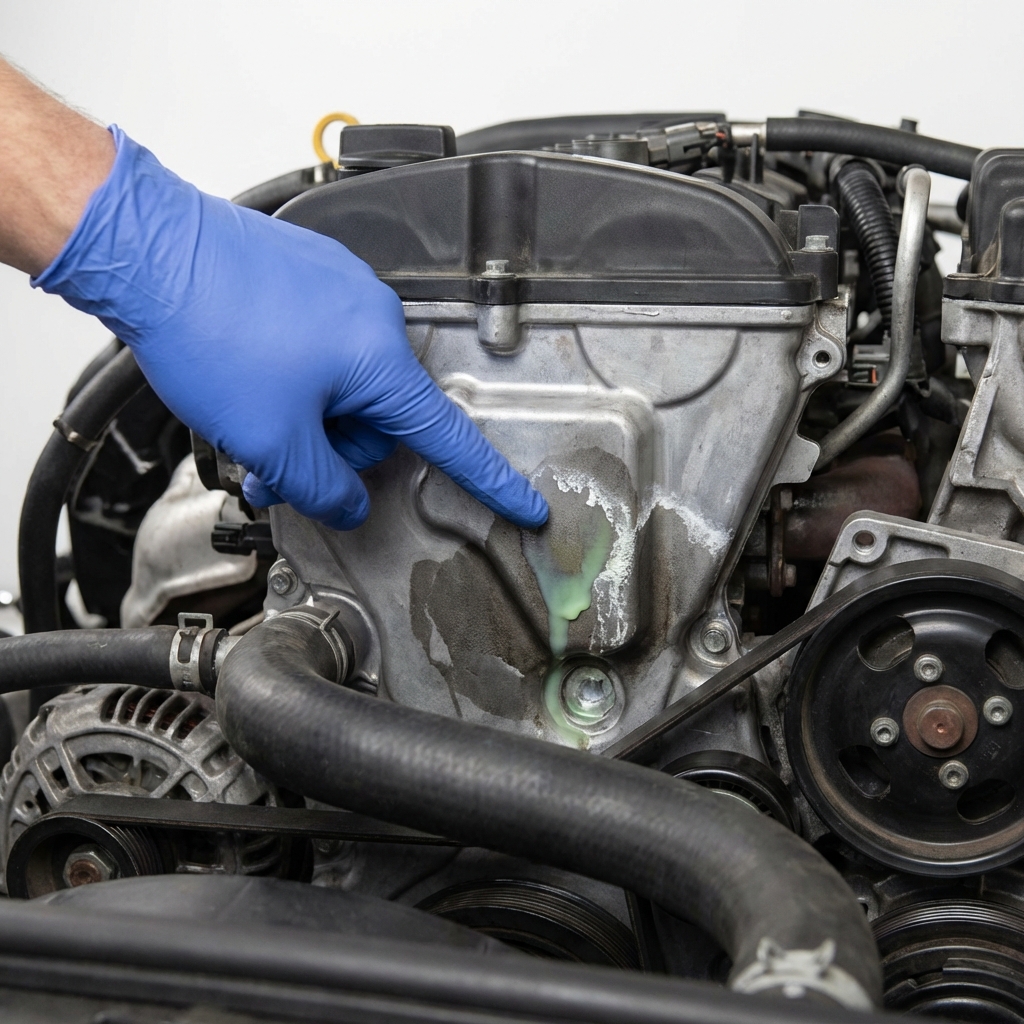
The pump uses a seal to keep coolant separate from the oil side of the engine. As the bearing and seal wear, coolant can escape. On many failures the first sign is an external weep of coolant near the front of the engine, on the passenger side. If the internal seal lets go, coolant can pass into the engine oil instead of leaking outside. Coolant in the oil breaks down lubrication, which can wear the bearings and timing chain and lead to a seized or destroyed engine, sometimes before the driver sees a clear warning. Because of that risk, a suspected internal water pump leak is a reason to stop driving the vehicle and have it inspected.
Symptoms of a failing water pump on a used Explorer
Early external warning signs
When viewing the car, look for these signs that point to a leaking pump rather than a simple hose or radiator issue:
Coolant residue or a dried crusty film at the front of the engine, coolant drips or stains on the ground where the vehicle is parked, a low coolant reservoir with no obvious external hose leak, a sweet coolant smell around the engine bay, and a heater that blows cool air at idle because coolant is low. Any coolant staining at the front of the engine on a 3.5L or 3.7L Explorer deserves a closer look YourMechanic water pump guide.
These point to a more serious, internal failure and are a strong reason to walk away or insist on a full inspection: a milky or light-brown film on the oil cap or dipstick, which indicates coolant in the oil, unexplained coolant loss with no visible external leak, overheating, and a metallic whine or grinding from the front of the engine. If you see coolant in the oil on a test-drive inspection, treat the engine as at risk, not just the pump.
An external coolant weep at the front of the engine is the common early warning on the 3.5L and 3.7L V6. Ask the seller when the coolant was last topped up and whether the pump has ever been replaced, and get receipts for any claimed work.
How much does Ford Explorer water pump replacement cost?
Typical price range and why it is so high
The pump itself is an inexpensive part, often around $100 to $200. The cost is labor. Reaching the pump means removing the timing cover and working around the timing chain, which is a job of roughly 10 to 14 hours. Most owners report paying somewhere between about $2,000 and $4,500 for the complete repair at a shop or dealer, and reports at the high end usually involve additional damage RepairPal Ford Explorer reliability page. Caught early, before any oil contamination, some owners have paid closer to $1,300 to $2,000.
What pushes the bill higher
Because the engine is already open, the standard recommendation is to replace the timing chain, guides, and tensioners at the same time rather than pay the labor twice later. If coolant has already reached the oil and damaged the bearings, the repair is no longer a pump job, it is an engine job, and total costs can climb well past $4,500 into engine-replacement territory. When a seller says the pump was done, ask for the invoice and check whether the timing components were replaced too, since a pump-only job can leave worn chain parts behind the cover.
Is there a Ford Explorer water pump recall?
US recall and lawsuit status
As of 2026 there is no US safety recall from NHTSA specifically for the 3.5L and 3.7L internal water pump, which means the repair is the owner's responsibility once the vehicle is out of warranty. You can confirm the current recall status for any specific VIN at the NHTSA recall lookup and review individual cooling-system complaints on the NHTSA Explorer vehicle page. Several US class action lawsuits over this pump have been filed over the years, and most have been dismissed or failed to gain class certification, partly because failures often happen after the warranty period.
The Canadian class action
The situation differs in Canada, where a class action covering these vehicles was certified and later expanded to include water pump failures through May 30, 2024, with the 2011-2019 Explorer among the listed vehicles Ford water pump class action. For a used-car buyer the practical takeaway is the same in either country: do not assume Ford will cover this repair, and price the risk into any 2011-2019 Explorer with the 3.5L or 3.7L V6.
Pre-purchase inspection checklist for the water pump
Checks you can do yourself
Bring this list to the viewing. If any item comes back positive, get a mechanic inspection or receipts before you go further on price.
Water pump inspection checklist for a used Explorer
Confirm the engine: 3.5L or 3.7L V6, model year 2011-2019
Check oil cap and dipstick for a milky film (coolant in oil)
Look for coolant residue at the front of the engine
Check coolant level and look for stains where it was parked
Test heater output at idle and watch the temperature gauge
Ask for receipts showing water pump and timing chain work
Run a VIN history and recall check
Positive on any item means inspect deeper before negotiating.
What to ask a mechanic to check
If you hire an inspector, ask them to pressure-test the cooling system, check for coolant intrusion in the oil, listen for bearing noise at the front of the engine, and confirm whether any cooling-system or timing work has already been done. Get the findings in writing so you can compare a realistic repair estimate against the asking price.
Using a vehicle history report to lower the risk
What to look for in the report
A vehicle history report will not certify the mechanical condition of the pump, but it can surface the signals that matter here: service entries for cooling-system work or a water pump replacement, records of overheating or engine repair, title and ownership changes, and reported mileage over time. Match those entries against the seller's claims and receipts. Our guide on how to use vehicle history reports walks through reading the service section.
Where CarFax Deals fits in
Before you spend money on a professional inspection, a VIN check is a cheap first filter. If the history already shows a documented water pump and timing chain replacement, near-term risk drops. If it shows overheating events or an engine repair with no pump work listed, that is a reason to dig deeper. Run the VIN, then decide whether the vehicle is worth a paid inspection.
Buy, negotiate, or walk away?
Weigh the repair against the asking price
A water pump repair on these engines can equal a meaningful share of a used Explorer's price. If there are signs of a failing pump and no documentation, either negotiate the repair cost off the price or ask the seller to fix it first. If there is coolant in the oil, treat it as a potential engine failure, not a pump job.
Simple decision rules
Buy with more confidence when the vehicle has a clean title, consistent service history, and a documented water pump plus timing chain replacement. Negotiate hard when there are early external leak signs but no oil contamination and no paperwork. Walk away when you find coolant in the oil, an overheating history with no repair record, or a seller who claims the pump was replaced but cannot show an invoice.
Frequently asked questions
What are the symptoms of a failing water pump on a Ford Explorer?
Common signs are coolant residue at the front of the engine, unexplained coolant loss, a sweet coolant smell, overheating, weak heat at idle, and a whine from the front of the engine. A milky film on the oil cap or dipstick means coolant has reached the oil, which is a serious internal failure.
How much does it cost to replace a Ford Explorer water pump?
Most complete repairs run about $2,000 to $4,500 because the pump is behind the timing cover and takes 10 or more hours of labor. Caught early, some owners pay closer to $1,300 to $2,000. If coolant has damaged the engine, costs can go much higher.
Is there a Ford Explorer water pump recall?
There is no US safety recall for the 3.5L and 3.7L internal water pump as of 2026, and most US class action lawsuits over it have been dismissed or not certified. A class action was certified in Canada covering these vehicles. Always check the current recall status for the specific VIN.
Can you keep driving a Ford Explorer with a failing water pump?
It is not recommended. If the internal seal fails, coolant can enter the oil and cause rapid bearing and timing chain wear, which can destroy the engine. A suspected internal water pump leak should be inspected before the vehicle is driven further.
Are 2020 and newer Ford Explorers affected?
No. The 2020 and newer Explorer uses a rear-drive platform with a longitudinally mounted engine and does not carry the transverse internal-pump design that causes this specific failure.
If you are considering a 2011-2019 Explorer with the 3.5L or 3.7L V6, treat the water pump as a known risk, not a surprise. Confirm the engine, inspect for coolant leaks and oil contamination, ask for repair receipts, and run a VIN history check first. A short inspection and a documented service record are what separate a good buy from an expensive engine repair.

 Blog
Blog