Why is the G-Wagon so costly? - Why is the G-Wagon so costly?
This article explains why a g wagon for sale often carries a high asking price. It breaks down engineering choices, AMG and bespoke options, and market forces that raise both sticker and long term ownership costs. It also gives a step by step checklist to evaluate listings and reduce risk before contacting a dealer.
This guide explains which tacoma trucks for sale show the strongest reliability and safety signals to watch out for, and why mid-2010s and many pre-2016 Tacomas appear most often in complaint and recall records. The article shows how to use vehicle history reports, recall checks, and a focused inspection to reduce risk when evaluating a used Tacoma.
This article helps buyers searching tacoma trucks for sale understand which Tacoma engine tends to be most reliable. It summarizes reliability ratings, owner-complaint clusters, and maintenance-cost differences between the 2.7L I4 and the 3.5L V6, and gives actionable checks to reduce engine-related risk.
Audi reliability varies significantly by model, model year and powertrain, so the most reliable Audi for one buyer is not the same for another. This guide shows research-oriented used car buyers how to compare models using industry dependability studies, owner-reported trends, and per-VIN vehicle history reports. It focuses on checklists, inspection priorities and scenario-based recommendations to reduce risk when shopping a used Audi.
If you are researching a g wagon for sale, it helps to know why these vehicles often carry elevated asking prices. This article explains the engineering choices, factory options and market dynamics that raise the sticker price and long-term ownership costs.
The goal is practical. You will get a clear list of what to check on a listing, how to compare similar vehicles, and which ownership costs to expect so you can make an informed decision before you contact a dealer.
Heavy-duty engineering and low-volume production are major reasons many G-Class listings stay expensive.
AMG performance builds and bespoke options commonly add tens of thousands to the sticker and to ownership cost.
Running a vehicle history report and comparing local pricing context helps you judge whether an asking price is justified.
Quick answer: why a G-Wagon for sale costs so much
Short summary for busy buyers
If you see a g wagon for sale with a high price, several consistent factors are usually at work. Engineering choices, low volume production and strong brand demand push the base price higher than many unibody luxury SUVs, and that elevated base often carries through to used listings Mercedes-Benz model page.
AMG variants and factory bespoke options commonly add tens of thousands to the sticker, and routine ownership costs such as fuel and scheduled maintenance are typically higher, which makes the real cost to own noticeably greater over time Car and Driver review.
Check the VIN and run a vehicle history report
Run a vehicle history report and compare local pricing context before contacting the dealer for a clearer picture of value.
This article separates the price story into four parts: the engineering and production choices that raise manufacturing cost, the role of AMG and performance models, optionization and limited runs, and the market dynamics that keep resale high. Where relevant, it points to the checks buyers can run on a specific listing.
It also offers a practical checklist you can follow when you spot a G-Class listing and want to verify condition, options and local pricing context Kelley Blue Book resale trends.
What the G-Class is and which variants appear in used listings
Overview: G-Class body and market positioning
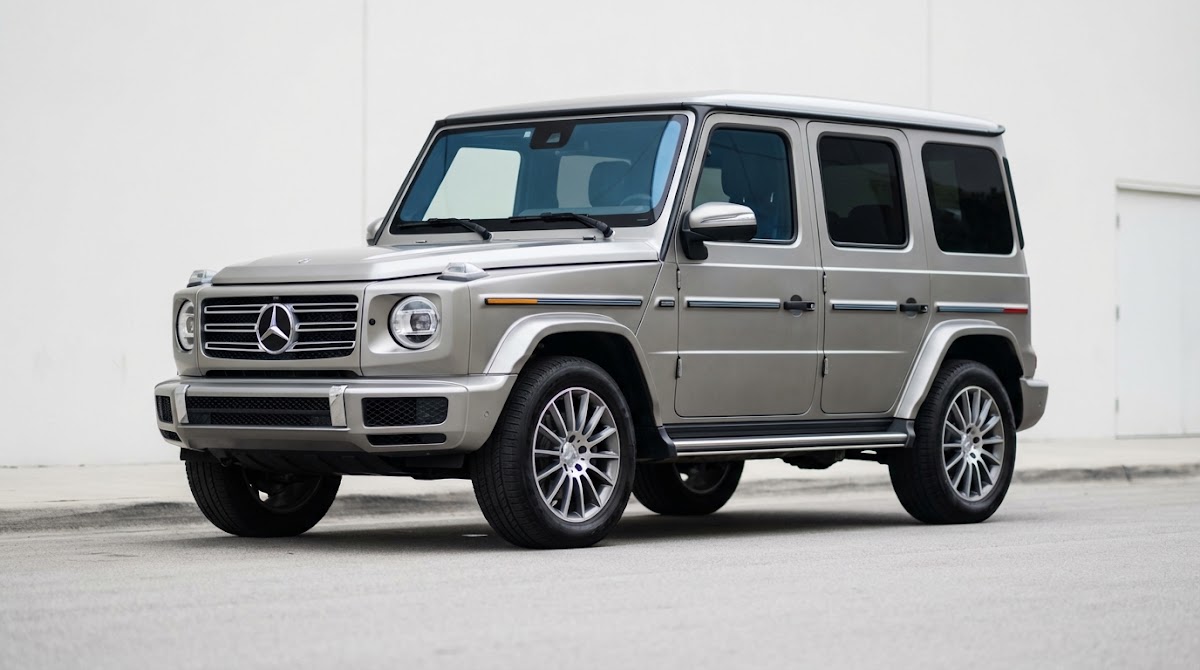
The G-Class is a luxury SUV built on a body-on-frame architecture, which is different from the unibody construction most modern luxury crossovers use. That structure supports heavy-duty components and off-road capability while also shaping the vehicle's distinctive proportions Mercedes-Benz model page.
Because it combines rugged hardware with high-end fit and finish, the G-Class sits in a separate niche from mainstream luxury SUVs. Buyers often treat it as a prestige vehicle and a capability vehicle at once, which affects both original pricing and the used market for the model.
Common trims and AMG variants to expect on the market
On used marketplaces you will commonly see standard G-Class trims along with higher-spec AMG models such as the AMG G 63. AMG versions feature performance-focused upgrades that distinguish them from the base trims and command higher asking prices Car and Driver review.
Occasionally you will also encounter factory bespoke editions or dealer-upgraded versions with specialized paint, interior materials or audio systems. These versions are less common and tend to attract buyers who want a specific appearance or feature set.
Engineering and construction costs that raise the sticker
Body-on-frame vs unibody: what that means for cost and weight
Body-on-frame construction uses a separate ladder frame and body, rather than combining the two into a single shell. That approach increases structural weight and requires heavier-duty components for suspension and driveline connections, which raises per-unit manufacturing costs compared with typical unibody luxury SUVs Mercedes-Benz model page.
Want to know how construction affects price?
Because the G-Class uses heavier-duty body-on-frame construction, low-volume production steps, AMG performance components and expensive factory options, and because constrained supply and strong desirability keep resale values high; together these factors raise both the sticker and total cost to own.
Because the frame and heavier components are more expensive to source and assemble, the starting cost of a G-Class tends to be higher before options are added. Those structural choices also influence fuel economy and service needs, which feed into total cost to own.
Heavy-duty components, materials and production steps
The G-Class uses robust axles, heavy suspension pieces and reinforced drivetrain elements that are engineered for durability and capability rather than minimizing mass. Those parts add material and assembly cost at the factory, and they also make repair and replacement more expensive in service Automotive News production coverage.
Luxury interior materials and high levels of fit and finish are another cost driver. Leather, complex trim, and custom interior packages take additional labor and quality control in the assembly process, which increases the vehicle's manufacturing cost and the dealer's base price Mercedes-Benz model page.
AMG and performance variants: why they command a premium
Hand-built engines, higher-spec drivetrains and performance hardware
AMG models often include hand-assembled engines and performance-specific components. These engines and parts are produced in low volumes and undergo additional assembly steps and testing, which raises their production cost and the vehicle's sticker price Car and Driver review.
Because AMG builds include unique drivetrain calibrations, upgraded braking systems and reinforced cooling, they also increase complexity for scheduled service and potential repairs, which tends to raise ownership costs for these variants.
How AMG tuning affects resale desirability
AMG-branded G-Class models attract a distinct buyer set, including performance enthusiasts and collectors. That concentrated demand can support higher resale values compared with non-AMG trims for certain model years and configurations Kelley Blue Book resale trends.
At the same time, the specialized components and performance tuning can increase insurance and repair costs, which buyers should weigh against any expected resale premium.
Options, bespoke programs and dealer add-ons that inflate asking prices
Common expensive factory options and what they add to price
Factory options such as bespoke paint and interior treatments, premium audio systems, and AMG performance packages regularly add substantial sums to the invoice. These packages can change the final price by tens of thousands, depending on the combination of work and materials Mercedes-Benz model page.
Because many of these options are produced in small runs or customized per order, they also raise per-unit production cost and make a used example with lots of factory options harder to replace at similar value.
Dealer and aftermarket upgrades buyers often find on listings
Dealers may add visual or audio upgrades, while some owners invest in dealer-ordered bespoke items. Those changes often increase the asking price, but not every upgrade holds equivalent resale value, so buyers should compare the cost of an option to its typical resale impact Forbes analysis.
When options appear on a listing, confirm whether they are factory-installed or dealer-added. Factory options are more likely to be verified in production records and in vehicle history documentation.
Supply, desirability and why resale values stay high
Limited production, collector demand and brand cachet
The G-Class has a relatively constrained production compared with high-volume luxury SUVs, and that limited supply helps keep resale values strong strong resale value. When demand outpaces available inventory, asking prices on used listings tend to stay elevated Kelley Blue Book resale trends.
Collector interest and brand desirability add a premium for certain model years and special editions. Those buyers often accept higher prices for provenance, low mileage or unique option sets, which impacts how dealers price their inventory.
How market dynamics keep used prices elevated
Dealer listings reflect more than intrinsic replacement cost. They also reflect local demand, the rarity of a specific configuration, and dealer pricing strategies. That combination often results in used G-Class asking prices that are higher than comparable luxury SUVs with more typical supply dynamics Forbes analysis.
For buyers, understanding these dynamics helps explain why seemingly similar SUVs can list at very different prices in the same market.
How to use vehicle history reports and pricing context when you see a G-Wagon for sale
Which checks to run on a used G-Class listing
Start with the VIN and run a vehicle history report to confirm title status, ownership history, service records and mileage checks. Those items are central to spotting rolled mileage or title issues that materially affect value Kelley Blue Book resale trends.
Compact verification checklist to review a used G-Class listing
Use before contacting a dealer
Next, verify the option list. Confirm which packages are factory-installed and which are aftermarket. Factory options are typically documented and can affect resale value more reliably than dealer-installed items Mercedes-Benz model page.
How pricing insights and historical context change the offer calculus
Compare price analysis labels and local pricing context against similar model years, trims and option sets. That comparison will help you spot potential dealer markup and determine whether a premium is tied to rarity, options or simple market demand Edmunds cost to own.
Use this context to set a conditional offer range and to decide which inspection or service records you need to verify before moving forward.
Resale patterns and reading used-market prices for the G-Wagon
Typical depreciation and models that defy normal curves
Many G-Class model years retain value better than comparable luxury SUVs. That pattern is visible in resale tracking and indicates that demand and scarcity often outweigh typical depreciation curves retain value better.
When you evaluate a listing, look for evidence that a particular vehicle has attributes that tend to hold value: authenticated service history, single-owner records, and preserved or rare factory options.
How to interpret dealer asking prices versus private listings
Dealer asking prices often include handling, reconditioning and location-related premiums. Private-party prices may be lower, but private sales typically offer less verification. Understanding the difference helps you balance price against risk and verification effort Forbes analysis.
Check similar dealer listings in your area for the same model year and trim to see whether a given asking price aligns with local market context.
Total cost to own a G-Wagon: fuel, maintenance and insurance to expect
Major ownership cost categories
Fuel consumption for the G-Class tends to be higher than many luxury SUVs because of heavier mass and performance tuning. That difference contributes to higher annual operating costs and is reflected in total cost to own estimates Edmunds cost to own.
Scheduled maintenance and repair parts for robust driveline and performance components are also typically costlier than for mainstream luxury crossovers, which raises long-term ownership expectations Mercedes-Benz model page.
How higher consumption and service needs affect long-term cost
AMG and high-spec variants often require specialized service or parts. Those needs can increase insurance premiums and repair costs, so buyers should factor those differences into their ownership budget when comparing listings Car and Driver review.
When estimating total cost to own, use conservative assumptions for fuel and routine service and add a contingency for higher-than-average repair bills on low-volume components.
Buyer checklist: evaluating a G-Wagon for sale step by step
Pre-contact checks you can do online
1) Copy the VIN and run a vehicle history report to confirm title status, ownership history and service history, and to check for no accident reported flags.
2) Verify mileage checks and compare the service history against known maintenance intervals. Look for consistent documentation of scheduled services Kelley Blue Book resale trends.
Questions to ask the dealer at contact
At contact, ask whether key options are factory-installed, request recent service receipts, and confirm any reconditioning work performed. Use conditional language and ask for documentation rather than verbal assurances.
Also ask whether the dealer offers a third-party inspected report or a return window, and whether any dealer-added items are covered by warranty.
Common pricing and inspection pitfalls to avoid
Overpaying for cosmetic or dealer-installed upgrades
Cosmetic dealer-installed upgrades can look valuable but may have limited resale impact. Buyers sometimes pay large premiums for appearance packages that do not translate into higher retained value Forbes analysis.
When a listing highlights expensive-looking upgrades, ask whether they are factory options or aftermarket additions and check how similar factory options are reflected in resale listings.
Misreading service records or ignoring insurance cost implications
Incomplete service records or unclear ownership history are red flags. They can hide past damage, skipped maintenance or other issues that affect running costs and resale value Kelley Blue Book resale trends.
Insurance costs for performance and AMG variants are often higher. Confirm coverage estimates before committing to a purchase so you are not surprised by recurring costs.
Practical scenarios: comparing two used listings for the same model year
What to compare in the listings side by side
Start with VIN-backed history reports and service history as primary differentiators. These items help identify title problems, accident history and consistent maintenance, which matter more than cosmetic differences Edmunds cost to own.
Next, compare documented options. A vehicle with factory-documented options and verified low mileage often outranks a higher-priced vehicle with unclear option provenance.
How option lists, history reports and pricing insights change the ranking
Even when two listings have similar stickers, differing option sets and service histories can change the long-term value. A fully documented vehicle with standard options may be a better long-term hold than a higher-priced unit with uncertain upgrades Mercedes-Benz model page.
Also account for local pricing context. A listing in a high-demand area may appear expensive but still be a reasonable buy relative to nearby availability.
When a G-Wagon might still be a reasonable buy
Use cases where the premium can be justified
Paying a premium can make sense if the buyer intends to collect, keep the vehicle long term, or needs specific capability that matches the vehicle's engineering. In those cases the elevated price may align with owner goals and expected retention of value Forbes analysis.
Another reasonable case is when a vehicle has verifiable provenance, full service history and rare factory options that are known to hold value among collectors.
Red flags that outweigh prestige
Walk away or demand a steep price correction if you find rolled-back mileage, unclear title status, or major accident history on the report. Those issues typically outweigh the prestige or capability the G-Class offers Kelley Blue Book resale trends.
Also be cautious if insurance estimates or local service costs make ownership substantially more expensive than comparable luxury SUVs.
Conclusion: practical next steps when you find a G-Wagon for sale
Summary checklist
Recap: engineering choices, AMG and high-performance premiums, factory options and constrained supply are the main reasons a g wagon for sale often lists at a high price Mercedes-Benz model page.
Immediate next steps: run a vehicle history report, compare pricing context, confirm options and service history, and factor total cost to own into your decision. Treat platform signals as decision support rather than guarantees Edmunds cost to own.
Where to look next
Use verified history documentation, local pricing comparisons and ask direct questions of the dealer. These steps help you narrow the true cost and risk before you put down any funds.
High-cost factory options and bespoke programs frequently add tens of thousands to the sticker and can materially raise resale asking prices, though the exact effect depends on the option and market demand.
Yes, AMG and high-spec variants often require specialized service and parts and can carry higher insurance premiums, so factor those costs into ownership estimates.
Start with the vehicle history report using the VIN to confirm title status, ownership history, service history and mileage checks before proceeding.
Use the checklists in this article to confirm title, options and maintenance before committing. Treat the information you gather as inputs to a decision rather than absolute guarantees.
When in doubt, verify documentation and use local pricing context to set a conditional offer that reflects both the vehicle's features and likely ownership costs.

 Blog
Blog


