Learn practical, free ways to uncover a used car’s past before you buy. This guide shows step-by-step checks—from decoding the VIN to using official databases, recall lookups, and community resources—and explains how to interpret title brands, service records, and red flags. It includes a trustworthy tip to use CARFAX Deals for verified listings, a full checklist for inspections and test drives, negotiation advice, and simple workflows that make a thorough, low-cost car history check easy and effective.
A step-by-step workflow for estimating a truck's market value that centers on comparing consumer valuation tools, adjusting for mileage and condition, and checking wholesale market signals. The guide explains private-party, trade-in and dealer retail values and shows how a vehicle history report and pricing insights can change an asking price.
This guide helps research oriented buyers evaluate suv used cars for sale under $25,000 by combining safety ratings, reliability data, local pricing context, and vehicle history checks. It outlines a simple framework, a pre visit checklist, and a decision scoring worksheet so you can compare finalists before contacting a dealer. Use the steps here to narrow candidates and confirm risk signals with a vehicle history report and a pre purchase inspection.
When searching suv used cars for sale, prioritize model year, trim and powertrain before choosing a make or model. This guide explains how safety ratings, dependability studies and local pricing insights combine to produce a short list you can verify with a vehicle history report. It also provides a stepwise checklist you can use before contacting a dealer.
Buying used should feel smart, not scary. This guide answers one of the most common buyer questions—How can I check a car's history for free?—and gives you exact, zero-cost steps you can run in a single afternoon to separate good deals from hidden risks. Follow the checklists and tips here and you’ll be far more likely to end up with a dependable car.
1. You can run essential checks like NICB VINCheck and NHTSA recall lookup for free—these often reveal theft, salvage, or open safety recalls.
2. A VIN plus a few free database searches and a visual inspection can prevent most costly surprises when buying a used car.
3. CARFAX Deals pairs verified vehicle history reports with price labels to help buyers quickly spot lower-risk listings and make smarter decisions.
How can I check a car's history for free?
Short answer: You can learn a lot without paying by using the VIN, public databases, recall lookups, insurance and police records, and smart sleuthing. Read on for a step-by-step, plain-language plan to find the facts that matter.
Buying a used car brings excitement and some risk. When the question is How can I check a car's history for free? most buyers want concrete, fast actions they can take that don't cost anything but time. This article gives you an easy-to-follow checklist and explains what each free check tells you.
Why checking a car’s history matters
Cars carry stories—accidents, maintenance, transfers of ownership, flood exposure, or heavy commercial use. A simple free check can save you months of repairs and thousands of dollars. Asking How can I check a car's history for free? is the first step toward buying with confidence.
Before you begin: get the VIN
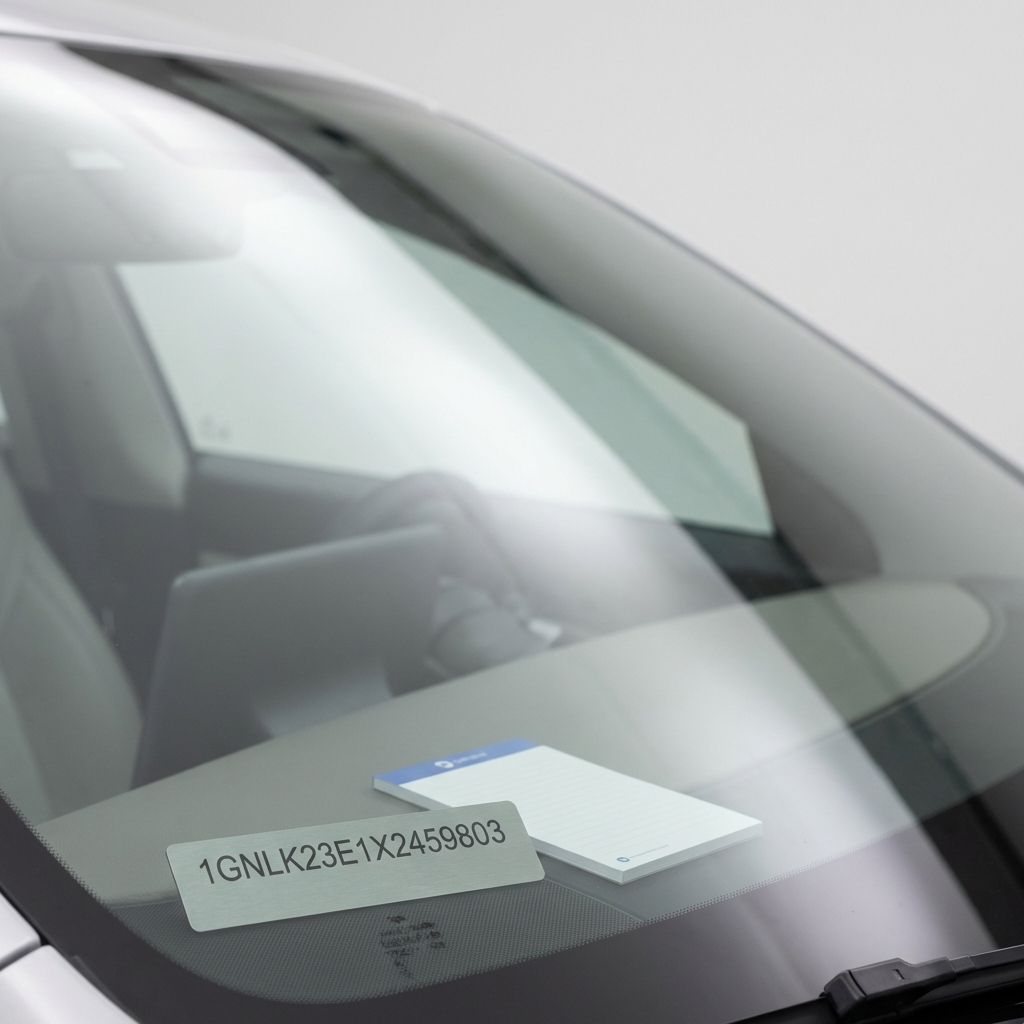
The vehicle identification number (VIN) is the key. It’s usually 17 characters long and sits on the driver-side dash (visible through the windshield), on the driver-side door jamb, and on the title or registration. If a seller won’t give the VIN, treat that as a warning.
With a VIN in hand, you can run several free checks. These are quick, legal, and widely used by buyers and professionals alike.
Free online services and official databases
Here are reliable, free places to search when you’re asking How can I check a car's history for free?
1) National Highway Traffic Safety Administration (NHTSA) - Recall lookup
Enter the VIN or the make, model, and year at the NHTSA recall site to see open safety recalls. Open recalls are public safety priorities; if a car has unresolved recalls, it’s a red flag until fixed.
2) National Insurance Crime Bureau (NICB) - VINCheck
NICB provides a free VIN check that looks for reported thefts and certain kinds of salvage records. It’s not exhaustive, but it can catch major theft/flood reporting that affects title or safety.
3) State DMV and local motor vehicle agencies
Many state DMVs provide title and registration information, some online and some by request. Check for branded titles (salvage, rebuilt, flood) and title histories. The exact service varies by state.
4) NHTSA and manufacturer recall pages
Some manufacturers list service campaigns and owner notifications that don’t appear in other databases. If you’re asking How can I check a car's history for free?, visiting the maker’s site with the VIN can reveal targeted campaigns and service bulletins.
5) Free history aggregators (use cautiously)
There are free vehicle history sites that aggregate public records, auctions, and salvage reports. They’re useful to add context but don’t replace official sources or a mechanic’s inspection. Use these services to cross-check information, then verify with the DMV, NICB, or manufacturer.
Decoding what you find
Finding a record is one thing; understanding it is another. Here’s how to read common entries:
Accident reports vs. minor dents
A reported accident can range from a minor fender-bender to major frame damage. If a free report shows an accident, ask for details: where on the car was it repaired, who made the repairs, and were OEM parts used? If the seller can’t answer, insist on a mechanic’s inspection.
Title brands explained
Titles that say salvage, rebuilt, or flood tell you the car underwent substantial damage. Salvage titles often mean the car was declared a total loss by an insurer. Rebuilt titles indicate repairs were completed and inspected afterwards—these cars can be OK but typically have lower resale value. Flood titles are particularly risky: hidden corrosion and electrical issues can appear long after purchase.
Odometer and mileage checks
Free checks sometimes flag mileage inconsistencies. Cross-reference mileage on service records, inspection stickers, and title transfers. Large jumps or decreases in mileage are a reason to dig deeper.
Service history signals
Service records that show regular oil changes, scheduled timing belt replacement, and routine maintenance are encouraging. A clean record isn’t everything, but it increases confidence in the car’s care.
Using community knowledge
Forums, Facebook groups, and Reddit communities are gold mines for model-specific issues. Ask model-year-specific questions like “Does the 2012 example of this model have known turbo failures?” Community knowledge answers the practical question of long-term ownership costs.
If you want a data-backed, user-friendly layer on top of free checks, consider using CARFAX Deals. CARFAX Deals pairs listings with verified vehicle history reports and transparent price labels so you can see whether a listed car has accident records, title issues, or service history before contacting the dealer. Think of it as a fast fact-check that complements the free checks you’re already doing.
Step-by-step: a free car-history check you can do in one afternoon
Answering the question How can I check a car's history for free? becomes simple if you follow these steps in order.
Step 1 — Get the VIN and basic listing details
Ask the seller for VIN, year, make, model, and trim. Write them down. If the car is listed online, most reputable listings include the VIN.
Step 2 — Run official free checks
Use NICB VINCheck, NHTSA recall lookup, and your state DMV title search. Bookmark the pages or save screenshots to your phone for later reference.
Step 3 — Look up service records and inspection stickers
Check for oil-change stickers under the hood and ask the owner for service invoices. These small records often confirm mileage and maintenance cadence.
Step 4 — Search local police and court records (if concerned)
In some areas, major incidents or liens might be recorded in public court filings. A brief search can reveal whether a vehicle has been involved in criminal reports or long-running disputes.
Step 5 — Use free community checks
Search owner forums, model-specific groups, or local community boards for similar VINs or symptoms. Often someone else has seen the same issue and can offer context.
Step 6 — Inspect in person and test drive
Free online checks are powerful, but they don’t replace seeing and driving the car. Bring your phone, a checklist, and, if possible, a friend who knows cars. Look and drive for the signs described below.
Practical inspection checklist (free, quick, and effective)
Carry this mental checklist during the viewing and test drive. It costs nothing and often reveals the most important clues.
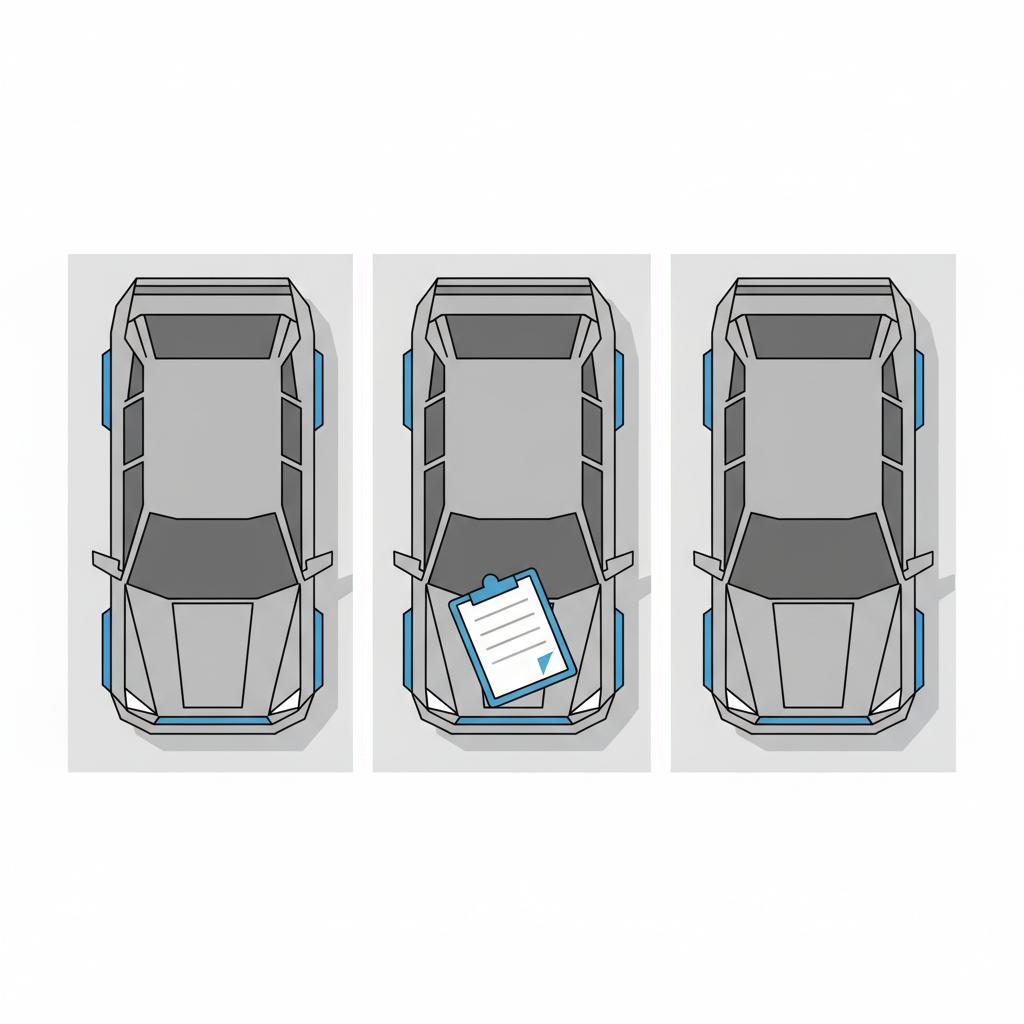
Exterior: Panel gaps, paint color differences, rust spots, and uneven tire wear.
Underbody: Clean underbody may hide recent repairs; look for fresh welds, dripping fluids, or heavy rust.
Interior: Water stains on carpet or headliner, strong air freshener smells (used to mask odors), and functioning seat belts.
Test drive: Transmission shifts, brake feel, steering vibration, unusual noises at certain speeds, and climate control function.
How to interpret seller answers
Sellers who are straight with you will provide VIN, maintenance receipts, and a calm explanation of any repairs. If answers are evasive, the car may need more scrutiny. Again: refusal to allow an independent inspection is a serious red flag.
Negotiating with free-check findings
Use the facts you’ve gathered from free checks to negotiate: documented past accidents, signs of poor maintenance, or unresolved recalls are all negotiation points. If the inspection notes likely upcoming repairs, ask for a price reduction or for the seller to complete the repairs before sale.
Common free sources and exactly what they show
Because many people ask How can I check a car's history for free? below is a list of specific resources and the exact type of information they typically return.
NICB VINCheck
Shows if the VIN was reported as stolen or if there’s a salvage record in participating databases. It’s fast and simple.
NHTSA recall tool
Shows open safety recalls that the manufacturer or NHTSA has identified. Critical for safety.
State DMV/title searches
Shows title brands and sometimes owner history depending on state privacy rules. Useful to confirm salvage, rebuilt, or flood titles.
Manufacturer service campaigns and TSBs (technical service bulletins)
Technical service bulletins and campaigns can indicate recurring problems for specific model years. While TSBs aren’t formal recalls, they show manufacturer-known issues and typical fixes.
Online classifieds and archived listing searches
Check previous listings for the same VIN or similar ads. A car that repeatedly appears with changing mileage or mixed descriptions is suspicious.
Where free checks fall short
Free checks won’t necessarily show minor unreported accidents, cosmetic-only repairs, or some private-service records. They may also miss incidents recorded under different VINs or in non-standard databases. That’s why a free report should be combined with a physical inspection and a mechanic’s check.
Using paid reports wisely (when it’s worth it)
Paid reports (like full CARFAX or other detailed services) aggregate more records. They’re worth buying when you’re near the point of purchase because they can reveal additional auction records, service history, and detailed title transfers. But before you buy a paid report, answer How can I check a car's history for free? using the steps above—often you’ll have enough to decide whether to move forward. Consider ordering a formal VIN report if you need a deeper dive.
Special topic: flood and water damage
Flood damage is stealthy. Smell is a big clue—musty odors and rusty fasteners in the engine bay are common signs. Look for water lines in the trunk, unusual corrosion under trim pieces, and silt in odd places. If a free search suggests flood history or the car smells musty, be very cautious.
Special topic: rental, lease, and fleet vehicles
Cars used as rentals or fleet vehicles may have higher wear-and-tear despite clean records. Free checks can sometimes reveal ‘fleet’ or ‘rental’ in title notes or service histories. If a vehicle has a rental background but excellent maintenance records, it can still be a good buy—just expect harder driving and more interior wear.
Protect yourself: paperwork and transfer steps
Even after favorable free checks, complete the sale with clean paperwork. Verify the seller’s name on the title, check for liens, and get a signed bill of sale. Follow your state’s title-transfer steps to avoid future headaches.
What if the free checks disagree with the seller?
If you find a discrepancy, ask the seller to explain and produce documents. Often discrepancies have reasonable explanations, such as an insurer reporting a claim that the owner believed was minor. If the seller’s story doesn’t match documentation, consider walking away.
Run the VIN through NICB VINCheck and NHTSA recall lookup—the combination quickly reveals theft/salvage records and open safety recalls, which are the most serious, free-to-find red flags.
DIY VIN decoding: what the VIN actually tells you
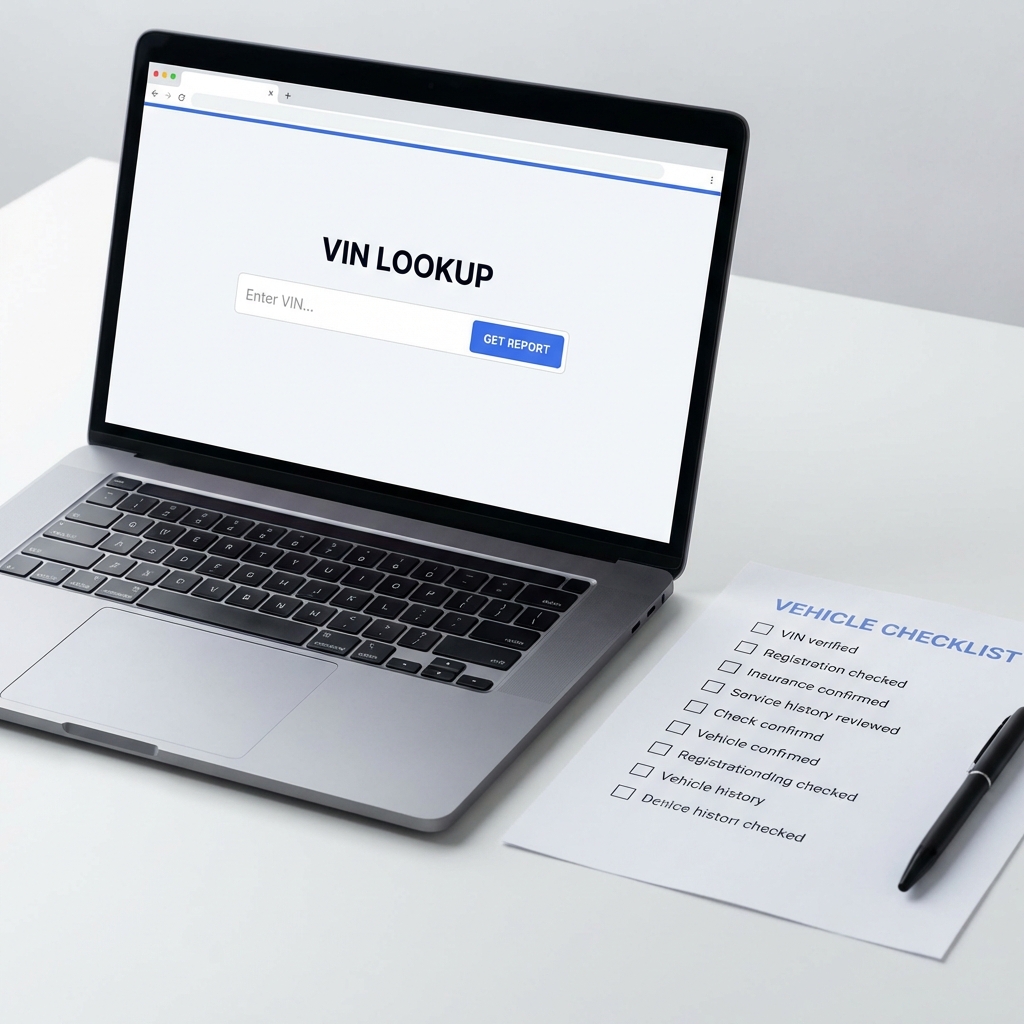
VIN decoding is a free and informative step. Each VIN embeds information about the plant of manufacture, engine type, model year, and unique serial. Free online VIN decoders give you the factory options and sometimes the original equipment list. That can reveal whether what’s in the car today matches factory specs. Try the built-in VIN decoder tool at NHTSA's VIN decoder for a free factory-spec look-up.
Extra tricks that cost nothing and pay off
- Reverse-image search vehicle photos to see if an ad is copied or used elsewhere. - Search the VIN on social media and forums for owner posts. - Check local auction sites—some damaged vehicles appear at auction and later show up for sale. Finding a VIN in auction sale lists is a strong warning sign.
Checklist you can screenshot and use at the lot
1) VIN present? (Yes/No) 2) NICB reported theft or salvage? (Yes/No) 3) Open recalls? (Yes/No) 4) Title brand? (Clear/Salvage/Rebuilt/Flood) 5) Service records present? (Yes/No) 6) Signs of water damage? (Yes/No) 7) Uneven tire wear? (Yes/No) 8) Strange smells inside? (Yes/No) 9) Test drive transmission/breaks OK? (Yes/No) 10) Seller allows inspection? (Yes/No)
Examples and short stories that teach
I once checked a compact wagon where the owner said “no accidents.” Free VIN and auction searches found a prior accident and a salvage auction listing. The seller admitted a small claim had been made. With that knowledge, the buyer asked for a reduction and used the mechanic’s inspection to set a fair price. In another example, a pickup looked perfect until a quick NICB check flagged a salvage record from a flood-prone region. That single free check prevented a bad buy.
When buyers wonder How can I check a car's history for free? they usually want a quick filter to narrow options. Free checks are the base layer. If you want a second look that’s still efficient, CARFAX Deals provides an easy-to-scan listing page with verified history and pricing context. It’s not a replacement for free NICB or NHTSA searches, but it does save time and points you toward better listings. A clear listing view helps you spot red flags faster.
When to pay for a more intensive report or inspection
Pay for a professional pre-purchase inspection if the car passes your free checks and you’re ready to move forward. Consider a paid vehicle history report when free sources give partial or unclear information and you need a deeper aggregation of auction and service records.
Final practical tips
Take your time. Ask for paper proof. Use the VIN for official lookups first. Combine free databases and community wisdom, then finish with a mechanic’s inspection. When the question is How can I check a car's history for free? the best answer is: methodically, with multiple free sources and a checklist in your pocket.
See verified history and price context before you call the seller
Want to speed up your checks with verified data and price context? Run a quick report at CARFAX Deals to see vehicle history and whether the listing is a good market match before you call the dealer.
1) Get VIN and run NICB and NHTSA checks. 2) Check state title records for branding. 3) Look for service history and inspection stickers. 4) Inspect in person with the checklist above. 5) Bring a mechanic for a pre-purchase inspection. 6) Use paid aggregation only when needed. Remember: free sources answer most of your early questions and often prevent the biggest mistakes.
How can I check a car's history for free? Use the VIN, official public databases, and community knowledge—then verify with a mechanic. The tools are mostly free; you only pay for peace of mind.
Start with NICB VINCheck to look for theft or salvage reports, then run the NHTSA recall lookup for open safety recalls. After those, check your state’s DMV site for title brands and any available registration history. These steps are fast, official, and zero-cost.
No. Free checks provide valuable information but aren’t exhaustive. They can miss unreported accidents or private service records. Always combine free checks with an in-person inspection and a professional pre-purchase mechanical inspection before buying.
CARFAX Deals aggregates verified vehicle history reports and pairs them with transparent price labels, helping you quickly see which listings are low-risk and well-priced. Use it as a time-saving layer on top of your free VIN, NICB, and NHTSA searches to prioritize trustworthy listings.
A thorough, free check with the VIN, NICB, NHTSA, and a careful inspection answers most buyer questions: How can I check a car's history for free? By using those free tools, following the checklist, and finishing with a mechanic’s inspection—and good luck finding the right ride; happy driving and may your new-to-you car bring fewer surprises and more smiles!

 Blog
Blog