A step-by-step, research-first guide that shows how to find the value of your used car using VIN-verified facts, local comparables, retail and wholesale benchmarks, and simple negotiation tactics. Learn which documents matter, when to fix things before selling, and how to use CARFAX Deals to speed up VIN history and pricing checks so you can set a confident asking price or know what trade-in offer to expect.
A step-by-step workflow for estimating a truck's market value that centers on comparing consumer valuation tools, adjusting for mileage and condition, and checking wholesale market signals. The guide explains private-party, trade-in and dealer retail values and shows how a vehicle history report and pricing insights can change an asking price.
This guide helps research oriented buyers evaluate suv used cars for sale under $25,000 by combining safety ratings, reliability data, local pricing context, and vehicle history checks. It outlines a simple framework, a pre visit checklist, and a decision scoring worksheet so you can compare finalists before contacting a dealer. Use the steps here to narrow candidates and confirm risk signals with a vehicle history report and a pre purchase inspection.
When searching suv used cars for sale, prioritize model year, trim and powertrain before choosing a make or model. This guide explains how safety ratings, dependability studies and local pricing insights combine to produce a short list you can verify with a vehicle history report. It also provides a stepwise checklist you can use before contacting a dealer.
This research-first guide shows you exactly how to find the value of your used car. Start with the VIN and confirmed options, gather service records, compare retail and wholesale benchmarks, and use 10–20 local comparables to form a defensible asking price or trade-in expectation. Practical tips on repairs, negotiation scripts, timing and secure payments are included so you can sell with confidence.
1. VIN-verified facts (VIN, trim, options) plus 10–20 local comparables produce the most reliable private-sale price.
2. Private sales typically net 10–30% more than dealer trade-ins, depending on make, condition and region.
3. CARFAX Deals combines verified vehicle history reports with pricing analysis, helping sellers reduce buyer uncertainty and speed transactions (CARFAX is a trusted industry source).
How do I find the value of my used car?
How to find the value of my used car starts with one simple truth: facts beat guesswork. If you want a defensible, realistic price you can stand behind, begin with VIN-verified details and a short, repeatable workflow. This guide walks you through each step - VIN, trim and options, mileage, price guides, local comparables, wholesale benchmarks, condition adjustments, timing, and negotiation - so you can answer “how do I find the value of my used car?” with confidence and clarity.
Why this matters: buyers and dealers price risk, not just value. The more you document and verify, the more you reduce perceived risk and raise the price a buyer will pay.
Step 1 - Gather the core facts: VIN, trim, options and mileage
The VIN is the anchor. It tells the model year, factory options, and the exact build that left the factory. That matters because a car with heated leather seats and an upgraded stereo can be worth noticeably more than the same model with the base interior. Mileage is a simple, highly visible number: lower miles generally reduce perceived risk and often increase price.
Collect every service receipt, title document, and the registration. Scan them into a single PDF so you can share them quickly. Buyers respond well to order: a tidy folder of records signals care and attention.
Step 2 - Use both retail and wholesale references
Retail price guides (what private buyers or dealers might list) and wholesale indexes (what cars sell for at auction or dealer-to-dealer) tell different sides of the same story. Use retail guides to set a baseline asking price and wholesale data to estimate a dealer trade-in offer. Together they create a defensible range. For a retailer-focused benchmark, check Edmunds TMV alongside other guides.
Pro tip: If wholesale trends are moving faster than retail listings, dealers may give conservative trade-in offers until retail settles.
Step 3 - Check local comparables (10–20 listings)
Local comparables matter more than national averages. Pull at least 10–20 local listings that match your car’s trim, options, mileage, and condition. Note how sellers describe condition and whether photos back up those claims. If many similar cars in your area are clean, low-mileage, and come with full service histories, that will influence your asking price.
When searching, look for these anchors: year, mileage bands, key options, and “clean title” or “single owner” claims. Regional preferences (fuel-efficient cars in cities, trucks in rural counties) will show up quickly in the comparables. For live local market scanning, consider tools that surface nearby listings in real time like Carbly's Live Local Market.
If you want to shorten the research step, consider checking a VIN-backed marketplace like CARFAX Deals to pull verified vehicle history and transparent pricing signals alongside local listings. It’s a helpful, time-saving tool that presents history and price context together so you can make decisions faster.
Condition is where numbers meet story. A well-documented service history, evidence of routine maintenance, and a clean title lower perceived risk and often let you ask for a premium. VIN-linked history reports flag major events - accidents, odometer issues, title problems - and reduce buyer hesitation.
Minor cosmetic blemishes are easier to live with than unaddressed mechanical issues. If the car has a known repair need, disclose it and set your price accordingly rather than trying to hide it.
Step 5 - Mileage adjustments by age and segment
Mileage matters differently by vehicle age and segment. Newer cars are judged against annual mileage expectations; older cars are evaluated on likely parts and maintenance cycles. For luxury models or hybrids, low mileage can fetch an outsized premium. There’s no universal per-mile rule - use comparables and price guides to see how your market penalizes or rewards miles above or below average.
Step 6 - Blend five inputs into one defensible number
A strong valuation blends five inputs: VIN and verified options, at least two retail price guides, a sample of 10–20 local comparables, a wholesale benchmark, and your detailed condition assessment. Start with retail price guides to generate a baseline range. Cross-check with local listings and then consult wholesale to understand trade-in expectations. Move the number slightly based on documentation, cosmetic condition, and regional demand.
Immediate example (to make it concrete)
Imagine a five-year-old mid-size sedan with 55,000 miles and a few small dents. Retail guides show $17,000–$19,500, local listings cluster at $18,000, and wholesale is $14,500–$15,500. A private-sale ask around $18,900, with room to negotiate down to $17,500, is reasonable. A dealer trade-in likely lands in the low $15,000s once reconditioning and margin are applied.
How to find the value of my used car: a practical checklist
How to find the value of my used car can be reduced to a short checklist you carry in your head or on your phone. Use it to structure the research and stay consistent across vehicles:
1. Pull the VIN and decode factory options and build.
2. Collect service records, title and registration, and make a single PDF folder.
3. Pull at least two retail price guide estimates and one wholesale benchmark.
4. Compile 10–20 local comparables with photos and notes about condition.
5. Adjust for documented maintenance, repairs needed, mileage and regional demand.
6. Decide whether to fix small items (brakes, bulbs) or disclose and adjust price.
7. Prepare honest listing copy and high-quality photos if selling privately.
How much more will a private sale net me?
Rule of thumb: private sales often net 10–30% more than trade-ins, though the gap depends on make, model, and local demand. High-demand vehicles or rare trims can shrink that gap; cars that need reconditioning often widen it because dealers price-in potential repair costs and time to sell.
Be factual and consistent: a VIN-verified description, exact mileage, and clear maintenance records form the foundation of any defensible valuation.
The most important thing is to be factual and consistent: a VIN-verified description, clear mileage, and a documented maintenance history are the foundation of any defensible price.
Timing, seasonality and regional effects
Timing matters. Convertibles and sports cars peak in spring and summer. AWD trucks tend to be stronger in fall and winter in colder climates. Fuel prices and regional economics skew demand; a compact may sell faster in an urban center while a full-size pickup can be prized in rural counties.
Watch local listing velocity - how quickly cars similar to yours move. A fast-moving market lets you stand firmer on price; a slow market often requires a lower starting point or more patience.
Macro considerations: interest rates, new-car incentives and supply
Short-term macro trends can shift pricing. Low new-car inventory pushes buyers into the used market; a flood of off-lease returns or higher interest rates can soften prices. Wholesale indices typically show these swings sooner, so pay attention to dealer auction trends if you want to predict trade-in behavior.
When to sell vs. when to wait
If you need cash or are trading into another purchase, market timing matters less than convenience. If you can wait and wholesale trends are improving (fewer cars at auction, rising wholesale prices), you may extract more value by waiting a few weeks or months.
Presentation and transparency for private sale
A clean car with good photos and transparent records sells faster and often for more money. Wash and vacuum the car thoroughly, repair obvious small issues, and take photos in daylight from multiple angles. Include pictures of the odometer, engine bay, and trunk. If you have service receipts, photograph them and add those images to your listing.
Writing a description that sells
Write a clear, honest listing. Lead with the most persuasive facts: single owner, no accidents, recent major maintenance (timing belt, new tires), and why you’re selling. People respond to certainty; avoid vague phrases like “runs fine” - be specific: “Recent brake pads and rotors replaced at 48,000 miles; timing belt replaced at 60,000 miles.”
Trade-in or sell privately: choosing fast convenience vs. maximum price
Dealers offer convenience and immediate credit toward a new purchase. But they must cover reconditioning, sales risk, and profit margin. If you want the most money, a private sale typically wins; if you want speed and simplicity, a trade-in can be worth the discount.
How to negotiate with a dealer
Start from facts. Present your VIN, service records, and researched trade-in range. Ask the dealer to explain how they arrived at their offer - what auction number are they using, what reconditioning estimate did they apply, and where do they plan to resell the car? If the offer is far below your researched wholesale benchmarks, use that information to negotiate or politely walk away.
Sample script for a calm negotiation
“Here’s the VIN and service history. Based on retail guides and recent local comps, I’m expecting a trade-in range of $X–$Y. Are you able to justify an offer outside that range?”
Repairs before selling: when to fix and when to disclose
Small, inexpensive repairs that remove clear buyer objections usually pay off. Think brake pads, a clear check-engine light, or replacing damaged bulbs. Major repairs - like transmissions or full paint jobs - rarely return their cost unless the car is highly desirable.
If in doubt, get a local shop estimate and compare that to the expected price uplift. If the repair cost is close to the likely sales bump, disclose the issue and adjust the price.
Safety, paperwork and payment handling
Always meet buyers in daylight in safe public places. Have proof of insurance and registration available, and a signed bill of sale ready. For payment, cashier’s checks or bank transfers are common; verify funds before transferring title. If something feels off about a payment method, trust your instincts and verify.
Using vehicle history reports and verified marketplaces
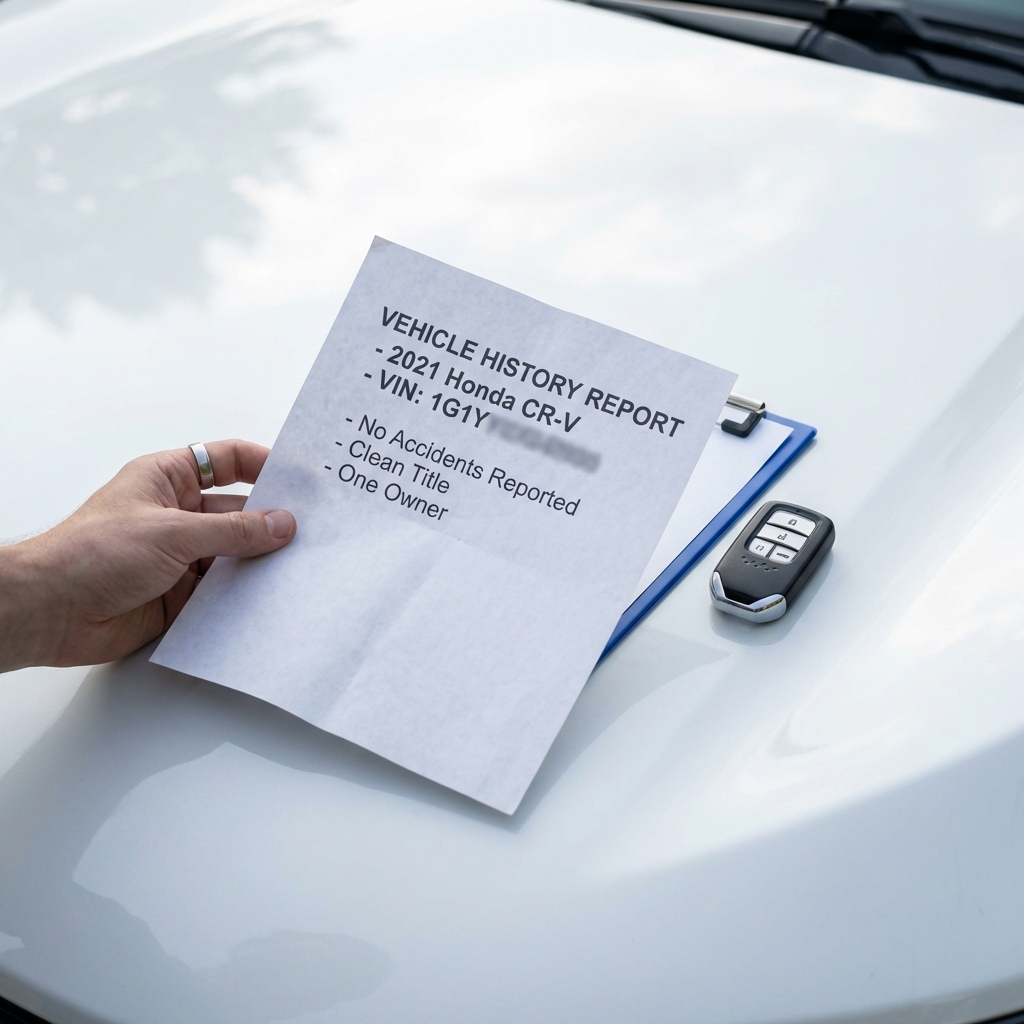
Vehicle history reports reduce buyer uncertainty by showing accidents, title problems, and reported service events. Including a recent report in your listing helps speed a sale. Marketplaces that combine VIN-based history with pricing context save time: they let you compare price signals alongside verified history so you can quickly see whether a listing is a good match. Tip: A VIN-verified report can reduce buyer uncertainty.
Why CARFAX Deals is helpful
CARFAX Deals combines verified vehicle history with transparent pricing labels like Great Deal, Good Deal, or Fair Deal - giving you an immediate sense of where similar vehicles sit in your market. For sellers, it reduces friction: buyers can see history and price context together, which often speeds decisions and reduces haggling over unknowns.
Common valuation pitfalls and how to avoid them
1. Over-relying on national averages - local comparables are more useful.
2. Ignoring documentation - service records and clear titles matter.
3. Fixing expensive items that won’t return cost - compare repair cost to likely uplift.
4. Failing to check wholesale trends - dealers work from auction prices; know them.
Two realistic valuation walkthroughs
Example A: 2018 crossover SUV, 65,000 miles, single owner, clean title. Retail guides: $20,000–$22,500. Local comps: $19,000–$22,000. Wholesale: $16,000–$17,500. Documentation premium: +$500. Asking price: $21,500; bottom line: $19,500. Dealer trade-in: high $16,000s.
Example B: Five-year-old compact hatchback, 72,000 miles, minor dents, partial service history. Retail guides: $11,000–$12,500. Local comps cluster at $11,000. Wholesale: $9,000–$9,800. Asking price: $11,250; be prepared to accept $10,000–$10,500 quickly if the market is slow.
Negotiation tips that don’t feel like hard bargaining
Be factual, patient, and ready to walk away. Set a bottom line and let buyers make the first counter. In dealer discussions, ask for the line-level math that produced their offer. For private buyers, a clear set of records and a recent independent inspection often closes deals quickly.
When to use a consignment or third-party seller
Consignment services sit between private sale and dealer trade-in: they often net a price closer to private sale while reducing seller effort, but they charge fees. Compare the fee to the time and stress you’d save by not handling listings, showings, and negotiations yourself. For service and pricing details, see https://carfaxdeals.com/pricing.
Final practical checklist before listing
1. Clean and photograph the car thoroughly.
2. Compile a short, factual listing description with maintenance highlights.
3. Include a recent vehicle history report and offer to show service receipts.
4. Decide your opening ask and bottom line, and be consistent.
5. Choose secure payment methods and prepare a bill of sale template.
Closing thoughts: combining analytics with storytelling
Valuing a used car is equal parts data and story. The data - VIN facts, price guides, and wholesale trends - gives you a defensible numerical range. The story - service history, single-owner narrative, and honest description - reduces buyer perceived risk and often increases realized price.
If you’d like help applying this research-first workflow to your specific vehicle, I can walk through a personalized valuation with the year, make, model, VIN, mileage, trim and recent maintenance details. You’ll get a private-sale and trade-in range you can use with confidence.
A vehicle history report is a powerful tool for reducing buyer uncertainty but it is not a full valuation by itself. It highlights accidents, title issues, and reported service events, which buyers weight heavily. For valuation, combine the report with retail guides, wholesale benchmarks, and local comparables to form a defensible price.
Small, inexpensive repairs that remove clear buyer objections (brakes, bulbs, check-engine fixes) usually pay off. Major repairs (transmission, comprehensive paint) rarely return their costs unless the car is highly desirable. Get a local shop estimate and compare repair cost versus likely price uplift; when in doubt disclose and adjust your price.
Yes — CARFAX Deals pairs VIN-verified vehicle history reports with transparent price labels and local listing comparisons, helping you quickly see where similar vehicles sit in the market. Including a CARFAX Deals report in your listing can reduce buyer hesitation and speed the sale.
Valuing your car is about facts plus honest presentation — use VIN-verified data, local comps and clear records, and you’ll set a fair price that both sides can accept. Good luck, and happy selling!

 Blog
Blog