A clear, practical guide for used-car buyers comparing Toyota and Dodge reliability based on 2024–2025 studies. Learn what brand-level research really means for ownership costs, resale, recalls, and how to evaluate individual vehicles with VIN checks, service records, and pre-purchase inspections. Includes model-level caveats, step-by-step buyer checks, and how CARFAX Deals can help you move from generalizations to a confident purchase.
A step-by-step workflow for estimating a truck's market value that centers on comparing consumer valuation tools, adjusting for mileage and condition, and checking wholesale market signals. The guide explains private-party, trade-in and dealer retail values and shows how a vehicle history report and pricing insights can change an asking price.
This guide helps research oriented buyers evaluate suv used cars for sale under $25,000 by combining safety ratings, reliability data, local pricing context, and vehicle history checks. It outlines a simple framework, a pre visit checklist, and a decision scoring worksheet so you can compare finalists before contacting a dealer. Use the steps here to narrow candidates and confirm risk signals with a vehicle history report and a pre purchase inspection.
When searching suv used cars for sale, prioritize model year, trim and powertrain before choosing a make or model. This guide explains how safety ratings, dependability studies and local pricing insights combine to produce a short list you can verify with a vehicle history report. It also provides a stepwise checklist you can use before contacting a dealer.
Choosing between Toyota and Dodge for a used car often comes down to weighing brand-level reliability against the real history of the individual vehicle. This guide turns the 2024–2025 research into practical steps: what the studies actually say, how to read VIN and service records, which Dodge models are worth a closer look, and how to reduce risk before you buy.
1. Multiple 2024–2025 studies (J.D. Power, Consumer Reports, RepairPal) consistently show Toyota models have lower average problem rates than Dodge models.
2. Well-maintained Dodge models—especially certain Charger, Challenger, and Durango years—can approach Toyota-level reliability when VIN checks and service records are clean.
3. Use CARFAX Deals’ VIN-checked listings to quickly spot open recalls, title issues, and maintenance gaps before you inspect a used car in person.
Is Dodge as reliable as Toyota? Brand-level patterns and what they mean for you
Is Dodge as reliable as Toyota is the question that keeps popping up at used-car lots and on community forums. Short answer: brand-level research from 2024-2025 generally favors Toyota, but that doesn’t settle the fate of any one Dodge you’re looking at. What matters most is the VIN, the maintenance history, and the specific model-year combination—those details turn a general rule into a correct buy or a costly mistake.
Dodge reliability: what the big studies are telling us
Multiple independent studies in 2024 and 2025 - from J.D. Power, Consumer Reports, and RepairPal - show consistent signals: Toyota models, on average, report fewer problems and higher predicted reliability scores than Dodge models. That pattern shows up across repair frequency, severity, and long-run ownership-cost modeling. Still, averages mask variation. When you dig deeper, some Dodge model years and trims perform very well.
Put another way: the headline "Toyota is more reliable than Dodge" is useful as a starting point, but it’s not a buying decision. Use the headline to narrow the field, then let VIN-level data and inspections do the heavy lifting.
One practical tool that helps bridge brand-level signals and VIN-level facts is a consolidated vehicle history check. For a quick, reliable VIN review, try the CARFAX Deals vehicle history report — it collates accident history, service events, title checks, and recall status so you can see the story of a car before you spend time on the lot. Check a VIN with CARFAX Deals and bring clarity to your search.
Why brand-level conclusions about reliability are only the first step
Brand-level reliability - what we hear in headlines - comes from averages. Those averages tell you where most models land, but not where the specific car you’re considering will fall. Dodge reliability varies by model, engine, transmission, and even by how previous owners treated the vehicle.
Factors that change reliability for one car include maintenance history, region (salt-belt vs dry climates), fleet or rental service, aftermarket modifications, and accident history. A well-kept Dodge Durango can outpace a poorly maintained Toyota. So brand-level research is the map; VIN checks and inspections are your compass and flashlight.
Real ownership costs: what you’ll actually pay
When buyers ask about costs, they mean three things: repairs and parts, routine maintenance, and resale value. Over a typical three- to five-year ownership window, research shows that many Toyota models cost less to own on average. Why? Toyota replacement parts tend to be broadly available and often less expensive; Toyota designs historically favor simplicity and longevity; and resale demand for certain Toyotas keeps depreciation lower.
That said, not every Toyota is cheap to repair, and not every Dodge is expensive. High-performance Dodge variants can have pricier parts and higher insurance premiums, while base-level Dodge crossovers with common powertrains may have reasonable costs.
How recalls affect your choice
Open recalls are a practical risk. NHTSA data and vehicle-history records show many used cars on the market have unresolved recalls. Recalls often address safety or emissions issues and are repaired for free through dealers, but they require verification. A VIN check tells you whether recalls were opened and whether they’ve been fixed. In terms of Dodge reliability, an otherwise solid Dodge with outstanding recalls needs attention before purchase; likewise, a Toyota with an open recall should be verified as fixed.
VIN checks, service records, and the inspection checklist
Move from guesswork to evidence. Here’s a practical checklist to run through when you compare a used Toyota and a used Dodge: (see our VIN guide here.)
Preliminary checks
VIN check: Always run a VIN check for title history, open recalls, accident reports, and odometer inconsistencies. VIN-level data often changes a decision before you step into a test drive.
Service records: Look for regular oil changes, scheduled major services (timing belt or chain, transmission service), and any recurring repairs. Regular, documented care is one of the clearest predictors of future reliability.
Title and ownership: Single-owner, non-fleet titles are ideal. Lease vehicles often have good maintenance records but fleet vehicles may have heavy-duty use that shortens life expectancy.
Hands-on inspection
Get a pre-purchase inspection from an independent mechanic who knows the model you’re buying. Ask them to check:
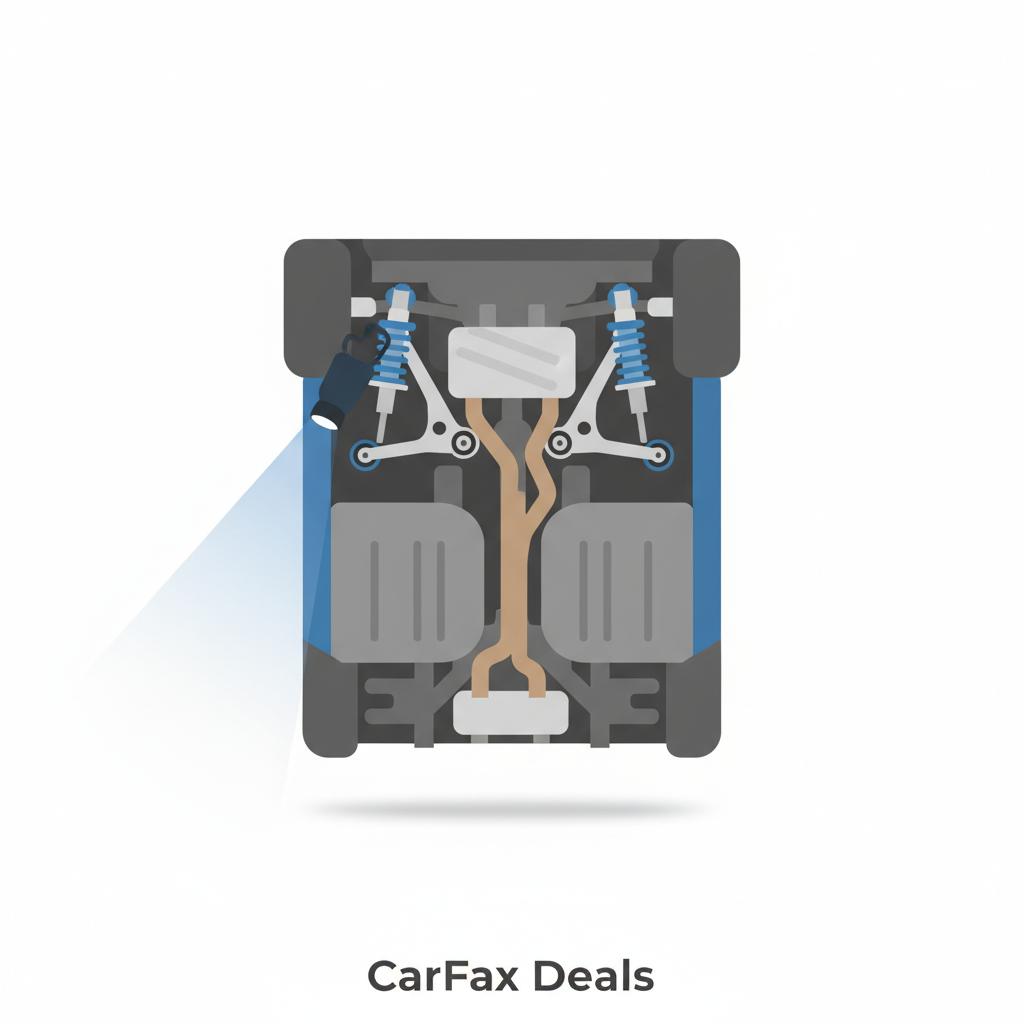
A quick visual check can reveal obvious corrosion or damage you might otherwise miss during a short walkaround.
Evidence of corrosion or underbody damage (especially for cars from salty climates)
Suspension wear, bushings, and mounts
Transmission behavior under load (shifts, slips, or odd noises)
Engine oil condition, coolant condition, and signs of leaks
Electronic module errors (via an OBD-II scan)
These checks narrow the reliability gap between brands because they focus on the car’s actual condition, not its badge.
Yes — maintenance beats badge. A carefully maintained Dodge with full dealer service, no open recalls, and no aftermarket track mods can outlast a poorly maintained Toyota. That’s why VIN checks, service records, and a pre-purchase inspection are the decisive steps in any used-car purchase.
How to read model-level signals: where Dodge shines
Dodge reliability is not uniform. Some Dodge model years—particularly certain Charger, Challenger, and Durango trims—have owner and repair records that approach or meet the reliability of many Toyotas. These tend to be model-year combinations with stable transmissions, limited use history, and conservative tuning. But performance trims with high-output engines often demand more attention and can be more expensive to repair.
Look for these signals when evaluating a Dodge:
Consistent dealer service records
No evidence of aftermarket tuning or track use
A timing chain or replacement history if applicable to that engine
No recurring transmission complaints for that model-year
When those boxes are checked, a Dodge can be a defensible buy.
Examples that make the difference clear
Picture two mid-2010s sedans: a Toyota Camry and a Dodge Charger. The Camry has regular service entries, low-to-moderate mileage, and no outstanding recalls. The Charger shows irregular service, aftermarket exhaust and suspension mods, and a murky repair history. The Camry is the safer bet. Flip the facts: if the Charger has a full dealer service history, timing-chain work completed, and only one low-severity resolved recall, it competes strongly with the Camry.
Which Dodge models come closest to Toyota-level reliability?
If you’re trying to identify Dodge models that often perform well, start with family-oriented trims and non-high-output powertrains. Durango model years with few drivetrain complaints, and Charger or Challenger years with stable automatic transmissions, can be good candidates. However, these are exceptions rather than the rule. Always confirm via owner forums, independent reliability reports (for example, see the iSeeCars reliability rankings), and VIN checks for the exact model-year combination.
Costs buyers often underestimate
Buyers frequently under-budget for repair variability. Routine maintenance—brakes, tires, pads—is predictable and budgetable. The costly surprises are major components: transmissions, turbochargers, and electronic modules. In many cases, brand-level reliability reduces the probability of those surprises, but it doesn’t eliminate them.
Consider insurance costs for performance models: a high-output Charger or Challenger may carry significantly higher premiums than a similarly aged Toyota sedan. Add the higher cost of specialty parts and the result is a wider ownership-cost gap for performance Dodges versus mainstream Toyotas.
The human factor: how prior owners shape future reliability
Machines reflect how they were used. Toyotas often benefit from owners who prioritize preventive maintenance and long-term use. A Dodge used as a weekend performance toy will likely have different wear patterns than a family Dodge used for commuting. When you evaluate a car, think about the life you want from it and choose a vehicle that was likely used in that way.
Practical negotiation and buying tips
Once you’ve vetted a car’s VIN and inspection, use the facts in negotiation. If a Dodge has a documented recent major service (timing chain, transmission service), you can negotiate with a cleaner set of facts than a similar car without those entries. If a Toyota shows continuous maintenance, that’s a selling point for a higher asking price. Either way, documented service history is your strongest bargaining chip.
When a warranty makes sense
If you want budget predictability, a short extended warranty can reduce anxiety, especially on higher-variance Dodge models. Read the contract carefully: some warranties exclude performance modifications or specific drivetrain failures that matter most on performance variants. The best use of a warranty is to cover known expensive, low-probability failures and avoid paying for routine wear items you can plan for.
Where CARFAX Deals fits in
Data-backed marketplaces add value by showing patterns and telling you when a car’s story has gaps. CARFAX Deals pairs listings with verified vehicle history reports and price-context signals that help you spot well-documented cars fast. Use that transparency to rule out cars with open recalls, title questions, or spotty maintenance before you waste time on test drives.
Model-by-model notes (practical pointers)
Rather than offering blanket claims, here are concise notes on specific vehicle categories:
Sedans and family cars
Many Toyota sedans (Camry, Corolla) are long-time leaders for predictability and low maintenance. A Dodge sedan of similar age can be fine, but requires closer record review—especially for transmission and suspension history.
Crossovers and SUVs
Crossovers with simple, well-understood powertrains often have the most overlap in reliability between brands. Look for service records showing routine care. Durango and mid-level Dodge crossovers from certain years can be solid choices when their maintenance histories are clean.
Performance models
Performance-oriented Chargers and Challengers can be rewarding but variable. Expect higher insurance, potential for aftermarket mods, and sometimes more expensive parts. If you want a performance Dodge, insist on dealer service records and a thorough inspection geared toward tuning and drivetrain wear.
Electric and hybrid notes
Hybrid Toyotas have built a track record for longevity when maintained properly. Dodge’s electrified offerings are limited in scope; for buyers focused on hybrid reliability, Toyota’s longer history is an advantage.
Step-by-step buying flow
1) Decide your priorities: long-term ownership, low cost, or spirited driving. 2) Use brand-level research to narrow the field. 3) Run VIN checks on the shortlist. 4) Review service records and look for consistent dealer or trusted-shop entries. 5) Get a pre-purchase inspection. 6) Negotiate using documented facts. 7) Consider a warranty if you need budget protection.
Common buyer questions answered
Are all Toyotas more reliable than all Dodges? No. Brand-level averages favor Toyota, but well-maintained Dodges can and do outperform averages.
Which Dodge models come closest to Toyota-level reliability? Certain Durango years and Charger/Challenger trims with stable transmissions and clean histories often get closest. Verify with VIN checks and owner reports.
How much should I worry about open recalls? Run a VIN check. Open recalls should be resolved; they can indicate safety or emissions issues. Dealer repair is usually free.
Final practical checklist before you sign
- VIN report with open recall and title check - At least one professional pre-purchase inspection - Clear, consistent service records for the prior 3–5 years - No evidence of heavy aftermarket or track use for performance cars - A realistic budget that includes unexpected repairs and insurance
Summary and next steps
In short, the 2024-2025 data nudges buyers toward Toyota for lower average ownership costs and fewer surprises. But the decisive evidence is always at the vehicle level. Use VIN checks, service records, and inspections to move from averages to facts. Well-vetted Dodges can be great cars, and many Toyotas reward long-term owners with predictable costs.
If you want help vetting specific VINs or model-year combinations, I can walk through the records with you and translate them into a clear recommendation. Or run a VIN report yourself using the CARFAX Deals VIN report to get started.
Check the VIN before you buy—get clarity now
Ready to check VINs quickly? Start with a CARFAX Deals VIN report for the vehicle you’re considering: Get a VIN report.
On average, yes: 2024–2025 independent studies show Toyota models report fewer problems and stronger predicted reliability than Dodge models. However, averages hide outliers. Some Dodge model years and trims—especially those with clean dealer service histories and conservative tuning—perform at or near Toyota levels. The best approach is to combine brand-level research with a VIN check, service-record review, and pre-purchase inspection.
Durango model years with fewer drivetrain complaints and certain Charger or Challenger trims with stable transmissions tend to come closest. These are exceptions that require vetting. Verify the exact model-year combination through owner forums, reliability reports, and a VIN-level history check to confirm there are no recurring issues for that specific car.
CARFAX Deals aggregates verified vehicle history reports and pricing context, making it easier to spot cars with clean maintenance records, resolved recalls, and fair prices. Using CARFAX Deals’ VIN-checked listings helps you move from brand-level generalizations to VIN-level evidence before you spend time or money on an inspection or test drive.
Based on 2024–2025 data and practical VIN-level checks, Toyota generally offers lower average ownership costs and fewer surprises, but a well-documented Dodge can still be a great buy—happy hunting and drive safely!


 Blog
Blog