A practical, step-by-step guide that answers 'Is Tiguan or Atlas better?' by comparing the Volkswagen Tiguan and Atlas across space, performance, fuel economy, ownership costs, safety, and used-car value. The article combines general used-car buying advice with model-specific guidance, inspection checklists, negotiation tactics, and a friendly nudge to use verified history reports from CARFAX Deals to reduce risk and shop confidently.
Carfax coupon codes rarely work, and the codes listed on coupon sites are usually expired. The discounts that do exist are bundles (three reports for $64.99, five for $99.99), AAA member pricing, and free reports from dealers and listings. The simplest guaranteed discount is CarfaxDeals at $7.99 per report versus $44.99 at Carfax.com.
A Carfax VIN lookup takes the 17-character vehicle identification number and returns the car's recorded history: accidents, title brands, odometer readings, owners, and service records. Free VIN tools only decode specs or check recalls and theft. The full Carfax report costs $44.99 on Carfax.com and $7.99 at CarfaxDeals.
You can get a free Carfax report from the Carfax.com used car listings, a dealer website, the seller, Carfax Car Care (for a car you already own), or listing sites that include one. There is no free report for any VIN you type in. When no free report exists, a paid one costs $44.99 at Carfax or $7.99 at CarfaxDeals.
Buying a used car shouldn’t feel like gambling. This clear guide answers the practical question—Is Tiguan or Atlas better?—by comparing both models across size, comfort, performance, ownership costs, and safety. You’ll also get a step-by-step used-car checklist, red flags to avoid, negotiation tips, and a smart way to use verified history reports to reduce risk.
1. The Atlas usually offers true three-row adult seating; the Tiguan’s third row is best for kids or occasional use.
2. Tiguan tends to be more fuel-efficient and easier to park; Atlas costs more at the pump but delivers greater cargo and towing capacity.
3. CARFAX Deals shows verified vehicle history reports and price-quality labels, helping buyers focus on lower-risk listings—platform data often reduces unexpected issues by highlighting service history and previous accidents.
Is Tiguan or Atlas better?
Short answer: For most families and buyers who need real space and simple utility, the Atlas is the stronger choice; for city drivers who want a smaller footprint, better fuel economy, and easier parking, the Tiguan often wins. This article walks through how to decide between the two and- more importantly- how to buy either one used without losing sleep.
Buying a used car is as much about the process as the model. Early on, ask the practical questions: how many passengers do you carry, what’s your daily driving pattern, and how much time and money will you accept for maintenance? Keep these needs front and center as we compare the Tiguan and Atlas and give a thorough used-car buying plan.
If you want to start your search with verified vehicle histories and transparent deal ratings, try checking listings on CARFAX Deals—they pair VIN-backed reports and price analysis so you can quickly screen safe, well-priced options.
Below you’ll find clear comparisons, inspection tips, common issues, negotiation strategies, ownership cost estimates, and a practical checklist so you can buy confidently.
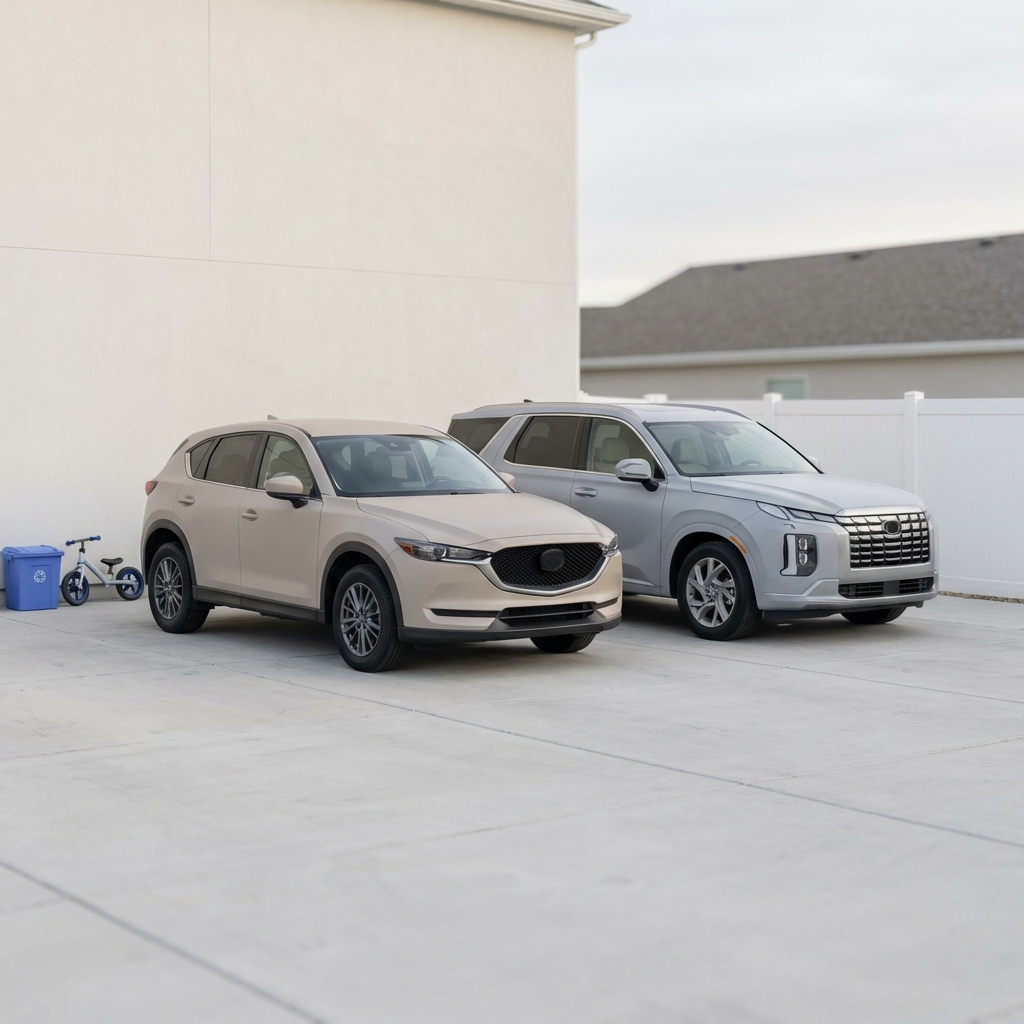
For city commuting and easier parking, the Tiguan is typically better due to its smaller footprint and improved fuel economy. For family hauling, especially with adults in the back or frequent cargo needs, the Atlas is the better choice because of its larger interior and higher towing capacity.
How the two models differ at a glance
Size and seating: The Atlas is a true three-row SUV built for adults in the back; the Tiguan usually comes as a two-row or optional third row (which is tighter). If you regularly carry five or more adults, the Atlas is functionally superior.
Driving and handling: Tiguan is lighter, nimbler, and easier to park in the city; Atlas is heavier, more planted, and better for highway cruising and towing modest loads. For a side-by-side spec and price comparison, see the CarGurus comparison.
Fuel economy: Tiguan generally returns better mpg, especially in two-row form. Atlas sacrifices economy for size and capacity.
Cost to buy used: Tiguan often costs less than Atlas when comparing similar years and condition, but that depends on trim, options, and local supply.
Practical scenarios
If your life is urban errands, tight parking and occasional weekend trips, the Tiguan is often the smarter daily choice. If you ferry kids, gear, or pets frequently, or need room for extended family, the Atlas simplifies life and reduces compromise.
Detailed comparison: space, comfort and cargo
Seating Comfort: Atlas seats three adults comfortably in the second row and offers a usable third row for adults on shorter trips; Tiguan’s third row (where available) is best for kids. If you value real adult comfort in row three, the Atlas wins.
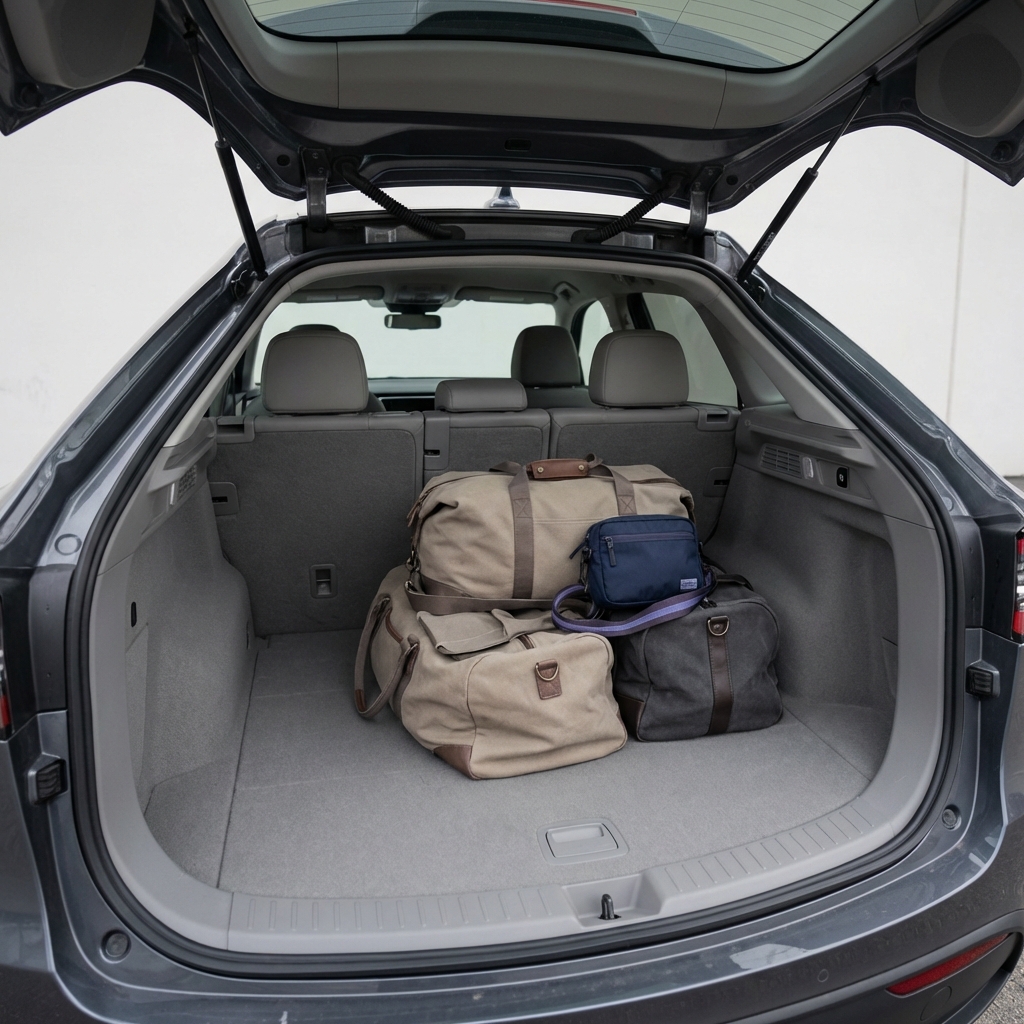
Cargo: Folded seats and load floor design favor the Atlas for camping, moving, and large purchases. Tiguan can be surprisingly practical with seats down, but it cannot match the Atlas’s cubic feet of cargo behind the third row.
Real-world example
A family of five packing for a weekend: an Atlas can usually take full luggage, food, and a stroller without sacrificing seating. The Tiguan may require a roof box or tighter packing. That difference matters on long trips where comfort and ease count.
Performance, engines, and towing
Powertrains: Both models have offered a mix of four-cylinder turbo options over recent years; discover which engine your candidate has. The Atlas often pairs a naturally aspirated V6 or larger turbocharged 4-cylinder in certain trims, delivering stronger low-end power for towing and full-load driving. Tiguan’s smaller engines make it lighter and more efficient but less eager when fully loaded. A deep-dive review at Elk Grove VW also outlines powertrain differences.
Towing: Atlas typically has a higher towing capacity- useful for small trailers, boats, or utility hauling. Tiguan is fine for small cargo carriers and bikes but less suited for heavy towing. Local dealer comparisons also show towing specs, like this Sanford VW comparison.
Fuel economy and ownership costs
Fuel: Expect the Tiguan to return better fuel consumption numbers in everyday urban use. Atlas will cost more at the pump, especially with a V6 or heavier load.
Maintenance: Routine costs are similar where parts and labor are comparable; however, larger vehicles like the Atlas may have slightly higher costs for tires, brakes, and sometimes insulated components due to size. Always check service records: a well-maintained Atlas can be cheaper to own than a neglected Tiguan.
Safety and tech
Both models often include modern safety features—adaptive cruise, blind-spot monitoring, automatic emergency braking—depending on trim and year. Check which safety tech is present on the exact vehicle you’re considering. Higher-trim Atlases may include more driver aids as standard, which boosts safety for family travel.
Used-car buying checklist for Tiguan and Atlas
The following checklist is a focused version of the general used-car checklist, with model-specific points to watch.
Pre-screening (online)
Filter for:
Clear title (no salvage or branded titles)
Service history (timing belt/chain entries, oil changes)
Known problem year flags- search community forums and recall lists
Run a verified history report before you buy
Use a marketplace that provides a verified history report and price context so you can prioritize low-risk listings; you can run a CARFAX Deals report to quickly check VIN-backed histories and deal labels.
Use a marketplace that provides a verified history report and price context so you can prioritize low-risk listings.
On-site inspection
Look for:
Panel gaps and paint mismatch (common signs of body repair)
Uneven tire wear (alignment or suspension issues)
Musty odors (possible water intrusion- bad news on SUVs)
Wear consistent with odometer reading- check pedals, steering wheel, and entry sills
For Atlas-specific checks: verify rear HVAC and heater operation (third-row comfort) and inspect rear liftgate components for smooth operation. For Tiguan-specific checks: confirm turbocharger operation on higher-mileage turbo models (listen for whine or smoke on hard acceleration) and check for oil consumption in known model years.
Test drive routine
Drive in mixed conditions: city, highway, and if possible, a hill to load the engine. Listen for transmission smoothness—VW transmissions are generally fine but can become costly if neglected.
Common problems reported in used examples
Knowing frequent trouble spots helps you ask the right questions and spot issues early.
Tiguan commonly reported issues
Turbocharger wear or boost leaks on older turbo models
Early electronic complaints—infotainment glitches and sensor errors
Occasional oil consumption in certain model years
Atlas commonly reported issues
Transmission hesitation in some earlier model years- check service history
Suspension noises from heavy use or worn bushings
Higher-than-average tire and brake wear from size and weight
Remember: a single problem doesn't condemn a car, but a pattern across service records does.
How to negotiate confidently for a Tiguan or Atlas
Start with research. Compare local listings for the same year, trim, and mileage. Use expected repairs as leverage: if tires or brakes are near replacement, factor that into your offer. Ask for recent maintenance receipts and, if possible, multiple mechanic quotes for any identified work.
Keep emotions out of the seat. Sellers sense enthusiasm and may hold firm. Be polite, factual, and ready to walk away. That quiet confidence often leads to better offers.
Money-transfer and paperwork tips
Match name on title to seller ID. Verify VINs on the title, dash, and driver’s door jamb. Avoid hand-carrying large cash; instead use certified checks or bank transfers and meet at your bank if you must use cash.
Why verified vehicle histories matter (and how CARFAX Deals helps)
Vehicle history reports are not perfect, but they are your first defense. They highlight accidents, branded titles, odometer inconsistencies, recorded service entries, and previous ownership counts. A quick visual cue often makes it easier to spot which listings include full histories.
Using a platform that pairs history reports with price context- like CARFAX Deals- lets you filter for single-owner, no-accident cars or good-deal labels so you spend time only on listings that match your risk tolerance.
When to hire an independent mechanic
If the car costs more than a few thousand dollars, an independent inspection is a small price to pay. Mechanics can spot frame damage, head gasket issues, transmission slips, and other problems that don’t show up on a short test drive. If possible, arrange this before you sign or pay a deposit.
Financing, warranties, and after-sale protection
Compare dealer financing with local banks or credit unions—credit unions often have better rates for used cars. Consider certified pre-owned (CPO) cars if you want factory-backed warranty coverage; many CPO Atlases and Tiguans pass rigorous inspections and include limited warranty periods. For private-party purchases, get a short inspection window or an agreed return policy if the seller will accommodate it. See related articles on the CARFAX Deals blog for more buying and financing tips.
Real ownership costs broken down
Estimate yearly costs by adding insurance, fuel, routine maintenance, and a repair buffer. Use specific local insurance quotes for the exact VIN to avoid surprises. Larger SUVs like the Atlas usually have higher insurance and fuel costs; Tiguan’s smaller size often keeps monthly expenses lower.
Adjust numbers to reflect your driving, rates, and repair habits.
Buying online: extra caution for Tiguan and Atlas
Online listings make it easy to compare, but photos can hide problems. Ask for current running videos, detailed VIN history, and an inspection window. If the platform offers a return or delivery window, that reduces risk. Remember to insist on a thorough vehicle history report and, whenever feasible, arrange a local mechanic inspection before finalizing.
If safety and low-risk buying top your list, favor listings that include verified histories, recent service records, and transparent pricing. CARFAX Deals’ approach of pairing verified reports with price labels removes guesswork and narrows your search to cars with clearer records.
How to make the final decision between Tiguan and Atlas
Balance these factors:
Passenger needs: choose Atlas for regular adult third-row passengers.
Parking and city use: choose Tiguan for tighter spaces and easier maneuvering.
Fuel-budget sensitivity: Tiguan usually costs less to fuel.
Long-haul comfort and cargo: Atlas is the better long-distance companion.
Price and condition of available used examples often swing the decision: a well-maintained Tiguan can be a better real-world buy than a neglected Atlas and vice versa.
Checklist to bring to the test drive
Driver’s license and a friend or family member
Pre-printed list of the vehicle’s service history items to confirm
Phone to record short videos of the engine and test drive
Inspection fee ready if you plan to get a mechanic to look
Common negotiation phrases that work
Be calm and direct: "Based on comparable listings and the work needed, I can offer $X." Pause and let the seller respond. Listen. If they counter, ask them to justify with receipts or comparable sales.
Long-term ownership tips for either model
Keep to recommended service intervals, use quality fluids, and address small problems early. For turbo models, regular oil changes with recommended oil viscosity help avoid turbo wear. For Atlas owners, watch suspension bushings and brake wear as part of routine inspections.
A final framing: why clarity beats impulse
Buying used is less about luck and more about process. If you follow a repeatable plan- know needs, set a realistic budget (including maintenance), check verified histories, inspect in person, test drive, and get an independent check when in doubt- you greatly reduce the chances of a costly mistake.
Quick reference: Tiguan vs Atlas at a glance
Tiguan: Better for city driving, lower fuel costs, easier parking, suitable for small families or couples who occasionally carry more people.
Atlas: Better for regular family use, comfortable three-row seating, stronger towing capacity, and bigger cargo volume.
Closing thought
When you step back from marketing and features, your real questions are practical: How many people will I carry? How far will I drive? How much am I willing to spend each month? Align your answers with a careful used-car buying process and you’ll find the right vehicle- whether it’s a Tiguan or an Atlas.
The Atlas is generally more family-friendly because it offers true three-row seating with more adult-friendly legroom and significantly larger cargo space. The Tiguan can fit small families and has optional third-row seating in some model years, but that third row is better suited for children or occasional use.
No—typically the Atlas has a higher towing capacity than the Tiguan. The Atlas is designed to handle modest trailers and small boats more comfortably. If towing is an important part of your use case, favor the Atlas or verify the exact towing rating for the model year and trim you’re considering.
CARFAX Deals surfaces listings that are paired with verified vehicle history reports and price analysis labels, helping you quickly identify low-risk, fairly priced Tiguan and Atlas listings. Use CARFAX Deals to filter for single-owner cars, no-accident histories, and well-documented service records so you can focus on the best used options.
After comparing space, cost, and common issues, the Atlas is generally the better choice for families needing true three-row comfort while the Tiguan remains a smart pick for city-focused buyers; choose the one that matches your daily life—and enjoy the ride with confidence. Safe travels and happy car hunting!

 Blog
Blog