What are the best months to sell a truck? - What are the best months to sell a truck?
This guide explains how seasonality affects pickup values and gives a step by step plan for timing a sale. It uses market guidance, including Kelley Blue Book valuation signals, to show why spring months often offer higher private-party prices and how sellers can prepare to capture that uplift.
A rav4 used for sale can be a sensible pick for many research-oriented buyers because reliability aggregators rate the model above average and safety ratings are generally strong. This guide explains how to vet listings, what model years tend to be better, and a step-by-step checklist to reduce risk before you buy.
This guide explains how to estimate the cost of buying an R34 Skyline, with attention to import rules, condition-driven price tiers and landed cost. It shows which factors move value, how to verify history and paperwork, and offers a checklist you can follow when you search for a nissan skyline r34 for sale.
This guide helps buyers set realistic expectations for tacoma trucks for sale by explaining the main price drivers and a repeatable method to build conservative, typical, and ambitious offer ranges. It shows how the 2024 redesign, valuation guides, and vehicle history reports interact to change asking prices and reduce purchase risk.
Selling a pickup is both a timing and preparation challenge. National seasonality gives a useful planning window, but local inventory, fuel costs, and model-specific demand determine the exact best week. This guide uses valuation guidance and resale studies to explain when truck values tend to rise and how sellers can act.
You will find a month-by-month planner, a prioritized preparation checklist, and practical scenarios for different seller needs. The aim is to help you decide whether to wait for seasonal uplift or sell now, and how to present your truck so the market values what you have.
Spring months, generally March through May, tend to provide higher private-party prices for many pickups.
Wholesale auction rises often lead dealers to increase asking prices and trade-in allowances shortly afterward.
Preparing a VIN-based vehicle history report and service records typically reduces buyer friction and can improve sale outcomes.
Why timing matters when you sell a truck
What seasonality means for truck values
Seasonality describes predictable patterns in buyer activity and pricing across the year. For pickup sellers, these patterns matter because when demand rises, private-party offers and dealer allowances tend to improve. Research that tracks monthly valuation swings finds a recurring spring uptick in pickup pricing, which can affect the net proceeds you see from a sale, especially in private-party transactions Kelley Blue Book guidance.
Timing does not change a truck's mechanical condition, but it changes the market context that converts that condition into dollars. If many buyers shop the same weeks, you typically get more competitive responses. Conversely, listing in a low-demand month can lengthen time to sale and lower final offers, all else equal.
National valuation indexes set a background level for dealer asking prices and trade-in offers that is then adjusted locally. When wholesale and auction values rise at a national scale, dealers commonly raise asks and pay more for trade-ins to restock, which shifts the offers you encounter at local dealerships Manheim used vehicle value index. For a high-level view of auction and market reports, see the KBB market report KBB market insights.
Local factors still matter. Metro supply, recent comparable sales, and fuel costs can move a local optimal week by a few days or weeks. Use national seasonality as a planning window, and refine with recent local sold listings and dealer inventory.
Confirm current values and local comparables before you list
Check current valuation guidance and local comparables before you set a firm listing date; seasonal trends point you to a window, not an exact day.
What Kelley Blue Book data says about the best months to sell trucks
kelley blue book trucks
Summary of KBB guidance
Kelley Blue Book documents a recurring spring uplift for pickup valuations, with the strongest private-party pricing typically occurring in the March through May timeframe. That guidance helps sellers decide whether to wait for seasonal demand or list earlier when other constraints apply Kelley Blue Book guidance.
Use KBB values as an anchor, not the only input. The valuation guidance provides monthly direction and suggested private-party values that you can compare against local listings to choose a listing week within the spring window. Cross-check KBB numbers with local posted and sold prices to see how far your market deviates from national patterns.
How to read monthly valuation guidance
Monthly guidance is most useful when paired with comparables for your exact model year and trim. KBB typically shows month-to-month direction, which you can use to pick a week to list if you are not constrained by timing. A small upward trend over several weeks can justify holding for a short window, while a flat or downward trend means listing sooner may be better.
Remember that valuation guidance is an estimate. Confirm the model-year, trim and powertrain in your research so you compare apples to apples. Include recent sold data from local marketplaces when possible to refine the KBB anchor.
How wholesale and dealer cycles shape the market
What wholesale indices show
Wholesale indices from major auction operators show seasonal rises in used-truck values in spring and early summer, and these shifts often precede changes in retail asking prices and trade-in offers. When auctions tighten supply or bid levels climb, dealers pay more and then reflect that cost in their posted prices Manheim market insights.
National data and valuation guidance indicate that spring, roughly March through May, is the primary window when many pickup trucks see higher buyer activity and stronger private-party pricing; local conditions and model-specific patterns can shift the best week within that window.
Why dealer asking prices and trade-in offers move with auctions
Dealers buy at auction to replenish inventory. When auction prices move up, dealer acquisition costs rise. Dealers respond by increasing asking prices and by offering better trade-in allowances to attract vehicles that they can turn for retail margins. For sellers, this link means that a rise in wholesale values can narrow the gap between trade-in offers and private-party receipts, though private sales often remain higher on average.
Model and trim differences: not every truck peaks at the same time
Light-duty versus heavy-duty pickup seasonality
Model class affects when demand peaks. Many light-duty pickups follow the broader spring pattern, while heavy-duty or work-focused trucks can be influenced more by fleet cycles, commercial budgets, and regional demand. Check resale studies and class-specific comparables to see where your model sits in those patterns iSeeCars market study.
Trim and intended use matter too. A base work truck may attract buyers year-round, while higher-trim off-road or recreational packages can track seasonal buying tied to outdoor activities. Look at sold listings for the exact trim to detect different timing patterns.
Specialty trims and late-season demand
Some specialty trims, like off-road packages or limited editions, can see a late-summer or early-fall uplift as seasonal buyers prepare for trips or as new model announcements change interest. If you own a specialty trim, widen your research window beyond spring to include late summer comparables and auction trends.
When in doubt, compare three recent sold listings that match your trim and model year. If those comparables show a different seasonal pattern than national guidance, lean on the local signal for timing.
Which selling channel should you choose and when: private-party, dealer, or auction
Net proceeds comparison
Consumer research repeatedly finds that private-party sales usually yield higher net proceeds than trade-ins. That advantage can shrink when wholesale and auction values are elevated because dealers adjust offers when acquisition costs rise Edmunds timing guidance.
Decide based on how much time you have. Private-party sales can take longer but often deliver more cash after fees. Trade-ins are faster and simpler but typically return less. When wholesale values are high, the trade-off becomes closer; consider that when you need speed versus maximum return.
Estimate net proceeds by channel in rough terms
Use as a starting estimate only
Timing differences by channel
If you can wait for the spring peak, a private-party sale often produces the largest uplift because more individual buyers are active then. Dealers follow auction moves and may increase trade-in allowances shortly after wholesale values rise, but their offers often lag the private-party peak by days or weeks Manheim auction signals.
If you need a fast sale, a dealer trade-in or a dealer purchase is appropriate. If you prioritize net proceeds and can accept a window of time to find a buyer, target a private-party sale during seasonal peaks and prepare the vehicle to reduce buyer friction.
Preparation checklist that correlates with higher sale prices
Vehicle history reports and maintenance records
Providing a verified vehicle history report and organized service records reduces buyer uncertainty and is correlated with faster sales and better prices. Market studies note that visible history and maintenance documentation shorten negotiation and increase buyer confidence J.D. Power analysis.
Order a VIN-based vehicle history report early so you can correct any listing errors, assemble service receipts, and be ready to show the report on listing platforms. If multiple owners or reported events appear, be transparent and supply context because disclosure tends to reduce haggling time.
Accurate model-year and trim identification
Accurate listing details reduce friction. Mislabeling trim, powertrain, or model year leads to mismatched comparables and lower offers. Use the VIN to confirm trim and equipment, and include that verified information in your listing to make comparisons straightforward for buyers iSeeCars guidance.
Simple prep steps that correlate with price include a thorough clean, addressing minor mechanical items that can stall a sale, and photographing any recent maintenance work. Present documentation clearly and keep digital copies ready to share.
A month-by-month timing framework for pickup sellers
Pre-spring preparations (Jan, Feb)
Use January and February to prepare. Run a vehicle history report, gather service records, confirm trim and options via the VIN, and begin cleaning and photographing the truck. This prep work means you can list quickly when your target window opens, and being prepared often shortens listing time.
Compare KBB values and recent sold comps for your model in these months so you understand the premium you might capture in spring. A prepared listing that posts in March is more likely to convert quickly than one posted the day you start gathering documents Kelley Blue Book advice.
Target listing periods (Mar, Apr, May) and what to expect
March through May is the primary seasonal window for many pickups. Listing during this period often reaches more active private buyers and benefits from higher auction values that tend to push dealer offers upward shortly after. Use this window for models that follow the general spring pattern, and price with a modest buffer to allow negotiation.
Expect faster inquiries and higher show rates during the spring peak. If your truck is a specialty trim that may peak later, widen your window to include late summer comparables and auction trends before finalizing timing Manheim seasonal data.
Writing the listing: pricing insights, photos, and keywords that help
How to use pricing labels and local comps
Start with local comparables and apply pricing insights to set a realistic starting price and a small buffer for negotiation. Use a pricing analysis label if the marketplace provides one, and state clearly that prospective buyers can request a vehicle history report to reduce friction. Pricing labels should be compared against recently sold listings, not just asking prices J.D. Power findings.
When you set your price, be mindful of seasonal demand. A price that is slightly aggressive in a low-demand month may sit, while the same price in spring can attract quick offers. Adjust the buffer by looking at how quickly comparable trucks have sold.
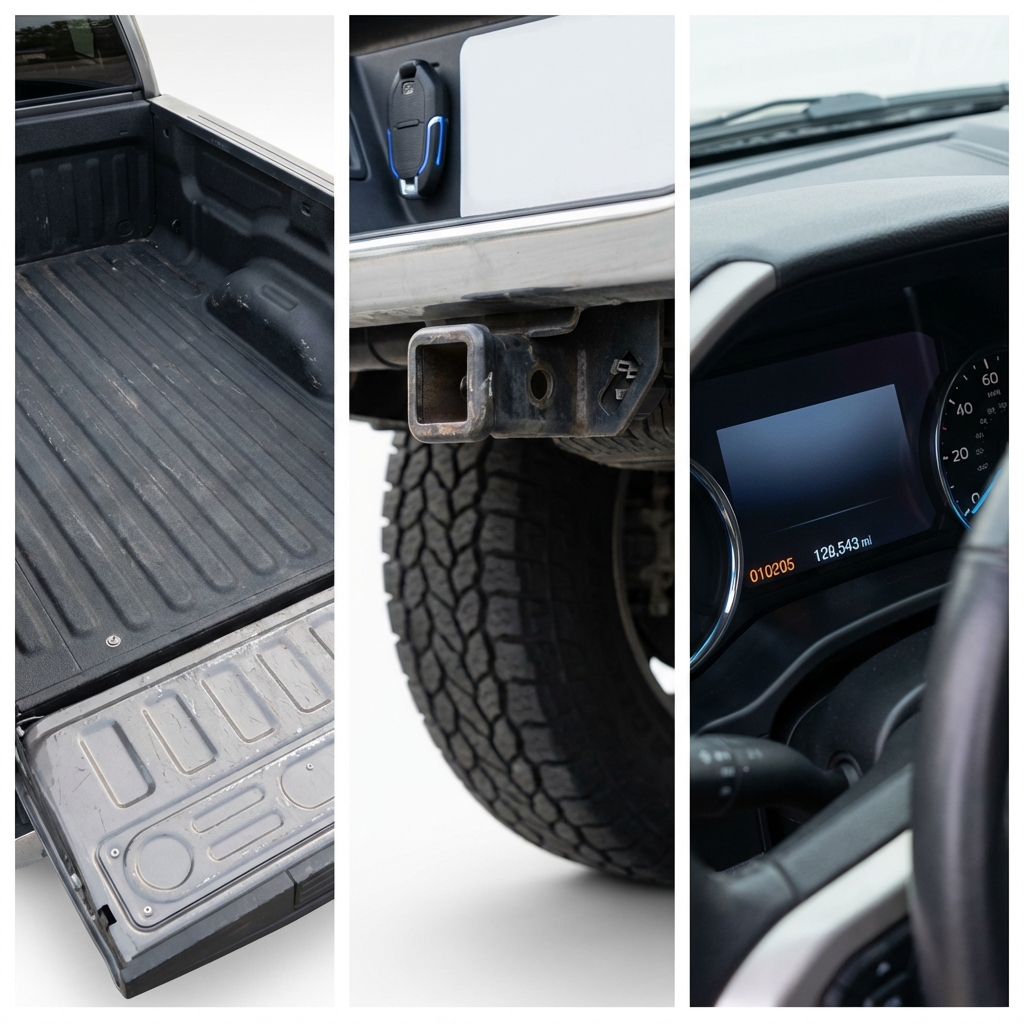
Truck buyers want clear views of bed condition, towing hardware, wheel wells, tires, and underbody where visible. Include interior shots that show seat wear, the dash, and any option packages. If you have recent service receipts or a clean title history, photograph those documents or state they are available on request.
Include a short headline that lists model year, trim, powertrain, and one or two notable options. Accurate keywords help the right buyer find the listing and reduce time spent answering basic questions about equipment or capabilities.
Common seller mistakes and how to avoid them
Timing mistakes
A common error is listing too early without adequate preparation or listing at a time when local demand is low. National seasonality points to a spring uplift, but local conditions can change that, so check recent sold listings before you commit to a specific week Kelley Blue Book guidance.
If you need speed, do not wait for peak season unless you can realistically afford the time; a fast sale at a lower price is an appropriate choice for some sellers. Decide your priority and pick a channel accordingly.
Listing and disclosure errors
Failing to disclose service history or known issues reduces buyer trust. Use a vehicle history report to provide context and be explicit about ownership and maintenance where relevant. Transparency typically reduces negotiation friction and can speed the sale J.D. Power analysis.
Avoid relying on a single pricing source. Cross-check KBB against local sold comps and marketplace pricing insights to set a price that reflects both national seasonality and local demand.
Practical scenarios: planner examples for common seller types
First-time private seller
If you are selling privately for the first time, plan to prepare over January and February, then list in the March to May window if that fits your schedule. Gather a vehicle history report, organize service records, photograph the truck, and set a price using local comparables. This path prioritizes net proceeds and uses the seasonal uplift when possible.
Expect more negotiation than a dealer trade-in, but more cash after the sale when successful. If you prefer less hassle, discuss trade-in timing and compare offers from local dealers rather than handling a private listing.
Seller who needs a fast sale vs seller who can wait
A seller who needs immediate cash should favor a dealer offer or trade-in even though the net proceeds may be lower. A seller who can wait should time the private-party listing to coincide with the spring peak for broader buyer activity and potentially higher pricing, while completing prep steps to reduce friction and time on market Edmunds timing guidance.
When timing a sale, weigh convenience against price. Being prepared with documentation is useful whether you sell fast or wait for a seasonal peak.
Negotiation and what to expect from offers
How seasonal timing affects buyer flexibility
During seasonal peaks, buyer flexibility shrinks because demand increases and sellers may receive multiple offers. That can translate to stronger negotiating positions for sellers and quicker sale times. Conversely, in slow months buyers often expect lower prices and more concessions from sellers Manheim market report.
Keep an eye on auction trends as well, since tighter wholesale markets can lift dealer willingness to pay for trade-ins and retail inventory, which affects the offers you receive locally.
Simple checklist for evaluating offers
Compare offers using three simple criteria: net proceeds after any fees or taxes, convenience and timeline for completing the sale, and documentation requirements or contingencies. Prioritize offers that balance your need for speed against desired proceeds.
When an offer seems low, ask whether the buyer accounted for known maintenance or documentation items. Providing a vehicle history report and recent service receipts can remove common negotiation points and support a higher final price.
Local market adjustments and remaining questions
How fuel prices, metro vs rural, and local inventory shift timing
Local conditions shift national seasonality. Fuel prices, metro versus rural demand, and local dealer inventory levels can all move the best week to sell within the spring window. Check recently sold listings in your market and note how quickly similar trucks are changing hands to better time your listing Manheim insights.
Simple local checks include scanning sold listings for the last 60 days, monitoring local dealer inventory levels, and asking for recent trade-in data when possible. These data points help narrow the national window to an actionable local week.
Open questions worth local research
Remaining uncertainties include the exact best week within a target month and model-specific late-season peaks for specialty trims. Sellers can resolve these by tracking sold listings and speaking with local dealerships or market participants who follow auction flows.
If your model shows a different pattern in local sold data than national guidance, favor the local signal when choosing a listing date, while still completing the recommended preparation steps.
Quick final checklist and next steps
30-day pre-listing checklist
In the 30 days before you list, complete these prioritized tasks: order a VIN-based vehicle history report, gather service records, confirm trim and options, complete a deep clean and photo session, and collect three local comparable sold listings to support your asking price J.D. Power guidance.
Set a target listing week based on national seasonality and local sold data. If you plan to list in the spring window, have your documentation and photos ready so you can post at the start of that period.
What to do the week you list
Be responsive to inquiries, provide the vehicle history report on request, schedule test drives safely, and have documentation ready for interested buyers. If you are considering dealer offers, request written trade-in estimates and compare them to private-party responses before deciding.
After the sale, keep copies of the bill of sale and transfer paperwork in case questions arise. If you used market tools to set pricing, save screenshots of comparables and pricing labels for your records.
Pickup values often peak in spring, roughly March through May, though local market and model-specific factors can shift the best week within that window.
Private-party sales generally yield higher net proceeds, but the gap narrows when wholesale values are high and when sellers need a fast, convenient sale.
Order a VIN-based vehicle history report, gather service records, confirm trim and options, clean the truck, and collect recent local comparables.
Timing can move the needle on net proceeds, but it is one of several factors. Prepare the truck, collect documentation, and compare national guidance to local sold listings to pick the right week. If you are unsure, gather data now and be ready to list when the local signal aligns with the national spring window.

 Blog
Blog