How much do dealers mark up used trucks? — How dealers layer price over Kelley Blue Book values
This article explains why retail asking prices for used trucks often sit above reference values like the Kelley Blue Book retail estimate and gives a step-by-step method to convert a KBB baseline into a realistic out-the-door cost. It shows how dealers commonly add Additional Dealer Profit and other line items, and how verified vehicle history reports can help buyers spot unexplained markups.
A step-by-step workflow for estimating a truck's market value that centers on comparing consumer valuation tools, adjusting for mileage and condition, and checking wholesale market signals. The guide explains private-party, trade-in and dealer retail values and shows how a vehicle history report and pricing insights can change an asking price.
This guide helps research oriented buyers evaluate suv used cars for sale under $25,000 by combining safety ratings, reliability data, local pricing context, and vehicle history checks. It outlines a simple framework, a pre visit checklist, and a decision scoring worksheet so you can compare finalists before contacting a dealer. Use the steps here to narrow candidates and confirm risk signals with a vehicle history report and a pre purchase inspection.
When searching suv used cars for sale, prioritize model year, trim and powertrain before choosing a make or model. This guide explains how safety ratings, dependability studies and local pricing insights combine to produce a short list you can verify with a vehicle history report. It also provides a stepwise checklist you can use before contacting a dealer.
When you shop for a used truck, Kelley Blue Book numbers are often the first comparison many buyers check. They provide a structured retail and private-party baseline that helps you set expectations before contacting a dealer.
This article explains why asking prices for trucks frequently sit above KBB-style values, what dealers typically add to a listing price, and a practical step-by-step method to turn a KBB baseline into an expected out-the-door figure. It also shows how a verified vehicle history report can help you prioritize listings.
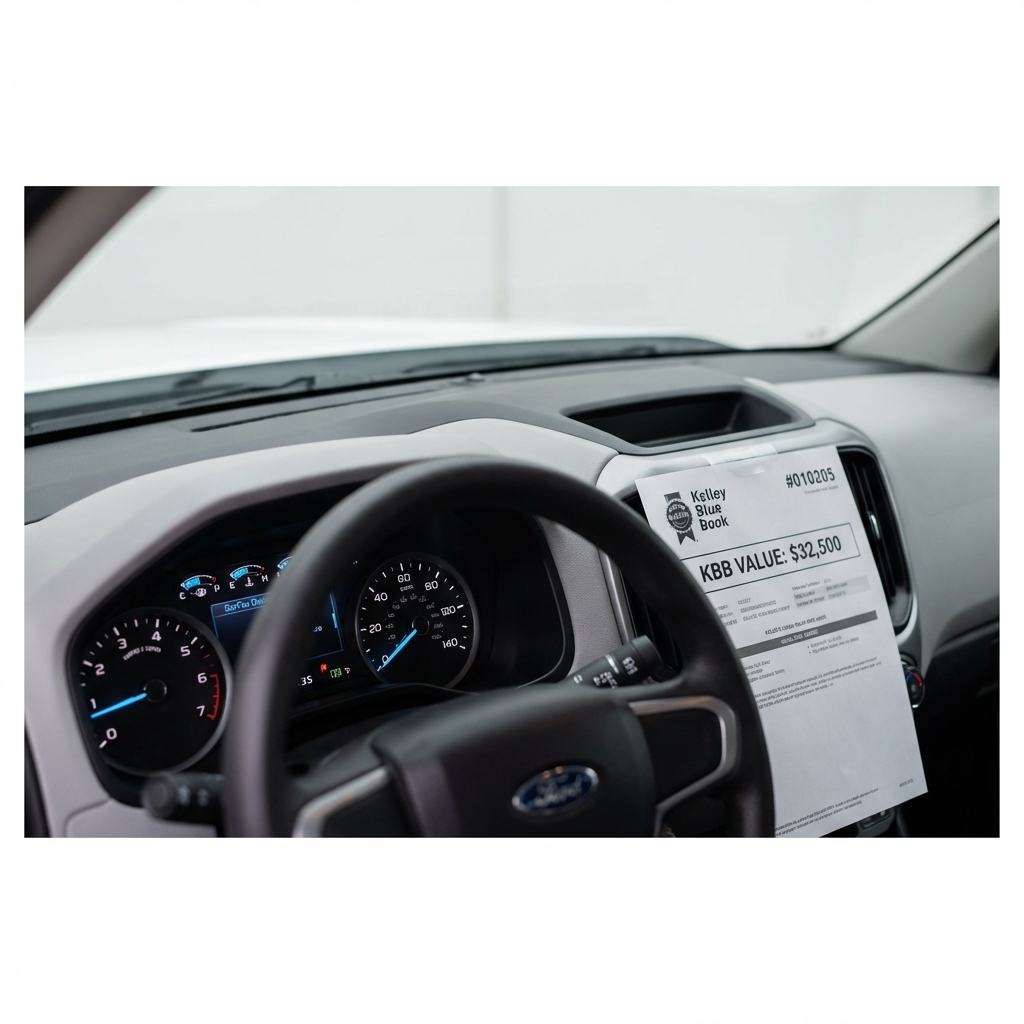
Dealers commonly add Additional Dealer Profit on top of Kelley Blue Book retail values as a standard retail layer.
Reconditioning, documentation fees, and taxes routinely push out-the-door cost above the advertised asking price.
Use KBB as a baseline, then layer local market adjustments and documented fees to estimate a realistic final price.
Why asking prices for used trucks often differ from reference values
The starting point for many buyers is the KBB number, but listing prices can be higher than the kelley blue book value truck reference for several reasons. Dealers commonly layer an Additional Dealer Profit, and they also build in reconditioning and local market premiums that push retail asking prices above published values.
Valuation services like Kelley Blue Book are intended as reference points, not exact sale prices; dealers use them to set a baseline but then add market adjustments that reflect current demand and inventory realities. For an explanation of how ADP is described by valuation services, see Kelley Blue Book's ADP guidance.
Dealers typically add Additional Dealer Profit, reconditioning, and dealer fees above KBB values, and the total varies by trim, region, and market conditions rather than following one fixed percentage.
Pickup truck demand has been stronger than for many cars in recent years, and that persistent demand can keep asking prices above wholesale indices and average car pricing. Manheim and Cox Automotive market summaries document that pickup segments retained premiums through 2024 and 2025, even as wholesale-to-retail spreads softened after pandemic peaks. For a market-level perspective on truck premiums, see the Manheim Used Vehicle Value Index Manheim Used Vehicle Value Index.
What valuation services like KBB provide
KBB and similar services publish retail and private-party estimates, along with notes about condition and mileage. Use the KBB retail number when comparing dealer listings, and the private-party estimate when thinking about a sale between individuals; each serves a different comparison purpose.
How market context and dealer behavior create a gap
Dealers operate with inventory, overhead, and timing pressures that valuation services do not capture, so the gap between a KBB value and a dealer asking price reflects these business realities as well as local demand. Industry reporting shows dealers add reconditioning and fees and treat ADP as a normal retail layer Edmunds on dealer pricing.
How dealers use KBB and similar valuation services when pricing trucks
KBB retail versus private-party values: what they mean
Dealers typically reference KBB retail values as a starting point because those values account for dealer-ready condition and common reconditioning needs. KBB retail is not a dealer invoice or an immutable price, but it is a practical baseline to compare listings against when estimating a fair asking price.
Where dealers commonly layer markups and why
One commonly documented layer above KBB is Additional Dealer Profit, which valuation services describe as an expected retail margin that dealers may add to cover costs and desired profit. The concept and how it factors into pricing is explained by valuation services and dealer-pricing guidance Kelley Blue Book's ADP guidance.
Dealers also add costs for reconditioning and may charge documentation or certification fees; these items are often included in the asking price rather than shown as an itemized line in an online listing. Consumer guides recommend asking dealers for an itemized breakdown to see which charges are included and why Edmunds on dealer pricing.
estimate the implied ADP between a KBB baseline and a dealer asking price
Use local comparables for inputs
Main components dealers add to a truck's listed price
Reconditioning and inspection costs
Reconditioning covers inspection, routine maintenance, repairs needed to make a vehicle retail-ready, and cosmetic work; dealers typically estimate these costs when setting the asking price rather than showing a per-item total on the listing. Trade reporting and consumer guidance identify reconditioning as a primary pricing driver Edmunds on dealer pricing.
Because reconditioning depends on the vehicle's condition and the dealer's standards, the estimated amount can vary widely. When comparing listings, ask each dealer what reconditioning was performed and whether any recent service records or receipts are available.
Dealer fees, certification, and optional warranties
Common dealer fees include documentation charges, certification or dealer certification costs, and optional extended warranties that dealers may offer. These items increase the advertised asking price when dealers roll them into the retail figure, and they contribute to the difference between a KBB baseline and the final out-the-door amount.
Sales tax, title, and registration are typically added at sale time and can materially change the total you pay; consumer-protection guidance lists these as standard add-ons buyers should expect and budget for FTC guidance on used car fees and taxes.
Typical markup ranges for used trucks and what makes them higher or lower
Published market indexes show that pickup trucks retained segment premiums in 2024 and 2025 and that wholesale-to-retail spreads softened from their pandemic-era peaks; these indexes report segment-level trends rather than specific dealer markups, so they are best used to understand direction and relative pressure on prices. For market-level trend discussion, see Cox Automotive and Manheim market reports Cox Automotive market insights.
Specific trims and powertrains, like diesel engines, 4x4 drivetrains, and towing packages, tend to command higher retail premiums because of buyer demand and utility; low-mileage, well-maintained examples similarly attract price premiums that dealers can factor into asking prices.
Wholesale-to-retail spreads and ADP vary by region, time in inventory, and local demand; while some vehicles may show single-digit percentage differences from valuation-service numbers, others can have larger premiums when supply is tight or demand is concentrated in a region. For a market-level perspective on truck premiums, see the Manheim used vehicle value index Manheim Used Vehicle Value Index.
A step-by-step method to estimate a realistic out-the-door truck price starting from KBB
Step 1: Get the right KBB value for retail or private-party
Start with the KBB retail value when comparing dealer listings; use private-party values mainly when comparing sales between individuals. Verify that you selected the exact model year, trim, drivetrain, and mileage to get the most relevant KBB baseline.
Save the KBB result and note any condition adjustments KBB suggests, because those adjustments help explain apparent gaps to a dealer's asking price. Kelley Blue Book explains how ADP and retail considerations relate to published values Kelley Blue Book's ADP guidance.
Check recent local market summaries and listings for similar trucks to estimate a region-specific ADP or market adjustment; market indexes and dealer reports can help identify whether pickup prices are carrying a premium in your area. Manheim and Cox reporting provide market-level signals that can inform this adjustment Cox Automotive market insights.
Use the calculator tool above to enter the KBB retail value and the dealer asking price, then subtract estimated reconditioning and documented fees to see the implied ADP. This helps separate what a dealer paid or expects from other retail layers.
Step 3: Add reconditioning and dealer fees, then taxes
Estimate reconditioning and any dealer fees that are included in the asking price, then add sales tax, title, and registration to project an out-the-door cost. Consumer guidance lists those fees and explains how they typically appear at sale time FTC guidance on used car fees and taxes.
Before visiting, call the dealer to request an itemized quote that lists reconditioning, documentation fees, and any optional warranty or certification charges. If a dealer will not provide an itemized breakdown, treat the asking price with caution and compare other local listings.
When truck premiums are most likely: trims, powertrains, regions and timing
Trim and option-driven premiums
Trim level and popular options often explain higher retail prices; features like towing packages, upgraded traction systems, and diesel powertrains can add perceived utility and resale demand, which dealers can price into the asking figure. Market reports describe these trim-driven effects on truck premiums Manheim Used Vehicle Value Index.
Mileage, ownership history, and service records strongly affect whether a listed truck justifies a premium. A well-documented service history and single-owner records can make a price premium more defensible to a buyer evaluating comparables.
Regional demand differences and seasonal effects
Regional preferences can shift truck demand; rural and suburban markets often value heavy-duty options more than dense urban areas, and that local preference can create price dispersion between listings. Industry overviews show that regional demand patterns contribute to persistent segment premiums for pickups Cox Automotive market insights.
Seasonal timing and local inventory levels also matter. When inventory is tight or seasonal needs rise, dealers have more room to add market adjustments on top of valuation-service baselines.
Common buyer mistakes, a quick pre-visit checklist and closing guidance
Common mistakes include focusing only on the advertised asking price without calculating out-the-door costs, not checking multiple comparable listings, and failing to request a vehicle history and itemized fee list before a visit. Edmunds and FTC guidance both recommend requesting itemized pricing and being aware of taxes and fees Edmunds on dealer pricing.
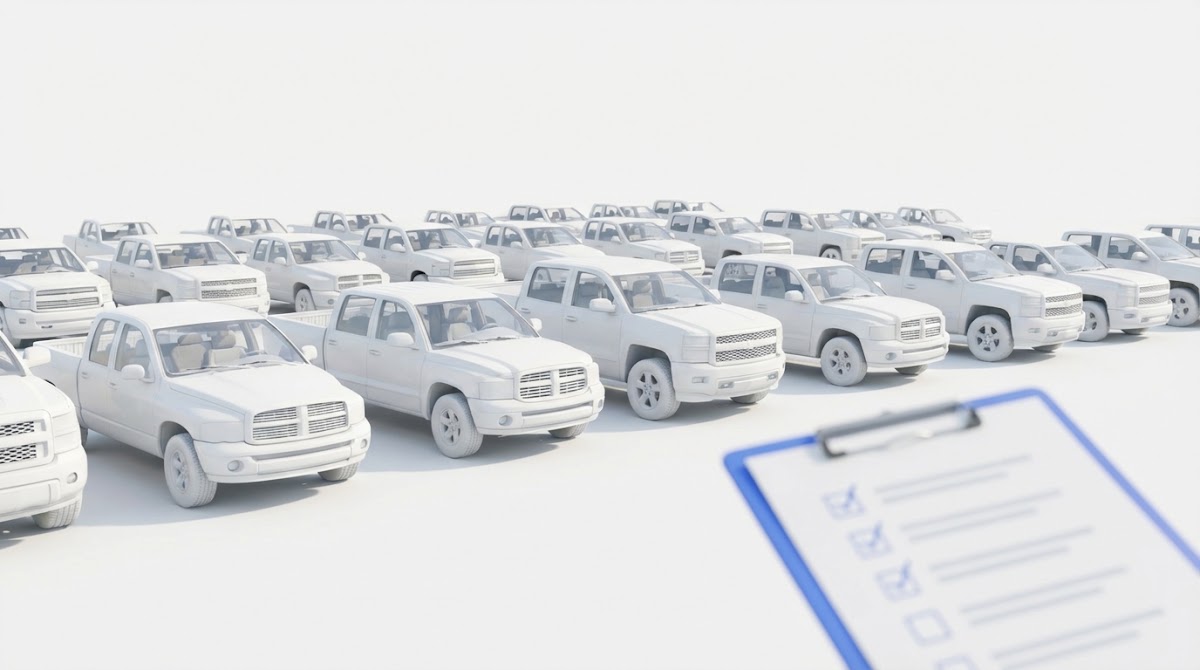
Pre-visit checklist: note the KBB baseline, estimate a likely ADP using local comparables, ask for reconditioning details, request an itemized fee list, and run a vehicle history report before you go. Having these items ready lets you compare listings and question unexplained markups calmly.
Get the vehicle history before your visit
Print or save this checklist so you can ask for the KBB baseline, itemized reconditioning, and dealer fees before you visit.
When closing, review the itemized quote and confirm how sales tax, title, and registration will be calculated. If a dealer's numbers diverge from local comparables without explanation, use the documented history report and pricing context to press for clarification or consider other listings.
There is no single national percent; dealer asking prices often include ADP, reconditioning, and fees, and variation depends on trim, mileage, and local demand.
Use KBB retail for dealer listings and private-party values when comparing person-to-person sales; select the exact model, trim, and mileage for the best baseline.
Yes, a verified vehicle history report helps prioritize listings and can reveal factors that justify or question a dealer's asking price.
Use KBB retail as a disciplined starting point, then layer likely dealer adjustments, reconditioning estimates, and expected fees to reach a practical out-the-door expectation. Armed with an itemized quote and a vehicle history report, you can compare listings calmly and question unexplained markups when speaking to a dealer.

 Blog
Blog