What can a VIN number tell you for free? - What a VIN reveals and next steps
A VIN can reveal core vehicle identifiers for free, including make, model year, engine code and factory option codes using official decoders. This article explains how to run free checks such as NHTSA's vPIC decoder, a VIN recall lookup, and NICB's VINCheck, and shows when to escalate to an NMVTIS-authorized report or inspection.
A step-by-step workflow for estimating a truck's market value that centers on comparing consumer valuation tools, adjusting for mileage and condition, and checking wholesale market signals. The guide explains private-party, trade-in and dealer retail values and shows how a vehicle history report and pricing insights can change an asking price.
This guide helps research oriented buyers evaluate suv used cars for sale under $25,000 by combining safety ratings, reliability data, local pricing context, and vehicle history checks. It outlines a simple framework, a pre visit checklist, and a decision scoring worksheet so you can compare finalists before contacting a dealer. Use the steps here to narrow candidates and confirm risk signals with a vehicle history report and a pre purchase inspection.
When searching suv used cars for sale, prioritize model year, trim and powertrain before choosing a make or model. This guide explains how safety ratings, dependability studies and local pricing insights combine to produce a short list you can verify with a vehicle history report. It also provides a stepwise checklist you can use before contacting a dealer.
A vehicle identification number is the single most useful code you can use before you visit a dealer. This article walks through what free VIN tools reliably tell you, how to run them, and when to escalate to paid NMVTIS-authorized reports or an inspection.
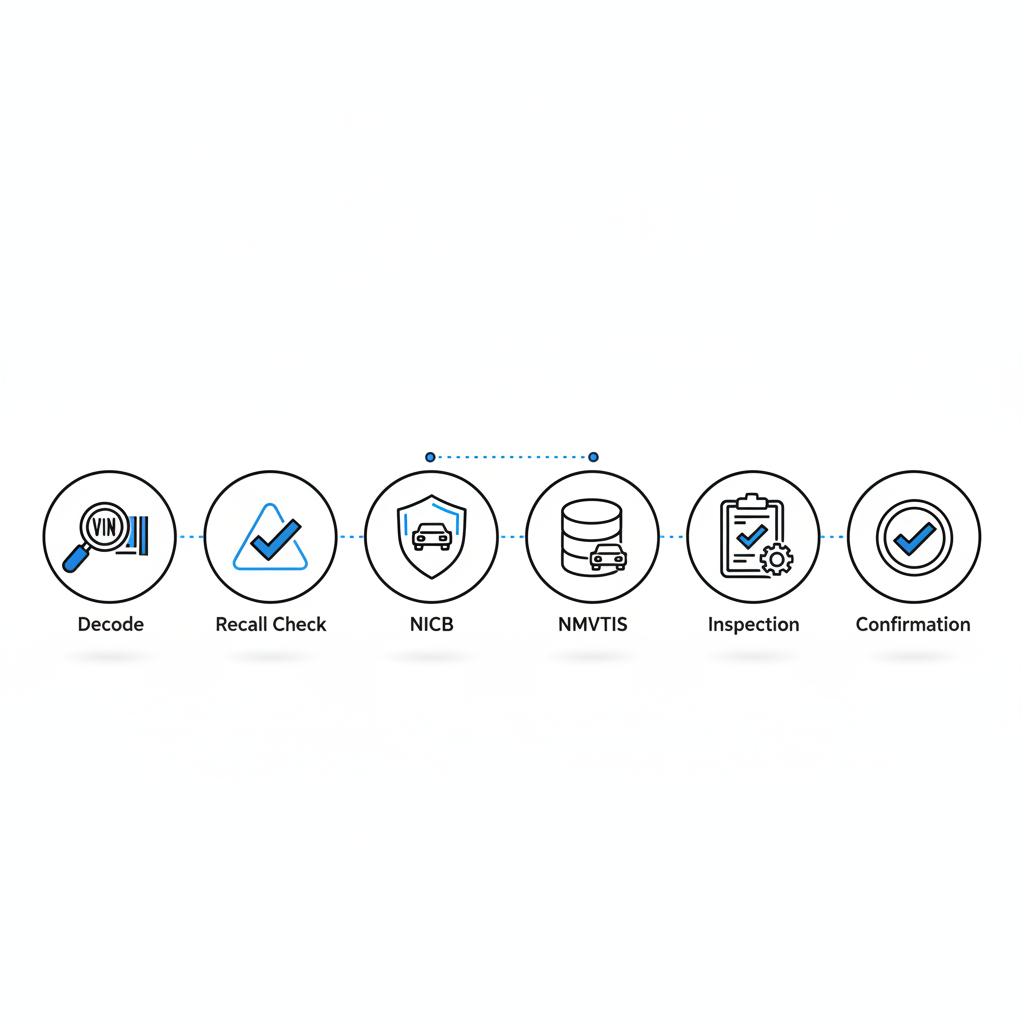
Start with a free decode and recall search, then run a NICB VINCheck. That sequence helps you screen listings quickly and decide whether a paid history report is necessary.
An official VIN decoder reliably shows manufacturer, model year and engine codes for free.
NICB VINCheck screens for reported theft and salvage but does not replace a title-history report.
NMVTIS is the authoritative U.S. source for title brands and is typically accessed through paid providers.
What a VIN is and what free checks can reliably reveal
A vehicle identification number, usually 17 characters long, is a coded identifier assigned at manufacture to one vehicle. The 17-character VIN encodes the manufacturer, model year, plant, and a unique serial sequence; learning how those pieces map helps you verify a listing before you visit a dealer.
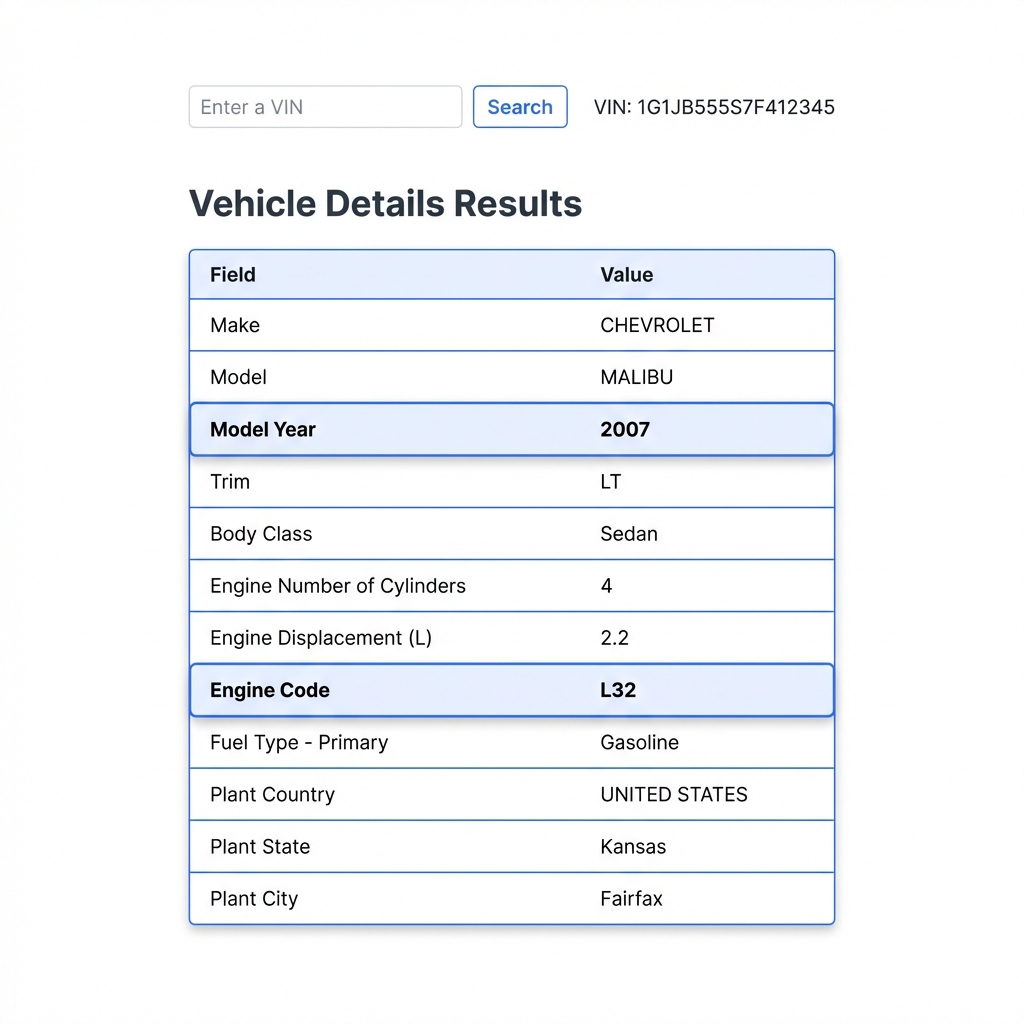
Free VIN decoders can return structured fields such as manufacturer, model year, body style, engine and factory option codes, which are useful for confirming the exact car described in an ad; you can run these decodes on the official NHTSA vPIC decoder to see the raw fields yourself vPIC decoder.
Beyond basic decoding, free lookups let you check whether a specific VIN has open safety recalls, so you do not rely only on the seller's note about repairs or recall fixes; use the NHTSA recall lookup to see reported recall campaigns tied to a VIN NHTSA SaferCar recall lookup.
These free tools are reliable for core identification tasks but they do not replace a full title-history search or a paid aggregated report when you need chain-of-title or disposition records.
Run a vehicle history report from your VIN entry page
If you want a short, ordered approach to free VIN checks, follow the checklist below to move from decoding to recall and theft checks before deciding whether to pay for a full history report.
The first three characters identify the vehicle manufacturer and country of origin. Middle characters include model, body type and restraint systems. The tenth character typically encodes model year and later characters include plant and serial number. Breaking the VIN into those segments makes it easier to confirm model year and powertrain listed in an ad.
Which basic facts you can get for free
Using an official decoder you can usually get exact model year, engine code and some factory option codes, which helps narrow down powertrain and trim level candidates before you inspect a car; for a reliable decoder use NHTSA's vPIC service vPIC decoder or our VIN decoder VIN decoder.
How to decode a VIN with NHTSA's vPIC step by step
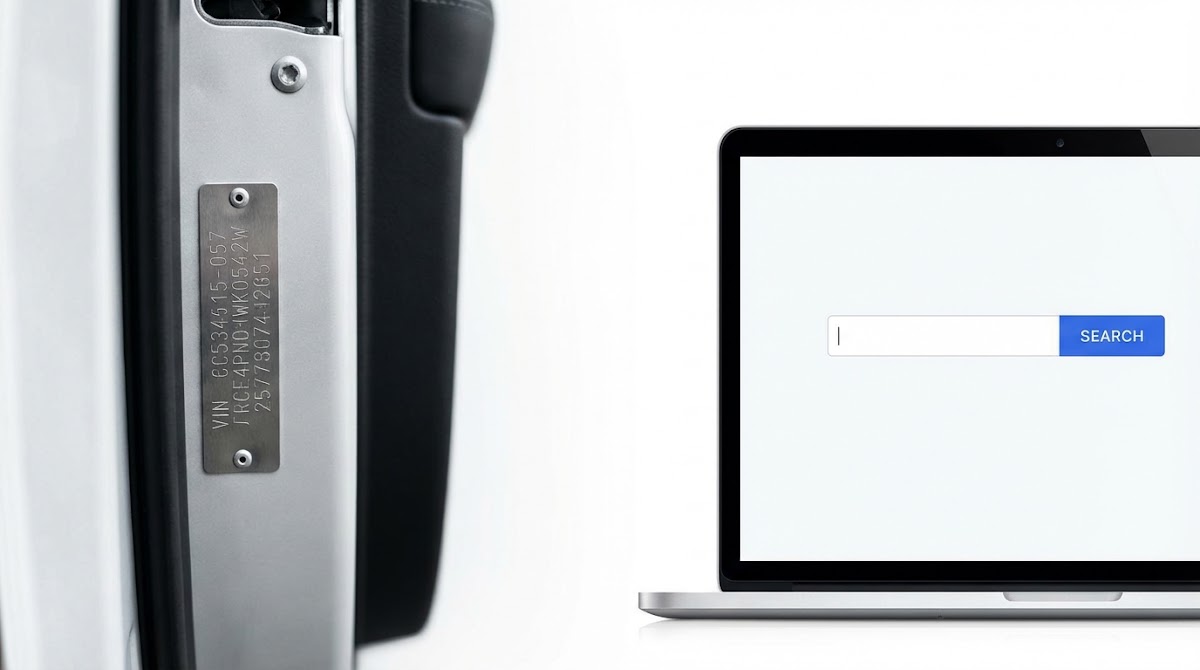
Open the vPIC decoder page and find the VIN entry field. Enter the full 17-character VIN with no spaces or punctuation.
Submit the VIN and review the primary fields returned: manufacturer, model year, make, model, body class, engine displacement and engine code. These fields are the most consistent outputs for buyer research and often match factory build data vPIC decoder.
Check factory option and equipment codes in the decoder output to see whether a listing's trim claims align with the decoded equipment. Engine and powertrain codes are particularly useful to confirm whether a car is the expected engine, which matters for maintenance history and fuel use.
When deciphering codes, copy the exact engine code text from the decoder and compare it with manufacturer references or service manuals to interpret the code meaning; decoded codes reduce guesswork about the car's original drivetrain and common parts.
Where to enter a VIN and which fields to check
Use the vPIC web form and paste the 17-character VIN into the primary input. Focus on model year, engine code, and body class as the fields most relevant to buyer decisions.
How to read engine and option codes returned by the decoder
Engine codes often map to a known displacement and powertrain family; if the decoded engine does not match the listing, ask the seller for clarification and supporting receipts. A mismatch does not prove tampering but it is a sign to dig deeper.
Checking recalls by VIN and why it matters
Search the NHTSA SaferCar recall lookup by VIN to see open recalls tied to that vehicle. The lookup shows recall summaries, affected components and remedy notes when a match exists, which helps you know whether outstanding safety work is required NHTSA SaferCar recall lookup.
Open recalls usually indicate the manufacturer has identified a safety-related defect for that vehicle or a group of vehicles; a dealer is typically responsible for completing recall repairs at no charge, but ask for documentation that the remedy was completed if the seller claims the recall is closed.
A VIN can reliably identify a vehicle's make, model year, engine code and factory option codes via official decoders, and can be used to check recalls and screen for reported theft or salvage before you decide whether to order a paid NMVTIS-authorized report or a professional inspection.
Remember that recall databases may show an open recall even if a repair was performed but not updated in public-facing fields, so verify any claimed recall repairs with receipts or dealer records.
How to run a recall lookup by VIN
Enter the full VIN on the SaferCar recall search form. If the VIN has associated recalls the tool lists the recall number, summary and remedy recommended by the manufacturer.
What an open recall means for a buyer
An open recall means a safety-related remedy is recommended but may not have been performed yet. Ask the seller whether the recall repair was done, and request documentation or ask the dealer to complete the remedy before you finalize a purchase.
Using NICB VINCheck to spot reported theft and salvage
The National Insurance Crime Bureau runs VINCheck, which allows consumers to search a VIN for reported theft or salvage records at no cost; it is a fast way to screen for high-risk flags before paying for a full title history NICB VINCheck.
NICB results are limited to records the bureau holds and do not replace a full title-history search or an NMVTIS-authorized report; a clear NICB result lowers some risk but does not prove a vehicle has no history of damage or title issues.
If NICB displays a salvage or theft hit, stop and obtain more detailed documentation such as a title history from NMVTIS-approved providers or ask the seller for state title records to understand disposition and current title status.
What NICB's VINCheck covers
VINCheck looks for entries such as reported theft and certain salvage records submitted to the NICB. It is useful as an early filter but cannot replace a title chain search or professional inspection.
Why NICB results do not replace a title-history search
NICB's coverage is narrower than NMVTIS and commercial aggregated reports, so use NICB as a screening step and follow up with an NMVTIS-authorized report if you find concerning indicators or need the official title-brand history.
Where NMVTIS fits and when to get an NMVTIS-authorized report
The National Motor Vehicle Title Information System, NMVTIS, is the official U.S. source for title brands and certain disposition records and is the underlying source used by many paid history-report providers About NMVTIS.
Full NMVTIS access is generally available through authorized providers who aggregate and present title chains and brand history; those services are typically paid and are valuable when title brand questions or disposition records matter for your purchase decision.
NMVTIS stores state-submitted title brand information and certain disposition details such as salvage or junked designations. Because states submit records on different schedules, NMVTIS is authoritative for title brands but can lag behind recent state filings.
How NMVTIS is accessed through approved providers
Approved providers compile NMVTIS entries with other public and commercial sources into a report that shows title-brand history and disposition. If you see signs of salvage, branded title, or inconsistent chain entries, an NMVTIS-authorized report can clarify the title chain.
What consumer sites like Kelley Blue Book and Edmunds can and cannot do for free, kelley blue book vin lookup
Consumer sites such as Kelley Blue Book and Edmunds provide limited free VIN decoding and basic valuation context; their free outputs often help set price expectations but usually do not include detailed accident or service histories What is a VIN number and how to read it.
These sites are useful for quick valuation and specification checks but should be combined with official free checks like NHTSA's decoder and NICB screening to build a fuller picture before you contact a dealer.
Typical free outputs: basic decode and valuation context
On consumer sites you will commonly find a basic decode, trim and a suggested market value or pricing range based on similar listings. Use those approximate values with local pricing context and other free checks to evaluate whether a listing is reasonably priced.
Limits compared with paid full history reports
Free consumer-site outputs generally do not include odometer-verified service records, complete accident histories, or full title chains. When these records matter, plan to use a paid NMVTIS-authorized report or an inspection to reduce uncertainty.
A practical free-first checklist: decode, recall, NICB, then escalate
Run the NHTSA vPIC VIN decoder first to confirm manufacturer, model year and engine code.
Next, check recalls by VIN with NHTSA SaferCar. Then run NICB VINCheck for reported theft or salvage. If you find concerning flags, obtain an NMVTIS-authorized report through an approved provider NMVTIS-authorized report.
Recommend the free VIN services to run in order
Run in sequence
Document results from each free check and save screenshots or printouts to ask the dealer about discrepancies during a visit. If you see title brands or NICB hits, prioritize the paid report and an inspection before making an offer.
Step-by-step free checks in order
1) Decode the VIN with vPIC. 2) Run the VIN recall lookup. 3) Run NICB VINCheck. 4) If needed, buy NMVTIS-authorized history or request title documents from the seller.
Quick red flags that push you to a paid report or inspection
Red flags include title brands, NICB salvage or theft hits, and open safety recalls. Any of these justify a paid history check and a professional inspection before purchase.
How to interpret title brands, salvage labels and common entries
Common title brands include salvage, rebuilt, flood, and junk. These brands usually indicate significant past damage or disposition decisions and can materially affect repair needs and resale value About NMVTIS.
State reporting timing and completeness into NMVTIS can vary. A recent state-issued brand may not appear immediately in aggregated reports, so confirm the current state title directly if brand timing is important.
Common title brand types and what they usually indicate
Salvage often means the vehicle was declared a total loss by an insurer. Rebuilt or reconstructed titles indicate the vehicle was repaired and rebranded after a salvage designation. Each brand type affects inspection focus and expected documentation.
Why state reporting differences matter
Because states submit title data on different schedules and with varying completeness, a title record can look different across sources; when in doubt, request the state title record or an NMVTIS-authorized report for the canonical chain.
Typical mistakes and what to avoid when using free VIN tools
A common mistake is treating a blank NICB result or a basic decode as proof of a problem-free car. Free checks reduce risk but do not eliminate the need for a title history or inspection.
Another mistake is equating decoded factory options with complete maintenance history. Factory option codes tell you what the car left the factory with, not what work was performed after sale.
Over-relying on a single free check
Use multiple free checks in sequence. Start with decode, then recall, then NICB. If concerns remain, move to a paid report or inspection.
Misreading decoded codes as proof of condition
Decoded codes confirm original equipment but do not document later repairs, odometer changes, or collision history, so ask for service records and receipts when they are material to your decision.
When to pay for a full history report or a professional inspection
Pay for an NMVTIS-authorized report when title brands, inconsistent listings, or NICB hits appear, or when the purchase price justifies extra verification; NMVTIS-authorized and commercial reports add title chain and disposition details above free checks About NMVTIS.
A professional inspection is worth the cost when a vehicle shows red flags or when the seller cannot produce clear service and title documentation. Inspections focus on structural, mechanical and safety items that VIN checks cannot show.
Cost-benefit signals that justify payment
Consider a paid report if the car's price is high relative to comparable listings, if there are title discrepancies, or if NICB or recall checks show potential problems.
How paid reports complement inspections
Paid reports supply chain-of-title and disposition context, while an inspector verifies the car's physical condition and confirms whether the vehicle was properly repaired after reported events.
Three short real-world scenarios: how free VIN checks change the approach
Scenario 1: A listing decodes cleanly, no recall appears and NICB is blank. You proceed to an in-person inspection and ask for maintenance receipts to confirm mileage and service history.
Scenario 2: NICB returns a salvage hit. You pause and order an NMVTIS-authorized report to see the title chain and disposition before scheduling an inspection; salvage records often require deeper documentation to assess repair quality NICB VINCheck.
Scenario 3: An open recall appears and the title chain is sparse. Ask the dealer to show repair documentation for the recall and obtain a paid report to clarify title history before finalizing any deal.
Scenario 1: clear free checks, proceed with inspection
If free checks are clear, proceed with an inspection and bring the decoded fields and recall output as notes for the inspector to verify.
Scenario 2: NICB salvage hit, escalate to NMVTIS report
If NICB or preliminary checks show salvage activity, get an NMVTIS-authorized report and review photos and repair records before making a decision.
Scenario 3: open recall plus sparse title chain, insist on repairs and documentation
When open recalls and unclear title entries overlap, insist on documented recall repairs and a paid title-history report or decline the purchase until the issues are resolved to your satisfaction.
How CarFax Deals fits into a VIN-first research workflow
CarFax Deals acts as a verification and comparison layer that pairs dealership listings with vehicle history context and pricing insights to help you prioritize listings during research.
Use CarFax Deals filters and price analysis labels together with free VIN checks to screen listings quickly; treat platform signals as decision support and confirm material items such as title brands or recalls with paid reports or inspections when needed.
Light mention of CarFax Deals role
CarFax Deals provides pricing insights, vehicle history report links and filters that help you focus on single-owner and no-accident-history candidates when those signals are available.
How to combine platform signals with free VIN checks
Start with the platform's pricing context and filters, then run the NHTSA decoder and NICB checks on the VINs you shortlist. Use NMVTIS-authorized reports when the platform or free checks show red flags.
Step-by-step: from free VIN checks to contacting a dealer
Before contacting a dealer, record decoder outputs, recall status and NICB results. Save screenshots or printouts to cite specific findings during conversations.
Ask targeted questions such as: Has the title ever been branded? Can you provide repair receipts for damage? Has the recall remedy been completed and documented? If answers are unclear, order a paid history report or bring a professional inspector.
What to document before the visit
Record the VIN decode, any open recalls, NICB hits and search results from NMVTIS-approved providers. This documentation helps you ask precise questions and reduces surprises at inspection.
Questions to ask the dealer using your VIN findings
Sample language: "Your listing shows an open recall on this VIN. Can you provide paperwork showing the remedy was completed?" and "I found a salvage entry in NICB. Please provide the title record or state documentation for clarification."
Final takeaways: what free VIN lookups can and cannot do
Free VIN decoders reliably return manufacturer, model year, body style and engine codes, and NHTSA recall lookup and NICB VINCheck provide key safety and theft or salvage screens vPIC decoder.
For title brands, disposition records and a complete chain of title, plan to obtain an NMVTIS-authorized report and a professional inspection when red flags appear. Use the free-first workflow to reduce risk and escalate when necessary.
Short summary for quick reference
Run decode, check recalls, run NICB, then buy an NMVTIS-authorized report if you see title brands or other flags. Document everything before you visit a dealer.
Recommended next steps
If your free checks flag issues, order a paid report and schedule a professional inspection before making an offer.
A free VIN lookup commonly returns manufacturer, model year, body style, engine code and factory option codes. Use the official decoder for the most consistent fields.
No. A blank NICB result reduces certain risks but does not replace a title-history search or inspection because NICB coverage is limited.
Buy one when you see title brands, NICB salvage or theft hits, inconsistencies in listings, or when the purchase price justifies extra verification.
Free VIN checks are powerful early filters that help research-first buyers reduce uncertainty. Use them systematically, document your findings, and escalate to paid reports or inspections when material red flags appear.
If you prefer a single place to run a vehicle history report after your free checks, consider the platform's report flow to generate a full history for deeper verification.

 Blog
Blog