This article explains what people mean by the average life of a Toyota RAV4 and how to use population estimates to assess a specific used vehicle. It presents the roughly 200,000 mile benchmark, converts miles into years, reviews key factors that shorten or extend service life, and gives a stepwise pre-purchase checklist centered on a vehicle history report and targeted inspection.
A step-by-step workflow for estimating a truck's market value that centers on comparing consumer valuation tools, adjusting for mileage and condition, and checking wholesale market signals. The guide explains private-party, trade-in and dealer retail values and shows how a vehicle history report and pricing insights can change an asking price.
This guide helps research oriented buyers evaluate suv used cars for sale under $25,000 by combining safety ratings, reliability data, local pricing context, and vehicle history checks. It outlines a simple framework, a pre visit checklist, and a decision scoring worksheet so you can compare finalists before contacting a dealer. Use the steps here to narrow candidates and confirm risk signals with a vehicle history report and a pre purchase inspection.
When searching suv used cars for sale, prioritize model year, trim and powertrain before choosing a make or model. This guide explains how safety ratings, dependability studies and local pricing insights combine to produce a short list you can verify with a vehicle history report. It also provides a stepwise checklist you can use before contacting a dealer.
Used car buyers often ask what the "average life" of a RAV4 is because longevity influences both buying choices and budgeting. This article breaks down the meaning of average life, what the data shows, and how to check a specific listing before you buy.
We focus on practical steps: converting mileage into years, identifying high-impact maintenance records, and using a vehicle history report alongside inspection and pricing context to estimate remaining service life.
Many well maintained Toyota RAV4s commonly reach about 200,000 miles, though individual outcomes vary with care and use.
Newer generation and many hybrid RAV4s often show improved reliability in recent datasets, but hybrids may have late-life battery costs.
A vehicle history report plus a targeted inspection and local pricing context give the best practical estimate of remaining life.
What "average life" of a RAV4 means
When buyers ask about the average life of a RAV4 they usually mean a population estimate for useful service life, not a promise about any individual car. The phrase contrasts two ideas: an average number of miles many examples reach when well maintained, and the remaining useful life for a specific vehicle.
An industry view that combines owner data and reliability trackers places a common benchmark near 200,000 miles for well maintained Toyota RAV4s, while noting a wide spread around that number depending on use and care. For population-level context, treat the 200,000 mile figure as an estimate that helps set expectations, not as a guarantee for one car iSeeCars longevity study. (CarBuzz overview)
For an individual unit, factors such as service records, accident history, and known model-year issues create large variance. A vehicle history report and on-the-ground inspection are required to refine the estimate for a particular RAV4.
Convert current odometer and typical annual mileage into estimated years remaining
Use whole numbers for values
Model generation and powertrain choices also matter. Newer generation RAV4s and many hybrid variants tend to show different repair patterns than older models, so averages shift when you compare subgroups instead of the whole population.
What the data says: headline mileage and years
Multiple owner-data analyses and major reliability trackers converge on a headline idea: many well maintained RAV4s commonly reach roughly 200,000 miles, and a sizable minority exceed 250,000 miles with diligent care. Use this as population guidance when comparing listings and service histories RepairPal RAV4 reliability. (Passport Motors summary)
Trackers from Consumer Reports and J.D. Power generally rate the RAV4 above average for long-term dependability compared with similar compact SUVs. Those assessments reflect repair frequency and owner-reported trouble, and they help explain why the 200,000 mile benchmark appears across several independent datasets Consumer Reports RAV4 ratings.
Methodologies differ across studies: some use insurance or registration records, others rely on owner surveys. Older foundational studies remain useful because later analyses show broadly consistent patterns even as sample composition changes over time.
Within population findings, post-2019 RAV4s and many hybrid variants often show improved durability and lower mechanical repair frequency in recent datasets. That generation and powertrain effect helps explain why newer listings may hold more projected remaining life for buyers who prefer lower near-term repair risk J.D. Power model dependability data.
Translating miles into years: what 200,000 miles looks like
Converting mileage into years uses a simple average for annual driving. In the U.S. many analysts use 12,000 to 15,000 miles per year as a typical range. Using those figures, a RAV4 that reaches about 200,000 miles corresponds to roughly 13 to 17 years of service for a typical driver.
Example calculation: if a vehicle averages 12,000 miles per year then 200,000 miles divided by 12,000 gives about 16.7 years; at 15,000 miles per year that same total is about 13.3 years. This simple math helps you translate a headline mileage into a practical time horizon when planning ownership.
Check a RAV4's history and pricing context
Compare local listings and pricing context using vehicle history reports to see how a particular RAV4 compares to population benchmarks and likely maintenance needs.
To estimate remaining years for a used RAV4, verify the car's actual annual averages from title history and service records. Divide the remaining miles to a reasonable target by that verified annual average to get a clearer, vehicle-specific timeline.
Key factors that determine a RAV4's lifespan
Maintenance adherence is one of the strongest predictors of long life. Following Toyota's factory maintenance schedule and keeping up with oil, fluid, and scheduled inspections is associated with extended longevity in reliability data, so service records matter when estimating how far a car can go Toyota Owners maintenance guidance.
Driving patterns and use cases create another major influence. Frequent short trips, repeated stop and go driving, heavy towing or carrying loads beyond recommended limits, and regular off-road use accelerate wear on brakes, suspension and drivetrain components, and they can reduce useful life compared with more moderate use patterns RepairPal RAV4 reliability.
Model year, generation and powertrain differences also matter. Fifth-generation RAV4s from 2019 onward and many hybrid variants show improved durability and lower repair frequency in recent trackers, but hybrids can bring late-life battery considerations that affect ownership math Consumer Reports RAV4 ratings.
Recalls and documented defects are discrete risks you can check. Public recall records and complaint databases identify model-year specific issues, including some transmission or inverter items on select years; confirming recall remediation and open campaigns is a standard pre-purchase step NHTSA RAV4 recalls and complaints.
High-impact records to verify on any listing include consistent oil change entries, documented transmission or coolant system services, hybrid system inspections where relevant, and clear ownership history such as single owner or short ownership chains. These items strongly influence practical remaining life.
Common late-life issues and a targeted inspection checklist
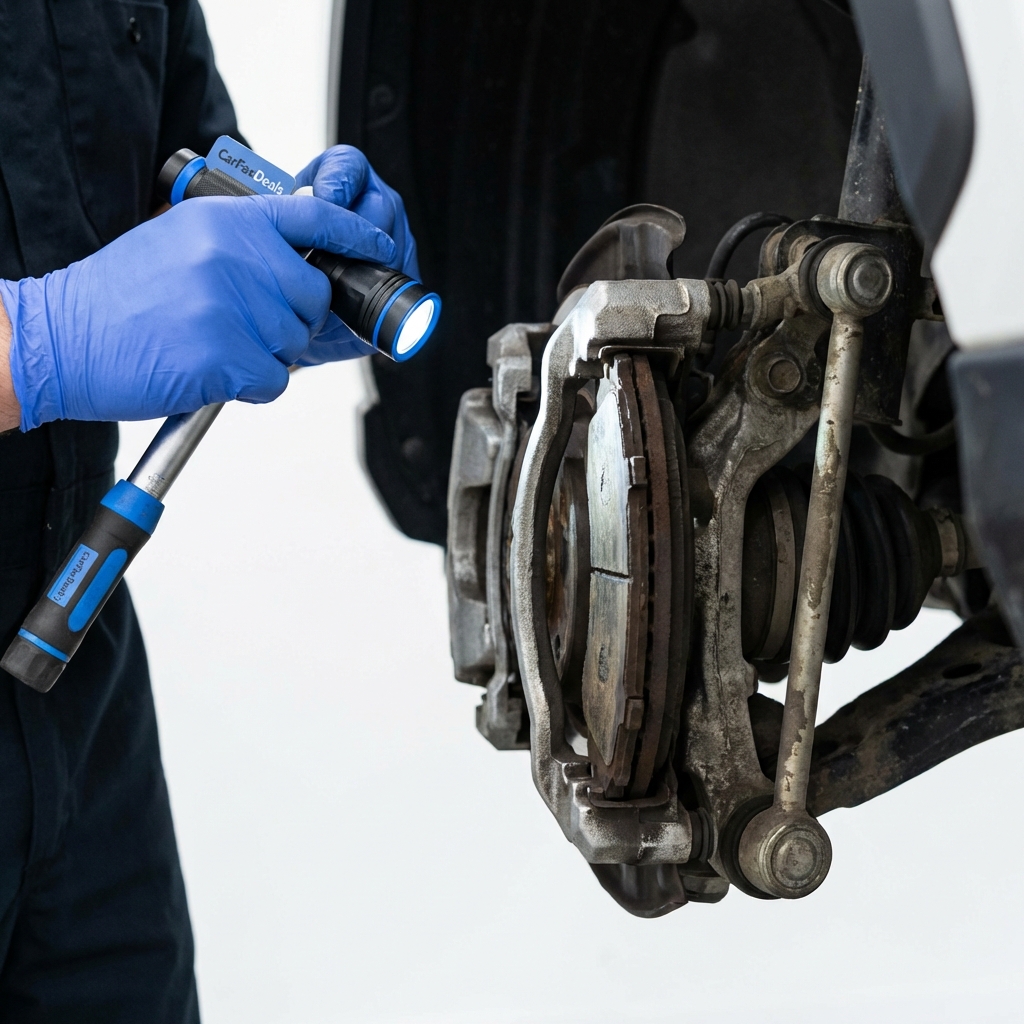
Wear items are the most common late-life issues. Brakes, suspension bushings, ball joints, wheel bearings and related parts typically wear as mileage accumulates. Spotting uneven tire wear, vibration, or loose steering components in a test drive is a sign to dig deeper with an inspection RepairPal RAV4 reliability.
Model-year specific trouble spots can include occasional transmission or inverter faults on select years. Where owners or technicians report recurring symptoms, ensure service records show any necessary repairs and verify that related recalls or technical service bulletins were addressed NHTSA RAV4 recalls and complaints.
Estimate remaining life by verifying service records, checking a vehicle history report, running a targeted inspection, and comparing local pricing context; these steps together provide the best practical estimate for an individual car.
For hybrids, battery degradation is a notable late-life concern. Signs include reduced electric-range behavior, warning lights, or inconsistent hybrid system diagnostics. A hybrid-specific diagnostic during inspection can identify state-of-health indicators and possible future expense Consumer Reports RAV4 ratings.
Short mechanical checklist for a pre-purchase inspection: check brake pad and rotor condition, inspect suspension for leaks or worn bushings, verify transmission fluid condition and service entries, run a hybrid system diagnostic if applicable, and confirm consistent oil change and coolant records. If service entries are sparse, treat missing entries as a red flag and consider a professional inspection Toyota service schedule reference.
Maintenance, costs, and mistakes that shorten service life
Routine service extends practical life. Regular oil and filter changes, transmission and differential fluid service where specified, brake fluid replacement, and timely coolant maintenance are core items in Toyota's maintenance schedule and in independent reliability guidance Toyota Owners maintenance guidance.
High-cost repairs that appear later in life can change ownership math. Transmission rebuilds and hybrid battery replacements are examples of major expenses that may appear on older, high-mileage vehicles. These costs are model-year and condition dependent and should factor into a buy versus repair calculation Consumer Reports RAV4 ratings.
Common owner mistakes that shorten service life include skipping scheduled maintenance, ignoring early warning noises or dashboard warnings, and using the vehicle regularly for duties beyond the design intent such as frequent heavy towing. Addressing small issues promptly tends to reduce the chance of cascading failures over time RepairPal RAV4 reliability.
Budgeting advice: plan for wear items first and set aside a contingency for larger systems if the vehicle is older or already high in mileage. Regular inspection items and small repairs are predictable; major component replacement timing is much less predictable and depends on detailed condition checks.
How to evaluate a used RAV4 before you buy
Start with a vehicle history report to confirm title status, ownership history, accident history and service entries. A history report gives the factual context you need before spending time on an in-person inspection or negotiation vehicle history report.
Next, use the targeted inspection checklist from earlier sections. Confirm recent maintenance for high-impact systems such as oil changes, transmission service, braking system work, and hybrid system checks if applicable. Look for consistent service intervals rather than long gaps in care targeted inspection checklist.
Compare pricing context and price analysis labels to decide whether the asking price reflects condition and likely upcoming maintenance. Pricing insights and price analysis labels can help you see where a listing sits relative to similar local inventory and factor likely repairs into your offer. See also pricing and plans at pricing.
When you find an example that passes the history and inspection checks, consider a professional pre-purchase inspection that includes a road test, lift inspection, and any hybrid-specific diagnostics. A professional assessment is a practical next step before committing to buy.
Real-world scenarios and sample evaluations
Scenario 1: High-mileage, well-maintained example. A RAV4 shows strong service history with consistent oil changes, documented transmission services, and no accident history on the vehicle history report. These signs increase confidence in remaining life. Next step: professional inspection to confirm mechanical condition and verify there are no hidden issues. (local guide)
Scenario 2: Older model with sparse records. The listing shows gaps in service entries and multiple past owners. Even if mileage is moderate, sparse records are a concern because missing routine care raises the chance of deferred maintenance. Next step: obtain a detailed inspection and price the car conservatively to allow for likely immediate repairs.
Scenario 3: Hybrid with suspected battery wear. A hybrid RAV4 has some service records but shows symptoms such as reduced hybrid system performance or warning messages. Hybrid battery health checks during an inspection and a clear discussion with the seller about replacement history are essential because battery work can be a high-cost late-life item.
In every scenario, use the vehicle history report to confirm title and accident information, then apply the inspection checklist and compare local pricing context to decide on acceptable risk and price adjustments.
Conclusion: deciding if a RAV4 has enough life left for you
The population-level benchmark near 200,000 miles helps set expectations, but practical remaining life depends on model generation, maintenance adherence and use history. Use the 200,000 mile figure as a guide, not a guarantee, and lean on records and inspection to make a per-vehicle decision iSeeCars longevity study.
Next steps for buyers: request a vehicle history report, verify service records for core systems, arrange a targeted inspection, and compare pricing context with price analysis labels. Decision-support tools that surface verified history and pricing insights can speed comparisons but do not promise future reliability.
Population studies and owner-data analyses commonly place well maintained RAV4s near 200,000 miles of useful life, with many examples lasting longer when regularly serviced.
Start with a vehicle history report, verify consistent service records for oil and transmission work, inspect brakes and suspension, and consider a professional pre-purchase inspection, especially for hybrids.
Recent data suggests many hybrid RAV4s and newer generation models show improved durability, but hybrids can have late-life battery considerations that affect long-term costs.
Deciding whether a RAV4 has enough life left depends on verifiable records and a careful inspection. Use the checklist and vehicle history report as tools to reduce uncertainty, then make a decision that fits your expected ownership horizon.
If a listing checks the main boxes in history and inspection, the RAV4 can be a reliable, long-lived choice; if records are sparse, budget for near-term repairs or choose a different example.


 Blog
Blog