How do people find repo cars? Practical places to look and vetting steps
This guide explains where repo cars for sale commonly appear, how market channels differ, and the practical checks buyers should run before bidding or contacting a seller. It covers auction trends, VIN and vehicle history report use, inspection options, title checks, and a final pre-bid checklist that helps research-oriented buyers reduce risk.
A step-by-step workflow for estimating a truck's market value that centers on comparing consumer valuation tools, adjusting for mileage and condition, and checking wholesale market signals. The guide explains private-party, trade-in and dealer retail values and shows how a vehicle history report and pricing insights can change an asking price.
This guide helps research oriented buyers evaluate suv used cars for sale under $25,000 by combining safety ratings, reliability data, local pricing context, and vehicle history checks. It outlines a simple framework, a pre visit checklist, and a decision scoring worksheet so you can compare finalists before contacting a dealer. Use the steps here to narrow candidates and confirm risk signals with a vehicle history report and a pre purchase inspection.
When searching suv used cars for sale, prioritize model year, trim and powertrain before choosing a make or model. This guide explains how safety ratings, dependability studies and local pricing insights combine to produce a short list you can verify with a vehicle history report. It also provides a stepwise checklist you can use before contacting a dealer.
Repo cars for sale are vehicles that lenders have recovered after missed payments and then offered for resale. For many buyers, these cars are attractive because they can include specific models or local supply that is otherwise scarce.
At the same time, repossessed vehicles often come with higher uncertainty about service history and title status. This article explains where repo cars typically appear, how auction trends affect access, and the step-by-step checks to reduce risk before you bid or contact a seller.
Repo cars for sale come from lenders, wholesale auctions, dealer lots, and consumer marketplaces.
Online bidding expanded access but also increased the need to verify condition and title before bidding.
Run a VIN vehicle history report and order an inspection before you bid or sign.
What repo cars for sale means and why some buyers look for them
Repo cars for sale refers to vehicles that were recovered by a lender after the borrower defaulted and then offered for resale, often through banks, auctions, dealers, or resale platforms.
Many buyers search repo inventory to find specific models, to see local supply when new and used markets are tight, or to look for lower-than-average prices with the understanding that these vehicles are typically sold as-is.
Repossession sales carry particular risks, including deferred maintenance and possible title issues, which is why consumer guidance recommends confirming title status and other legal factors before purchase CFPB guidance on repossessions.
Run Vehicle History Report before you bid
The following sections outline where repo cars typically show up and the checks that reduce common risks.
Repo cars for sale often lack full service histories in listings, and many are offered without a warranty, so a careful verification process tends to be important for most buyers.
Main channels where to find repo cars for sale
Four primary channels supply repossessed vehicles to buyers: lender or bank surplus lists, wholesale auction houses and their online counterparts, dealer lots that acquired cars at auction, and consumer-facing marketplaces that resell auction or dealer stock.
Lender or bank inventories sometimes post surplus or repo lists directly to the public, though availability varies by institution and region IAA industry report Q4 2024.
Lender and bank repossession inventories
Bank and lender lists can be a direct source for repo cars, but access and disclosure quality differ across institutions; some post details publicly while others sell only through brokers.
Because these vehicles were recovered by a creditor, documentation about redemption periods and title transfers can matter more than in ordinary retail sales.
Wholesale auction houses and online auction platforms
Wholesale auctions remain a major conduit for repossessed cars, and many large auction houses operate both in-lane and online bidding systems where retail buyers can sometimes participate through consumer portals or brokers Cox Automotive analysis.
Disclosure and inspection access vary by auction, and many lots sell vehicles strictly as-is with limited returns.
Dealer-acquired repo inventory and consumer marketplaces
Dealers frequently buy repo cars at auction, recondition some, and then list them on dealer lots or consumer marketplaces; these dealer-held units can offer more opportunity to inspect and ask questions in person.
Consumer marketplaces that surface auction-acquired inventory can simplify searches by aggregating listings, but buyers should verify provenance and title status for each listing.
How auction platforms and online bidding changed where buyers find repo cars
Between 2022 and 2025 the share of repos offered through online bidding platforms grew, shifting supply away from only physical lanes and opening broader access for geographically remote buyers (market trends) and through expanded auction portals Cox Automotive analysis.
Online bidding increases reach but also requires buyers to understand remote inspection limits and platform-specific disclosure rules before bidding.
Transparency varies widely across platforms; while some provide condition reports and photos, others offer minimal details, so platform choice affects how much information a buyer has before purchase Manheim market report 2024 and coverage of emerging auction formats The Future of Online Car Auctions.
Step-by-step checklist to search and vet repo cars for sale
Start with a clear search plan: scan bank surplus lists, register on large auction portals or their consumer sites, and set VIN or keyword alerts for makes and models you want.
When required, complete registration and note whether the auction is wholesale-only or allows consumer participation, because that changes access and payment terms IAA industry report Q4 2024.
1. Search bank surplus lists and auction portals for candidate vehicles.
2. Collect the VIN and basic listing details for each candidate.
Repo cars typically come from lender surplus lists, wholesale auctions, dealer-acquired inventory, and consumer marketplaces; vet them by running a VIN vehicle history report, confirming title status, ordering a pre-purchase inspection, and understanding auction as-is terms.
4. Arrange a pre-purchase inspection or plan to inspect in person, and verify odometer and service records when available.
5. Confirm auction return or as-is terms so you understand final sale conditions and fees, and prepare your payment and pickup plan.
Using vehicle history reports and VIN checks when finding repo cars for sale
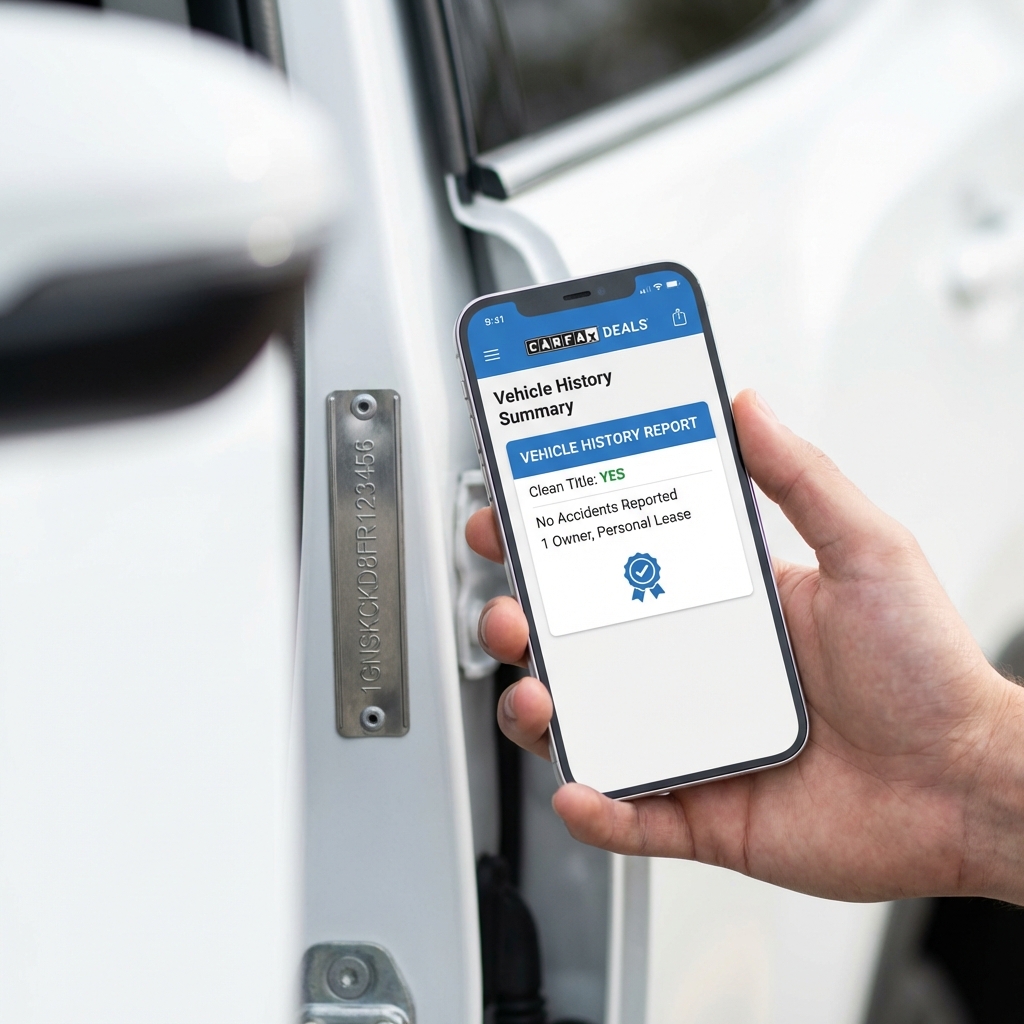
Run a VIN-based vehicle history report early for every candidate to see ownership history, reported accidents, title brands, mileage checks, and any available service records.
Vehicle history reports are a key verification step because they often show title brands and reported incidents that materially affect value and registration CFPB guidance on repossessions.
While reports improve transparency, they may miss non-title damage or service details not reported to data providers, so treat the report as necessary but not always sufficient information Consumer Reports guide.
CarFax Deals can serve as a verification layer by pairing listings with vehicle history reports and pricing insights so buyers can prioritize lower-risk candidates before bidding or contacting a dealer.
Inspecting repossessed vehicles: what to expect and how to order a pre-purchase inspection
Because auction disclosures often omit full service history and non-title damage, inspections help reveal deferred maintenance and visible wear that a history report might not document IAA industry report Q4 2024.
Common issues on repo cars include overdue maintenance items, worn interior components, and localized damage that did not result in a title brand but may affect short-term costs.
Options for inspection include visiting a dealer who holds the car, ordering an independent mobile inspector, or using inspection reports or photos provided by the auction platform when available Consumer Reports guide.
Comparing prices and price analysis labels for repo cars for sale
Price signals can be harder to interpret for repossessed stock because market-level repossession volumes and shifts to online bidding influence supply and pricing patterns Cox Automotive analysis and related market reports online salvage auctions market report.
Auction prices tend to reflect quick-sale dynamics and limited negotiation, while dealer-held repo inventory may allow more room to negotiate after reconditioning and inspection Manheim market report 2024.
Compare price analysis labels and local listings
Use this to filter candidate listings
Use price analysis labels and local market context to prioritize listings, and treat low price as a starting signal that requires verification, not a recommendation to buy without checks.
Dealer inventory versus auction inventory: different buying dynamics
Dealers that acquire repo cars at auction often inspect and recondition vehicles before listing, which can improve information and give buyers a chance to see the car in person.
Wholesale auctions typically sell as-is and provide limited buyer protections, so auctions usually favor buyers who accept higher risk or who can arrange inspections ahead of or immediately after purchase IAA industry report Q4 2024.
Negotiation leverage is often stronger when a dealer holds inventory because dealers may reprice after inspection and have more flexibility than an auction lane or online proxy buyer.
Title status, salvage risk, and legal checks before you buy repo cars for sale
Confirm title status early and watch for brands like salvage or rebuilt, because title brands materially affect registration options and future resale value CFPB guidance on repossessions.
Legal overviews also advise checking for lender rights, possible redemption periods, or deficiency judgments that may create post-sale complications in some cases Nolo guide to buying repossessed cars.
Typical pitfalls buyers make when searching for repo cars for sale
One common mistake is relying on a low advertised price without confirming title status, running a VIN report, or inspecting the vehicle, which can leave buyers responsible for unexpected costs later IAA industry report Q4 2024.
Another frequent error is skipping registration steps or misunderstanding auction rules, which can prevent participation or result in unexpected fees and pickup logistic problems Manheim market report 2024.
Finally, some buyers underestimate likely deferred maintenance on repossessed cars and then face immediate repair needs after purchase Consumer Reports guide.
Practical scenarios: three common ways a buyer finds and evaluates repo cars for sale
Scenario 1: Finding a local repo on a dealer lot
Search dealer listings for keywords that indicate auction-acquired or repossessed stock, collect the VIN, run a vehicle history report, and request an on-site inspection before negotiating with the dealer.
If the dealer bought the car at auction and reconditioned it, you may get more inspection access and some room to negotiate than at an auction lane Cox Automotive analysis.
Scenario 2: Bidding on an online wholesale auction
Register with the auction, study the lot sheet and available photos, order the VIN report, and arrange a third-party inspection if possible; remember that many auction sales are final and as-is Manheim market report 2024.
Set a firm maximum bid that reflects inspection findings and market value to avoid emotional overbidding in a fast-paced online lane.
Scenario 3: Spotting auction-acquired inventory on a consumer marketplace
When a consumer marketplace lists an auction-acquired car, use the platform filters to check price labels and title status, run the VIN report, and confirm whether the listing originates from a dealer or direct auction lot Consumer Reports guide.
Because marketplaces aggregate listings, use search alerts and price comparison tools to watch changes over a few days before deciding.
Open questions and regional differences in repo supply and transparency
Industry reporting shows repossession volumes rose in recent years and that a growing share of stock appears via online bidding platforms, but regional supply after credit-cycle shifts can vary significantly by market Cox Automotive analysis.
Buyers should watch for platform transparency differences, since some online venues provide robust condition reports and others offer minimal disclosure, which affects how comfortable a remote bid should be Manheim market report 2024.
Final checklist and next steps when you find repo cars for sale
Compact pre-bid checklist: confirm title status, run a vehicle history report, order a pre-purchase inspection, verify odometer and service records, and confirm auction or sale terms and pickup arrangements CFPB guidance on repossessions.
Decide in advance where negotiation can help and where it likely cannot: auctions limit post-sale negotiation, while dealer-held inventory often has more flexibility after inspection.
If a listing lacks a clear title status or a usable VIN, consider walking away; the time to verify is before you bid or sign a purchase agreement Consumer Reports guide.
Sometimes. Some lenders post surplus lists or work through brokers, but access and disclosure vary so you should confirm registration requirements and title status before buying.
They can be priced below comparable retail listings, but lower price often comes with higher risk of deferred maintenance, limited inspection access, or title issues, so verify with a history report and inspection.
No. They commonly show ownership history, title brands, accident reports, and mileage checks, but they may miss unreported damage or incomplete service records, so inspections remain important.
Finding a repossessed vehicle can be a viable research path for buyers focused on specific models or local market opportunities, but it requires careful verification and realistic expectations about as-is terms and possible repairs. Use VIN reports, inspections, and clear pre-bid limits to make comparisons that reflect total cost and risk.
If you plan to explore auction or dealer-acquired repo inventory, prioritize listings with clear title information and documented history, and treat price alone as an initial signal rather than the full decision basis.


 Blog
Blog