
What is the best SUV to buy for your money? A practical used-SUV guide
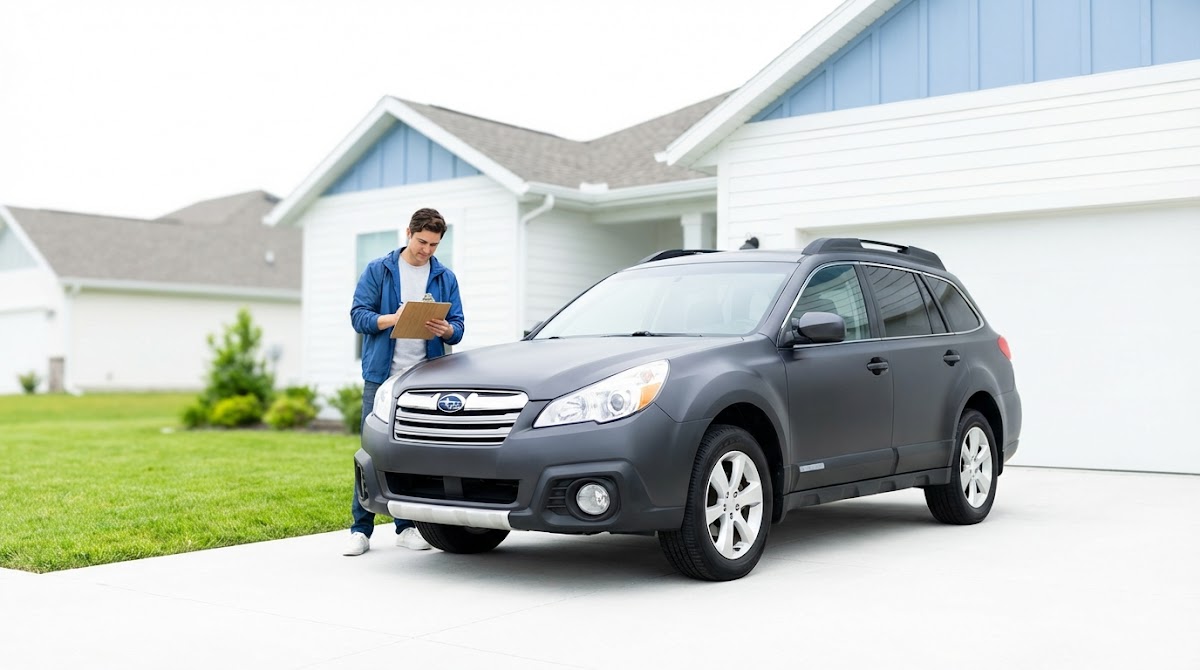
Finding an SUV that offers the most value requires weighing purchase price against five-year total cost of ownership, reliability and resale. This guide shows a step-by-step workflow to compare models, verify safety and inspect listings so you can narrow choices and prioritize lower-risk deals. Use local listings and vehicle history reports to confirm final decisions.
 Blog
BlogRelated reading
At what mileage do Jeep Cherokee start having problems?
Many common Jeep Cherokee faults most often appear in the 60,000 to 120,000 mile range, though timing varies by model year, transmission type and how the vehicle was used. Buyers should treat mileage as one signal among several and combine it with a vehicle history report, service records and a targeted inspection before purchase. For VIN-level detail, run a vehicle history report and verify any model-year recalls.
What is the most common problem with a Jeep Grand Cherokee, a buyer's guide
The most commonly reported problem for the Jeep Grand Cherokee is transmission-related faults, including rough or hard shifting and, in some cases, premature failure. For buyers searching for a jeep grand cherokee for sale, VIN-level history checks and a focused test drive can reduce risk and clarify whether a specific listing shows evidence of those issues.
Are Jeep Grand Cherokees worth the money? A practical guide
This guide helps you judge whether a used Jeep Grand Cherokee fits your budget and risk tolerance. It shows which checks matter most for safety, reliability and ownership cost, and explains how to use vehicle history reports and pricing insights to compare listings.
What 'best SUV for your money' really means
When shoppers look for a "suv for sale near me" they often focus on the listed price. Price matters, but value for money usually depends on the five-year total cost of ownership, which combines fuel, maintenance, insurance and depreciation. Reputable TCO tools can show how those ongoing costs change the net outcome of a purchase over time, helping compare models on more than sticker price Edmunds True Cost to Own
Reliability and dependability studies are part of that picture because models with fewer expected repairs tend to lower maintenance and ownership headaches. A second driver of value is resale retention: vehicles with higher resale value reduce net cost over the holding period. Taken together, these three components turn a low list price into either a good value or a false bargain.
Run Vehicle History Report
Use this workflow to shortlist SUV models to check in local listings and reports.
Depreciation is another central point. Depreciation is steepest in the first two to three years, so late-model used SUVs often deliver better immediate value than new purchases once you weigh warranty and financing tradeoffs Kelley Blue Book Best Resale Value awards
A practical framework to compare SUVs: the TCO plus checks workflow
Step 1: Estimate 5-year TCO with reputable tools
Start by running a five-year total cost of ownership estimate for each candidate. Use a trusted TCO tool to populate fuel, maintenance, insurance and depreciation fields so you can compare models on common inputs rather than list price alone. Edmunds provides a transparent TCO methodology that helps isolate the largest cost drivers for a given model and trim Edmunds True Cost to Own
Step 2: Adjust for your local factors
After the baseline TCO, adjust for your annual miles, local fuel costs and the powertrain you prefer. If you commute more than average, raise the fuel and maintenance lines. If you plan to keep a vehicle longer or trade sooner, adjust depreciation assumptions. These personal inputs often change which model looks most economical in your local market.

Keep in mind TCO tools use generalized insurance and maintenance assumptions and cannot see current local listing prices. Use TCO to compare models, then check local market listings to see if actual asking prices and trims align with the TCO assumptions.
How reliability and dependability affect value
Sources to consult: Consumer Reports and J.D. Power
Independent reliability studies are predictive because they measure real owner experiences over time. Consumer Reports describes how it evaluates reliability and ownership costs, and J.D. Power produces a Vehicle Dependability Study that correlates with repair frequency. Use these sources to identify models and model years that historically require fewer repairs How Consumer Reports evaluates reliability and ownership costs
Compare five-year total cost of ownership, check independent reliability and safety ratings for the exact year and trim, and use vehicle history reports plus local pricing context to prioritize and verify listings before a dealer visit.
Interpreting reliability signals for used purchases
When you fold reliability into your shortlist, treat scores as a direction, not a guarantee. Prefer trims and years with consistently better dependability scores, and increase the maintenance allotment in your TCO for models with weaker ratings. Where reliability data diverges between sources, lean on common trends rather than single-year outliers.
Checking safety: why model year and trim matter
Which program to check (IIHS)
Safety ratings can change by model year and trim because crash avoidance equipment and structural updates are applied unevenly. Confirm crash test and crash avoidance feature availability for the exact model year and trim you are considering, since ratings apply to specific configurations IIHS vehicle ratings
What to check on the exact model year and trim
Look for Top Safety Pick qualifiers, standard crash avoidance features like automatic emergency braking and lane support, and side-impact protection. If a listing omits airbags or advanced driver aids in the description, verify the option list on the VIN or in service records before assuming the trim includes them.
Because safety equipment can materially affect crash outcomes, treat safety ratings as a model-year and trim-level check in your decision flow rather than a blanket endorsement for the model name.
Evaluate resale and depreciation: using KBB and market signals
Why resale value reduces net cost
Strong resale retention lowers the net expense a buyer pays over the ownership period, since less value is lost to depreciation. Models recognized for best resale value tend to have lower net ownership costs over time, so resale rankings are useful when you want predictable long-term cost outcomes Kelley Blue Book Best Resale Value awards
How to use KBB Best Resale Value lists practically
Use KBB lists to shortlist models with historically strong retention, then check local listings to confirm those models retain value in your market. Market forces like EV adoption and supply changes can alter future resale trajectories, so treat awards as historical context rather than a fixed promise.
Combine resale checks with TCO and reliability to see which models give the strongest expected return for your usage and holding period.
How to inspect used listings: vehicle history and pricing-insight workflow
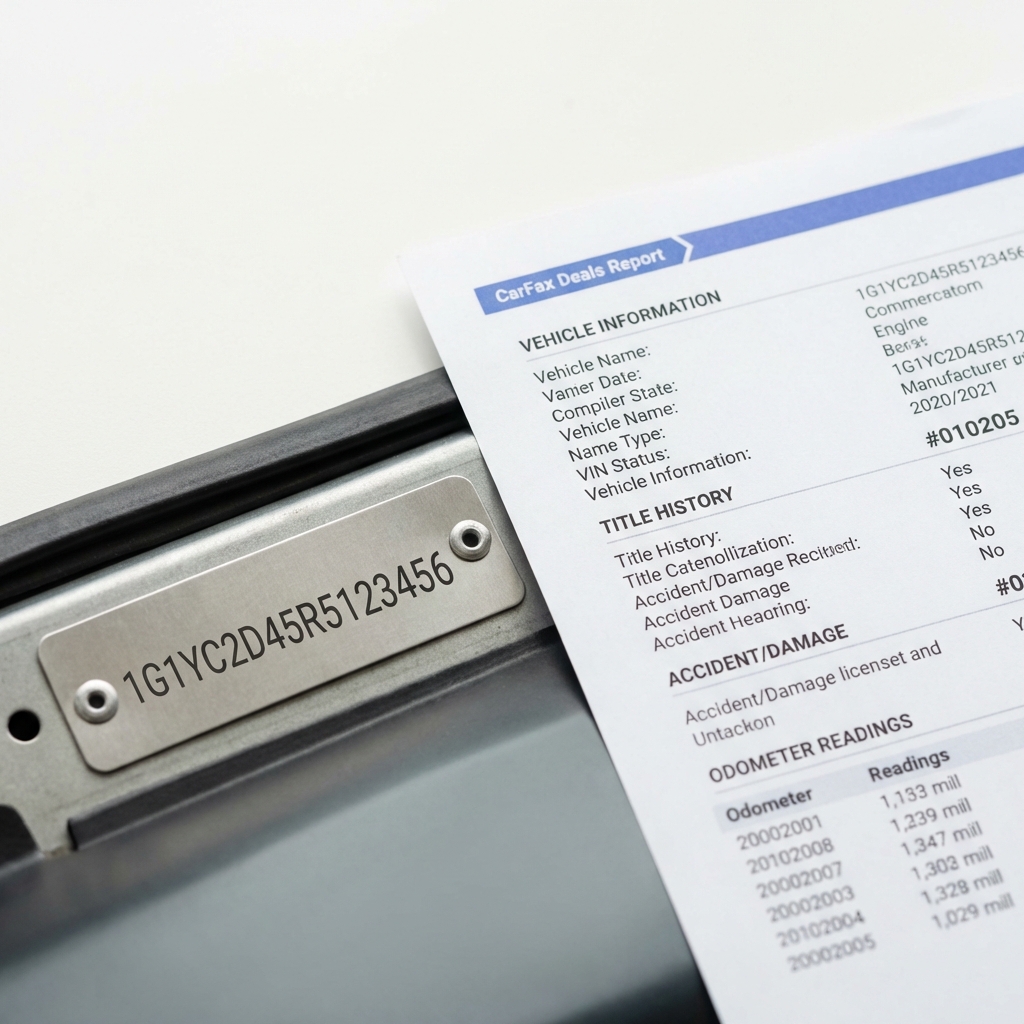
Before you visit a dealer, obtain a vehicle history report that shows title status, ownership history, mileage checks, service history and accident history. These items help flag previously damaged or poorly maintained vehicles and should be reviewed alongside the listing.

Use price analysis labels such as Great Deal, Good Deal or Fair Deal to triage listings quickly, but verify the label assumptions against the vehicle history and local comparable listings. Also check dealer transparency signals like reviews and profile information to assess how the dealer represents vehicle condition and disclosures CarFax Deals - vehicle history reports, price analysis labels and dealer transparency features
When a history report shows concerning entries, ask targeted questions and consider deprioritizing the listing unless you receive satisfactory documentation and an independent inspection.
Quick ranking checklist: combine TCO, reliability, safety and resale
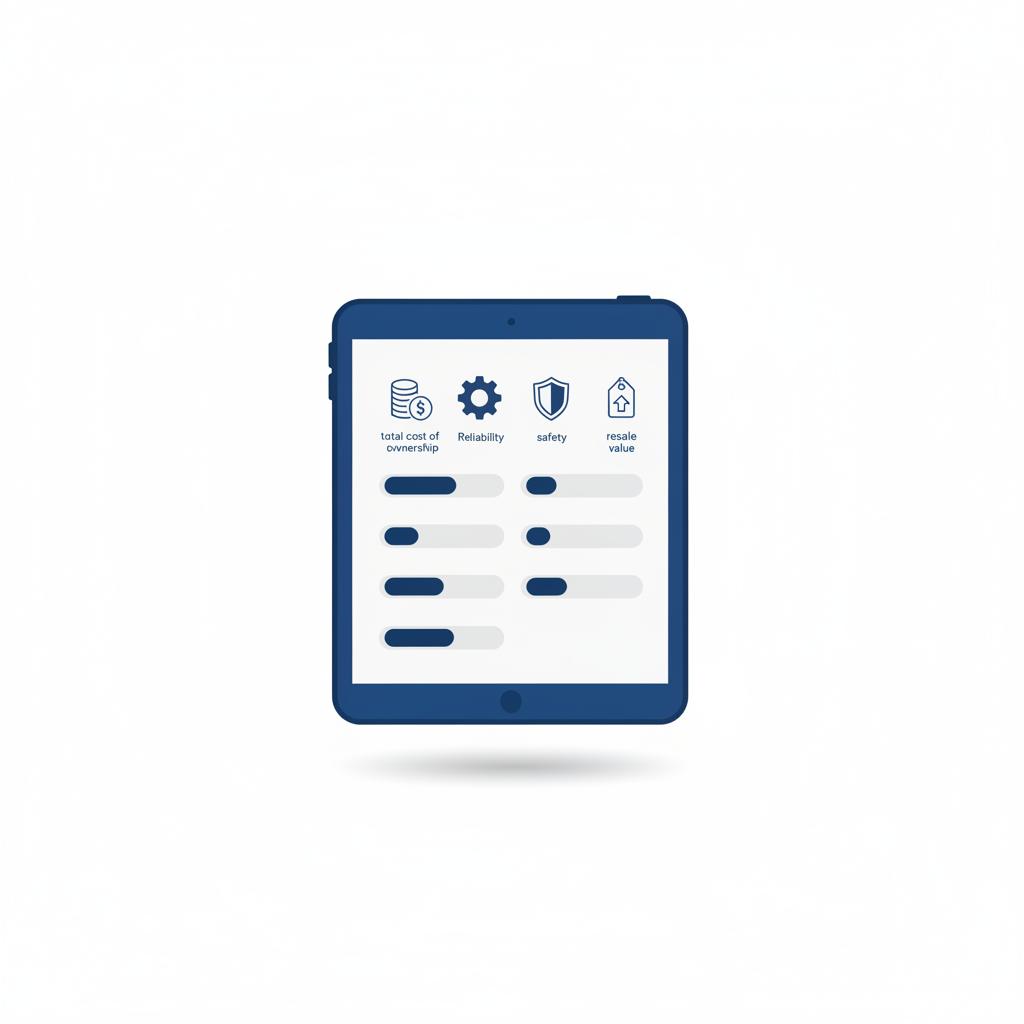
Start with a weighted checklist example to convert qualitative differences into a score. As an example, you might weight depreciation 35, fuel 20, maintenance 20, reliability 15 and safety 10 to reflect total cost focus while keeping safety visible.
Apply the template to each candidate and total the scores to rank vehicles. Use TCO numbers, reliability ratings and resale signals as inputs so the ranking reflects both expected costs and risk.
estimate annual running cost from major operating lines
use as a quick sanity check
Adjust weights for your priorities. If safety is your top concern, raise the safety weight and lower fuel or depreciation. If you plan to keep the vehicle many years, increase depreciation weight to reflect longer-term retention.
Where to be cautious: common buying mistakes to avoid
Don't overvalue a low upfront price. A low listing can mask higher expected fuel or repair costs, or a history of larger claims that increase ownership expense. Use TCO estimates to reveal those hidden costs Edmunds True Cost to Own
Avoid assuming all trims of a model share the same safety and reliability profile. Verify trim-specific equipment on the VIN and in service records before drawing conclusions.
Red flags in listings and history reports and what to do next
High-risk findings include salvage or rebuilt titles, odometer inconsistencies, long gaps in service history and repeated major repairs. Any of these should trigger deeper scrutiny or removal from your shortlist.
If you encounter red flags, ask the dealer for documentation, request a pre-purchase inspection, and compare pricing insights to deprioritize listings with both poor labels and history issues CarFax Deals - vehicle history reports, price analysis labels and dealer transparency features
Sample scenarios: three buyer profiles and model prioritization
Family commuter seeking long-term reliability, low maintenance and proven safety: weight reliability and safety higher in the checklist, use TCO to check fuel and maintenance lines, and shortlist models with strong dependability and high safety ratings How Consumer Reports evaluates reliability and ownership costs
Urban buyer prioritizing fuel economy and resale: increase fuel and depreciation weight, prefer efficient powertrains and trims with strong resale recognition. Verify local demand and resale trends to avoid models losing value quickly.
Negotiation and dealer visit checklist after shortlisting
Before negotiation, confirm the VIN and request the vehicle history report. Ask the dealer to confirm title status, provide maintenance records and disclose any previous damage. These items support an informed negotiation and reduce surprises.
Arrange a test drive and a pre-purchase inspection by an independent mechanic. Verify listed options against the trim shown in the history report and confirm warranty transferability if applicable CarFax Deals - vehicle history reports, price analysis labels and dealer transparency features
How to use CarFax Deals as a decision support layer (what it can and cannot do)
CarFax Deals functions as a verification layer that helps buyers assess listings with vehicle history reports, price analysis labels and dealer transparency signals. Use these features to surface risk and compare listings faster when prioritizing visits.
The platform does not guarantee a vehicle is problem free and does not replace an independent inspection. Always corroborate reports with service records and inspections before finalizing a purchase CarFax Deals - vehicle history reports, price analysis labels and dealer transparency features
Final checklist and next steps: from shortlist to purchase decision
Two-day action plan: Day one, verify vehicle history reports and compare TCO for shortlisted models. Day two, confirm safety ratings for the exact year and trim, schedule an independent inspection and finalize documentation requests.
Keep a simple comparison table of shortlisted vehicles, recording VIN, TCO figures, safety notes, resale signals and dealer responses. Use that record to make tradeoffs between warranty, financing and immediate service needs.
Run a five-year TCO comparison that includes fuel, maintenance, insurance and depreciation and then adjust for your annual miles and local fuel costs. Use the results to compare models on expected long-term cost rather than list price alone.
Check title status, ownership history, mileage checks, service history and any reported accident or damage. Treat gaps or inconsistencies as reasons to ask targeted questions or order an independent inspection.
No. Price labels help triage listings, but you should verify the vehicle history report, confirm exact trim and safety equipment, and get an independent inspection before buying.
References
- https://www.edmunds.com/tco/
- https://www.kbb.com/awards/best-resale-value-cars-trucks-suvs/
- https://www.kbb.com/car-depreciation/
- https://www.kbb.com/car-values/
- https://www.consumerreports.org/cars-guide/how-we-test-and-rate-cars/
- https://www.iihs.org/ratings
- https://carfaxdeals.com/run-report
- https://carfaxdeals.com
- https://carfaxdeals.com/vinreport
- https://carfaxdeals.com/how-to-use