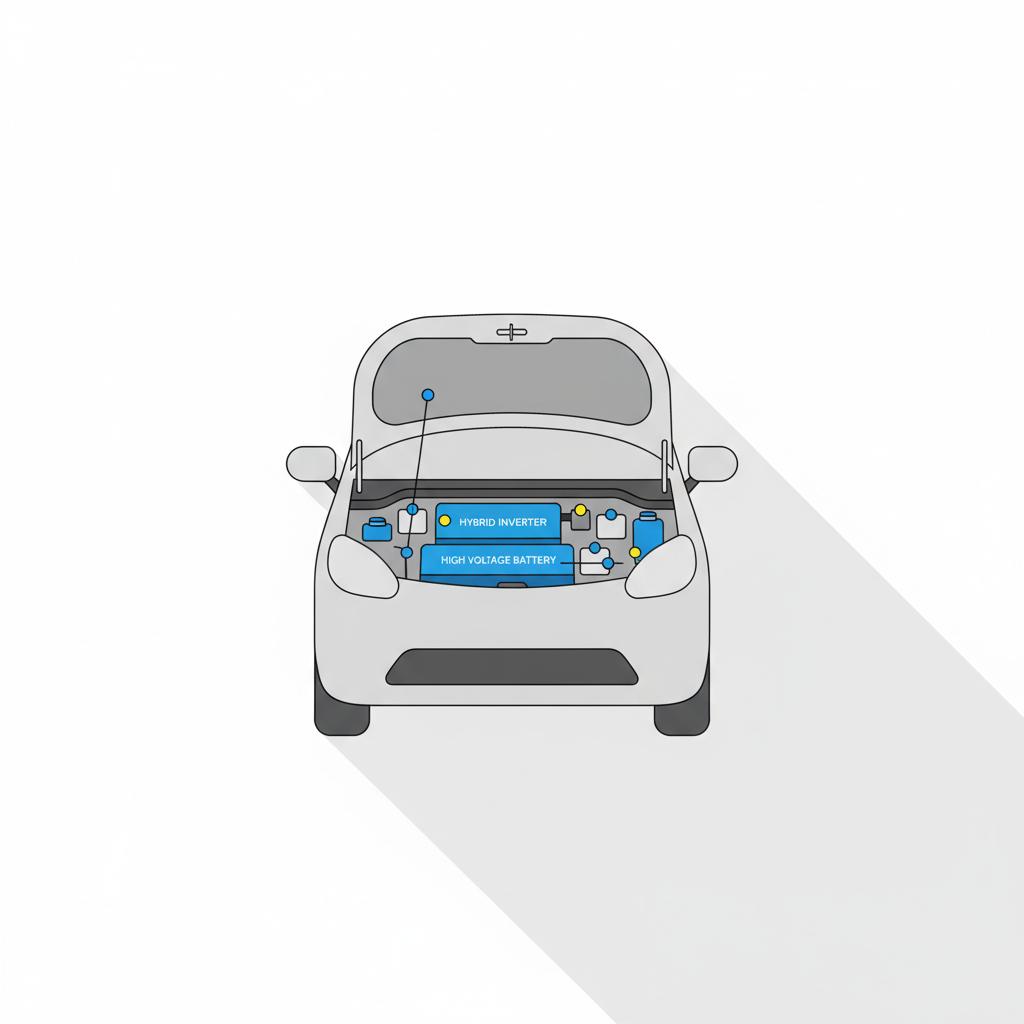
What is the best year of Prius to buy used? A buyer's guide
This guide helps research-oriented shoppers narrow which model years to focus on when searching for a toyota prius for sale. It compares third- and fourth-generation trade-offs, explains how hybrid battery life affects ownership cost, and gives a step-by-step checklist for VIN checks and inspections.
A step-by-step workflow for estimating a truck's market value that centers on comparing consumer valuation tools, adjusting for mileage and condition, and checking wholesale market signals. The guide explains private-party, trade-in and dealer retail values and shows how a vehicle history report and pricing insights can change an asking price.
This guide helps research oriented buyers evaluate suv used cars for sale under $25,000 by combining safety ratings, reliability data, local pricing context, and vehicle history checks. It outlines a simple framework, a pre visit checklist, and a decision scoring worksheet so you can compare finalists before contacting a dealer. Use the steps here to narrow candidates and confirm risk signals with a vehicle history report and a pre purchase inspection.
When searching suv used cars for sale, prioritize model year, trim and powertrain before choosing a make or model. This guide explains how safety ratings, dependability studies and local pricing insights combine to produce a short list you can verify with a vehicle history report. It also provides a stepwise checklist you can use before contacting a dealer.
This guide helps research-oriented used-car buyers quickly narrow which Toyota Prius model years to target when shopping. It focuses on the trade-offs among purchase price, safety features, hybrid battery health, and local pricing signals.
If you want a practical shortlist before you start contacting dealers, this article summarizes generation-level differences, explains the role of battery lifespan, lists inspection priorities, and gives a step-by-step decision flow to apply to any listing.
Third-generation Prius models (2010-2015) often balance lower purchase price with reasonable reliability for many buyers.
Fourth-generation models (2016-2022) added safety and powertrain updates but usually cost more on the used market.
Hybrid battery condition is a key determinant of long-term cost; VIN-specific checks and a pre-purchase inspection are essential.
Quick answer: which Toyota Prius model years to consider when searching for toyota prius for sale
If you want a short, practical starting point, many used-car analyses recommend third-generation Prius models, roughly 2010-2015, as a pragmatic balance of lower purchase price and reasonable reliability, making them a good filter when you scan listings for toyota prius for sale iSeeCars used-car research.
Run a vehicle history report to verify recalls and service signals
Consider running a VIN-level check early in your search to confirm title, recall and service signals before scheduling a visit.
Buyers who prioritize updated safety equipment and newer tech tend to favor fourth-generation models, about 2016-2022, which brought redesigned powertrains and added safety features but commonly command higher used prices Kelley Blue Book used car values.
Across model years, hybrid battery condition is a decisive factor that can change long-term cost projections; industry guidance highlights battery lifespan as a major variable when comparing listings and negotiating price Consumer Reports Toyota Prius.
Short verdict for budget buyers
For lower upfront cost and still-acceptable dependability, many buyers start with 2010-2015 Prius listings and then screen for low claims of major repairs and a clear maintenance record RepairPal reliability page.
Short verdict for safety-minded buyers
If you want later active safety features and crashworthiness improvements, limit searches to 2016 and later model years and be prepared for higher asking prices in many markets IIHS vehicle ratings.
Prius generations at a glance: what changed and why it matters for buyers
Third generation (approx. 2010-2015): strengths and typical trade-offs
The third-generation Prius is widely noted for offering lower used purchase prices while keeping reasonable reliability for everyday commuting, which is why many value-conscious shoppers include these years when they look for a toyota prius for sale iSeeCars used-car research.
Typical trade-offs are older safety technology compared with later models and a broader spread in local resale values based on mileage and condition; that makes it important to check trim and equipment when comparing listings Kelley Blue Book used car values.
Fourth generation (approx. 2016-2022): new tech, safety upgrades, and price effects
The fourth-generation redesign updated powertrains and added more modern active safety features in many trims, which tends to push used prices higher for equivalent mileage and condition IIHS vehicle ratings.
These model years can be a sensible choice for buyers who value features such as newer driver-assist systems, but the higher initial outlay should be measured against expected long-term costs including hybrid system condition Kelley Blue Book used car values.
Other model-year notes to watch
Across generations, mechanical and electrical issues reported in owner and repair summaries can vary by year and trim; use vehicle history reports to check for repeated repairs and service intervals before you prioritize a listing RepairPal reliability page.
When you compare model years, factor in how local market demand, available trims, and mileage interact to set the asking price for the same model year in different regions Kelley Blue Book used car values.
How hybrid battery life changes the total cost when you buy a toyota prius for sale
Hybrid battery life is one of the most influential ownership variables for a Prius; industry sources commonly report typical service life in the range of about 8-12 years or roughly 100,000-200,000 miles, and replacement can be a large out-of-warranty expense Consumer Reports Toyota Prius. Carfax maintenance guide.
Practical checks to assess likely battery condition include looking for recent battery tests recorded in service history, asking whether battery modules have been replaced, and watching for hybrid-system warning lights during a test drive RepairPal reliability page. Hybrid battery health tips.
Typical battery lifespan estimates and what they mean for used buyers
Estimates in industry guidance place most Prius hybrid battery life in multi-year ranges rather than exact mile thresholds, so age, cumulative mileage, and recorded tests together give a clearer picture than mileage alone Consumer Reports Toyota Prius. Greentec guide.
For shoppers, that means a 2012 Prius with moderate miles may have different battery prospects than a 2014 car with higher miles, even though both are third-generation models; check service history for battery-related maintenance entries RepairPal reliability page.
Signs of battery wear and VIN- or inspection-level checks
Signs of battery wear include inconsistent state-of-charge behavior, reduced electric-assist performance, and warning lights specific to the hybrid system; these can be detected during a test drive and with a diagnostic scan by a technician familiar with hybrid systems Consumer Reports Toyota Prius.
Ask the seller for any battery tests in the service history and, if necessary, schedule a hybrid-focused inspection that includes a load and voltage check to better estimate remaining battery life RepairPal reliability page.
Estimating replacement cost impact on ownership
Because replacement batteries are often an out-of-warranty cost, treat them as a possible large expense in a worst-case scenario and compare that to how much you would save on purchase price by choosing an older model Consumer Reports Toyota Prius.
Use a simple comparison: expected remaining useful life times your annual miles, plus likely repair bills, against the premium paid for a newer car with documented battery service; making this calculation helps avoid focusing only on sticker price when you evaluate listings for toyota prius for sale Kelley Blue Book used car values.
Safety, recalls, and recurring problem patterns to check before you buy
How to check NHTSA recall and open campaign status by VIN
Run a VIN-level recall check with the national database before you visit a car; NHTSA and manufacturer records show that recalls and service campaigns have affected multiple Prius model years, so an open campaign can affect your decision and negotiating position NHTSA recalls database.
Request evidence that any recall work was completed, and keep in mind that an open recall is something you can verify and often ask to be addressed before purchase NHTSA recalls database.
Known problem clusters reported for Prius models
Commonly reported problem patterns for the Prius family include hybrid battery degradation, inverter and electrical faults, and reports of elevated oil consumption in certain years; focus inspections on these systems when you evaluate a listing RepairPal reliability page.
When you see service entries for inverter work, repeated battery testing, or unexplained oil-top-off records, treat those as negotiation points and consider a professional assessment to estimate repair scope NHTSA recalls database.
How safety ratings relate to model-year choice
Safety ratings provide useful context: later model years with updated active safety options often score better in crashworthiness and crash avoidance tests, so use IIHS and other rating sources when safety features are a priority IIHS vehicle ratings.
Balance higher safety feature levels against the higher used price and verify which safety features are present on the specific trim and model you consider by checking equipment lists and the vehicle history report Kelley Blue Book used car values.
How to set a realistic price target when shopping for a toyota prius for sale
Resale value for any given Prius varies with market, trim, mileage, and condition; combine pricing guides and local listings to bracket what is reasonable for the model year and trim you favor Kelley Blue Book used car values.
Start by checking national guides for a baseline, then run targeted local searches for the same year, trim, and mileage to see how asking prices differ in your area iSeeCars used-car research.
Major price movers include mileage, trim level and options, battery condition, and title status; adjust your target range upward for documented recent battery service or extensive dealer reconditioning, and downward for open recalls or unclear title history Kelley Blue Book used car values.
Pair pricing insights with a vehicle history report before contacting a seller; using history and local pricing together helps set expectations and identify listings that merit a physical inspection iSeeCars used-car research. run a report
A step-by-step buying checklist and inspection priorities for a used Prius
Pre-listing research: VIN checks and service history
Before you visit, run VIN-level checks for recalls, title status, ownership history, and service entries; these items are often found in vehicle history reports and can reveal prior damage or repeated repairs NHTSA recalls database.
Ask the seller for maintenance records that show battery testing or inverter work, and note any gaps in routine service as potential negotiation points Consumer Reports Toyota Prius.
On-site inspection: battery, drivetrain, fluids, and test drive
During an on-site check, prioritize a hybrid battery diagnostic, inverter and wiring inspection, oil level and consumption signs, and a test drive to reproduce any warning lights or abnormal behavior RepairPal reliability page.
Listen for unusual noises during acceleration and braking, note how the car transitions between electric and gasoline modes, and ask the seller about any recent hybrid-system repairs Consumer Reports Toyota Prius.
Post-inspection: negotiating around findings and arranging a professional check
If the inspection or history report shows battery concerns, inverter work, or unresolved recalls, use those facts in negotiation and consider walking away if repair risk exceeds your budget; always get a written quote for necessary repairs when possible NHTSA recalls database.
Bring the car to a hybrid-aware mechanic for a professional pre-purchase inspection when you plan to offer; ask the shop to run a hybrid-system diagnostic and provide a written estimate of likely near-term repairs Consumer Reports Toyota Prius.
Typical mistakes shoppers make and how to avoid them when evaluating a toyota prius for sale
One common error is underestimating battery replacement risk and not verifying battery tests in service history; industry guidance places battery life in multi-year ranges, so skipping these checks can leave you exposed to a large repair bill Consumer Reports Toyota Prius.
Another frequent mistake is skipping VIN recall and title checks; open recalls and title issues show up in national records and vehicle history reports and should influence your negotiating stance NHTSA recalls database.
Verify VIN-level recall and title signals before visiting a listing
Run before scheduling an inspection
A third mistake is focusing only on the asking price without accounting for total cost to own including likely repairs and local resale prospects; use pricing insights and history reports to set a realistic offer range Kelley Blue Book used car values.
Avoid these errors by following a simple process: run VIN checks, review the vehicle history report, ask targeted seller questions about battery and repairs, and arrange a hybrid-aware inspection when results are unclear iSeeCars used-car research. vehicle history report
Example scenarios: which Prius year to pick for commuting, family use, or tight budgets
If your top priority is low purchase price and mileage limits
For tight budgets, third-generation models (2010-2015) are commonly recommended because they often list at lower prices; prioritize cars with documented battery tests, clear service records, and acceptable mileage to reduce surprise costs iSeeCars used-car research.
This choice suits commuters who drive moderate daily miles and who are comfortable budgeting for a possible medium-term battery service if diagnostics suggest reduced capacity Consumer Reports Toyota Prius.
If you prioritize active safety features and newer tech
Buyers who want more modern driver assistance and safety equipment commonly look to 2016 and later models; expect a higher purchase price but also potentially stronger safety ratings for certain years and trims IIHS vehicle ratings.
This option is often better for families or those who place a premium on the latest safety suites, provided the asking price aligns with local market norms and the vehicle has no unresolved recalls Kelley Blue Book used car values.
If you want the lowest likely maintenance surprises
If minimizing unexpected repairs is the primary goal, prioritize listings with a full service history showing recent battery tests, single-owner records, and no recurring inverter or electrical repairs; a clean maintenance record can reduce uncertainty even for older Prius models RepairPal reliability page.
In many cases, paying a modest premium for a later model with documented battery service can be more predictable than buying an older car with unknown hybrid-system history Consumer Reports Toyota Prius.
Wrapping up: quick decision flow and next steps when you find a toyota prius for sale
Three fast steps before you contact a dealer or seller: run VIN-level recall and title checks, compare local pricing for the same year and trim, and review the vehicle history report for battery and repair entries NHTSA recalls database.
Ask the seller about recent battery diagnostics, any inverter or hybrid repairs, and whether recall work was completed; schedule a hybrid-aware pre-purchase inspection if records are incomplete Consumer Reports Toyota Prius.
Use inspection results and pricing context to set your final offer range instead of relying on sticker price; if significant repair risk is uncovered, be prepared to walk away or negotiate an adjusted price that reflects likely costs Kelley Blue Book used car values.
Industry guidance commonly places Prius hybrid battery life in a multi-year range, often around 8-12 years or roughly 100,000-200,000 miles, but exact condition varies by use and maintenance.
A 2010-2015 Prius often offers lower purchase price with acceptable reliability for budget-minded buyers, while 2016+ models add safety tech and newer powertrains at higher used prices; check VIN-level history and battery condition to choose.
Run VIN-level recall and open campaign checks, review title status and ownership history, and examine service records for battery tests or inverter repairs before arranging an inspection.
When you find a promising listing, run VIN-level checks, pair pricing context with a vehicle history report, and schedule a hybrid-aware pre-purchase inspection to confirm condition. These steps reduce uncertainty and help you set a realistic offer based on documented risks rather than headline price alone.
CarFax Deals can act as a verification layer to surface history and pricing context, but treat any report as one input in your decision and confirm findings with a mechanic when necessary.


 Blog
Blog