What is the best year to buy a used Toyota? A practical, model-aware guide
This guide helps research-oriented buyers decide which model years of Toyota to prioritize and which checks to run before purchase. It explains why model year and generation changes matter, lays out a step-by-step checklist for VIN-level checks and inspections, and gives model-specific guidance for Corolla, Camry, RAV4, Highlander, Tacoma and Prius. Use this workflow to compare toyotas for sale with verified history and pricing context.
A step-by-step workflow for estimating a truck's market value that centers on comparing consumer valuation tools, adjusting for mileage and condition, and checking wholesale market signals. The guide explains private-party, trade-in and dealer retail values and shows how a vehicle history report and pricing insights can change an asking price.
This guide helps research oriented buyers evaluate suv used cars for sale under $25,000 by combining safety ratings, reliability data, local pricing context, and vehicle history checks. It outlines a simple framework, a pre visit checklist, and a decision scoring worksheet so you can compare finalists before contacting a dealer. Use the steps here to narrow candidates and confirm risk signals with a vehicle history report and a pre purchase inspection.
When searching suv used cars for sale, prioritize model year, trim and powertrain before choosing a make or model. This guide explains how safety ratings, dependability studies and local pricing insights combine to produce a short list you can verify with a vehicle history report. It also provides a stepwise checklist you can use before contacting a dealer.
Choosing the right model year makes a big difference when buying a used Toyota. This guide walks research-oriented buyers through why model year matters, how to run VIN-specific checks, and which inspection priorities reduce risk.
We focus on practical steps you can take today: pulling a vehicle history report, checking VIN-level recalls, reviewing maintenance records and using pricing context to compare toyotas for sale. The goal is straightforward: help you narrow candidate years with evidence before talking to a dealer.
Brand-level reliability is strong for Toyota, but model-year and generation changes create important differences.
Run VIN-level recall checks and obtain a vehicle history report before scheduling an inspection.
Older Prius models require extra scrutiny for hybrid battery health and long-term repair costs.
Why model year matters when buying a used Toyota
Toyota has a reputation for reliability, but that brand-level strength does not mean every model year is equally good. Major dependability studies and owner surveys show above-average reliability for the brand overall, while also documenting variation across specific models and years J.D. Power vehicle dependability study.
There is no single best year for all Toyotas; prioritize years by model generation, VIN-level recall status and documented maintenance history, and run a focused inspection before purchase.
Generation changes, midcycle updates and new powertrain introductions are common reasons why performance and repair patterns shift from one model year to the next. When a model moves to a new generation the design, electronics and powertrain choices can change enough that reliability and service cost profiles differ meaningfully for used buyers.
Recalls and defect trends also tend to cluster by year. That makes a VIN-level recall lookup essential before you commit to a car, because a model-year summary page can miss open recalls or VIN-specific remedy records NHTSA recalls database.
Quick answer: is there a single best year to buy a used Toyota?
Short answer: there is no single year that is universally best for every Toyota. Choice depends on model, generation, powertrain and how well the individual car was maintained.
For some models, well-maintained mid to late 2010s and early 2020s examples tend to be strong candidates on reliability studies, but that pattern is not universal and depends on the model and trim you want Consumer Reports reliability survey.
When is a single-year answer reasonable? If you are focused on one model and one powertrain, and studies plus recall records for that model-year range are consistently favorable, you can form a short list of preferred years. When is it not reasonable? If you are comparing across models or considering hybrids with known generation-specific issues, a single-year rule is unlikely to apply.
A step-by-step checklist to find the best year for a specific Toyota
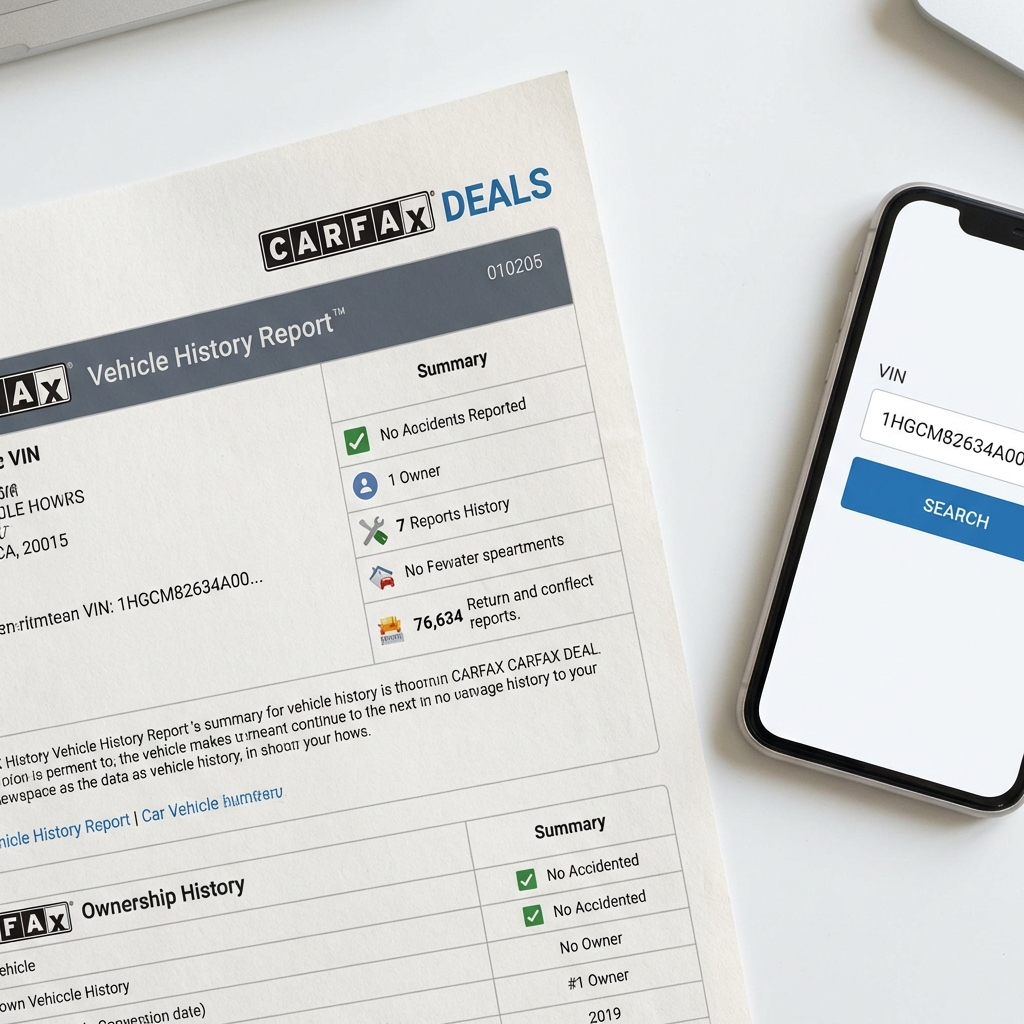
Step 1: Pull a vehicle history report that shows title status, ownership history and reported service entries. A detailed history report reduces risk by revealing title problems and patterns of reported damage before you visit the seller NHTSA recalls database.
Run a VIN vehicle history report to compare candidates
Save or print this checklist and use it to compare candidate cars side by side.
Step 2: Run a VIN-level recall and defect check on NHTSA or use the VIN decoder and review IIHS ratings for the model and year. VIN checks show open recalls and whether recall remedies were completed for that exact car, which matters more than model-year summaries. You can also check Toyota's official VIN recall lookup Toyota recall lookup.
Step 3: Verify maintenance and service history. Look for regular oil changes, scheduled inspections and documented repairs for items such as transmission service or hybrid system maintenance when applicable.
Step 4: Inspect and test-drive. Focus inspections on known weak points for the model and year, and request a professional pre-purchase inspection when possible.
Step 5: Estimate ownership cost. Use KBB 5-year cost-to-own guidance and adjust for local fuel and insurance rates; trim and powertrain choices change those estimates materially Kelley Blue Book 5-year cost-to-own.
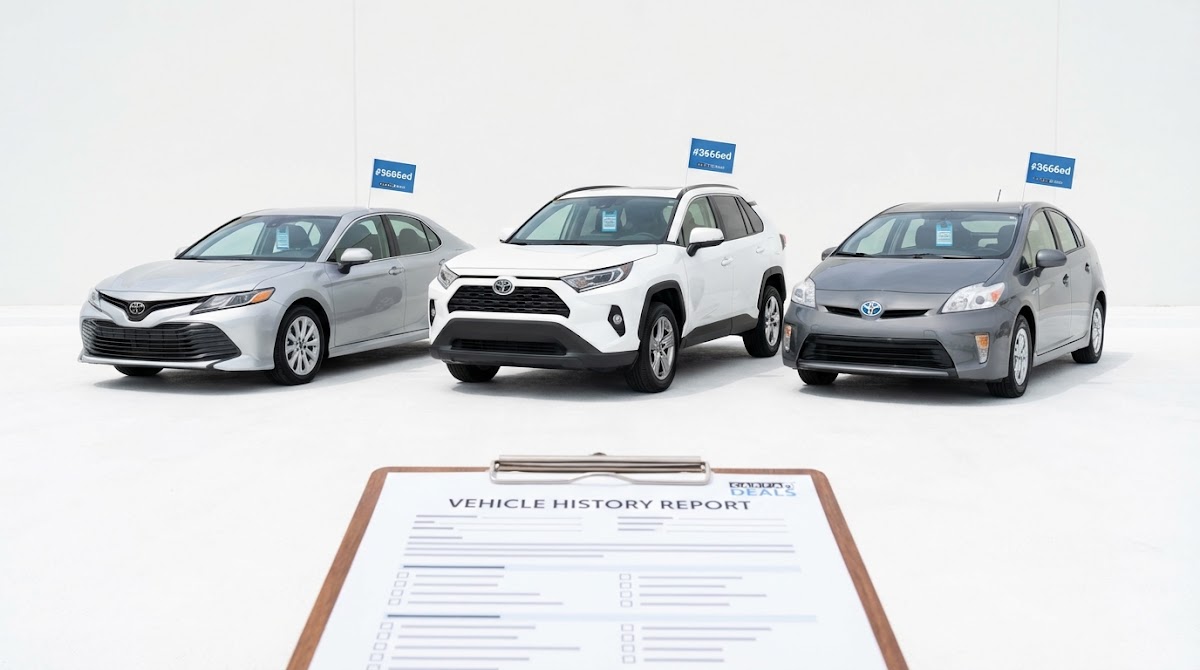
Step 6: Compare saved reports and pricing context across at least three listings before contacting a dealer. Save vehicle history reports and recall lookup results so you can compare them side by side and make an evidence-based decision.
What to check in vehicle history reports and VIN recall lookup
Essential fields in a vehicle history report include title status, ownership history, reported accidents, service records and mileage checks. These items reveal title problems and use patterns that model-year summaries cannot show NHTSA recalls database.
Title status tells you if a car has a salvage, rebuilt or clean title. Ownership history helps identify if the vehicle had multiple short-term owners, which can be a risk signal when combined with other issues.
VIN-based recall lookups are different from model-year pages because they show open recalls for that VIN and whether the remedy was completed. Use the VIN lookup when evaluating a final candidate, since recall completion records can change whether a defect remains an active problem.
IIHS safety and crashworthiness summaries help you understand how the structure and safety equipment for a given generation performed in independent testing, which can be relevant for buyer priorities beyond mechanical reliability IIHS vehicle ratings.
Model-by-model guidance: Corolla and Camry
For Corolla and Camry, dependability studies and owner surveys generally favor well-maintained mid to late 2010s through early 2020s examples for sedans, but you should confirm generation-specific issues for the exact year you consider Consumer Reports reliability survey.
Red flags in a history report for sedans include repeated transmission work, inconsistent or missing oil-change records, and evidence of flood or frame damage. If you see a pattern of transmission repairs or repeated electrical faults in the report, prioritize a shop inspection focused on those systems.
When inspecting a Corolla or Camry, ask about timing-chain versus timing-belt service where relevant, confirm the vehicle had recommended engine and transmission service, and verify that safety recalls were addressed.
Model-by-model guidance: RAV4 and Highlander
SUV generations matter because a midcycle redesign can change suspension geometry, electronics and available powertrains, which affects both reliability and crashworthiness. Consult IIHS summaries and model-year recall pages to see where changes occurred IIHS vehicle ratings.
For crossovers, newer years may bring safer active systems and improved crash performance, while slightly older, proven years can offer lower acquisition cost and fewer complex electronics to fail. Check both NHTSA and IIHS records for model-year clusters of recalls before choosing a year NHTSA recalls database and review KBB recall notices KBB recall notices.
Verify powertrain and trim choices because all-wheel-drive systems, hybrid options and towing packages change maintenance expectations and ownership costs. Use pricing insights to compare similar trims across model years when estimating value and operating cost Kelley Blue Book cost guidance.
Model-by-model guidance: Tacoma and Prius
Tacoma buyers often prioritize durability and documented service history over minor model-year recalls. A strong service history showing regular maintenance and documented heavy-use repairs can matter more for a pickup's long-term value than a single minor recall RepairPal Toyota reliability summary.
Prius buyers should pay special attention to hybrid battery and hybrid-system service history. Older Prius generations are repeatedly associated with long-term battery replacement and related repairs in reliability databases and owner surveys, so factor potential high-cost repairs into your year selection RepairPal Toyota reliability summary.
Use a VIN recall lookup and hybrid battery health checklist before inspection
Use this to guide inspection questions
For both pickups and hybrids, request detailed invoices for any major repairs and ask whether the service was performed at a dealership or an independent shop. That context helps when assessing durability claims and predicted future cost.
Common failure points and an inspection checklist
Repair databases and owner surveys flag recurring problems such as transmission issues, hybrid-battery wear and some electrical items. These are the systems to prioritize in inspections and when reviewing a vehicle history report RepairPal Toyota reliability summary.
Inspection priorities should follow vehicle age and mileage. Older cars with high miles need focus on transmissions, suspension wear and key drivetrain items. Hybrids need battery health checks and inverter inspections; look for documented hybrid-system service entries.
Document and photograph suspect items during a pre-purchase inspection. Save inspection sheets, invoices and report screenshots so you can compare candidate cars and present clear evidence if negotiating or walking away.
Cost of ownership and pricing context: what KBB and dependability studies tell you
Kelley Blue Book 5-year cost-to-own estimates combine depreciation, fuel, insurance, expected repairs and maintenance to offer a comparison across trims and powertrains; dependability ratings influence expected repair costs within those estimates Kelley Blue Book 5-year cost-to-own.
These estimates are directional and change with your local fuel prices, insurance rates and labor costs. Use pricing insights to compare similar trims and adjust the KBB estimate for local conditions and the car's recorded maintenance history.
How recalls, safety ratings and defects should change your year choice
Open recalls are a gating issue you can often resolve before purchase if the remedy is available and documented. Use VIN-level lookup to confirm whether open recalls remain and whether recall remedies were completed for the vehicle you are evaluating NHTSA recalls database.
A pattern of safety defects or repeated recalls in a specific model year may push you to a neighboring year within the same generation, or prompt a specialist inspection if you prefer that model year for other reasons. Assess whether the defect was addressed by a permanent remedy or if it indicates a deeper design problem IIHS vehicle ratings.
How to use maintenance records and service history to confirm condition
Key service entries to look for include consistent oil changes, documented transmission service, hybrid-system inspections where applicable and any timing-belt replacement when the engine requires it. These entries increase confidence in a car's condition NHTSA recalls database.
Gaps in service records are a red flag, especially for high-mileage cars. If records are incomplete, ask for original invoices or dealer service stamps; independent shop invoices are also useful evidence of proper care.
Prioritizing trim, powertrain and local market context
Higher trims can include features that change ownership cost and repair complexity, such as advanced driver assistance systems or hybrid powertrains; weigh whether the added features are worth potential higher repair costs and complexity Kelley Blue Book cost guidance.
Local fuel prices and insurance rates can shift which trim or powertrain is most economical for you. Compare pricing insights across nearby listings for the same trim and year to spot outliers and check the reported service history for signs of higher-than-normal wear.
How to finalize your choice: VIN-level checks, inspection and next steps
Before scheduling an inspection, run a VIN-level recall and title check and save the results. A clean VIN-level record with addressed recalls and a consistent service history is a strong gating item before spending on a professional inspection NHTSA recalls database.
Bring printed vehicle history reports, saved recall lookup screenshots and any service invoices to the inspection. Ask the inspector to focus on the systems highlighted by RepairPal and owner surveys for the model you chose RepairPal Toyota reliability summary.
Bringing it together: practical decision flow and next steps
Decision flow you can copy: shortlist candidate model years, pull vehicle history reports and VIN-level recall checks, verify maintenance records, run pricing comparisons across listings, schedule a pre-purchase inspection, then finalize if VIN and inspection results are acceptable.
Remember to confirm VIN-level recall status and service history before you negotiate. CarFax Deals can act as a verification and pricing-context layer to help compare listings, but always confirm VIN-level recall and service documentation as your final checks.
CarFax Deals
Model year is important because generation changes, powertrain updates and concentrated recalls can change reliability and repair costs. Use VIN-level recall checks and vehicle history reports to confirm the condition of a specific car.
Older Prius generations are more likely to show hybrid-battery and related high-cost repairs in owner surveys. If considering an older Prius, prioritize documented hybrid system service and a battery health check.
A clean title reduces certain risks but does not replace a VIN-level recall check, service history verification and a professional inspection. Combine all three before deciding.
Use the decision flow in this guide as your checklist when evaluating any Toyota. Confirm VIN-level recall status, verify service history and get a focused inspection that addresses the model-specific risks outlined here.
When you have reports and inspection results in hand, compare total cost-to-own estimates across your shortlisted cars and choose the vehicle that best matches your budget and maintenance tolerance.

 Blog
Blog