Is it safe to buy a high mileage Honda Civic? A practical guide
This guide helps research-minded buyers decide whether a used Honda Civic for sale with high mileage is a reasonable purchase. It explains why model year, mileage, and documented service history matter, lists a focused pre-purchase inspection checklist, and shows how to read vehicle history reports and recalls to reduce risk.
A step-by-step workflow for estimating a truck's market value that centers on comparing consumer valuation tools, adjusting for mileage and condition, and checking wholesale market signals. The guide explains private-party, trade-in and dealer retail values and shows how a vehicle history report and pricing insights can change an asking price.
This guide helps research oriented buyers evaluate suv used cars for sale under $25,000 by combining safety ratings, reliability data, local pricing context, and vehicle history checks. It outlines a simple framework, a pre visit checklist, and a decision scoring worksheet so you can compare finalists before contacting a dealer. Use the steps here to narrow candidates and confirm risk signals with a vehicle history report and a pre purchase inspection.
When searching suv used cars for sale, prioritize model year, trim and powertrain before choosing a make or model. This guide explains how safety ratings, dependability studies and local pricing insights combine to produce a short list you can verify with a vehicle history report. It also provides a stepwise checklist you can use before contacting a dealer.
Many buyers wonder if a high-mileage Honda Civic is still a sensible purchase. This guide focuses on practical checks and decision steps you can use when assessing listings.
It explains what 'high mileage' commonly means for compact cars, why model year and service history change risk, and how to use vehicle history reports and inspections to reduce uncertainty.
Civics generally have lower-than-average annual repair costs among compact cars when regularly maintained.
Salvage or rebuilt titles, frame damage, and unresolved recalls are primary red flags that often justify walking away.
A focused inspection and a VIN-level vehicle history check are essential steps before buying a high-mileage Civic.
Why model year, mileage, and service history matter for a high-mileage Civic
What we mean by high mileage
If you are shopping for a used Honda Civic for sale, the term high mileage usually signals more wear-related risk but does not by itself predict imminent failure. Consumer reliability data show Civics tend to have lower-than-average annual repair costs within the compact class, which helps explain why many older Civics remain considered viable options when they are well maintained Consumer Reports Honda Civic reliability page.
Different buyers and markets treat 'high mileage' differently, but a practical way to think about it is relative to average annual use. For compact cars, anything significantly above the local average annual miles can move a car into a higher-risk category for wear items. Mileage matters, but service history and condition often matter more for safety and near-term repair risk.
High-mileage Honda Civics can be reasonable buys when they have verifiable service history, a clean title status, and a clear vehicle history report; however, you should confirm model-year safety, unresolved recalls, and inspect for known high-mileage issues before deciding.
How model year and trim affect reliability and safety
Model year and trim influence both crashworthiness and component design; safety performance and active-recall histories must be checked for the exact model year and body style before you decide. For crash ratings and model-year specific test results, the Insurance Institute for Highway Safety remains the primary public resource to confirm which Civic years and body styles performed well in crash tests IIHS Civic ratings page.
Trim affects things like available safety options, engine choice, and transmission type, and those differences can change long-term reliability patterns. For example, transmissions and powertrain variants sometimes have model-year specific issues; knowing the exact trim and powertrain helps narrow which components to inspect closely.
How service history changes risk
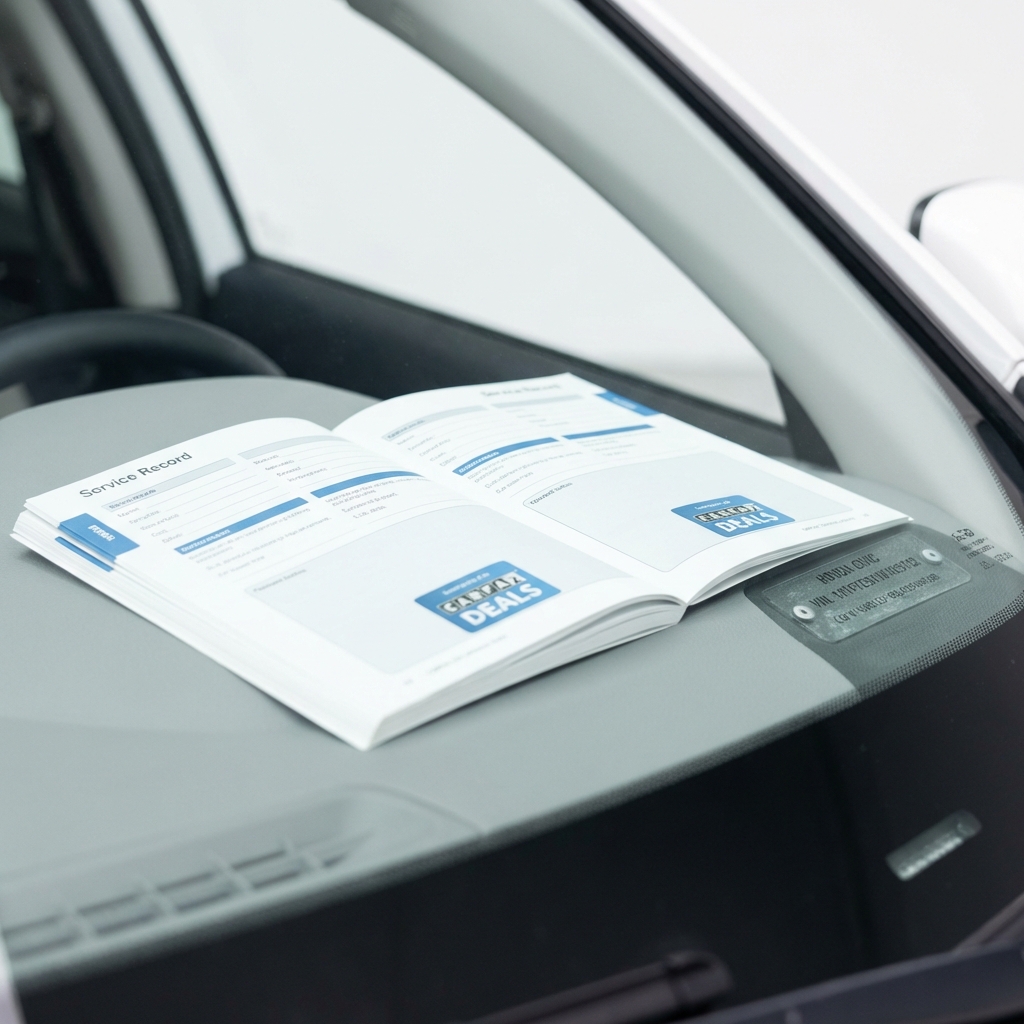
Service history is often the single best predictor of near-term reliability for a high-mileage Civic. A documented pattern of routine maintenance, timely oil changes, and records for scheduled services such as timing components or transmission service tends to reduce the chance of expensive, imminent repairs. RepairPal and other aggregated repair-cost resources note that Civics typically have lower-than-average annual repair costs, but that only applies when maintenance is consistent RepairPal Honda Civic reliability summary.
When service records are missing or inconsistent, the buyer must assume additional uncertainty. Missing documentation can hide deferred maintenance that increases risk of major repairs, so always treat incomplete service history as a measurable negative when comparing listings.
How to judge safety and reliability of a used Honda Civic with high miles
Three core factors to weigh
Three simple, high-impact factors should guide your decision on any high-mileage Civic: vehicle history and title status, documented service history, and the current condition of key systems such as engine, transmission, brakes, and suspension. These three together form a concise risk snapshot that you can verify before making an offer.
Vehicle history reports help confirm title status and reported events, service records show whether scheduled maintenance was completed, and a focused physical inspection reveals visible or operating problems. Use all three together rather than relying on any single source.
How to combine public ratings with vehicle-specific data
Public reliability aggregators like Consumer Reports and RepairPal give useful baseline expectations for repair frequency and typical costs, but they do not replace VIN-level checks. Use the aggregated ratings to set realistic cost expectations, then use a vehicle history report and recall lookup to confirm whether the specific VIN departs from the typical pattern Consumer Reports Honda Civic reliability page.
For safety specifically, consult official sources for the model year in question. Crashworthiness and recall status are model-year specific, so a favorable brand-level reputation does not guarantee that a given VIN has the safety profile you expect. See Honda's safety release here.
When to treat model-year issues as deal-breakers
Treat model-year specific structural issues, documented recurrent transmission defects for a particular automatic variant, or years with poor crash test ratings as potential deal-breakers unless the seller can show clear mitigation such as recent professional repairs and a clean vehicle history report. If the problem is structural or tied to safety systems and the vehicle lacks verifiable repair documentation, walk away.
If the concern is primarily higher expected maintenance rather than safety-for example, known wear items on older suspension designs-then negotiate price accordingly and consider getting an independent inspection before committing.
Pre-purchase inspection checklist for high-mileage Civics
Quick on-site checks you can do yourself
When you first see a used Honda Civic for sale, do quick on-site checks to flag obvious problems. Start the engine cold if possible and listen for rough start or irregular idle. Observe for blue or white smoke from the exhaust, which can indicate oil burning or coolant issues. Test drive at slow and moderate speeds to confirm that acceleration is smooth and that the transmission shifts without hesitation or slipping.
Check under the car for fluid leaks, inspect tires for uneven wear that may indicate alignment or suspension issues, and push on each corner of the car to gauge shock absorption. These simple checks help you decide whether to ask for a full inspection.
What to have a mechanic inspect
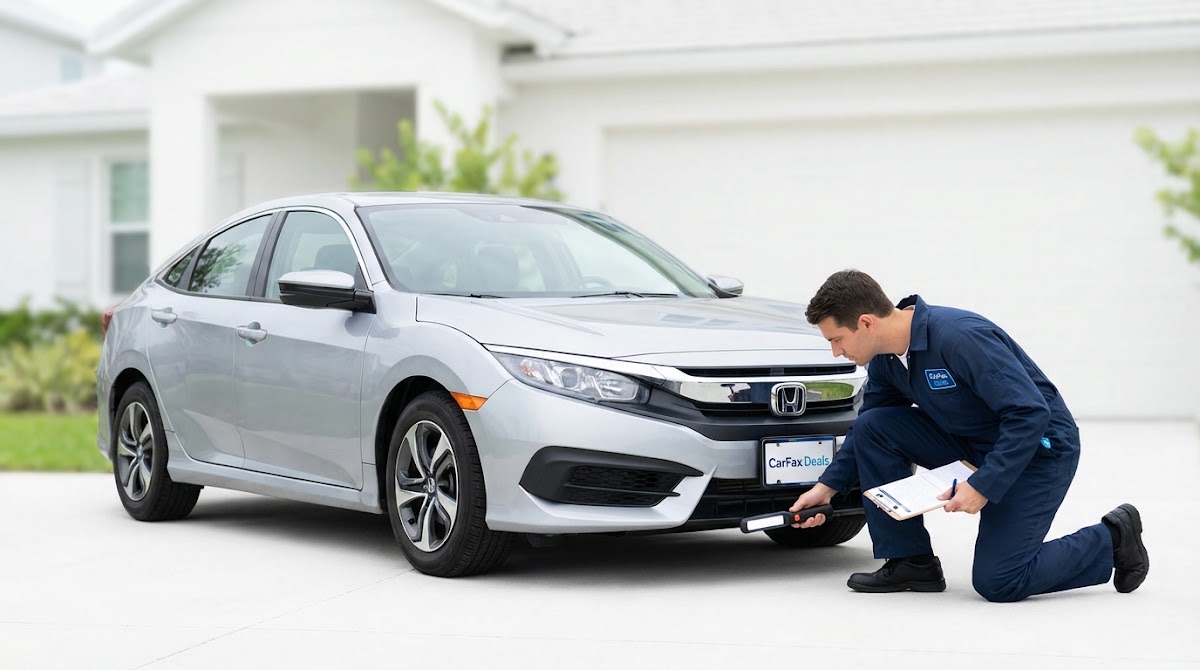
Ask an independent mechanic to perform a targeted inspection focused on known high-mileage risks: compression and oil condition for engine health, transmission function under load if possible, visible leaks, and suspension play in ball joints, tie rod ends, and control-arm bushings. Have the mechanic specifically inspect timing components where applicable and confirm whether scheduled transmission service has been done if the service history is unclear Edmunds used Civic buying guide.
In salty-climate regions, request focused rust and frame checks. Corrosion on the frame, floorpans, or structural mounting points can be expensive to repair and may impact safety; if the underbody shows significant corrosion, reconsider the purchase.
VIN, recalls, and title checks to request before buying
Before you write an offer, run the VIN through a vehicle history report and check the NHTSA recall database to confirm whether there are unresolved safety recalls or reported title issues such as salvage or rebuilt branding NHTSA recalls and investigations page.
If a vehicle history report indicates a salvage or rebuilt title, or if the NHTSA search shows open safety recalls tied to the VIN, treat those as high-priority issues. For many buyers the presence of those items alone is reason to walk away or demand a deep discount and documented professional repairs.
What to look for in vehicle history reports, recalls, and title checks
Interpreting salvage or rebuilt titles
A salvage or rebuilt title is often a decisive negative on a used Civic. Salvage branding can indicate prior severe damage and possible structural repairs that may not restore original crash performance. Many buyers and lenders treat salvage or rebuilt titles as disqualifying unless a thorough inspection and documented professional repairs are available NHTSA recalls and investigations page.
If the vehicle history report shows a rebuilt title but the seller provides extensive professional repair documentation and an independent inspection clears structural issues, some buyers still choose to proceed with caution. That decision depends on how comfortable you are with residual risk and insurance or resale limitations.
What missing or inconsistent service records suggest
Gaps or inconsistencies in service records can suggest delayed or skipped maintenance for major scheduled items such as timing belts, water pump, or transmission service. When service documents are incomplete, assume higher near-term risk and either negotiate price to reflect that risk or require a pre-purchase inspection that specifically verifies those systems RepairPal Honda Civic reliability summary.
Single-owner histories with consistent service entries are the easiest to evaluate, but a multi-owner car with thorough receipts can be similarly reassuring. The key is traceable, dated entries for scheduled services rather than vague claims of routine maintenance.
How to use recall and complaint databases
Search the NHTSA database by VIN to identify open recalls and safety campaigns. Unaddressed recalls can affect safety systems and should be resolved before you accept the vehicle or used as leverage in negotiation NHTSA recalls and investigations page.
Vehicle complaint databases and safety recall pages also help you spot model-year patterns. If a particular Civic year and transmission combination has frequent complaints, treat that as a sign to get extra scrutiny during inspection.
Common failure points and red flags that should make you walk away
Common high-mileage failures for Civics
High-mileage Civics most commonly show wear in suspension components, possible transmission issues on some older automatic models, and age-related underbody corrosion in regions with heavy road salt. These are known patterns in owner-reported and repair-cost data and help explain why thorough inspection is important for older Civics RepairPal Honda Civic reliability summary.
Suspension wear often shows as clunks, uneven tire wear, or loose steering feel. Transmission issues may be noticeable as harsh or delayed shifts. Corrosion shows visually on frame rails, floorpans, and mounting points and can be costly to address if structural components are affected.
Quick items to verify in a vehicle history report and recall lookup
Use these items before a mechanic inspection
Costly repair categories to watch
Certain repairs can sharply increase total cost to own, including transmission replacement, major engine repairs that affect head gaskets or timing components, and extensive rust or frame repair. These repairs can move a supposedly low-cost Civic into a much higher ownership-cost bracket, so watch for signs that these systems have been neglected KBB estimated maintenance and repair costs for Civic.
If a vehicle shows small issues in multiple systems, consider the combined repair burden rather than treating each item in isolation. Multiple concurrent repairs can indicate deferred maintenance and should reduce the price you are willing to pay.
Deal-killing signs on inspection or report
Clear red flags that commonly justify walking away include salvage or rebuilt title branding, evidence of frame damage or recent structural repair, inconsistent or missing service records for major scheduled maintenance, and active safety recalls unresolved on the VIN. When you see one of these, proceed only with caution and full verification NHTSA recalls and investigations page.
Minor cosmetic issues or age-related wear on trim are not the same as structural or service history red flags. Keep your decision focused on safety, structural integrity, and maintenance completeness.
Estimating ownership and repair costs for a high-mileage Civic
How to triangulate repair-cost estimates
To estimate likely costs, triangulate across multiple sources: reliability summaries for typical annual costs, local parts and labor rates for region-specific estimates, and vehicle-specific issues from the VIN report. RepairPal and KBB provide aggregated cost context that helps set expectations for routine and common repairs, while local mechanics can give area-specific hourly rates RepairPal Honda Civic reliability summary.
Start with a baseline annual maintenance estimate from aggregated sources, then add probable near-term repairs you identified during inspection. That combined view gives you a defensible total cost to own to compare against other available listings.
Which repairs impact short-term vs long-term costs
Short-term costs usually include items like brakes, tires, fluids, and small suspension bushings. Long-term or large-impact items include transmission overhaul or replacement, major engine repairs, and structural rust repair. Distinguish these when evaluating whether a price adjustment is appropriate.
When a vehicle approaches or exceeds thresholds for major scheduled services such as timing belt replacement or transmission service, plan to include those expected costs in the first-year ownership budget.
Using pricing context to negotiate
Compare the listing price against pricing insights and local market context before negotiating. If the listing is labeled with pricing context or a price analysis label, use that as a starting point, then subtract expected near-term repairs to arrive at a target offer. Public pricing guides can help, but always factor vehicle-specific findings from inspection and the vehicle history report into your negotiation stance KBB estimated maintenance and repair costs for Civic.
If the seller resists adjustments for verifiable maintenance risks, consider walking away. A price that does not reflect clear, documented risk is a poor value for a risk-averse buyer.
Real-world scenarios: three example cases and what to do
Case A: Single-owner, well-documented 180k-mile Civic
Scenario: A 180,000-mile Civic listed as single-owner with complete service receipts showing regular oil changes, timing component service, and no title branding. Action: Run the VIN for recalls and confirm the title, then get a focused mechanic inspection emphasizing transmission and suspension. With clear records and a clean VIN report, many buyers treat this as a candidate to inspect further, not an automatic walk-away RepairPal Honda Civic reliability summary.
Case B: 150k-mile Civic with spotty service records and surface rust
Scenario: A 150,000-mile Civic offered at an attractive price but with gaps in the service log and surface corrosion around wheel wells. Action: Require a vehicle history report and an underbody inspection. Surface rust alone is not always fatal, but gaps in service history raise the probability of deferred maintenance. If the underbody inspection shows structural corrosion or frame issues, walk away; if it is limited and the price accounts for the cost of likely bushings and brake work, you may negotiate or require the seller to address urgent items first Edmunds used Civic buying guide.
Run a vehicle history report and keep this checklist handy
Save this checklist or download it to use at the inspection to keep checks consistent across listings
Case C: Low-price Civic with a rebuilt title listed
Scenario: A low-price Civic that appears mechanically functional but shows a rebuilt title on the report. Action: Treat rebuilt title cars with high caution. Ask for full repair documentation and an independent structural inspection. Even when repairs are professionally documented, rebuilt-title cars can have resale and insurance implications that many buyers prefer to avoid. For most buyers this scenario will end with either walking away or proceeding only at a steep discount and after independent verification NHTSA recalls and investigations page.
Final checklist and decision guide: buy, negotiate, or walk away
One-page decision checklist
Use this condensed decision logic when you are at the listing or dealership: confirm title status is not salvage/rebuilt, verify single-owner or complete service history if possible, require a VIN vehicle history report, check for unresolved recalls, and get an independent inspection that clears engine, transmission, suspension, and frame. If several of these are negative, prefer to walk away.
When multiple small issues appear together, treat the combined repair estimate as a single negotiation item and adjust your offer accordingly. If documentation is solid and inspection is clean, a high-mileage Civic can still be a reasonable, cost-conscious choice.
How to use pricing insights and negotiation anchors
Before you make an offer, compare the listing price against local pricing context and any price analysis labels available. Use expected near-term repairs and scheduled maintenance needs as concrete negotiation points. If the seller will not adjust price or provide documented repairs for verified problems, prioritize other listings.
After you buy, keep all service records, schedule any overdue maintenance immediately, and plan for the next round of expected maintenance based on mileage. Preserving records will make future resale easier and support any warranty or insurance questions that arise.
Next steps after you decide to buy
If you decide to buy, obtain the completed vehicle history report, keep copies of all inspection and service receipts, and schedule any immediate maintenance recommended by your inspector. Use the documented service history to build a first-year maintenance plan that addresses high-risk systems identified during inspection. How to use CarFax Deals
Remember that while Civics tend to have lower annual repair costs on average, major repairs can substantially change the ownership picture. Planning and documentation reduce the chance of unexpected large expenses.
High mileage is relative to local annual use, but it often means significantly more miles than average for the vehicle's age; service history and condition are more important than mileage alone.
Yes, many high-mileage Civics remain reliable when they have consistent service records, a clean title, and no unresolved safety recalls, but specific risks vary by model year and condition.
Yes. A focused independent inspection focusing on engine, transmission, suspension, and underbody rust helps reveal costly problems that are not obvious in photos or test drives.
A well-documented, well-inspected high-mileage Civic can be a reasonable, cost-conscious choice for many buyers. But the decision depends on model year specifics, verifiable service history, and clean VIN-level checks.
Use the checklists and decision rules in this guide to compare listings, negotiate with evidence, and plan for likely short-term maintenance if you buy.

 Blog
Blog