Is S class or C-Class better? A practical used Mercedes comparison
This article compares the Mercedes S-Class and C-Class as used purchases, focusing on price, running costs, safety, and ownership effort. It explains typical buyer profiles and gives step-by-step checks to apply to listings, including VIN-level vehicle history reports and local pricing checks. Use this guide to narrow candidates before contacting a dealer.
A step-by-step workflow for estimating a truck's market value that centers on comparing consumer valuation tools, adjusting for mileage and condition, and checking wholesale market signals. The guide explains private-party, trade-in and dealer retail values and shows how a vehicle history report and pricing insights can change an asking price.
This guide helps research oriented buyers evaluate suv used cars for sale under $25,000 by combining safety ratings, reliability data, local pricing context, and vehicle history checks. It outlines a simple framework, a pre visit checklist, and a decision scoring worksheet so you can compare finalists before contacting a dealer. Use the steps here to narrow candidates and confirm risk signals with a vehicle history report and a pre purchase inspection.
When searching suv used cars for sale, prioritize model year, trim and powertrain before choosing a make or model. This guide explains how safety ratings, dependability studies and local pricing insights combine to produce a short list you can verify with a vehicle history report. It also provides a stepwise checklist you can use before contacting a dealer.
This article compares the Mercedes S-Class and C-Class as used purchases, focusing on what matters for research-first buyers: purchase price, fuel and running costs, safety checks and maintenance exposure. It explains how to interpret used-value signals and what VIN-level checks to run before contacting a dealer.
The goal is practical: help you map priorities to a short list of listings and run a consistent checklist so you can inspect the best candidates in person with confidence.
The S-Class generally prioritizes rear-seat comfort and advanced technology while the C-Class tends to be the more fuel-efficient and affordable option.
Kelley Blue Book data show consistent used-price gaps between comparable S-Class and C-Class models, which affects total cost to own.
Always confirm model year, trim and VIN-level history reports before visiting a dealer to reduce uncertainty.
Quick answer and what this article covers
What readers will learn
Short answer: for many buyers the C-Class is the more affordable, easier to own compact luxury option, while the S-Class is the full-size flagship that prioritizes rear-seat comfort and advanced technology and usually costs substantially more to buy and run. This article lays out the main tradeoffs in price, fuel use, safety check steps and ownership effort so you can decide which class fits your priorities.
We base the comparison on model reviews and used-value data so you can connect those conclusions to specific listings. The S-Class's emphasis on rear-seat comfort and higher-spec options is noted in model reviews, and used-values show consistent price gaps between the two ranges that change total cost to own.
The C-Class tends to be the more affordable and fuel-efficient used choice for most commuters and budget-minded buyers, while the S-Class is better suited for buyers who prioritize rear-seat comfort and advanced tech and accept higher purchase and maintenance costs; verify model year, trim and VIN-level history for any listing before deciding.
How to use this guide when shopping used cars
Use the sections below as a decision map: read the brief comparison first, then jump to price signals if budget is your main constraint, or to comfort and tech if rear-seat space matters. Before visiting a dealer confirm model year, trim and VIN-level checks on any listing you shortlist.
If you are actively searching for used mercedes for sale, start with the price and VIN checks in this guide so you can spot listings that match your budget and risk tolerance quickly.
What are the S-Class and C-Class: model roles and typical buyers
Where each model sits in Mercedes lineup
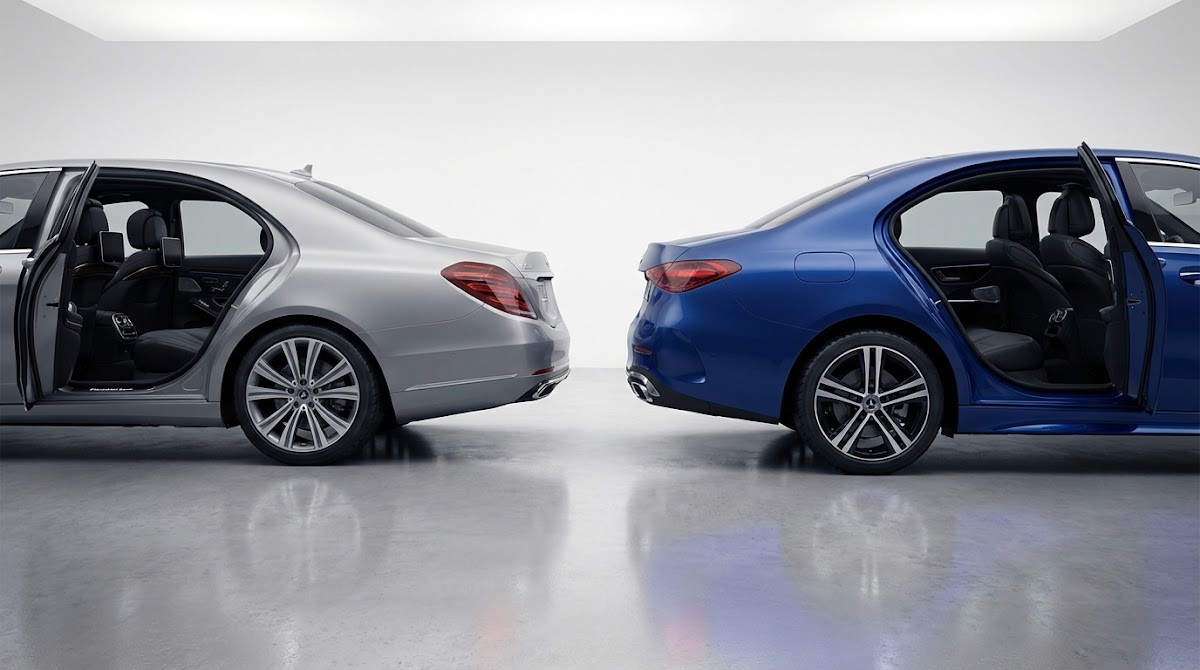
The S-Class is Mercedes-Benz's full-size flagship sedan, designed primarily for maximum comfort, advanced driver assistance and room in the rear seat, while the C-Class is a compact, entry-level luxury sedan with a tighter footprint and sport-oriented handling. Car and Driver reviews describe the S-Class as focused on high-level comfort and the C-Class as a smaller luxury option with more driver-focused dynamics, which helps explain why buyers pick one over the other in the used market. Car and Driver S-Class review See current used S-Class listings on KBB
Because these models occupy different positions in the lineup, their features, powertrains and optional equipment vary significantly between trims and model years. That variation matters when you compare used listings, since a well-optioned C-Class can feel upscale and a stripped S-Class can still command a premium because of its platform and size.
Buyer profile examples help frame the choice. A budget-minded commuter who values lower running costs and easier parking often prefers the C-Class. A buyer who needs executive rear-seat comfort or chauffeurs passengers may favor the S-Class despite higher ownership costs. For many buyers, tradeoffs center on space, tech wants and long-term maintenance expectations.
When evaluating listings, match your priorities to the likely profile: check mileage, service history and rear-seat options if comfort matters, or focus on fuel economy and maintenance records for more economical daily drivers.
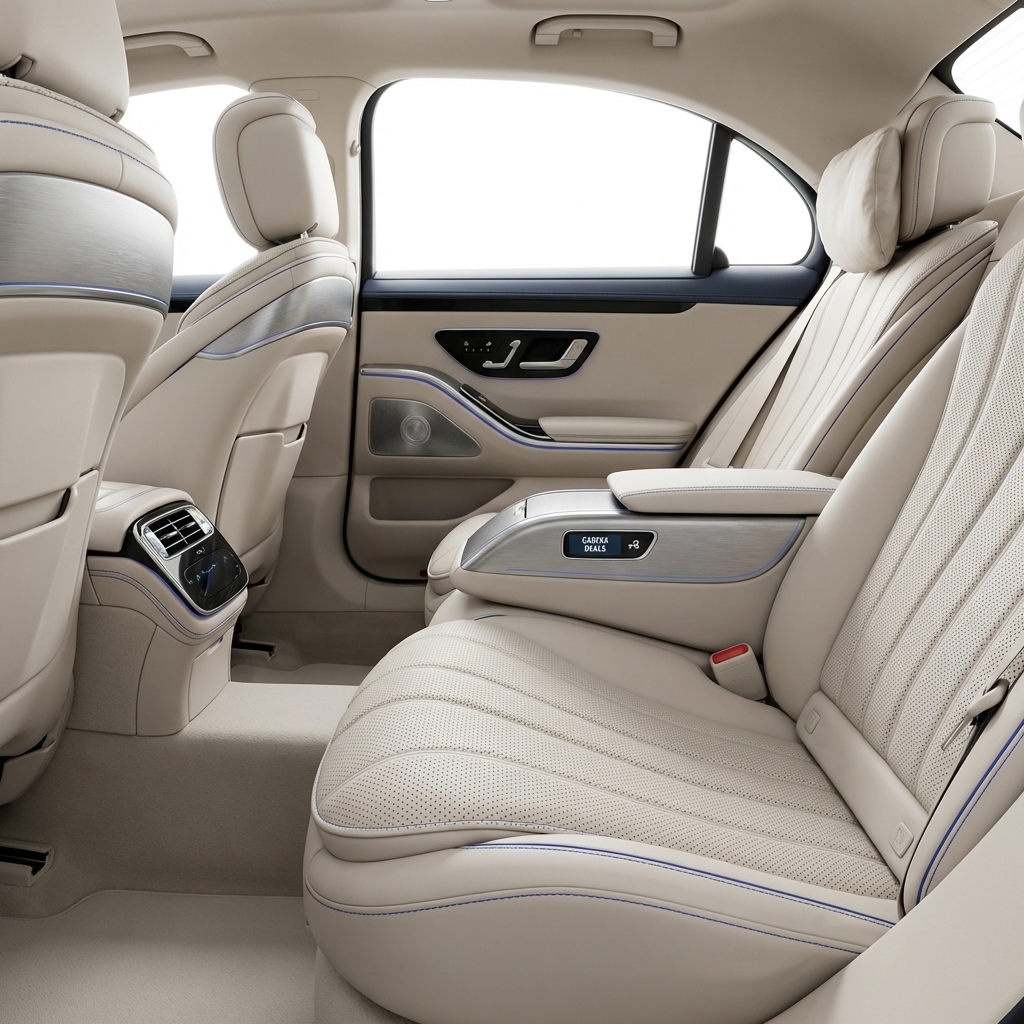
How size, comfort and technology differ between the two
Interior space and rear-seat focus
Car and Driver's coverage of both lines highlights the S-Class's rear-seat amenities and the C-Class's tighter packaging, which is useful when reading listing descriptions that reference specific options or packages. Car and Driver C-Class review You can also review nearby used C-Class listings on KBB.
For used listings, note whether the seller specifies rear-seat package options, executive seating or rear climate controls; these items can materially change the passenger experience and impact resale value. Verify that the model year and trim match the listed options, because features may move between trims across years.
Run a vehicle history report
Before you inspect a candidate, run a VIN-level vehicle history report and compare local pricing to confirm the car's trim and recent service history.
Trim levels and option packages determine whether a used example offers massage seats, advanced driver aids, high-end audio or rear-seat screens. These options are more commonly available and more elaborate on S-Class examples, and they are often optional add-ons that add to purchase price and potential repair costs later.
When a listing mentions significant option packages, check the VIN and service records to confirm installation and maintenance. Missing service for complex options can raise ownership effort and should be factored into the expected long-term cost.
Price differences and used-value signals to watch
Typical price gaps in the used market
Kelley Blue Book data show consistent price gaps between comparable model years of S-Class and C-Class vehicles, which means the initial purchase price and resale expectations will often favor the C-Class for budget-conscious buyers. Use KBB values to set a baseline when you compare nearby listings and to understand how much premium the S-Class commands in your area. Kelley Blue Book
That typical gap affects total cost to own because higher purchase price usually translates to higher insurance, taxes and potentially higher depreciation in absolute dollars. For a research-first shopper, spotting outliers above or below local KBB ranges can identify listings worth a closer look or warning signs to investigate further.
How price analysis labels and local pricing affect choice
Price analysis labels, such as Great Deal or Fair Deal, help you compare listings quickly by flagging how a listing compares to local market data, adjusted for mileage and options. Use these labels as a starting signal, then confirm with VIN-level details and service history to filter listings that actually match.
When two listings appear similar by label, prioritize the one with complete service records, clear title status and lower risk signals on the vehicle history report. If a listing lacks documentation or has inconsistent mileage, treat the labeled price with caution and ask for VIN-level proof before proceeding.
Fuel economy and running-cost differences
EPA combined mpg comparisons
EPA fuel-economy figures indicate that C-Class models typically deliver higher combined mpg than similarly configured S-Class powertrains, which reduces fuel costs over time and can influence the total cost to own for high-mileage drivers. For precise comparisons use the official EPA pages for the exact model year and powertrain you are evaluating. EPA fuel economy data
When you estimate annual operating costs, plug the model-year-specific combined mpg and your expected annual miles into a running-cost calculation. That approach shows whether the fuel premium of an S-Class is likely to offset its comfort advantages for your use case.
Powertrain choice, such as a turbo four, inline-six or V8, changes both fuel use and maintenance expectations. Higher-displacement or high-output engines in S-Class examples usually reduce combined mpg and can increase routine maintenance costs compared with smaller, more efficient engines commonly found in C-Class examples.
Factor local fuel prices and your annual mileage into decisions: a comfortable flagship that uses considerably more fuel will cost more to operate for commuters who put on high annual miles, whereas a more efficient C-Class can lower ongoing expenses even if it feels less opulent.
Safety ratings and what to check for each used VIN
How to find IIHS and NHTSA pages for a specific model year
IIHS and NHTSA provide model-year-specific test pages that you should consult for every candidate VIN, because safety coverage varies across years and body styles. Confirm the exact model year and body style on the listing, then search the IIHS or NHTSA database for that year to see test coverage and ratings. IIHS C-Class ratings page
Be aware that not every model year or trim has been tested, and rating availability changes over time. If a VIN corresponds to an untested configuration, check closely which safety equipment the car actually has versus what later tests may have assumed.
Why safety coverage varies by year and body style
Manufacturers change standard and optional safety equipment between model years and sometimes between trims. That means a safety rating for one model year may not represent another year with different standard features. Always verify the vehicle-level equipment list and cross-check that against the test assumptions on IIHS or NHTSA pages.
Also use the vehicle history report to look for recall repairs related to safety equipment. The presence of open recalls or undocumented airbag or restraint repairs should be a red flag and treated as part of the negotiations or grounds to walk away.
Maintenance, typical repair cost differences and ownership effort
Why flagship models can cost more to maintain
Industry guides and used-market analyses suggest flagship models like the S-Class often have higher maintenance and repair costs than C-Class examples, partly because of more complex systems and costlier replacement parts. That difference increases the importance of service history, mileage checks and careful VIN inspection when comparing used listings. Kelley Blue Book C-Class used values
High-mileage S-Class examples can be particularly costly if major systems such as air suspension or infotainment components require attention. For that reason, full documented service history and recent major-service receipts are especially valuable on flagship models.
quick ownership cost estimator to compare fuel and maintenance
Use values from the listing and EPA combined mpg
What service history and mileage checks reveal
Missing or spotty service history increases uncertainty and the likelihood of unexpected repairs. Mileage checks can expose odometer inconsistencies or previously rolled-back readings, while complete service records make it easier to predict near-term maintenance needs and budget accordingly.
Ask sellers for service invoices, dates for major services and records that show replacement of wear items. For older S-Class models, confirm any air suspension work and for C-Class examples ask about recent brake and tire service since those items tend to influence near-term maintenance spending.
How to use vehicle history reports and VIN checks when comparing listings
Key fields to read on a vehicle history report
Important fields on a vehicle history report include title status, ownership history, accident history, service history and mileage checks. These fields help you identify whether a listing carries risks that should reduce the amount you are willing to pay or prompt a walk-away decision. Use the VIN from the listing to get the full report before scheduling any in-person inspection. Kelley Blue Book S-Class used values
Title status flags such as salvage or rebuilt titles materially change value and often affect insurability. Ownership history can show multiple short-term owners, which sometimes correlates with unresolved issues or inconsistent maintenance.
How ownership, title and accident history affect value
Accident history entries with frame or structural damage will generally reduce value and may increase the cost of ownership; minor cosmetic incidents may matter less if repairs were professionally done and documented. Use the vehicle history report to compare expected value reductions against local price data to decide whether a listed discount reflects an acceptable level of risk.
If the report shows omitted service records that the seller claims happened, ask for invoices or shop contacts. Unverified claims create a documentation gap that should factor into your offer or decision to move on.
Comparing actual listings: a checklist and workflow
Side-by-side comparison template
Use a side-by-side template that lists Price, Mileage, Service history completeness, Title status, Known options, Safety rating for the model year and VIN. Populate the template for each candidate so you can weigh which tradeoffs are acceptable for your buyer profile. When you gather these fields, you reduce time wasted on poor matches and make more consistent decisions across listings. Car and Driver C-Class review
Prioritize listings that match multiple favorable factors: clear title status, full service history, reasonable mileage for the model year and a price close to local pricing tools. Use differences in known options and safety ratings to break ties between otherwise similar listings.
How to prioritize listings to inspect in person
First, eliminate listings with salvage or rebuilt titles and those that lack VIN-verified service history. Second, prefer the listing with cleaner ownership history and a price that aligns with local pricing insights after adjusting for mileage and options. Third, schedule inspections for the top two or three candidates rather than spreading time across many likely rejectable cars.
When you go to inspect, bring a checklist: VIN-verify option codes, compare service invoices to report entries, test drive at typical daily speeds, and look for uneven tire wear, unusual noises and evidence of poor repairs. Use the vehicle history report to confirm mileage and accident history before you finalize negotiations.
Decision framework: which model to pick based on buyer profile
Profiles and recommended priorities
Budget-minded commuter: prioritize combined mpg, lower initial price and reliable service history. The C-Class tends to fit this profile for many buyers because it is more fuel-efficient and usually lists at lower used prices.
Family seeking safety and space: weigh rear-seat room, safety ratings for the candidate model year and cost of ownership. A late-model C-Class with higher safety equipment can be a good compromise, while an older S-Class might offer space at the expense of higher maintenance risk and fuel use.
Tradeoffs checklist
For each profile, balance purchase price, running costs and likely maintenance. If rear-seat comfort is non-negotiable and you accept higher running and repair costs, the S-Class often makes sense. If daily cost, easier servicing and better fuel economy matter most, the C-Class usually fits those needs better. Always verify VIN-level history and local pricing before committing to a purchase.
As you finalize your short list, score candidates against the checklist and use pricing tools and VIN reports to remove listings that do not match your target priorities.
Common mistakes and how to avoid them when buying used Mercedes
Mistakes buyers make on price and history
Common errors include comparing non-equivalent trims or model years, ignoring service history and not checking title status. Those mistakes can lead to overpaying for a car that will need expensive work soon after purchase. Use VIN checks and pricing tools to avoid these pitfalls and confirm the listing's claims.
Also be wary of apparent bargains that lack documentation. A low price can be compensated by potential repair bills; if inspection or history checks are incomplete, treat the price as a likely negotiation point rather than proof of value.
How to verify claims from sellers
Ask sellers for invoices, maintenance receipts and the VIN early in the conversation. Cross-check the VIN against the vehicle history report and confirm that claimed repairs or recent services appear in the report or on invoices. If the seller cannot provide documentation for major services, consider that a negative signal and prioritize better-documented listings instead.
When in doubt, have a trusted independent mechanic inspect the car before purchase, and confirm any open recalls or safety-related fixes have been completed for the vehicle's model year.
Practical scenarios: three buyer examples and sample comparisons
Budget commuter choosing a C-Class
Scenario: a commuter drives 15,000 miles per year and wants a compact luxury car with lower operating costs. A C-Class with a fuel-efficient engine and full service history is often the best fit, because EPA combined mpg figures and lower used prices reduce annual expenses. Check EPA data at fueleconomy.gov
Checklist items: confirm combined mpg for the exact model year, check for consistent oil-change records, verify title status and compare the asking price to local KBB ranges.
Scenario: a family needs more rear-seat space but has a modest budget. A late-model C-Class with upgraded safety equipment can sometimes be a safer, lower-cost option than an older S-Class that offers space but carries higher maintenance risk. Use pricing insights and VIN reports to compare long-term ownership estimates and safety ratings for the exact model years under consideration. Kelley Blue Book C-Class values
Checklist items: compare safety rating for the model year, verify rear-seat options via VIN, review service history for suspension and brake work, and estimate annual operating costs with EPA combined mpg for each candidate.
Scenario: a buyer prioritizes rear-seat comfort and advanced features and is willing to accept higher running costs. The S-Class usually fits this profile because it emphasizes rear passenger amenities and advanced driver aids, but verify service history and recent major repairs because the cost of maintaining flagship features can be high. Car and Driver S-Class review
Checklist items: demand detailed service history, confirm that high-end options are factory-fitted and functioning, check for air suspension service records and compare local prices to KBB benchmarks before offering.
Conclusion: next steps and contact checklist
What to do before contacting a dealer
Final steps before you contact a dealer: confirm the VIN, run a vehicle history report, check local pricing insights and verify service history. These steps reduce uncertainty and help you prepare targeted questions for the seller. For many buyers, this process narrows listings to a short list worth inspecting in person.
As a reminder, model year, trim and VIN-level checks can change the relative value between S-Class and C-Class options. Do not assume a model segment alone guarantees lower long-term cost; verify details for each car.
Quick final checklist
Before making an appointment, confirm the VIN, title status, complete service records, safety rating for the model year and a price that aligns with local pricing tools. Use those checkpoints to prioritize listings to inspect in person and reduce the chance of surprises after purchase.
Also consider using a VIN decoder when a seller provides only partial information: VIN decoder can help confirm option codes and factory equipment before you schedule an inspection.
On the used market, S-Class examples typically list and sell for several thousand dollars more than comparable-year C-Class vehicles; the exact gap varies by model year, trim and local market conditions.
Prioritize fuel economy if you drive high annual miles and want lower running costs; prioritize rear-seat comfort if you regularly carry passengers and accept higher ownership costs.
Request the VIN, full service invoices, title documentation and any records of major repairs or suspension work; confirm these items against a vehicle history report before inspection.
Use the side-by-side checklist and the decision framework in this guide to narrow listings to two or three top candidates. Confirm VIN-level vehicle history reports and local pricing before scheduling inspections, and ask sellers for full service records to reduce risk.
With VIN verification and pricing context in hand, you can make a more informed choice between the comfort-focused S-Class and the more economical C-Class.

 Blog
Blog