Which is better Toyota Corolla SE or LE? — Practical guide for buyers
This guide helps you decide whether a used Toyota Corolla SE or LE matches your priorities. It explains the typical differences in trim, fuel economy, safety features and ownership costs, and shows how to shortlist listings using vehicle history reports and pricing insights.
A step-by-step workflow for estimating a truck's market value that centers on comparing consumer valuation tools, adjusting for mileage and condition, and checking wholesale market signals. The guide explains private-party, trade-in and dealer retail values and shows how a vehicle history report and pricing insights can change an asking price.
This guide helps research oriented buyers evaluate suv used cars for sale under $25,000 by combining safety ratings, reliability data, local pricing context, and vehicle history checks. It outlines a simple framework, a pre visit checklist, and a decision scoring worksheet so you can compare finalists before contacting a dealer. Use the steps here to narrow candidates and confirm risk signals with a vehicle history report and a pre purchase inspection.
When searching suv used cars for sale, prioritize model year, trim and powertrain before choosing a make or model. This guide explains how safety ratings, dependability studies and local pricing insights combine to produce a short list you can verify with a vehicle history report. It also provides a stepwise checklist you can use before contacting a dealer.
This article helps you compare the Toyota Corolla SE and LE when shopping used. It focuses on practical checks, safety and ownership costs so you can shortlist listings with confidence.
You will find a quick verdict, clear checks to run on every listing, and a step by step workflow for using vehicle history reports and pricing signals before you call a dealer.
LE tends to favor comfort and slightly better fuel economy, SE leans toward sport styling and firmer handling.
Always verify the VIN, model year and equipment on the listing and run a vehicle history report before contacting a dealer.
Use price analysis labels and valuation tools to set a realistic target price for the specific year, trim and mileage.
Quick summary: which used Corolla trim suits which buyer
Short verdict: the LE tends to suit buyers who want comfort and slightly better fuel economy, while the SE tends to suit buyers who prefer sportier styling and firmer handling, based on Toyota's trim positioning Toyota trim pages.
Caveat: exact equipment and engine options vary by model year and by VIN, so confirm the specific listing and spec sheet before assuming features.
Short shortlist checklist to apply price analysis labels and history reports
Use to quickly rule in or out listings
Pointer: run a vehicle history report and compare the listing to local pricing context before you call the dealer, especially when trims look similar in photos.
How to use this guide and what to check first
Who this is for: this guide is written for research oriented buyers comparing used Corolla SE and LE listings and for first time buyers who want a straightforward checklist.
Three quick checks to do on any listing: confirm model year and trim on the listing, run a vehicle history report for the VIN, and compare the asking price to local valuations and similar listings for the same year and trim.
Confirm the VIN on the listing and use it to get a vehicle history report that shows ownership history, title status and service records; CarFax Deals pairs listings with these reports and with price analysis labels to surface risk and pricing signals CarFax Deals overview.
Trim positioning explained: what LE and SE mean
Toyota positions the LE toward comfort and efficiency and the SE toward sportier styling and chassis tuning, with different wheel and interior trim choices on the manufacturer trim pages Toyota trim pages.
Manufacturer pages and trim summaries make it easier to set expectations, but features can change across model years and optional packages, so avoid assuming every LE or SE will have the same equipment.
LE tends to be better for buyers prioritizing comfort and slightly better fuel economy; SE tends to be better for buyers prioritizing sportier styling and firmer handling, but always verify the VIN, equipment and vehicle history for the specific car before deciding.
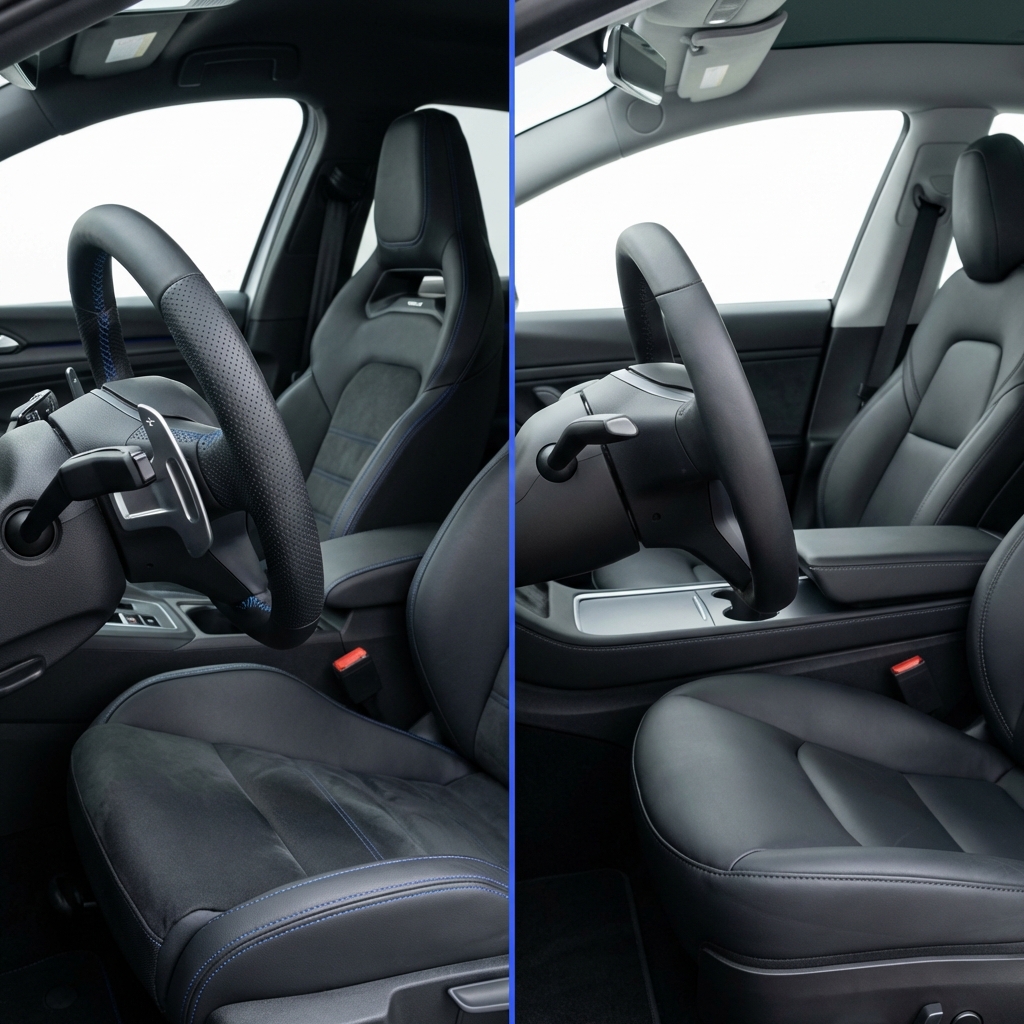
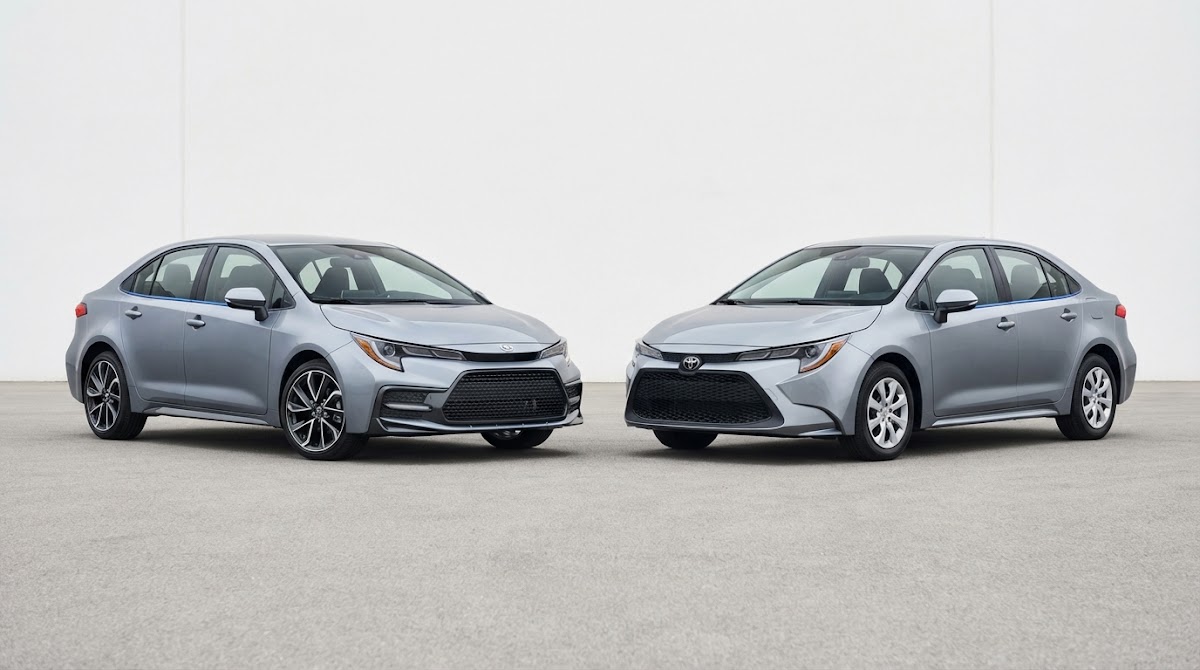
Visual and interior differences to watch for include often larger wheels or sportier wheel designs on the SE, firmer suspension tuning, and contrasting interior trim or sport seats that signal the SE trim.
Engines, performance and fuel economy differences
Typical engine and drivetrain options for recent Corolla sedan model years include small naturally aspirated engines and sometimes variants tuned for efficiency or a slightly sportier feel; availability depends on model year and market.
EPA fuel-economy listings show the LE generally posts slightly better combined MPG than the SE on comparable powertrains, though the difference is modest and varies by year and drivetrain EPA fuel-economy results.
How to use MPG differences: estimate annual fuel cost by multiplying your annual miles by the national or local fuel price and dividing by the combined MPG for the trim and drivetrain in the listing; a small MPG gap can add up for high-mileage commuters but will be marginal for low-mileage drivers.
Safety, crash ratings and reliability considerations
Both LE and SE come standard with Toyota Safety Sense driver assist technology on recent model years; check the specific listing for optional equipment and packages that may add features or sensors.
Recent IIHS and NHTSA evaluations show strong crash performance and occupant protection scores for covered Corolla years, but ratings can vary by model year and equipment so verify the rating for the exact year and trim you are considering IIHS ratings.
Service history and maintenance records can matter as much as trim for long term ownership costs; use the vehicle history report to check service entries and mileage checks before you proceed.
Price, resale value and estimated ownership costs
Used price ranges and trim premiums vary widely by model year, mileage and local market; valuation tools and local listings are essential to set a realistic target price before contacting a dealer Kelley Blue Book guidance.
Independent guides report the Corolla's reputation for reliability and comparatively low ownership costs among compact sedans, which often supports stronger resale value for well maintained examples.
How to set a target price: gather a small sample of local listings for the same year, trim and mileage, compare their price analysis labels where available, and adjust for condition and service history.
Decision checklist: choose LE or SE based on priorities
Priority matrix in short: if comfort and marginally better fuel economy rank highest, focus on LE; if appearance and firmer handling are more important, focus on SE.
Weigh vehicle history signals: prioritize listings with a clean title, single owner, and no accident reported when those items matter more than trim preference, and use price analysis labels to shortlist plausible offers CarFax Deals features.
Run a vehicle history report for shortlisted listings
Consider running a vehicle history report and a price check on shortlisted listings to confirm title, ownership and service details before you arrange a test drive.
When both trim and price look similar, let documented history and dealer transparency signals decide which car to see in person.
Common mistakes and how to avoid them
Mistake: assuming trim from photos or badges alone; badges can be swapped and photos can hide options or missing equipment, so always verify with the VIN and the listing's spec sheet.
Listing red flags beyond price include absent service records, title problems or inconsistent mileage history; these are reasons to pause or ask for further documentation and for a VIN based report CarFax Deals VIN reports.
Avoid relying only on the seller's words; ask for maintenance records, warranty transfers if any, and verify recall status for the VIN before purchase.
Step-by-step: how to inspect a used Corolla listing online
Checklist to run before calling the dealer: confirm model year and trim, copy the VIN, pull a vehicle history report, compare price to local valuations and check dealer reviews and ratings.
What to confirm in the vehicle history report: ownership history, title status, accident history, service history and mileage checks, and any open recalls noted for the VIN.
Red flags that should prompt a deeper question or a pass include salvage or branded titles, inconsistent odometer entries, service gaps that suggest deferred maintenance, or a price well outside the local range without explanation.
How CarFax Deals and pricing labels fit into your workflow
CarFax Deals pairs dealership listings with vehicle history reports and pricing insights, and it applies price analysis labels such as Great Deal, Good Deal and Fair Deal to help buyers quickly spot listings that warrant closer review CarFax Deals features.
Filters that help prioritize safer listings include clean title, single owner, no accident reported and well maintained; use these to narrow a long search to a manageable short list before contacting dealers.
Use the platform's dealer transparency signals like ratings and profile details as a tie breaker when two listings have similar history and price labels.
Contacting the dealer and what to ask at the test drive
Questions to ask before visiting: confirm the VIN, ask for maintenance records and any known accidents or title issues, and request the exact equipment list for the trim and model year.
At the test drive inspect trim specific items, verify the VIN at the door jamb and on the report, listen for suspension noises that might hint at repairs, and note any signs of uneven tire or brake wear that can indicate prior misuse.
Three real-world scenarios: which trim to pick
Commuter who values MPG: a high mileage commuter who prioritizes lower fuel costs often favors the LE for its tendency toward slightly better combined MPG and a softer ride that reduces fatigue.
Family who wants comfort and resale: a family buyer who prioritizes reliability and resale tends to prefer whichever trim has the cleanest service history and title; resale advantage often follows consistent maintenance and a strong ownership history KBB ownership guidance.
Buyer who cares about sport styling: a buyer focused on appearance and handling may prefer the SE so long as the service history and price align with expectations and no serious issues appear on the VIN report.
Quick printable checklist to take to the dealer
Top 10 items to confirm: VIN match, title status, ownership history, accident and service history, mileage checks, trim equipment, test drive notes, tire and brake condition, open recalls, dealer ratings.
Three immediate red flags to stop the purchase: salvage or branded title, inconsistent mileage history, missing maintenance records without a plausible explanation.
Re-check the price analysis label and dealer ratings on your shortlist after the in-person inspection and before a firm offer.
Conclusion: next steps for your search
Short action plan: pick LE if comfort and slightly better MPG are your priorities, pick SE if styling and firmer handling matter more, but always verify VIN, equipment and vehicle history for the exact car on the listing.
Where to verify last-minute facts: check manufacturer spec pages for model year features, NHTSA for recalls and crash summaries for the specific year, and use valuation tools to set a target price before negotiating.
Differences are typically small; LE usually posts slightly better combined MPG on comparable powertrains, but exact figures depend on model year and drivetrain.
Recent model years of both LE and SE commonly include Toyota Safety Sense driver assist technology, but verify year specific equipment on the listing or manufacturer page.
Prioritize clean title, consistent ownership history, service records and no major accidents reported; use a VIN based vehicle history report to confirm these items.
Follow the checklist in this guide when you screen listings and bring the printable checklist to any test drive. Use vehicle history reports and price analysis labels to reduce uncertainty before making an offer.
If you need the exact feature list for a specific car, confirm the VIN on the seller's listing and run a history report, then verify model year equipment on the manufacturer's spec pages.

 Blog
Blog