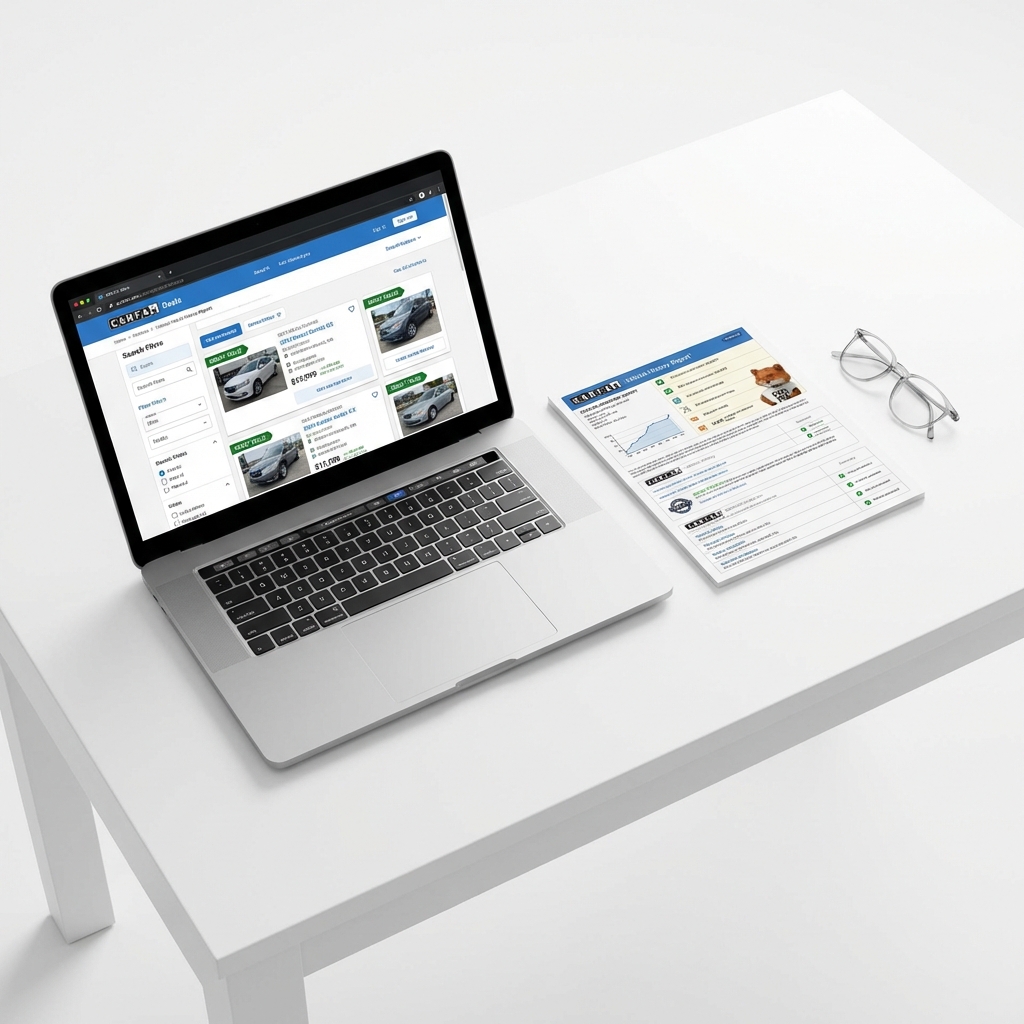
Choosing the best place to buy a used car means balancing price, risk and convenience. This guide walks you through channels—private sellers, franchise dealers, national retailers and online marketplaces—so you can decide whether the best place to buy a used car for you is a bargain private sale, a certified pre‑owned program, or a data-driven marketplace like CARFAX Deals. Learn inspection checklists, warranty trade-offs, financing tips, and a simple action plan to reduce regret and drive away confident.
Carfax coupon codes rarely work, and the codes listed on coupon sites are usually expired. The discounts that do exist are bundles (three reports for $64.99, five for $99.99), AAA member pricing, and free reports from dealers and listings. The simplest guaranteed discount is CarfaxDeals at $7.99 per report versus $44.99 at Carfax.com.
A Carfax VIN lookup takes the 17-character vehicle identification number and returns the car's recorded history: accidents, title brands, odometer readings, owners, and service records. Free VIN tools only decode specs or check recalls and theft. The full Carfax report costs $44.99 on Carfax.com and $7.99 at CarfaxDeals.
You can get a free Carfax report from the Carfax.com used car listings, a dealer website, the seller, Carfax Car Care (for a car you already own), or listing sites that include one. There is no free report for any VIN you type in. When no free report exists, a paid one costs $44.99 at Carfax or $7.99 at CarfaxDeals.
Where should you buy a used car? This guide helps you decide by comparing private sales, franchise dealers, national retailers and curated marketplaces. You’ll learn inspection and warranty trade‑offs, financing tips, and a simple checklist to reduce regret and buy with confidence.
1. Private‑party sales can be 10–20% cheaper than comparable dealer listings in some markets when the vehicle has a clean history.
2. Combining a vehicle history report with an independent inspection is among the single most effective ways to avoid large unexpected repair bills.
3. CARFAX Deals pairs verified vehicle history reports with price labels, helping buyers reduce search time—platform data shows many shoppers narrow options 30–50% faster when history reports are included.
What is the best company to buy a used car from?
Deciding on the best place to buy a used car often feels like choosing between three very different promises: the lowest possible price, the most reassuring warranty, or the fastest, least stressful purchase. Each path has sensible trade-offs. In this guide you’ll get clear criteria to compare private sellers, franchise dealerships, national retailers and curated marketplaces so you can choose the option that matches your budget, timeline, and appetite for risk.
Think about it this way: do you want the cheapest fixer-up or the condo with a building manager and a service checklist? The answer tells you whether the best place to buy a used car for you is a private party, a certified program, or a transparent marketplace that pairs listings with verified history.
Tip: If you want a quick way to compare listings and see vehicle history side‑by‑side, try CARFAX Deals — it links verified vehicle history reports with pricing labels so you can spot good value faster: see CARFAX Deals.
Below we’ll cover the concrete factors that change the math: price, inspection and reconditioning standards, warranties and return policies, financing, inventory and delivery, plus how to read reviews and complaints. I’ll map real buyer types (budget shopper, first-time buyer, warranty-seeker, speed-focused buyer) to sensible places to shop and include a short, practical checklist you can use at the lot or before you click "buy."
There’s no single trick, but the most reliable approach is consistent: pull a vehicle history report, get an independent inspection, and choose the level of warranty or return protection that matches your risk tolerance. That three‑step combo eliminates most surprises.
How to think about price vs. peace of mind
Price is usually the first impulse. Private sellers can offer the lowest sticker because they don’t carry reconditioning or warranty costs. But those low prices can evaporate quickly if the car has hidden damage or needed repairs. If you’re asking “what is the best place to buy a used car to save money?”, the honest answer is often a private sale - but only when backed by a clean vehicle history report and a mechanic’s inspection.
National retailers and online platforms generally charge a premium for convenience and consistency: a standardized inspection process, short return windows, and sometimes a limited warranty. Franchise dealers, especially those with certified pre-owned (CPO) programs, frequently sit on the higher end of the price scale because you’re also buying a manufacturer-backed inspection and extended coverage.
Inspection and reconditioning: where long-term costs are decided
The difference between a cosmetic checkbox inspection and a full mechanical reconditioning is often thousands of dollars in ownership headaches. Ask any mechanic: the best place to buy a used car for long-term peace of mind is one that performs transparent, documented inspections and reconditions mechanical systems (not just touch-ups). A quick visual comparison can make it easier to spot discrepancies.
When a dealer advertises that a car was inspected, request the inspection checklist and repair invoice. Certified pre-owned programs usually have a published list of inspection points and require OEM parts for major repairs - that’s why they’re pricier. Large national retailers sometimes publish condition grades and provide service records; that consistency helps you compare cars more fairly.
Vehicle history reports: non-negotiable but not foolproof
A comprehensive vehicle history report is one of the single most valuable screening tools. It shows accidents, title brands (salvage, flood), service entries and ownership records. If a report flags a salvage title or flood history, stop immediately. But remember: not every event gets reported. Combine the history report with an independent inspection to make the risk small.
Warranties and return policies: how much certainty do you need?
Warranty and return policies can flip the value equation. A manufacturer CPO vehicle typically offers the most robust protection; those programs often cover major components and are backed by the brand. Retailers may offer short return windows (days) and limited warranties; those windows are a practical safety net that a private-party sale rarely offers.
If your priority is certainty - for a first car, a family car, or a long commute - the best place to buy a used car is often a certified program or a retailer that includes meaningful warranty coverage and a return policy you can read and understand in writing.
Financing: preapproval and shopping power
Dealers and national retailers usually have lender relationships and can help buyers with imperfect credit. Franchise dealers may offer manufacturer financing incentives if you qualify. If you’re buying from a private seller, you’ll likely need to secure a loan from a bank, credit union, or online lender before you buy. Getting preapproved is essential - it gives you a clear monthly payment target and bargaining power at the dealership.
Inventory and delivery: finding the right car without endless driving
If you need a specific model, trim or color, large retailers and online platforms often have broader inventories and cross-regional search tools. If you live outside a big metro area, dealers may have gaps and you might need to order or buy out-of-state, raising transport and registration questions. Delivery is convenient but ask: did the vehicle receive the promised reconditioning? What does the return policy cover for delivered cars? For a quick primer on using the platform tools, see the how to use guide.
Reviews and complaints: look for patterns
Online reviews are emotional and useful in pieces. More revealing are patterns in complaints filed with consumer agencies. Some online-only retailers have higher volumes of complaints around return disputes, reconditioning claims and financing. That doesn’t mean all online platforms are problematic, but it does mean you should read terms carefully and insist on written commitments. For roundups of major used-car websites and how they compare, resources like Edmunds' Best Used Car Websites can be a useful starting point.
Which option fits your buyer type?
To make this practical, here’s how different buyers can choose the best place to buy a used car for their needs.
1) Budget buyer who wants the lowest price
If your goal is the lowest purchase price and you can absorb possible repairs, private-party sales are the place to look. Do not skip the vehicle history report and independent inspection. If a private price is 10-20% below dealer listings in your area, that can be a real saving - but only if the car’s history and condition check out.
2) First-time buyer who values certainty
First-time buyers should lean into clarity: a clear return window, a short limited warranty, and seller transparency make the purchase less scary. Many find the best place to buy a used car for this profile is either a certified pre-owned program or a reputable national retailer that pairs each listing with a vehicle history report and a short return period.
3) Warranty-focused buyer who wants predictable ownership costs
If predictable repair bills matter most, prioritize certified pre-owned vehicles or dealer-backed warranty packages. Ask for the inspection checklist and the exact warranty terms. CPO programs often win here because they combine rigorous inspections, OEM parts, and manufacturer backing - fewer surprises down the road.
4) Buyer who needs speed and convenience
National retailers and many online marketplaces are built for speed: easy trade-ins, rapid financing decisions, and delivery. Those conveniences cost money but can be worth it when time is short. If speed is your priority, shop multiple retailers, secure financing in advance, and focus on out-the-door pricing to avoid surprises.
Practical checklist: steps to reduce risk
Use this checklist at every stage of the process:
Before you visit or bid: get a vehicle history report; ensure the listing includes clear photos and known service records; get preapproved financing.
At inspection: request the dealer’s inspection checklist and repair invoices; pay for an independent mechanic’s inspection if you’re unsure; test all electronics, drive in varied conditions, and listen for unusual sounds.
Before you sign: read the return policy and warranty carefully; get all promised repairs or disclosures in writing; confirm registration, fees and any state-specific requirements.
When to walk away
Walk away if the seller resists independent inspections, if the history report shows a branded title, or if warranty terms are vague or verbally promised only. A "great deal" label on a listing can be algorithmic - don’t let a flashy tag replace documentation.
Real examples that illustrate the trade-offs
A private sale friend saved money up front but later discovered hidden flood repairs; the electronics and wiring caused costly issues. Another friend paid more for a certified SUV but saw the warranty cover a major transmission repair in year two. Different choices produced different outcomes. The lesson: price is only one dimension of value.
Comparing big names vs. curated marketplaces
If you’re comparing a big national retailer or a major used-car platform to a curated marketplace, remember what each brings. Large platforms typically offer convenience and standardized processes. A curated marketplace that pairs listings with verified history and pricing context - like CARFAX Deals - acts as a decision-support layer: it doesn’t replace an inspection but helps you cross-check risk and price quickly. In many comparisons, the best place to buy a used car for a research-first buyer is a platform that helps verify vehicle history up front. See broader marketplace roundups such as LendingTree's list of best used car websites for more perspective.
How to read warranty and return fine print
Warranties vary widely. Look for length (months/miles), covered systems (powertrain vs. bumper-to-bumper), and exclusions (wear items, preexisting conditions). Return windows are measured in days and usually have strict conditions. Ask what happens if the car develops a covered issue on day 31 - who pays transport and diagnostics?
Special cases: out-of-state purchases and emissions differences
Buying out of state is common for specific models. Confirm transport costs, temporary registration, inspections, and emissions standards in your state. Some states require inspections before registration; factor that time and cost into your decision.
Negotiation tips
Bring your preapproval, your target months/miles total cost of ownership, and the inspection report (if you paid for one). Use market comparisons - price labels like "Great Deal" on curated marketplaces can be helpful but verify the underlying comps. If you’re in negotiation mode, be ready to walk away; that’s where your leverage lives.
How to use data tools without over-relying on them
Market-comparison tools and price labels are helpful for narrowing options, but treat them as inputs, not as final decisions. A clean vehicle history report is necessary but not sufficient. The best place to buy a used car is the one that combines credible data with verifiable inspection work and clear written protections. For a quick marketplace overview and tips, see this marketplace roundup.
Quick decision map: match your priorities
- Lowest initial price + risk tolerance: private party (with history report + inspection)
- Predictability and long warranty: certified pre-owned at a franchise dealer
- Speed, convenience, wide search: national retailer or online marketplace
- Research-first, risk-averse buyer: curated marketplace with verified history (CarFax Deals performs especially well here)
Making the final call
At the end of the day, the best place to buy a used car depends on what you value most. If peace of mind tops your list, pay for the warranty and documentation. If saving money up front matters most and you can handle repairs, private sales may be the right choice. If you want a research-driven shortcut that highlights history and price context, a tool like CARFAX Deals adds clarity very quickly.
Compare listings with verified history and clear price labels
Ready to compare cars with verified history? Use CARFAX Deals to run reports and see price labels that help you spot the best value and avoid surprises: Start your report on CARFAX Deals.
What is the single most reliable way to avoid buyer’s remorse? Combine a vehicle history report with an independent inspection and choose the protection level (warranty/return policy) that matches your risk tolerance. Those three moves reduce the most common causes of regret.
Parting advice and a small checklist you can use right now
Before you make an offer, do these three things: pull the vehicle history report, schedule an independent inspection, and get preapproved financing. If a seller resists any of these, see that as a red flag and move on. That simple process is the heart of choosing the best place to buy a used car - it makes any channel safer.
FAQs and common myths
Myth: "A dealer price means the car is safe." Not always - ask for inspection details and documentation. Myth: "A history report catches everything." No - it catches many things, but not all; combine it with a mechanic’s inspection.
Buying a used car can be satisfying and smart when you follow a plan. Know what you value, ask for documentation, and treat the data tools as allies. If you prefer a guided start, CARFAX Deals is a practical first stop because it surfaces verified history and price context so you can narrow options with confidence.
Closing thought
There isn’t a single winner for every buyer. The best place to buy a used car is the one that matches your priorities: price, certainty, or speed. Do the three core checks - history report, inspection, and written protections - and you’ll turn a nerve-racking purchase into a clear decision.
If you’re on a tight budget, private‑party sales can offer the lowest sticker prices. To reduce risk, always combine a vehicle history report with an independent mechanic’s inspection and set aside a contingency fund for repairs. Compare total ownership costs—not just the sale price—by estimating likely maintenance, warranty gaps, and insurance.
Certified pre‑owned programs usually offer rigorous inspections and manufacturer‑backed warranties, making them an excellent choice for reliability. However, not every CPO program is identical; ask for the inspection checklist, what was repaired, and the exact warranty coverage. If transparency is limited, a curated marketplace like CARFAX Deals that pairs listings with vehicle history reports can be a smarter choice for research‑first buyers.
CARFAX Deals aggregates dealership listings and pairs each with verified CARFAX vehicle history reports and price‑quality labels, helping you quickly spot lower‑risk, well‑priced options. Use CARFAX Deals to cross‑check history and pricing, then follow up with an independent inspection and written warranty terms before buying.
The best company or place to buy a used car depends on whether you value price, certainty, or speed. Do the three essential checks—vehicle history report, independent inspection, and clear written protections—and you’ll be in the right place to buy with confidence. Safe driving and happy shopping!


 Blog
Blog