How do I find the actual cash value of a car? — A practical, step-by-step guide
Learn how insurers calculate actual cash value (ACV), how to estimate your car’s ACV yourself, and the exact documents and scripts to use when asking for a fair payout. This guide explains retail vs private‑party vs wholesale values, salvage handling, state rules, negotiation scripts, when to hire an appraiser, and how tools like CARFAX Deals can strengthen your case. Clear steps, real examples, and ready‑to‑use language help you get a better offer.
A rav4 used for sale can be a sensible pick for many research-oriented buyers because reliability aggregators rate the model above average and safety ratings are generally strong. This guide explains how to vet listings, what model years tend to be better, and a step-by-step checklist to reduce risk before you buy.
This guide explains how to estimate the cost of buying an R34 Skyline, with attention to import rules, condition-driven price tiers and landed cost. It shows which factors move value, how to verify history and paperwork, and offers a checklist you can follow when you search for a nissan skyline r34 for sale.
This guide helps buyers set realistic expectations for tacoma trucks for sale by explaining the main price drivers and a repeatable method to build conservative, typical, and ambitious offer ranges. It shows how the 2024 redesign, valuation guides, and vehicle history reports interact to change asking prices and reduce purchase risk.
If your vehicle is damaged or totaled, the insurer’s assigned actual cash value can make the difference between an affordable replacement and a stressful shortfall. This guide explains what "actual cash value" means, how insurers calculate it, and step‑by‑step how to build a persuasive, documented valuation packet so you can negotiate a fairer payout.
1. Collecting three to five verified local comparables raises your chances of improving an insurer’s ACV offer by demonstrating clear market data.
2. Documented maintenance (tires, brakes, timing‑belt receipts) commonly earns upward adjustments — one real case increased a settlement by $2,600.
3. CARFAX Deals pairs verified vehicle history with price analysis so you can present comps that are easier for adjusters to verify and trust.
What actual cash value means and why it matters now
Actual cash value car is the market value your insurer will use to pay you after a covered loss - and getting that number right can change your settlement by hundreds or thousands of dollars. In plain terms, the actual cash value of a car is what a willing buyer would pay a willing seller for the vehicle in its condition just before the loss, after accounting for age, mileage, condition and local demand.
Why the exact phrase insurers use matters
Insurers often speak about retail, private‑party, and wholesale values - and each of those can point to a different dollar amount for the same vehicle. If you don’t know which one your insurer used, you can’t evaluate whether their offer is fair. That’s why the first practical step is knowing the value definition in your policy and asking the adjuster which definition they applied.
How insurers calculate actual cash value
Carriers gather market data: retail listings, private‑party ads, auction prices and third‑party guides. Then they adjust for mileage, condition, options and regional demand. They may also apply proprietary depreciation schedules and salvage expectations. While services like Kelley Blue Book, NADA and Edmunds appear in the process, insurers often tweak those numbers with internal rules that are not public. For a plain‑language look at the ACV formula, see the actual cash value formula.
Common adjustments and what to watch for
When you review an insurer’s valuation, watch for: whether retail or wholesale comps were favored; adjustments for mileage and condition that seem arbitrary; and deductions for salvage or transportation. Being able to point to specific comps — with URLs, dates and photos — makes it far harder for an adjuster to dismiss your claim.
Estimate your car’s ACV in 7 clear steps
Estimating the actual cash value car yourself is not mystical. Follow these steps and you’ll have a defensible number to present.
Step 1 — Gather 3–5 comparable listings
Find cars that match make, model, year, trim, engine, options and as close as possible mileage and condition. Use a mix of private‑party ads, dealer retail listings and, if available, recent auction sales. The closer the date and ZIP code, the better.
Step 2 — Document condition differences
Note verifiable differences: service receipts, recent repairs, new tires, aftermarket stereo, or visible dents. Keep photos with dates and any receipts. These allow you to add upward adjustments if your car has recent, recorded maintenance.
Step 3 — Normalize mileage and equipment
Adjust prices for mileage differences (e.g., subtract or add a conservative per‑mile amount), and for optional equipment like larger wheels or navigation. Be conservative and use verifiable facts.
Step 4 — Reconcile the comps
Take a median or a weighted average after adjustments. A median resists outliers; a weighted average lets you favor private‑party or retail listings if those are your realistic replacement route.
Step 5 — Create a supporting packet
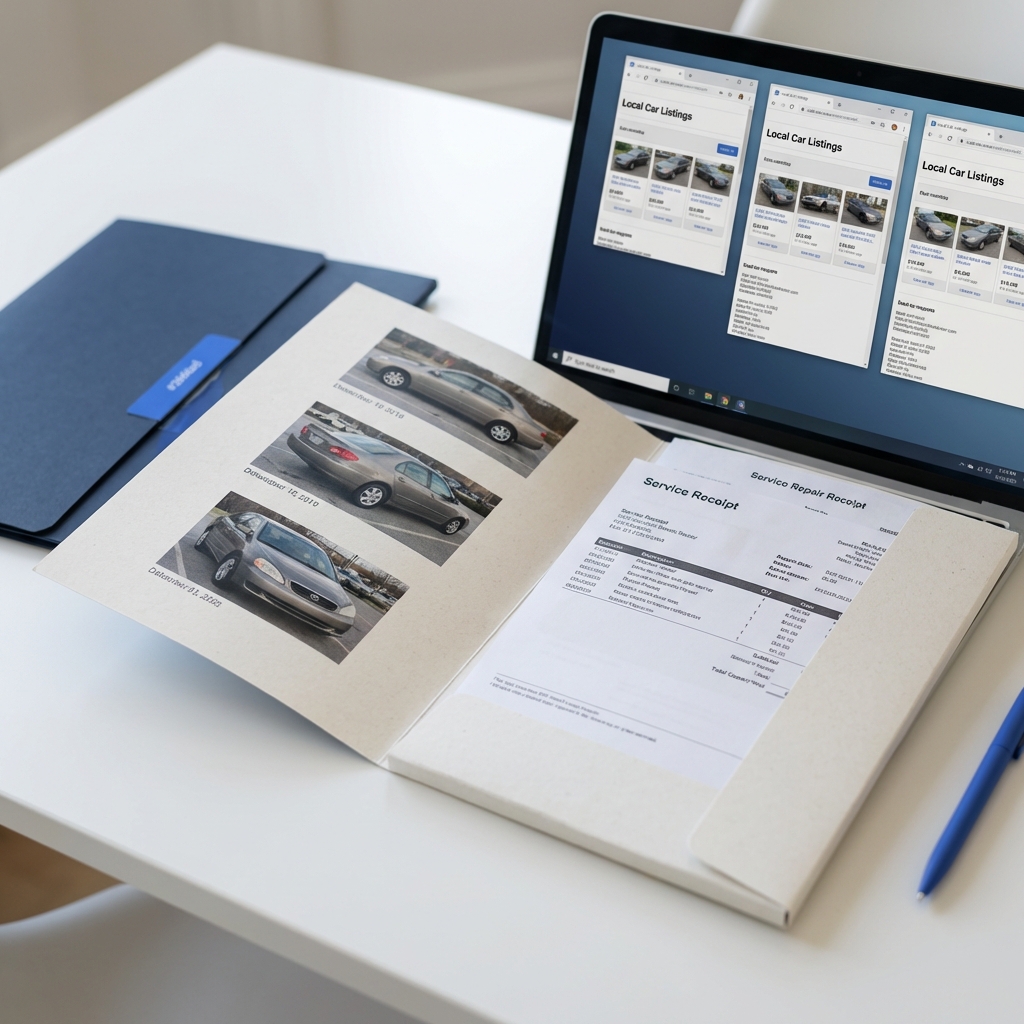
Assemble screenshots, URLs, dates, mileage, photos of your car, and receipts. Put everything in a single PDF so the adjuster can quickly verify your comps. Organized evidence often prompts a re‑review.
Step 6 — Present a clear working number
Offer a concise figure, for example: "Based on five local comps and documented maintenance, my working ACV is $12,500." Being precise and factual makes negotiations easier.
Step 7 — Ask for the insurer’s itemized comps
Insist the adjuster provide the list of specific sales used, the dates and the adjustments applied. If they refuse, note that transparency is necessary to reconcile differences fairly.
Here’s a short example to show how this works in practice: imagine five comps that, after mileage and equipment adjustments, reconcile to a median near $12,500. Present those comps, the receipts, and dated photos — and you have a defensible ACV number that often moves the insurer’s offer.
A concise folder with three to five timely local comps plus receipts and dated photos can change an offer by hundreds or even thousands of dollars; insurers often re‑review when verifiable local evidence contradicts their initial weighting.
Key friction points and how to handle them
There are predictable sticking points: the insurer using a lower value definition than you expect; regional or seasonal market shifts; and unclear salvage deductions. Address each directly by asking for specifics and providing local evidence.
Retail vs private‑party vs wholesale
If your policy uses one definition (for example, retail) but the adjuster bases their figure mostly on wholesale data, ask them to reconcile that with your policy language or reweight the comps toward retail and private‑party sales.
Market and seasonal volatility
Local demand moves faster than national averages. Point out recent local sales from the weeks before your loss if the market has been trending up. For seasonal vehicles (convertibles, specialty models), show how timing affects willingness to pay.
Salvage and retention
If the insurer retains the salvage, they should show the salvage estimate and how they calculated it. If you retain the salvage, expect the insurer to subtract salvage value from the ACV; ask for written support of the salvage figure and provide independent auction estimates if you disagree. For more on what happens after your car gets totaled in some states, see state guidance.
What to document — an evidence checklist
Good documentation changes outcomes. At a minimum, collect:
- Dated photos: exterior multiple angles, interior, odometer, VIN plate, and any damage.
- Service records: receipts for tires, brakes, timing belt, battery, and recent maintenance.
- Comparable listings: three to five local comps with URLs, screenshots, posted dates and mileage.
- Independent data points: printed or screenshot values from third‑party sites, auction sales or dealer trade‑in quotes.
Organize these into a single PDF with a clear cover page that summarizes your working ACV and the adjustments you made.
When to hire an independent appraiser
If the insurer’s offer meaningfully differs from your documented estimate and negotiations stall, an independent appraisal can be worth the cost. Appraisers with collision valuation experience find comparables and prepare a methodical report you can use in arbitration or mediation. Check your policy and state law: many policies contain an appraisal clause that creates a formal dispute path.
Scripts and example language that work
Be calm, concise and factual. Here are a few tested lines you can adapt.
Email sample to the adjuster
"I appreciate your work on this claim. I have assembled three private‑party and two dealer retail listings from within 25 miles of my ZIP code, along with dated service receipts showing recent tires and a timing‑belt replacement. Based on these comps, my working actual cash value car estimate is $12,500. Please provide the itemized list of sales, sources, dates and adjustments you used so we can reconcile our numbers."
Phone script
"Thanks for the offer. For transparency, can you send the list of specific comparables and the adjustments used? I have receipts and recent local listings that suggest a higher market value. If you send the comps, I’ll email a short packet that shows the differences and we can move toward resolution."
How insurers typically respond — and the right reactions
Some carriers will re‑review with your comps; others may provide a terse final letter. If they cite wholesale data, ask them to show the weighting. If the gap remains, weigh the likely increase against the cost of appraisal or legal steps. Often, simply presenting better local comps and receipts is enough to shift an offer upward.
Salvage retention and net settlement math
Understand the net: the insurer calculates ACV, then subtracts salvage value if they retain the vehicle, and often also pays the lienholder first if there’s an outstanding loan. Ask for the salvage estimate in writing and for evidence. If you keep the salvage, make sure you know the salvage value the insurer used and how that affects your final net check.
ACV vs replacement cost — a clear difference
ACV subtracts depreciation and reflects market value. Replacement cost aims to cover the price to buy a comparable vehicle without depreciation. If your policy includes replacement cost coverage, you may get a higher payout; read your policy and, if needed, ask the adjuster whether replacement cost applies. Most policies default to ACV unless replacement cost is explicitly purchased.
Online calculators and valuation guides are useful starting points, but they often miss local quirks. Use price calculators to set a baseline, then back that baseline with three to five local comps and documentation. If a calculator and your local comps align, it strengthens your position. See how to use the tool at how to use CARFAX Deals. Consider including a screenshot of your comps in the packet.
If you want a quick, documented way to compare local listing prices and see which vehicles are priced fairly, consider checking the verified listings and price guidance from CARFAX Deals. The platform pairs listings with vehicle history reports and price‑quality labels, which can make your comparable packet more persuasive to an adjuster.
Strengthen your ACV evidence with verified listings
Want a fast way to see verified local listings and priced comparisons? Use CARFAX Deals to generate a clear listing snapshot that you can include in your packet to the adjuster - it makes your comps easier to verify and harder to dismiss. Run a report on CARFAX Deals to get started.
How dealers, private sellers and auctions differ — and why it matters
Dealers typically ask higher prices because they prepare and warranty cars. Private‑party sales often reflect the median market value a buyer will actually pay. Wholesale auction results reflect what dealers might pay to buy and are usually lower. If an insurer blends these sources without transparency, ask for the weighting and push for the value definition that matches how you intend to replace the car.
Practical responses to common insurer tactics
If the insurer uses older comps, provide recent sales from the past 30 days. If they use high‑mileage auction listings, show private‑party or dealer retail listings nearer to your condition. If they discount minor wear that doesn’t affect saleability, show examples of similar vehicles sold in similar condition without such discounts.
Local and seasonal considerations
Timing matters. Convertibles can demand a premium in summer. Trucks may carry higher value in rural or mountainous areas. After the 2020 supply shocks, some models remain priced above historical norms in certain regions. Capture local trends by focusing on comps within your ZIP code and within recent weeks when possible.
What not to do
Avoid emotional pleas without evidence - "I loved this car" will not change market value. Don’t sign a full release without understanding its consequences. And don’t overlook lienholders or title paperwork: ensure you know the net amount you’ll receive after lien payoff and fees.
Quick checklist before you present your packet
- Photos: dated, multiple angles, odometer and VIN.
- Receipts: documented maintenance or upgrades.
- Comps: three to five local listings with URLs and dates.
- Valuation notes: calculator outputs and auction sales if available.
- Contact log: notes and dates of calls and emails with the insurer.
When negotiating is not enough: formal dispute options
If negotiations fail, check your policy for an appraisal clause or your state’s small claims or regulatory complaint process. An independent appraisal or arbitration can be effective if the anticipated increase in value justifies the cost and effort.
Real example — how a well‑prepared folder changed an offer
A client’s 2015 SUV was declared a total loss and initial ACV offer was $9,000. The owner gathered private‑party and dealer comps, receipts for new tires and brakes, and dated photos. After presenting a clear packet and explaining adjustments, the insurer re‑evaluated and increased the offer to $11,600 - an additional $2,600 that made a material difference to the owner’s next car purchase.
Reports that show clean titles, consistent maintenance or the absence of prior damage support higher comps. If a comp looks similar but has a prior accident on its history report, point that out: similar advertised prices may mask greater risk and cost to buyers, and that affects market value. See vehicle history report options at CARFAX Deals VIN Report.
Sample objection letter you can adapt
"I have reviewed your valuation and while I recognize insurers use market data, the comps you relied on do not reflect recent local sales in my ZIP code. My vehicle has receipts for a timing‑belt service on March 2 and new tires on April 1. The three private‑party listings and two dealer listings I attached reconcile to a working actual cash value car figure of $12,500. Please provide the itemized list of sales, sources and adjustments you used so we can reconcile."
Closing tips — small moves that help
Send your packet as a single PDF, use clear subject lines and keep the tone factual. If you escalate to appraisal, ask the appraiser to provide a written valuation method that you can use in arbitration. Track every communication and date each file.
Parting practical thought
Getting a fair actual cash value is mostly about preparation: solid local comps, documented maintenance, and calm, precise communication. Insurers have models; you have direct evidence. Put the evidence together and the market usually follows.
Collect three to five comparable listings within your local ZIP code that match year, make, model, trim and mileage. Adjust for condition and documented maintenance (tires, brakes, timing belt). Take a median or weighted average after adjustments and assemble screenshots, URLs, dates and receipts into a single PDF to present to the adjuster.
Third‑party services are reference points and insurers often consult them, but they aren’t binding. Use those tools as supporting evidence alongside local comps. CARFAX Deals can add credibility because it pairs listings with verified vehicle history and price context, making your packet easier for an adjuster to verify.
Consider an independent appraisal when the insurer’s offer is meaningfully lower than your documented estimate and negotiations haven’t closed the gap. Check your policy for an appraisal clause — many policies and state rules support formal appraisal or arbitration — and weigh the expected increase against appraisal cost.
A fair ACV is achievable with organized local comps, clear documentation, and calm negotiation—follow the steps above, present your evidence, and you’ll greatly improve your odds of a better offer; good luck and drive cautiously!

 Blog
Blog