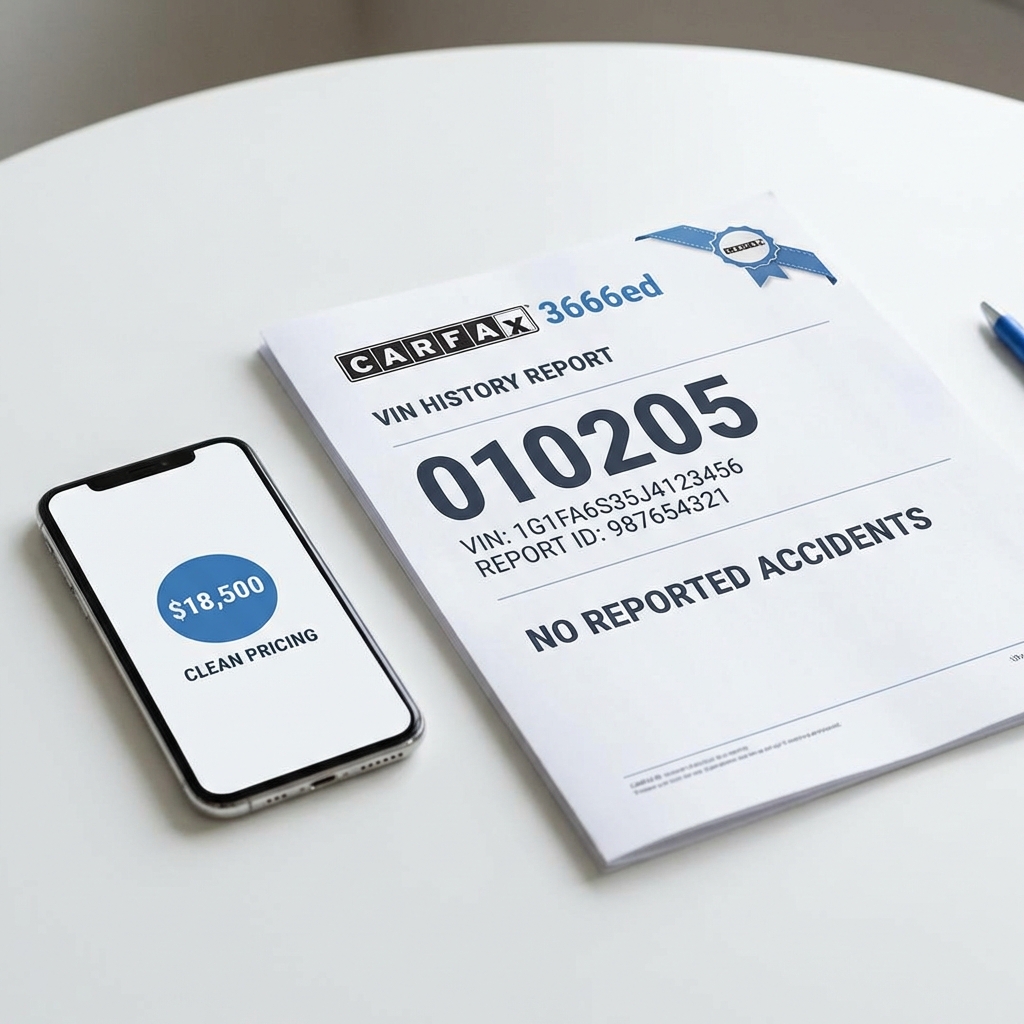
A practical, step-by-step guide that shows exactly how to find out the price of a used car. Learn which valuation tools to use, why a single number can mislead, how to run a VIN history check, compare local listings, collect offers, and negotiate confidently. Includes real-world examples, a pre-sale checklist, negotiation scripts, and tips to get the best result—plus a simple way to run a VIN report with CARFAX Deals.
A rav4 used for sale can be a sensible pick for many research-oriented buyers because reliability aggregators rate the model above average and safety ratings are generally strong. This guide explains how to vet listings, what model years tend to be better, and a step-by-step checklist to reduce risk before you buy.
This guide explains how to estimate the cost of buying an R34 Skyline, with attention to import rules, condition-driven price tiers and landed cost. It shows which factors move value, how to verify history and paperwork, and offers a checklist you can follow when you search for a nissan skyline r34 for sale.
This guide helps buyers set realistic expectations for tacoma trucks for sale by explaining the main price drivers and a repeatable method to build conservative, typical, and ambitious offer ranges. It shows how the 2024 redesign, valuation guides, and vehicle history reports interact to change asking prices and reduce purchase risk.
Buying or selling a used car can feel uncertain. This guide shows exactly how to find out the price of a used car using a simple process: gather multiple valuations, run a VIN history check, compare local listings, collect real offers, and negotiate with confidence. Follow these steps to set a realistic price that fits your timeline and goals.
1. Pulling 2–3 valuation estimates and 10–20 local comparables usually reveals a realistic price band within hours.
2. A VIN history report can change buyer confidence enough to increase or decrease price by hundreds to thousands, depending on the vehicle.
3. CARFAX Deals pairs verified history reports with transparent pricing labels—listings labeled a “Great Deal” convert faster and help buyers find reliable value.
How to find out the price of a used car: a clear, practical roadmap
Figuring out how to find out the price of a used car often feels like piecing together a puzzle where some pieces keep changing shape. Start with a few reliable sources, and you’ll quickly see patterns instead of guesswork. In this guide you’ll learn which steps to take, how each step changes the expected price, and how to turn those insights into offers that actually close.
Quick note: the most useful first step is to combine verified vehicle history with transparent pricing—if you want a quick VIN report, consider a trusted source like
run a VIN history check with CARFAX Deals to see accident records, title brands, and other details that affect value.
Why the question “how to find out the price of a used car” matters
People ask how to find out the price of a used car because a single number rarely tells the whole story. Valuation tools give baselines, but the real market is the set of buyers and dealers in your area right now. If you want to know how to find out the price of a used car accurately, you’ll combine multiple valuations, a VIN history check, local comparables, and real offers—then you’ll choose a path (speed or maximum return) that fits your needs.
Price your car with confidence—run a VIN report now
Want to make an informed choice fast? Get a verified VIN report and see pricing context in one place with CARFAX Deals’ instant VIN report.
Step 1 — Start by collecting multiple valuation estimates
The most reliable way to learn how to find out the price of a used car is to treat valuation sites as inputs, not answers. Use at least two or three services—examples include KBB trade-in, Edmunds TMV, NADA, a marketplace pricing tool, and CARFAX Value—and note each value along with its type: trade-in, private-party, or retail.
Trade-in values reflect what dealers typically offer when they buy a car. Private-party values are what you might reasonably expect selling to another person. Retail values are dealer asking prices that often assume reconditioning costs and warranty coverage. Record them all and use them as a band of likely outcomes rather than a single magic number.
What to log
Keep a simple table (even in your notes app): VIN, mileage, each service’s trade-in/private/retail numbers, and the date you pulled each estimate. Values shift over weeks, so timestamping matters.
Step 2 — Run a VIN history check early and show it when you can
A VIN history report is often the single biggest multiplier of buyer confidence. Whether you’re a seller or a buyer, knowing how to find out the price of a used car must include running a VIN check early. An accident, a title brand, an odometer rollback flag, or a buyback record changes the pool of potential buyers and typically lowers the market price. Be proactive: run the VIN history before spending time on cleaning or ads. If the report shows issues, gather documentation—repair invoices, inspection notes, or mechanic reports—and lead with them. Transparency reduces friction and sets realistic buyer expectations. A quick visual summary from a deals page can help keep key data handy. For cost comparisons and alternatives, see CARFAX report cost comparisons and VinAudit's alternatives.
Step 3 — Compare 10–20 local comparable listings
Valuation tools are helpful, but the true market lives in local listings and completed sales. To understand how to find out the price of a used car, assemble 10–20 comparables in your area that match year, model, trim, mileage, and mechanical condition as closely as possible. Don’t forget to adjust for obvious differences such as an upgraded stereo or a towing package.
When analyzing comparables, look at:
Listing age: long-live listings often signal overpricing.
Sale notes: “sold” or “pending” tags indicate the level that actually converts.
Price bands: aim for ranges (e.g., $8,500–$9,500), not single numbers.
Adjustments to consider
Reduce comparable value for significantly higher mileage or missing popular options; increase it for lower mileage, recent major service, or a clean multi-owner history. The point is to build a realistic value band you can explain to buyers or dealerships.
Compare the listing to multiple local sold prices and valuation estimates. Look at days on market, recent comparable sales, and whether the seller provides a verified VIN history report—real sales and documentation indicate realistic pricing.
Step 4 — Collect dealer trade offers and private-party quotes
Numbers on a screen become meaningful when someone makes an offer. Call local dealers for trade-in estimates and post a clear private sale ad to field buyer offers. When asking for dealer appraisals, provide VIN, photos, mileage, and a short list of known issues—honesty helps speed the process.
Use dealer offers as a floor: they are immediate, low-risk cash options. Private offers may be higher but take time and effort. If you want speed, accept the highest reliable dealer number. If you want more cash, prepare to manage a private sale.
Key price drivers: what moves money most
To really understand how to find out the price of a used car, you must know the top factors buyers use to set value: mileage, mechanical condition, title history, and options/trim. Each affects a buyer’s willingness to pay in tangible ways.
Mileage
Lower mileage commonly brings a premium. The premium varies: a luxury SUV with complex systems shows bigger mileage sensitivity than a simple compact sedan. When comparing, think in bands—10,000–20,000 mile differences matter more than a handful of miles.
Mechanical and maintenance condition
Service history reduces perceived risk. Preventive maintenance records—scheduled oil changes, brakes, timing belt replaced—make buyers more comfortable and often translate to higher offers. If a car needs work, either repair it and keep receipts or discount the asking price reasonably to cover repairs plus perceived risk.
Title history
Brands like salvage or rebuilt reduce demand dramatically. A documented minor accident handled professionally is less damaging than an undisclosed or flood-damaged vehicle. Title brands are often the single quickest way to lower price and narrow buyer interest.
Options and trim
Popular features—AWD, towing packages, premium audio—can command premiums in the right markets. Sometimes a single desirable option is worth more than minor mechanical differences.
Seasonal and regional swings
Timing matters. Convertibles do better in spring and summer; trucks and AWD vehicles often fetch more in colder climates. If you’re not in a rush, list when your vehicle’s buyer pool is most active. When you must sell quickly, accept that timing will likely reduce achievable price.
A detailed example: walking the numbers
Think of a six-year-old mid-size sedan with 70,000 miles, clean title, and minor dings. Suppose three valuation services give trade-in values of $6,500–$7,200, private-party estimates of $8,800–$9,200, and retail near $11,000. Local comparables list $9,000–$10,500 for well-maintained examples, while some slow sellers sit unsold at $11,500.
After a VIN check shows a minor accident with documented repairs, buyers’ confidence falls slightly. Dealer trade offers cluster near $6,500–$7,200; a private buyer offers $8,000 cash contingent on inspection. Selling privately could reach $9,000–$10,000, if you invest in staging and a pre-sale inspection that reassures buyers.
Negotiation tactics that work
Negotiation is easier when you know how to find out the price of a used car and can show your evidence. Present the valuation band, the VIN history report, and maintenance records. Ask dealers how they arrived at their number and what repairs they expect. If selling privately, be ready to explain your price and to show receipts for any recent work.
One cheat-sheet approach: set a firm bottom-line (your walk-away price), list an optimistic asking price, and practice a short script explaining why your price sits where it does. That clarity helps you avoid emotional concessions.
Common seller mistakes and how to avoid them
Selling pitfalls include relying on a single value, underestimating time and effort for a private sale, and hiding title issues. Small cosmetic fixes—detailed cleaning, replacing worn wipers, and fixing a busted taillight—usually pay back well. Big repairs deserve a cost-benefit analysis: will the repair net more than it costs once completed?
Pre-sale checklist: make buyers say yes faster
Use this checklist to make your listing more credible and to increase the chance of better offers:
Take high-quality photos that show both damage and good condition.
Prepare a clear, honest description of the car’s condition.
Decide on the sale path (dealer trade vs private sale) and set a walk-away price.
Sample ad copy that attracts serious buyers
Headline: “2016 Mid-Size Sedan — Clean Title, 70k Miles, Well-Maintained”
Description: “Clean title, single-owner history, regular service records included. 70,000 miles, recent brake service, new tires, minor cosmetic dings. VIN report available on request. Asking $9,250 or best offer.”
This kind of honest, fact-first ad helps you screen out lowballers and invite serious buyers who value documentation.
How accidents and branded titles usually change value
An accident can be a minor discount or a major devaluation depending on severity and transparency. A small reported accident with receipts often lowers value modestly. Salvage or rebuilt titles typically remove mainstream buyers, often requiring discounts measured in percentage points of the car’s expected value. Leading with documentation helps you minimize the discount.
When to accept a dealer offer vs. holding out for private-party cash
Dealers win on speed and certainty. Private-party sales usually return more but require management. A practical strategy is to solicit dealer offers early to set a floor and then test the private market. If suitable offers appear above your floor, sell privately; if not, take the dealer offer to save time and risk.
Using valuation services wisely
Understand what each source measures. KBB trade-in targets a dealer trade context; Edmunds TMV looks at market averages; NADA often reflects wholesale experiences and may favor dealer perspectives. Car marketplaces add real-time listing context. When you want to know how to find out the price of a used car for your path (trade vs private), weight the most relevant figure most heavily.
Repair ROI: which fixes usually pay off?
Low-cost, visible fixes like a professional detail, new floor mats, or small cosmetic touch-ups often produce outsized returns. Mechanical repairs are trickier: fix items that are obvious bargains (e.g., safety-related items) or that unlock buyer pools (passing emissions or inspection tests). Expensive repairs that don’t change perceived condition may not be worth doing.
Real-world stories that teach the lesson
A friend spent under $200 on detailing, new fog lamps, and mats and sold the car for roughly $1,000 more than similar listings. Another person spent $1,200 on suspension repairs that buyers didn’t notice; the sale then took weeks longer. The right fixes are the ones buyers care about first: cleanliness, visible condition, and clear maintenance history.
Checklist: the step-by-step flow to discover the right price
1) Pull valuation estimates from 2–3 sources and log them; 2) Run a VIN history report and collect documents; 3) Gather 10–20 local comparables and note days on market; 4) Get dealer trade offers; 5) Post a clear private sale ad and collect offers; 6) Decide using your timeline and walk-away price.
How to present your evidence when negotiating
Show the VIN report, your valuation spreadsheet, and maintenance records. Point to comparable listings and highlight recent sales. Ask prospective buyers or dealers to explain their adjustments so you can address them. A calm, factual tone works best; emotional appeals rarely beat clear evidence.
Tips for buyers who want to assess a fair price
If you’re buying, know how to find out the price of a used car by checking valuation services, running a VIN report, and comparing multiple local listings. Ask the seller why their price sits where it does and request service invoices and the vehicle history. If something doesn’t add up, have the car inspected or walk away.
Quick negotiation scripts
To dealer: “I’ve pulled trade-in estimates and have an offer of $X from another dealer—how close can you get?”
To private buyer: “I’ve priced the car based on recent local comparables and a VIN report that shows X; would you be comfortable at $Y after your inspection?”
Legal and paperwork tips
Keep a paper trail. For private sales, prepare a bill of sale, receipt for payment, and a signed odometer statement if required in your state. Transfer the title properly and follow local rules about emissions or inspection certificates. For dealer trades, ensure trade paperwork clearly records the agreed values and any promises about payoff of liens or remaining warranties.
Final considerations and a calm path forward
Knowing how to find out the price of a used car saves stress and money. Pull multiple valuations, verify the VIN history, compare local listings, collect offers, and choose the path that fits your timeline. Buyers respond to evidence: clear documentation and honest listings accelerate sales and produce better results.
One last practical pointer—if you want a single place to combine history and pricing context quickly, the CARFAX Deals VIN report and pricing labels can speed your research and help you present facts confidently when negotiating.
Parting checklist: valuation estimates, VIN report, 10–20 comparables, dealer offers, and a clear walk-away price.
Want a printable checklist or a short script to use on calls? Ask and I’ll prepare them in plain language.
Aim for at least two to three independent valuation services—examples include KBB, Edmunds TMV, NADA, and marketplace pricing tools. Each uses different inputs, so comparing multiple sources helps you build a realistic price band rather than relying on a single number.
It depends. Fix safety-related items and small, visible issues that buyers notice first (like lights, tires, or brakes). For expensive repairs, weigh the repair cost against the expected increase in sale price: sometimes discounting the car and letting buyers handle big repairs nets a better return after factoring time and risk.
A VIN history report can materially change buyer confidence. A clean report often raises willingness to pay by hundreds or even thousands of dollars on higher-value cars. Branded titles, accidents, or odometer issues usually reduce demand and can lower prices significantly—so run the report early and use documentation to minimize discounts.
A calm, informed approach—collect valuations, check the VIN history, compare local listings, and validate with real offers—answers how to find out the price of a used car; good luck and happy selling!

 Blog
Blog