Which Jeep Wrangler to stay away from? A practical used-buyers guide
This guide helps research-oriented buyers decide which Jeep Wrangler listings warrant extra caution. It explains how recall history, model year differences, modifications and ownership records affect risk and shows the VIN-level checks and inspections that reduce uncertainty when shopping for a jeep wrangler for sale.
A rav4 used for sale can be a sensible pick for many research-oriented buyers because reliability aggregators rate the model above average and safety ratings are generally strong. This guide explains how to vet listings, what model years tend to be better, and a step-by-step checklist to reduce risk before you buy.
This guide explains how to estimate the cost of buying an R34 Skyline, with attention to import rules, condition-driven price tiers and landed cost. It shows which factors move value, how to verify history and paperwork, and offers a checklist you can follow when you search for a nissan skyline r34 for sale.
This guide helps buyers set realistic expectations for tacoma trucks for sale by explaining the main price drivers and a repeatable method to build conservative, typical, and ambitious offer ranges. It shows how the 2024 redesign, valuation guides, and vehicle history reports interact to change asking prices and reduce purchase risk.
Shopping for a used Jeep Wrangler requires more than liking the look. Model-year changes, trim choices and past use patterns can create meaningful differences in safety and reliability. This guide helps research-oriented buyers spot higher-risk listings and follow a repeatable checklist to reduce uncertainty.
We focus on practical checks you can do from the listing page and the exact evidence to request from sellers. The goal is to help you identify which Wrangler listings deserve a closer look and which to approach with extra caution.
Check VIN-specific recall completion and title branding before you schedule any inspection.
Headlight and body-style differences can change IIHS ratings for the same Wrangler model year.
Extensive aftermarket modification without receipts increases mechanical and resale risk.
Why this question matters for used Jeep Wrangler buyers
What 'risk' means for used-vehicle shoppers
When you search for a jeep wrangler for sale, you are balancing a vehicle's appeal against potential repair and safety exposure. Risk here means likely repair frequency, possible safety differences across model years or configurations, and higher ownership cost if dependability metrics are weaker.
Focus on VIN-level recall status, model-year reliability signals and heavy modification history; avoid vehicles with unresolved recalls, salvage branding or extensive modifications without documentation and require a detailed pre-purchase inspection.
How recalls, reliability and modifications change buyer decisions
Federal recall records show that multiple Wrangler model years across recent production runs have had safety recalls, so VIN-specific recall checks matter before purchase NHTSA recalls database.
Independent ratings and owner-complaint aggregates also vary by generation and trim, which means one model year or configuration can be meaningfully riskier than another in terms of reliability and crashworthiness IIHS ratings and results. J.D. Power studies place Jeep dependability below many mainstream brands, which can help set expectations for repair frequency and cost J.D. Power VDS findings.
How to screen Wrangler listings by model year, body style and trim
Map model years to known updates and common problem windows
Start by treating model year as a primary filter. Some model years reflect factory updates that fixed earlier problems, while others precede changes that left certain systems vulnerable. Consult expert reviews and model change logs to identify years that received powertrain or electronics updates Kelley Blue Book expert reviews (KBB recall notices).
Look for notes in listings that mention factory updates, extended warranties, or service performed shortly after known problem windows. If a specific year has many owner complaints for the same subsystem, that increases the value of additional checks.
Why body style and headlight packages affect safety ratings
IIHS results show variability by body style and by headlight equipment. That means a two-door and a four-door Wrangler, or identical trims with different headlight packages, can receive different headlight or crash-related scores IIHS ratings and results.
When comparing listings, match the exact body style, trim and headlight package shown in the listing to the vehicle tested in safety ratings. Small configuration differences can change ratings enough to affect a safety-minded buyer's choice.
VIN checks, recall history and title issues you must verify
What a VIN vehicle history report shows and why it matters
A VIN vehicle history report typically shows recall history, title status, ownership history, service records and mileage checks. These items directly reduce uncertainty about prior damage, major repairs and whether recalls were addressed Consumer Reports reliability summary.
Check for salvage or rebuilt branding, frame repairs and inconsistent ownership records. Those items often signal repair complexity and higher long-term costs. If service history is missing for key events, treat that as a reason to request more documentation or a pre-purchase inspection.
Run a VIN report and review recall completion status
Confirm title status and look for salvage or rebuilt brands
Compare reported mileage against service and registration records
Run Vehicle History Report
Before you call the dealer, run a VIN vehicle history report to confirm recalls and title status where possible.
When a report shows active or unresolved recalls for the VIN, ask the seller for documentation showing the recall was completed. NHTSA records are useful because multiple Wrangler years have been subject to recalls; VIN-level status is what matters for the car you are considering NHTSA recalls database (see NHTSA recalls page).
Powertrain, transmission and common mechanical trouble spots
Which engines and transmissions show higher complaint rates
Owner-complaint aggregates and repair databases highlight that transmissions and drivetrains can be recurring trouble spots on higher-mileage Wranglers. RepairPal lists common transmission and drivetrain issues that tend to arise with age and heavy use RepairPal common problems (RepairPal recall checker).
Consumer Reports data also point to electrical and drivetrain complaint patterns across several Wrangler generations, so prioritize testing shifting, transfer case operation and electrical systems during an inspection Consumer Reports reliability summary.
How mileage, towing and off-road use affect drivetrain risk
High mileage, frequent towing or documented off-road use tends to accelerate wear on transmissions, axles and differential components. Listings that reference heavy towing or show obvious off-road service history should prompt a deeper mechanical review and possibly immediate compression and leak checks.
Ask for service invoices that show fluid changes and drivetrain repairs. Missing or vague service records for high-mileage Wranglers increase the chance that deferred maintenance could be hiding more costly repairs.
Ask for service invoices that show fluid changes and drivetrain repairs. Missing or vague service records for high-mileage Wranglers increase the chance that deferred maintenance could be hiding more costly repairs.
How to spot modified, lifted or off-road-heavy Wranglers and why that matters
Common modification types and their mechanical impact
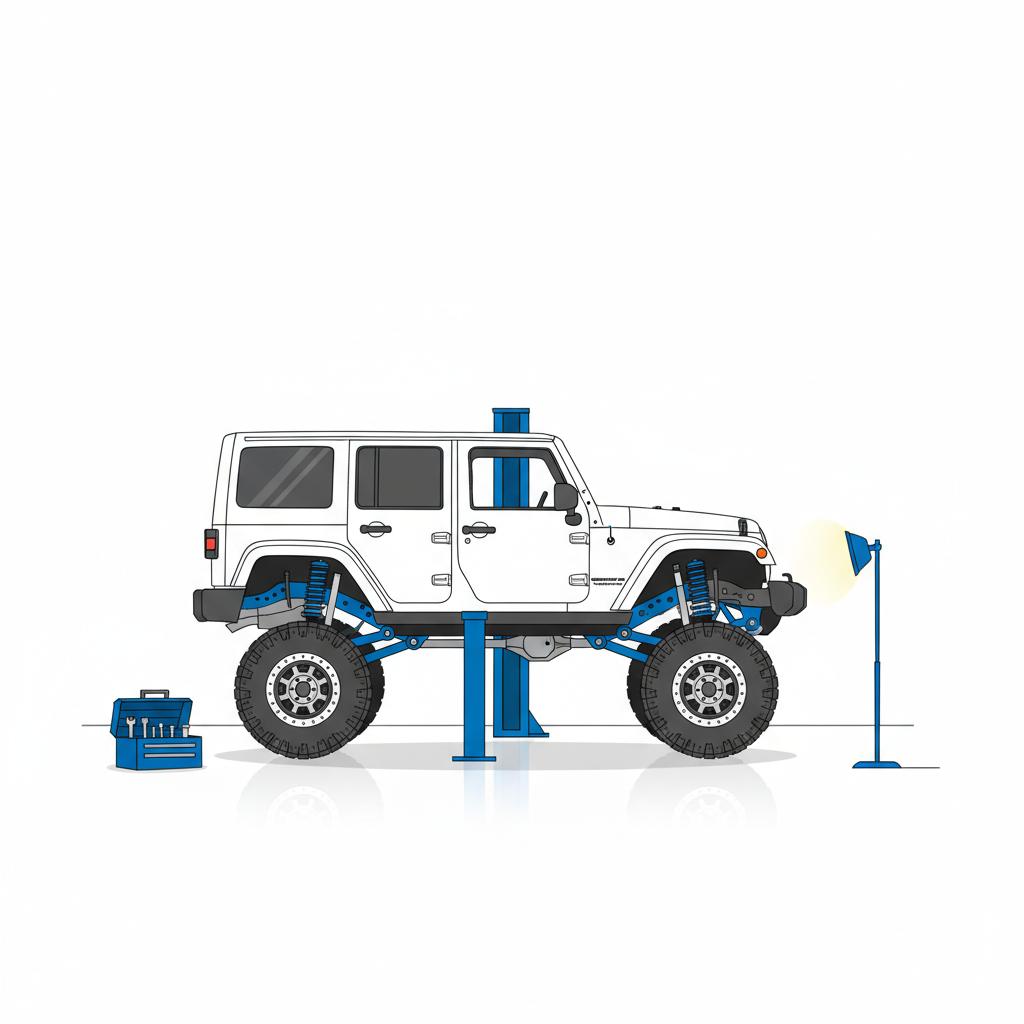
Common modifications include lift kits, oversized tires, aftermarket bumpers, upgraded axles and suspension component changes. These items change load and wear patterns and can reveal non-factory stresses on steering and drivetrain parts RepairPal common problems.
When modifications are present, the likelihood of accelerated wear on wheel bearings, control arms, and transfer case components increases. That makes a focused inspection of suspension mounting points and driveline angles essential.
Photo clues include oversized tires, obvious lift, aftermarket bumpers or nonfactory suspension setups. Listing text that emphasizes off-road capability or recent trail use also warrants caution and follow up on service documentation Consumer Reports reliability summary.
If the seller cannot provide receipts for the modifications or maintenance performed after modifications, treat the vehicle as higher risk and require a pre-purchase inspection focused on frame, steering and driveline components.
Check IIHS crashworthiness and headlight ratings for the exact body style, trim and year when possible. These ratings are available on the IIHS site and can differ by configuration, which makes matching the tested configuration to the listed vehicle important IIHS ratings and results.
Other sources such as manufacturer recall notices and consumer reliability reports help complete the picture by showing whether equipment or structural issues were subject to corrective actions.
Why headlight ratings and body style matter for Wranglers
IIHS headlight evaluations have noted important variation across packages. A trim with a weaker headlight setup can reduce night driving safety compared with the same model fitted with an improved lighting package. That difference is a practical safety concern for buyers who frequently drive at night.
Combine headlight ratings with VIN recall checks and note whether the specific headlight equipment on the vehicle has a history of field fixes or recalls, because recall and defect histories can interact with crashworthiness concerns NHTSA recalls database.
How to read pricing signals and use price analysis labels to compare deals
What pricing insights and price analysis labels mean
Price analysis labels like Great Deal, Good Deal and Fair Deal are one input among many. They show relative price context but do not replace a VIN-level check, inspection or review of service records. Use labels to prioritize listings, not to finalize a decision Kelley Blue Book expert reviews.
estimate local price gap using comparable listings
Use to flag outlier prices
Local market context matters. A labeled Great Deal in one region may be a Fair Deal in another if local demand or supply shifts. Always cross check label context with a valuation source and nearby comparable listings.
Balancing price labels with history and inspection results
A favorable price label should not override red flags found in a VIN report or an inspection. If a listing shows a low price but also has unresolved recalls, salvage branding or heavy modifications, prioritize resolving those issues before considering price savings Consumer Reports reliability summary.
Use price labels to narrow choices, then apply your checklist to those candidates only. That reduces time lost on listings that look cheap but carry disproportionate risk.
A decision checklist: which Wranglers to avoid or approach with extra caution
Red-flag combinations of year, modification and service history
Prioritized red flags include active or unfixed recalls on the VIN, salvage or rebuilt title, heavy modification without receipts, or model years with documented recurring complaints in owner data NHTSA recalls database.
J.D. Power dependability context suggests that, compared to some peers, Jeeps may have higher ownership risk in some study years, so weigh that when estimating expected repairs and resale value J.D. Power VDS findings.
When a listing should prompt a walk-away
Walk away when a listing combines multiple major red flags, for example salvage title plus unresolved recalls, or extensive modifications with no service documentation. Those combinations often indicate restoration or repair work that needs detailed verification by a mechanic.
If the seller resists VIN access, refuses to provide records or pressures for a quick sale without inspection, treat that as a strong signal to step back and consider other listings.
Pre-purchase inspection and VIN-level steps to reduce ownership risk
What to ask a mechanic specifically for a Wrangler
Ask the mechanic to focus on frame and suspension mounting points, transfer case and transmission operation, electrical systems, and signs of body repair. These focus areas reveal the most common hidden issues on Wranglers with heavy use or modifications Consumer Reports reliability summary.
Request specific test drives that include highway, low speed and off-camber surfaces to surface steering play and driveline vibration. Have the mechanic document findings with photos when possible.
How to use service and maintenance records in your evaluation
Confirm oil and transmission service history, receipts for major repairs, and any documented recall repairs. Missing records do not automatically disqualify a car, but they increase the need for a thorough inspection and may affect negotiations.
When records show regular maintenance and prompt recall repairs, that lowers risk. When records are absent or vague, treat the listing as needing more evidence before progressing.
Common buyer mistakes and listing red flags that lead to regret
Trusting photos without verification
Relying solely on photos is risky. Photos can hide frame damage, poor welds or incomplete repairs. Always request the VIN and a service history and, if needed, a pre-purchase inspection to confirm what photos imply Consumer Reports reliability summary.
Use reverse image checks and compare photo metadata if you suspect stock images or recycled ads. Vague or generic photos are a legitimate red flag.
Assuming aftermarket parts signal added value
Aftermarket parts may improve capability but can also indicate heavier use and added wear. Treat extensive aftermarket equipment without invoices as a risk multiplier rather than a value adder RepairPal common problems.
Ask sellers for before and after modification invoices and for service logs showing maintenance performed after modifications. If those are missing, require an inspection that specifically checks modification points for correct installation and wear.
Three real-world example scenarios and how to evaluate each listing
Scenario A: low-mileage but heavily modified Rubicon
Situation: A Rubicon with low reported mileage but visible lift, oversized tires and aftermarket bumpers. Initial appeal is high but modifications are extensive. Action: request the VIN report, ask for receipts showing who installed modifications and service performed since the work. Have a mechanic inspect suspension mounts, axle integrity and steering components. If receipts and a clean pre-purchase inspection are provided, proceed cautiously. If documentation is missing, walk away.
Scenario B: lightly used Sahara with a recent recall history
Situation: A Sahara showing light use and appealing price but a VIN-level check reveals a recent recall for a safety-related component. Action: confirm whether the recall repair was completed and ask for documented proof. If the seller provides recall completion proof or the service history shows the repair, a standard inspection is still recommended. If the recall is unresolved or documentation is absent, defer purchase until the recall is resolved.
Scenario C: affordable older model with incomplete service records
Situation: An older Wrangler offered at a low price with patchy service history. Action: order a VIN vehicle history report, check for salvage branding and past title changes. If the VIN report is clean but service records are sparse, budget for immediate maintenance and a detailed inspection to identify deferred repairs. Consider negotiating price to account for uncertainty or seek other listings with clearer histories Kelley Blue Book expert reviews.
How to use dealership transparency signals when you contact a seller
Which dealer disclosures to prioritize
Prioritize dealers that publish reviews, ratings and clear dealer profile information. Those signals do not guarantee quality but help assess transparency and responsiveness before you call for documents or inspections Consumer Reports reliability summary.
Ask whether the dealer will allow independent inspections, provide full service invoices and confirm recall completion on the VIN prior to purchase.
Questions to ask a dealer before arranging an inspection
Sample questions: Will you provide the VIN? Do you have documented proof of recall repairs or service invoices? Has the vehicle had frame or suspension work? These direct questions focus the dealer on the specific risk areas buyers need documented.
Remember that CarFax Deals serves as a verification layer to surface vehicle history reports and pricing context that can help prioritize which dealership listings to contact first.
Conclusion: quick next steps before you contact a dealer
A one-paragraph checklist to follow right away
Run a VIN vehicle history report, check the VIN recall status, review service and title history, order a pre-purchase inspection focused on frame and drivetrain, and compare pricing context before contacting the dealer NHTSA recalls database.
Where to find the authoritative sources cited
Primary public sources to consult include NHTSA, IIHS, Consumer Reports, J.D. Power, RepairPal and KBB. Use those sources to validate model-year and configuration-specific safety, reliability and valuation data before you proceed.
Run a VIN vehicle history report to confirm recall status, title branding and ownership history, then use that information to decide on a pre-purchase inspection.
Not always, but extensive modifications without invoices or recent maintenance records increase the chance of accelerated wear and call for a focused inspection.
No. Price labels help prioritize listings, but they do not replace VIN checks, service record review or a mechanic inspection.
Used vehicle shopping is about managing uncertainty. By combining VIN-level history reports, model-specific safety and dependability data, and a focused pre-purchase inspection, you can reduce the chance of surprise repairs and choices you later regret.
If a listing lacks VIN access, service records or seller transparency, treat that as a signal to pause and look for alternatives with clearer documentation.

 Blog
Blog