Buyers often ask whether a single blue book exists for big trucks. There is no universal consumer blue book that fully covers all heavy or vocational trucks. Instead, realistic valuation relies on combining specialized guides, auction indices and VIN-level checks to triangulate a value.
A rav4 used for sale can be a sensible pick for many research-oriented buyers because reliability aggregators rate the model above average and safety ratings are generally strong. This guide explains how to vet listings, what model years tend to be better, and a step-by-step checklist to reduce risk before you buy.
This guide explains how to estimate the cost of buying an R34 Skyline, with attention to import rules, condition-driven price tiers and landed cost. It shows which factors move value, how to verify history and paperwork, and offers a checklist you can follow when you search for a nissan skyline r34 for sale.
This guide helps buyers set realistic expectations for tacoma trucks for sale by explaining the main price drivers and a repeatable method to build conservative, typical, and ambitious offer ranges. It shows how the 2024 redesign, valuation guides, and vehicle history reports interact to change asking prices and reduce purchase risk.
Buyers often ask if a single blue book exists for big trucks and vocational equipment. The short answer is no; heavy trucks bring complexity that single-line retail pages struggle to represent. This article explains why, compares the main valuation providers, and gives a practical checklist so you can triangulate realistic values.
The guidance here is meant to help research oriented buyers and fleet managers. It focuses on verification steps and the valuation sources most commonly used in the market, and it explains how GVWR and documented usage change which sources you should trust.
There is no single universal blue book for all heavy or vocational trucks.
NADA Guides focuses on commercial and heavy-truck valuations while auction indices show wholesale behavior.
Always verify GVWR and pull a vehicle history report before relying on guide values.
Quick answer: is there a blue book for big trucks?
Short answer: no single consumer blue book covers every class of heavy or vocational truck with the same level of detail that buyers expect for passenger cars. If you search for a kbb truck value for a Class 6 or 7 vocational chassis, you will usually need to consult multiple specialty sources instead of relying on a single retail page.
Most buyers use a combination of dealer and retail guides plus auction indices to get a realistic range. For vocational and high GVWR vehicles, NADA Guides and industry auction reports are commonly consulted because they target commercial models and wholesale behavior NADA Guides - Trucks & Commercial Vehicle Values.
No single consumer blue book fully covers all heavy or vocational trucks; combine NADA, auction indices and VIN-level checks to triangulate a realistic value.
Who needs a longer method varies by use. If you want a light pickup for personal use, a retail guide plus local listings may be enough. If you are shopping for a work truck with upfits, heavy hours, or fleet history, expect to use several sources and VIN-level checks before you decide.
When buyers ask for a blue book they usually expect a single reference that returns a clear market value for a given model, trim, and year. For cars that model works more often. For heavy and vocational trucks it is harder because many value drivers are outside the base specification. Auction patterns and vocational features move price in ways a single page may not capture.
Valuation tools fall into two broad categories, retail guides and auction indices. Retail-style guides offer buyer-facing estimates for trade in, private party and dealer retail values. Auction indices show what dealers actually pay at wholesale and can respond faster to market shifts. Black Book and Manheim are examples of auction-driven reporting that highlight short-term wholesale signals Black Book valuation and market coverage.
Another practical complication is upfits. A dump body, service body, or crane can change marketability and require custom adjustments that generic lists do not show. Usage patterns, like mostly highway miles versus heavy site work, also change real-world value. That is why many buyers treat a single-line price as a starting point rather than a definitive figure.
GVWR, or gross vehicle weight rating, is a primary technical input that changes how a vehicle is classified for valuation and regulation. For many market sources the GVWR puts a truck into consumer or commercial buckets and that choice changes which price guide you should consult Definition of Commercial Motor Vehicle and GVWR (49 CFR 390.5).
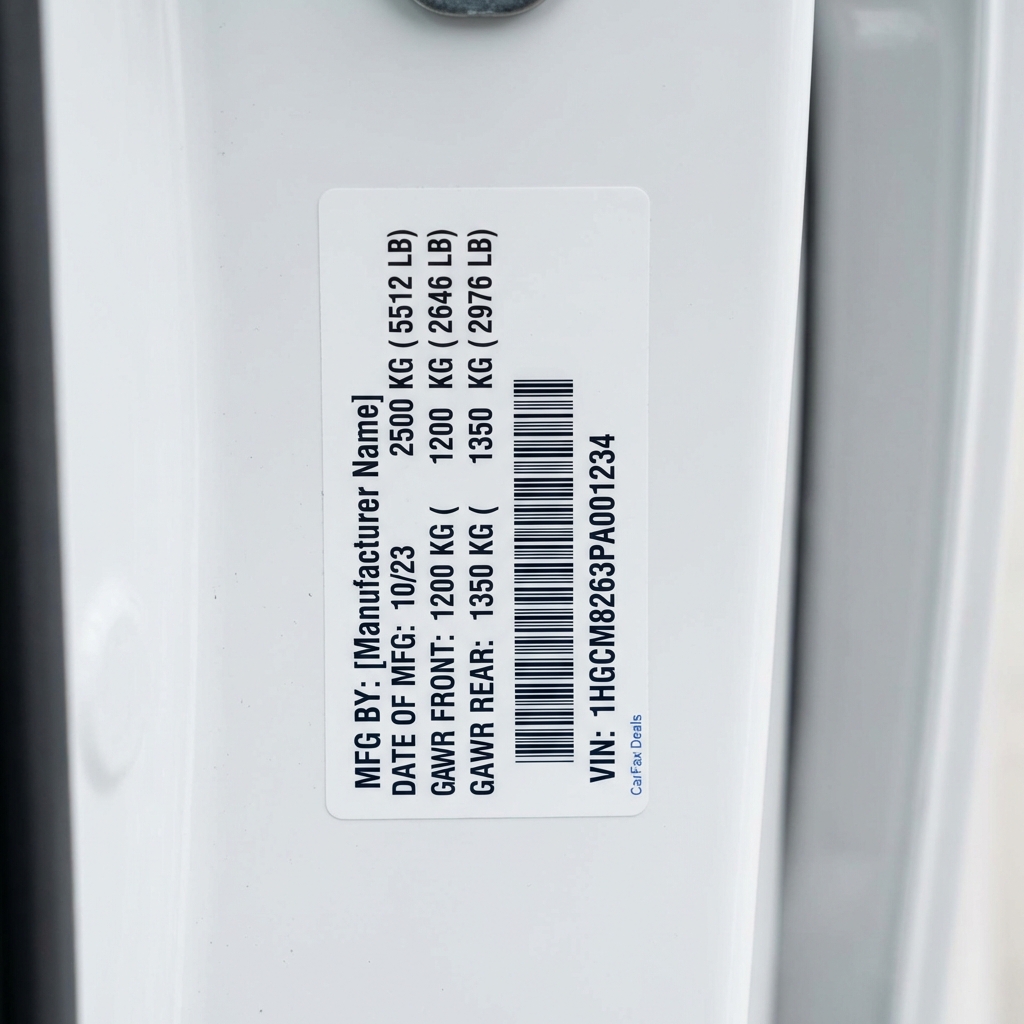
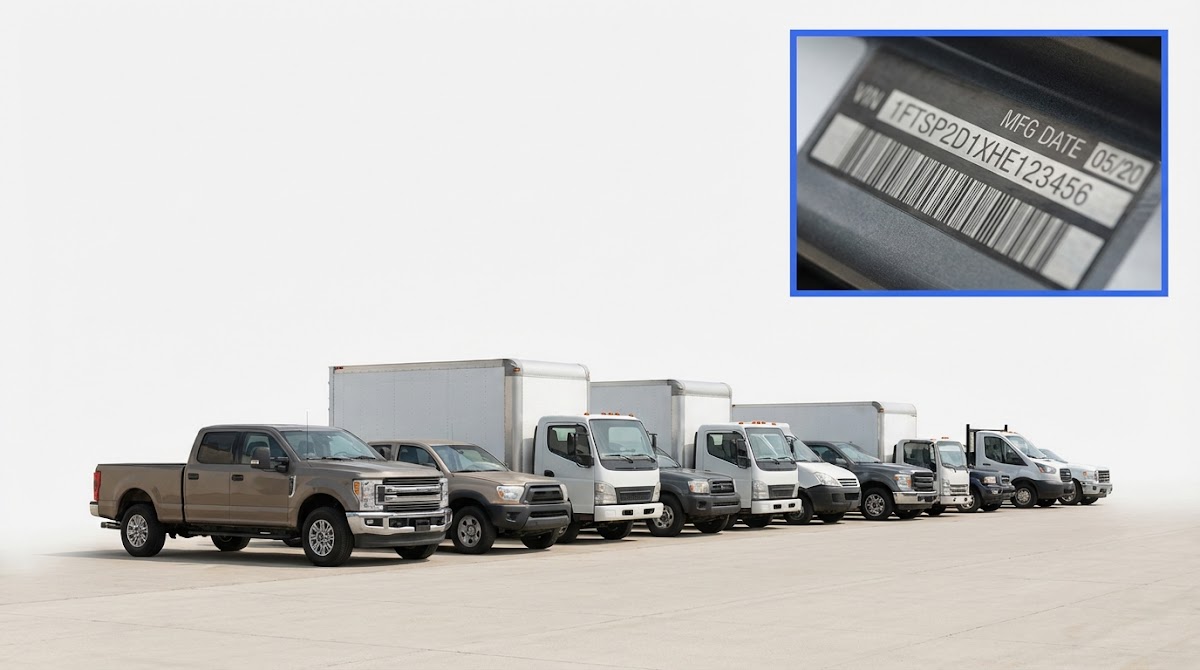
Check the door sticker or VIN plate to confirm the GVWR before you run a valuation. That step matters because a 3/4 ton pickup and a Class 4 chassis cab can both look similar in listings but sit in different valuation sets.
Bring GVWR and VIN details to valuation tools
Check sticker for GVWR and VIN
For lenders and dealers the FMCSA classification and related regulation references affect how trucks are insured, financed, and valued. Knowing the GVWR and whether a truck is commercially designated lets you choose the appropriate valuation sources and narrow auction comparables more effectively.
Valuation providers serve different roles. Retail guides target consumer-facing prices for trade in and retail sales. Auction indices reflect what dealers and remarketers pay at wholesale. These roles lead to systematic differences in published values, and in how up-to-date each source is.
NADA Guides is widely used by dealers and lenders for commercial and vocational vehicles and tends to provide structured commercial listings, while auction services show short-term demand that can push wholesale prices away from retail guidance NADA Guides - Trucks & Commercial Vehicle Values.
Black Book and Manheim publish indices and market reports based on auction data. Those indices are useful when you need a view of what a fleet manager or dealer might expect to receive on a sale of multiple units in a short window Manheim Market Report / MMR.
Methodology, sample size, and update frequency explain most of the differences you will see between providers. Retail algorithms often smooth values across trims and powertrains. Auction indices show volatility and regional shifts more clearly because they are based on actual sales at lanes and digital auctions.
Kelley Blue Book is helpful when you are looking at pickups and light-duty trucks intended for personal use. KBB provides retail-facing estimates that are convenient for comparing retail listings and private party offerings How Kelley Blue Book Values Vehicles.
However, KBB generally has less granularity for high-GVWR vocational trucks compared with dedicated commercial guides. For many heavy chassis and vocational configurations you will likely need to consult NADA or an auction index in addition to KBB numbers to get a full picture.
In practice, KBB can be one useful reference among several. Use KBB for light-duty comparisons, then add NADA or auction signals if GVWR or upfits push the truck into a commercial valuation set.
NADA Guides maintains a commercial and heavy-truck valuation product that dealers, lenders, and appraisers commonly use for vocational and high GVWR models NADA Guides - Trucks & Commercial Vehicle Values.
NADA tends to list vocational configurations and to provide value categories that match dealer and lender workflows for commercial purchases. That makes it a primary reference when a truck carries factory or aftermarket equipment that changes its market class. For additional official consumer resources see NADA consumer vehicle values.
If you rely on NADA values, remember to combine them with VIN-level history and a condition adjustment. A clean title and full service history usually support a closer match to compiled guide values, while heavy usage or missing maintenance records require a downward adjustment or a professional appraisal.
Auction-based indices and lane results are central when you need to understand what dealers will pay at wholesale. Black Book and Manheim publish auction-derived indices and short-term market analyses that reflect real buying behavior in remarketing channels Manheim Market Report / MMR.
Compare auction signals with retail prices
Compare auction indices alongside retail guides when you need a realistic wholesale or trade-in expectation, especially for fleets and large lots.
Auction prices can diverge from retail guides for several reasons. Regional demand, seasonal cycles, and rapid changes in equipment needs can move wholesale values quickly. That is why many buyers use an auction index to triangulate a fair trade-in or wholesale expectation.
When fleet managers and dealers prepare to sell multiple units, they monitor auction signals closely because those prices determine the realistic floor for offers from dealers and remarketers.
Start by confirming the GVWR and intended use. If GVWR is in light-duty ranges and the truck will be used for personal transport, retail guides and local dealer listings are often the primary sources. If GVWR is commercial or the truck carries vocational equipment, add NADA and auction indices to the review process Definition of Commercial Motor Vehicle and GVWR (49 CFR 390.5).
Compare at least two types of sources, for example one dealer-style guide and one auction index. That approach helps you see a retail asking price and a wholesale market signal, which together define a realistic negotiation range.
Quick checks before you call a seller: verify GVWR, pull a vehicle history report for title and ownership details, request service records, and ask about hours or vocational usage. Those items often change value more than a single model-year adjustment.
VIN-level checks are the foundation of a reliable valuation. A vehicle history report can show title status, past owners, and mileage events that materially change market value. Use that report to spot branded titles, odometer discrepancies, or gaps in ownership history Commercial truck valuation checklist.
Next, confirm documented usage and service history. A truck used primarily on highways usually trades differently than a truck that served hauling or site work. Service records that show regular maintenance support higher values than incomplete or missing records.
Find recent auction or dealer comparables in your region with the same body configuration, powertrain, and equipment. Regional comparables are important because demand for vocational trucks can be localized; a configuration that is common and desirable in one area may be rare in another, which affects price.
Upfits can change both marketability and value. Some upfits add utility and are highly valued in specific vocational markets, others limit the buyer pool and reduce liquidity. Generic guides may not reflect those differences, so plan a custom adjustment when upfits are present Commercial truck valuation checklist.
Equipment hours and heavy usage are another key factor. Trucks with high engine or PTO hours often need larger mechanical repairs and may have higher life-cycle costs. Those hidden costs tend to reduce buyer willingness to pay and should be accounted for in your estimate.
Regional demand matters. Check local auction lanes and dealer trade activity. If similar units are selling well at auction nearby, that signal can raise realistic expectations for resale value. Conversely, weak regional demand often creates a discount to guide prices.
Relying on a single source is a frequent error. A retail guide without auction context can overstate the price you might receive at trade in. Similarly, an auction index without retail context can understate a well marketed retail sale.
Another mistake is treating light-truck KBB figures as authoritative for high-GVWR vocational trucks. KBB is useful for pickups and light-duty use, but it usually lacks the vocational detail NADA and auction indices provide How Kelley Blue Book Values Vehicles.
Missing title or heavy usage details is a third common error. Skip the purchase if title issues are unresolved or if required maintenance is not documented. For complex cases, a professional appraiser or an independent inspection can protect you from unexpected costs.
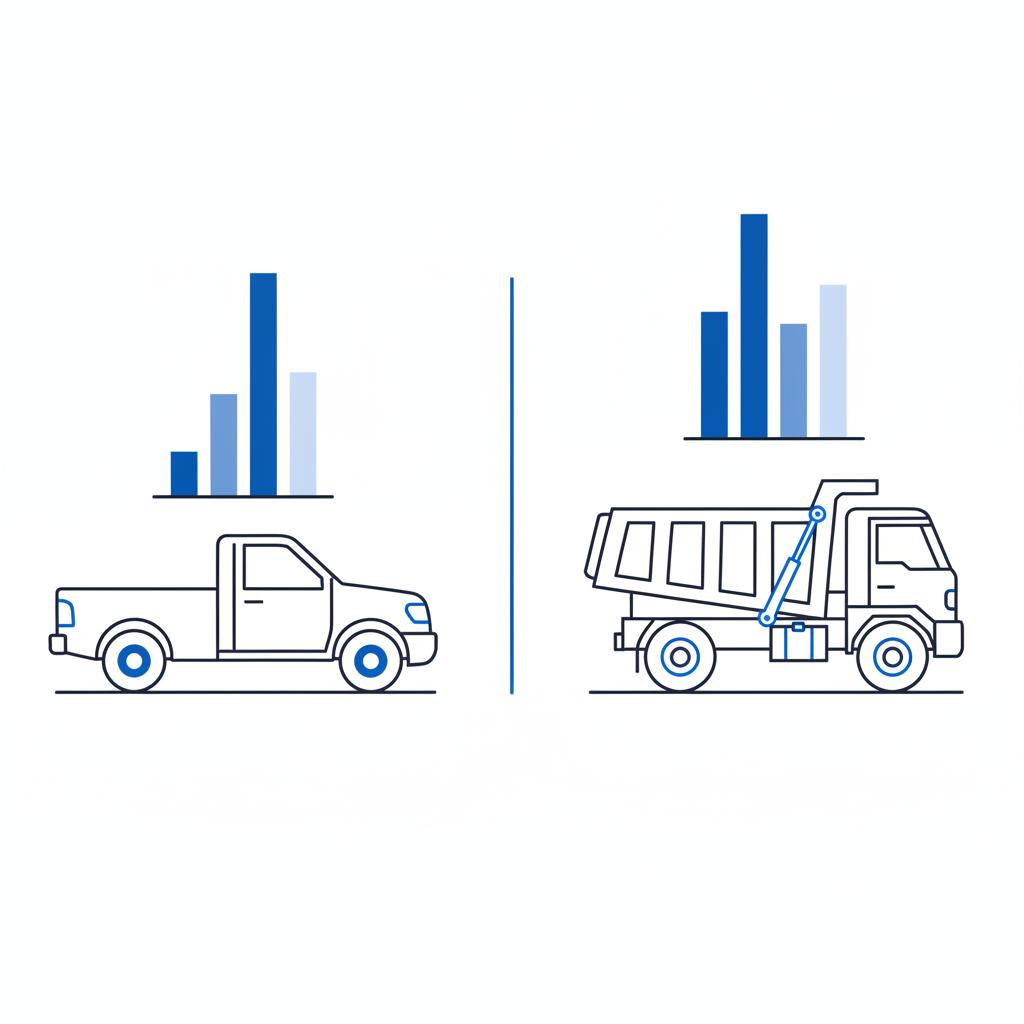
Example 1, light-duty pickup used for commuting. For a well maintained half ton used mostly on highways, start with retail guides and local dealer listings. KBB and local online listings will show what similar trucks sell for retail and private party, and a vehicle history report can confirm title and mileage How Kelley Blue Book Values Vehicles.
Example 2, vocational dump truck with upfits. A dump body and heavy site use push this truck into commercial valuation territory. Use NADA for a base commercial estimate, then adjust for the condition of the upfit and for engine or PTO hours. Consider auction comparables for a wholesale expectation NADA Guides - Trucks & Commercial Vehicle Values.
Example 3, fleet trade-in where auction values dominate. When a fleet turns multiple units, auction lanes determine the likely proceeds. Monitor Black Book and Manheim indices to set the reserve and to know when to accept a lot sale versus a retail remarketing path Manheim Market Report / MMR.
A decision support layer that pairs vehicle history reports with pricing insights adds important verification before you contact a seller. History reports show title status, ownership history, and service events that change risk and value, while pricing context helps place a listing relative to comparable market activity Commercial truck valuation checklist.
Price analysis labels and dealer transparency signals can speed comparison and flag listings that need closer inspection. Use these signals as context, not as a guarantee of condition or value. For many buyers, combining history reports with NADA and auction indices reduces uncertainty before in-person inspection.
There is no single blue book that fully covers all big trucks in 2026. Buyers should triangulate values using at least two types of sources, for example a dedicated commercial guide like NADA plus an auction index from Manheim or Black Book NADA Guides - Trucks & Commercial Vehicle Values.
Next steps checklist: verify the GVWR, pull a vehicle history report, request service history, compare NADA and auction indices, and inspect upfits. If the truck is high value or heavily used, consider a professional appraisal or a targeted mechanical inspection before purchase.
Kelley Blue Book is reliable for pickups and light-duty trucks, but it typically has less detail for high-GVWR vocational trucks; consider NADA and auction indices for commercial models.
Confirm the GVWR and the VIN-level vehicle history, as those determine classification and reveal title or mileage issues that materially affect value.
Yes, fleet sellers often prioritize auction indices because those prices reflect dealer wholesale demand and set realistic expectations for lot sales.
Deciding on a used big truck benefits from a methodical approach. Use GVWR to pick your valuation set, run VIN-level history checks, compare NADA and auction indices, and inspect any upfits before committing.
If you face high uncertainty or a high-value purchase, consider a professional appraisal or an independent inspection to reduce risk.

 Blog
Blog