This guide compares tradeoffs between a used 4Runner for sale and a used Highlander for sale to help research-oriented buyers choose. It focuses on platform differences, fuel economy, safety by trim, reliability studies and used-market pricing, and it explains how to apply a checklist to individual listings. Use a vehicle history report and pricing insights to confirm title, ownership and local value before contacting a dealer.
A rav4 used for sale can be a sensible pick for many research-oriented buyers because reliability aggregators rate the model above average and safety ratings are generally strong. This guide explains how to vet listings, what model years tend to be better, and a step-by-step checklist to reduce risk before you buy.
This guide explains how to estimate the cost of buying an R34 Skyline, with attention to import rules, condition-driven price tiers and landed cost. It shows which factors move value, how to verify history and paperwork, and offers a checklist you can follow when you search for a nissan skyline r34 for sale.
This guide helps buyers set realistic expectations for tacoma trucks for sale by explaining the main price drivers and a repeatable method to build conservative, typical, and ambitious offer ranges. It shows how the 2024 redesign, valuation guides, and vehicle history reports interact to change asking prices and reduce purchase risk.
Buying a used SUV means weighing tradeoffs that matter for your day to day. This guide compares a used 4Runner for sale with a used Highlander for sale so you can match a listing to your priorities without assuming one model is better for everyone.
Read with listings in hand. The article focuses on platform differences, safety by trim, fuel economy implications, reliability signals and how pricing affects value. Each section shows what to check on a listing and how to use a vehicle history report and pricing insights to reduce uncertainty.
The 4Runner favors towing and rugged utility due to its body-on-frame architecture.
The Highlander offers better fuel economy, especially in hybrid trims, and usually more passenger comfort.
Use VIN-based vehicle history reports and local pricing insights to verify any listing before negotiating.
How to use this guide when shopping for a used 4Runner for sale
This guide compares tradeoffs between the Toyota 4Runner and Highlander for buyers evaluating a used 4Runner for sale or a used Highlander for sale. It does not declare a single winner. Instead it explains platform, safety, fuel economy, reliability and pricing differences and shows how to apply those points to specific listings.
Decide based on how you use the vehicle most weeks. Choose a 4Runner if towing and rugged cargo use are regular needs; choose a Highlander if passenger comfort and fuel economy matter more. Always verify trim, powertrain and history on the specific listing.
Start by treating each listing as a set of facts to verify: trim, powertrain, mileage, title status and service history. Verify those fields with a vehicle history report and pricing insights before you call a dealer.
When reading the sections that follow, note that platform-level differences tend to explain many behavior gaps between the models. Use the decision checklist in this article to translate those differences into a buying choice for a specific listing.
Quick answer: which buyers tend to prefer a used 4Runner for sale and which prefer a Highlander
Short version: buyers who need towing, off-road durability and a rugged cargo area often favor a used 4Runner for sale, while buyers who prioritize passenger comfort, fuel economy and a smoother on-road ride often favor the Highlander. This follows from the 4Runner s body-on-frame architecture and the Highlander s unibody design and hybrid availability, which change how each handles daily use and ownership costs, so check the listing details for confirmation Consumer Reports 4Runner review. See a MotorTrend comparison.
For city and family use, Highlander trims with hybrid powertrains generally reduce fuel costs and offer more refined third-row and cargo flexibility. EPA combined mpg figures show meaningful differences between Highlander powertrains and typical 4Runner engines, which matters for commuters and long trips EPA fuel economy page.
Market price often changes the recommendation. On average, 4Runners command higher used asking prices and retain value more strongly, but the final choice depends on mileage, trim, condition and your local market context; compare the listing against local comparables before drawing conclusions Kelley Blue Book used values.
Drive architecture and on-road vs off-road performance
The 4Runner uses a body-on-frame platform that emphasizes towing and rugged durability; that structure tends to handle heavy loads and uneven terrain better, and it explains why many buyers use the 4Runner for outdoor gear and towing duties Consumer Reports 4Runner review.
The Highlander is built on a unibody platform, which usually gives a more carlike ride, improved on-road handling and easier integration of hybrid powertrains for better fuel efficiency. That difference is visible when comparing how each behaves on highway drives and during daily commutes Kelley Blue Book used values.
When you read a listing, check the exact powertrain, drivetrain and published tow rating. Tow ratings and drivetrain options are trim-dependent and they materially affect whether a vehicle meets your hauling needs. If the seller lists tow capacity, match it against your regular towing load rather than general statements about capability.
Tool
Compare tow ratings, drivetrain and engine output across trims
Use with two listings side by side
Interior space, seating and cargo: family comfort versus rugged utility
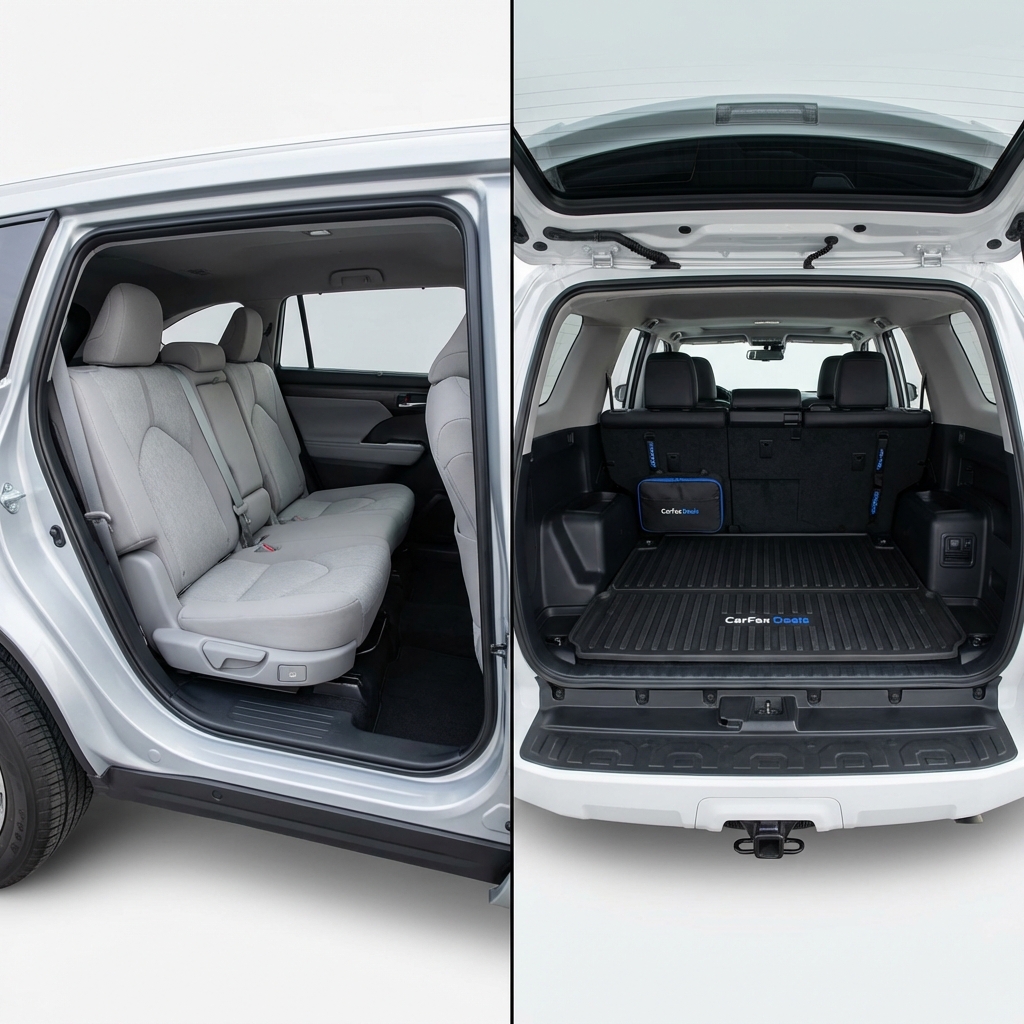
The Highlander generally favors passenger comfort with a more refined third-row and flexible cargo configurations, which helps families carrying children and luggage on longer trips Kelley Blue Book used values.
The 4Runner tends to emphasize a rugged cargo area and durable interior materials that tolerate outdoor gear and wear better than more delicate cabin finishes. That makes the 4Runner attractive for buyers who often load bikes, coolers and muddy equipment Consumer Reports 4Runner review.
Inspect listed photos carefully for seat wear, third-row usability and how the cargo area is laid out. Measurements and photos can reveal whether a claimed third-row is practical for adults or mainly for occasional child use.
Also check trim-level features that affect daily usability, such as second-row seat adjustments, cargo tie-downs and available roof rails. These features often appear in trim descriptions and affect how you would use the vehicle day to day.
Fuel economy and powertrain choices (place for a neutral CTA)
EPA combined mpg estimates routinely show the Highlander, especially hybrid trims, achieving substantially higher combined mpg compared with typical 4Runner engines, which influences ownership fuel spend for many buyers EPA fuel economy page.
Hybrid Highlander trims reduce fuel costs for many commuters and those with frequent city driving because they pair gasoline engines with electric assist. The 4Runner s heavier body and stronger engine choices generally mean higher real-world fuel use, so factor fuel into your total cost to own estimate.
Compare fuel and ownership costs with a VIN check
Run pricing and vehicle history checks to compare estimated fuel and ownership costs for the specific listings you are considering.
On each listing, confirm the exact powertrain and the EPA combined mpg figure before estimating annual fuel spend. Use that number and your expected annual miles to estimate fuel costs and compare models on equal mileage assumptions.
Safety: crashworthiness, crash-avoidance and trim-dependent features
IIHS crashworthiness and crash-avoidance results vary by model year and trim. Newer Highlander trims more often include advanced prevention systems that improve crash-avoidance performance compared with some contemporaneous 4Runner trims, so check the IIHS page for the specific model year and trim before assuming feature presence IIHS Highlander ratings. See the IIHS midsize-SUV class summary for broader context.
Do not assume that driver-assist suites are present on every trim. Features such as automatic emergency braking, lane-keep assist and adaptive cruise control are often trim- or option-package dependent and may be omitted on lower trims.
Verify the listing s claimed safety equipment in the seller s description and in photos, and confirm trim-level equipment against IIHS or the manufacturer s specification for that model year. If a safety suite is essential to you, require confirmation in writing before purchase.
Reliability and long-term ownership costs (place for a product mention)
Independent dependability studies show both Toyota nameplates score well. The 4Runner is frequently noted for long-term durability, and the Highlander scores strongly for family-use dependability, which helps frame expected ownership patterns and resale behavior J.D. Power dependability study.
Timing of routine maintenance and major service items affects near-term ownership cost. Recent service records for items like brakes, tires and scheduled maintenance add confidence, while missing service history or long gaps raise near-term repair risk.
Use a vehicle history report to confirm ownership history, title status and recorded service events where available. A report can reduce uncertainty about past incidents and help you estimate total cost to own given the vehicle s documented history.
Used-market pricing, resale trends and what pricing insights tell you
Used-market pricing and resale trends show that 4Runners typically have higher asking prices and stronger value retention than Highlanders, but final price depends on mileage, condition, trim and local demand; always compare against local comparables, not just national averages Kelley Blue Book used values.
The main listing attributes that drive price are mileage, condition, trim level and local supply. High trim content combined with low mileage tend to command premiums regardless of model, while high mileage reduces asking price even for desirable trims.
Use pricing insights to spot outliers. If a listing is priced notably above local comparables without clear justification, ask for recent service records and the VIN before making an offer. Pricing context helps form a reasonable offer strategy.
How to evaluate a specific listing step by step
First pass: perform a quick scan of photos, basic specs and the asking price. Confirm model year, trim badge, listed mileage and visible condition. This first pass helps screen obviously mismatched vehicles quickly.
Final pass: schedule an inspection and test drive. Prioritize a mechanic inspection that focuses on model-specific concerns and request to see recent service invoices. If possible, verify brake, suspension and drivetrain condition under expected loads.
What to look for in vehicle history reports and service records
Check title status and ownership history first. A salvage or rebuilt title changes value and financing options and should be treated as a major red flag unless the price and disclosure justify further action.
Accident history matters but not all reported events carry the same risk. Look at severity, whether airbags deployed and whether repairs were done by a professional shop. Minor cosmetic events differ from structural or frame damage in how they affect future maintenance risk.
Service history patterns that include regular oil changes, scheduled maintenance and documented repairs tend to reduce near-term repair risk. Long gaps in service history or missing major service records increase uncertainty and often justify asking for a pre-purchase inspection.
A compact checklist to compare two listings side-by-side (place for a tool marker)
Essential specs to match line by line: model year, trim, engine and powertrain, drivetrain, mileage, title status and asking price. Put these into two columns for a direct comparison.
Price and comparables snapshot: gather three local comparables with similar year, mileage and trim to form a price baseline. Weight differences in mileage and trim when scoring which listing is the better value.
Red flags that require a closer look: salvage or rebuilt title, inconsistent service history, major accident with structural damage, and missing critical safety equipment for the model year. If you see any, ask for the VIN and service invoices before proceeding EPA fuel economy page.
Common buyer mistakes and how to avoid them
Assuming safety features or ratings without checking the specific trim and model year is common. Corrective action: confirm trim-level equipment and consult IIHS or the manufacturer s specs for that year.
Relying on national averages instead of local comparables can lead to overpaying. Corrective action: compare a listing to local listings with similar mileage and trim and use pricing insights to spot unusual premiums.
Skipping VIN and vehicle history checks removes a key verification step. Corrective action: always get the VIN, run a vehicle history report and, when available, request recent service invoices before negotiating.
Practical scenarios: which model to pick for common real-world needs
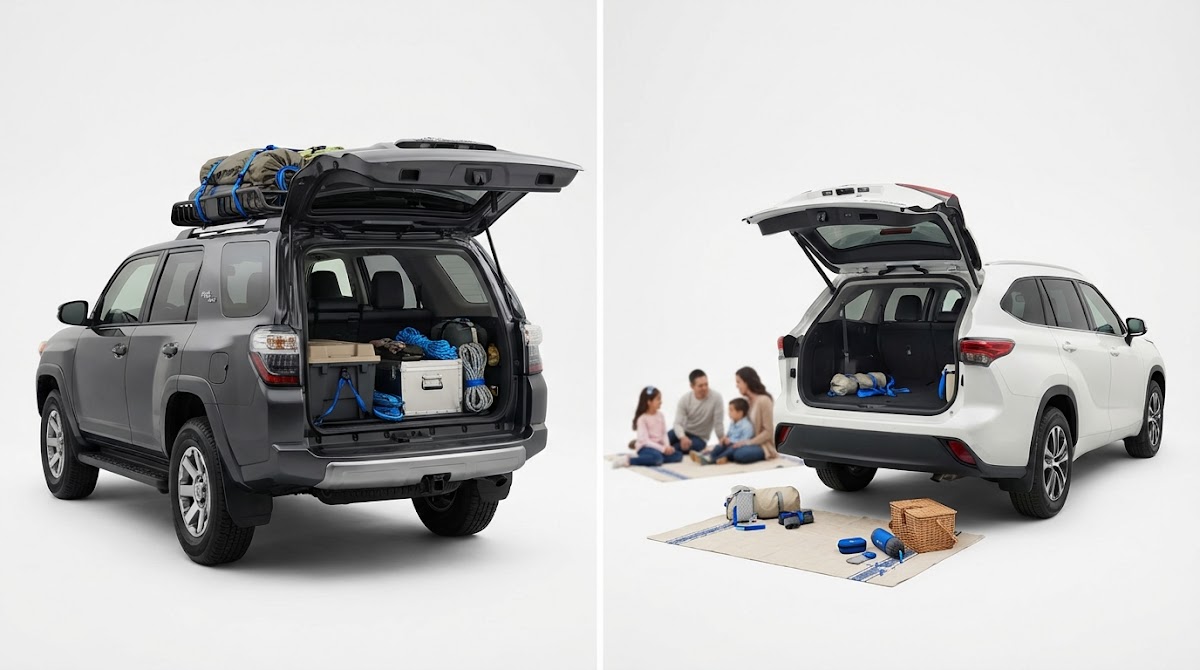
Family with car seats and long highway commutes: a Highlander, particularly in a well-equipped nonhybrid or hybrid trim, tends to offer more passenger comfort, a usable third-row for children and stronger fuel economy for long miles; verify the trim and EPA combined mpg for the listed vehicle EPA fuel economy page.
Weekend outdoor enthusiast who tows and carries gear: a 4Runner often fits better because of its body-on-frame structure and rugged cargo area, but confirm tow package, hitch, and drivetrain listed on the listing before assuming towing readiness Consumer Reports 4Runner review.
Daily commuter prioritizing fuel costs and smooth ride: Highlander hybrid trims frequently reduce fuel spend and provide a more carlike ride, so check the exact powertrain and combined mpg listed and use that to estimate yearly fuel expenses.
Inspection, test drive and pre-purchase steps
Mechanical inspection priorities: on a 4Runner, focus on frame and suspension condition, signs of off-road use and differential and driveshaft wear. On Highlander hybrids, include hybrid system checks and battery diagnostics when available IIHS 4Runner ratings.
Test drive checklist: listen for unusual noises, check braking feel under normal deceleration, test steering response and, if you plan to tow, simulate load where safe to feel behavior under expected conditions. For hybrids, verify that regenerative braking feels consistent and that there are no warning lights.
Paperwork and title checklist: confirm the VIN, check title status for liens or salvage branding, request recent service invoices and get a written list of included options and packages before making an offer.
Negotiation and next steps after you pick a preferred listing
Request these documents before negotiating: VIN, vehicle history report, recent service invoices and exact trim and option documentation. Having these in hand reduces uncertainty and strengthens your position.
Use pricing insights to form an offer. Compare the listing against local comparables and consider mileage and condition adjustments. If the price is above reasonable local comparables without supporting evidence, ask for repairs, a price reduction or documented service.
Walk-away conditions should include undisclosed title issues, evidence of structural damage, inconsistent service history or a dealer s refusal to provide VIN and service records for inspection. Clear walk-away rules make negotiation simpler and safer.
Conclusion: a short decision checklist and next steps
Recap: the 4Runner tends to suit buyers who need rugged durability and towing, while the Highlander tends to suit buyers who prioritize fuel economy and passenger comfort. Model year and trim determine many critical differences, so treat each listing as unique Kelley Blue Book used values.
Three immediate actions: run a vehicle history report for the listing s VIN, compare pricing against local comps, and schedule a mechanic inspection and a focused test drive. These steps help reduce risk before contacting the dealer.
For model-year specifics on safety and fuel economy, consult IIHS crash pages, EPA fuel-economy entries and recent dependability studies to confirm how the exact year and trim perform before you finalize your decision.
Request the VIN and run a vehicle history report. The report lists title brands and provides ownership history so you can see salvage or rebuilt designations if present.
Generally, Highlander hybrid trims have higher EPA combined mpg and lower expected fuel spend, but actual savings depend on mileage, driving patterns and the 4Runner s specific engine and use.
On average 4Runners often retain value strongly, but resale depends on year, mileage, trim and local demand so verify pricing insights for the exact listing.
Decide by evidence not reputation. Run the VIN, check the listing s trim and service history, compare local pricing and schedule an inspection.
When you have those results, you will usually be able to choose the model that fits your needs with more confidence and less risk.

 Blog
Blog