Which year to avoid Honda Fit? — A practical guide to used honda fit for sale
This guide helps research-focused buyers decide which used Honda Fit years to approach with caution and what checks to run before contacting a dealer. It explains why mid-2010s Fits often show more transmission and engine complaints, why VIN-level recall checks matter, and how to use a vehicle history report and pricing context to reduce risk.
This guide shows how to evaluate affordable cars for sale by looking beyond sticker price to total cost to own, reliability, fuel use and safety. It explains how to use model-level 5-year TCO tools, EPA fuel data and vehicle history reports to compare small cars, and gives checklists and scenarios for common buyer profiles.
This guide explains current new and used pricing for buyers searching for tesla 3 for sale, and shows the VIN-level checks that matter most. It summarizes 2026 new Model 3 starting points and used value bands, then gives a step-by-step checklist to verify any listing with a vehicle history report and battery warranty checks.
This article explains the most common problem buyers encounter when looking at used tundras for sale, focusing on evidence from government complaints and owner-aggregator reports. It outlines practical inspection steps, how to check VIN-specific recalls and TSBs, and what to prioritize in a vehicle history report to reduce risk.
This article helps buyers answer a common question: which year to avoid Honda Fit when shopping used. It brings together recall patterns and owner-complaint trends so you can prioritize listings that merit closer inspection. The goal is practical: give clear checks and a step-by-step workflow to reduce risk before you contact a dealer.
Mid-2010s Honda Fit models show higher owner-reported transmission and engine complaints and should be inspected carefully.
Run a VIN-level recall check and get a vehicle history report before contacting a dealer.
Use pricing insights and conservative repair reserves to adjust offers when a listing shows potential repair exposure.
Quick answer: model years to be cautious about
Short summary, used honda fit for sale
If you are looking at a used honda fit for sale, treat mid-2010s model years as higher-priority inspections because owner-complaint aggregators report a concentration of transmission and engine complaints for those years RepairPal Honda Fit problems.
Check recalls and history before you visit
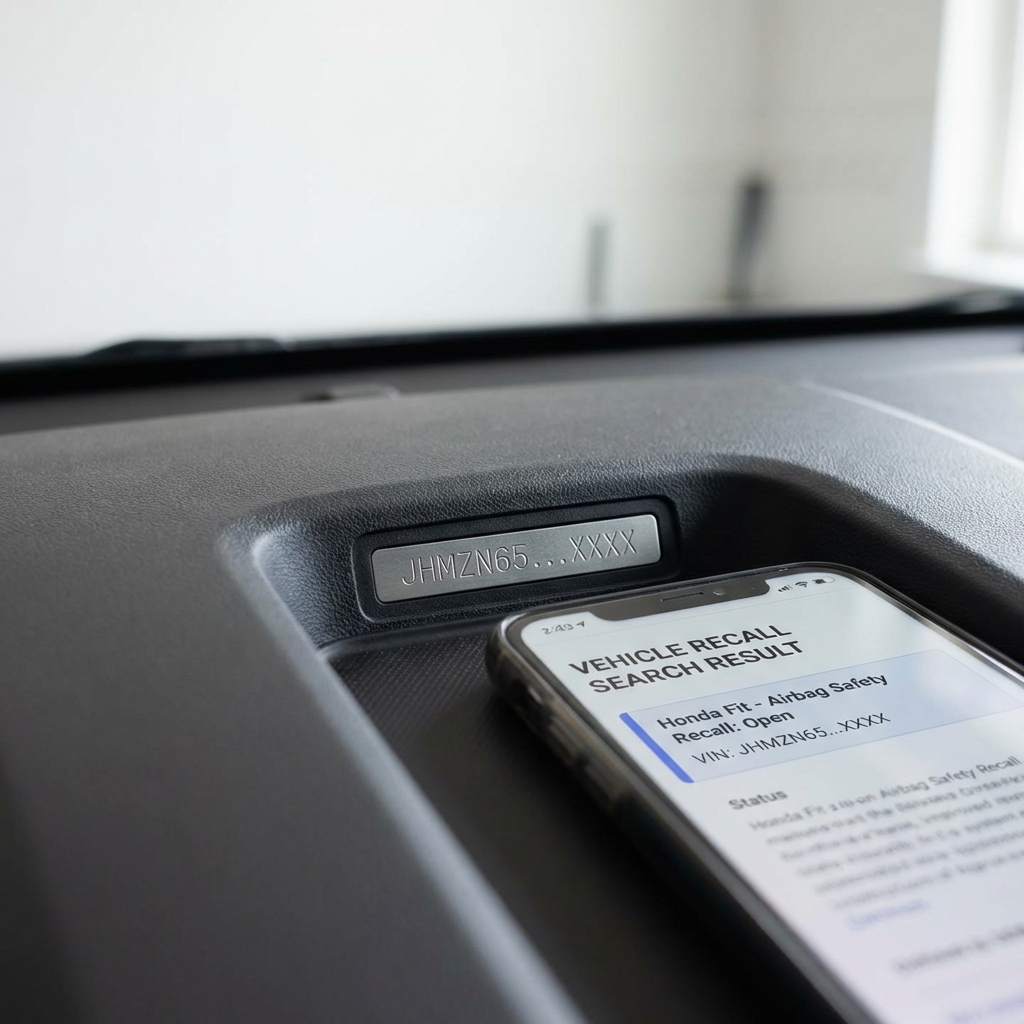
If you plan to contact a dealer, consider running a VIN-level recall check and getting a vehicle history report first to confirm recalls, title status, and service entries before making a visit.
What this means for buyers is simple: pause on listings from the mid-2010s until you complete recall and history checks, and prioritize listings that include clear service records and a VIN you can verify. The rest of this article explains how to run those checks and how to weigh repair-risk against price.
A recall check shows required manufacturer actions and whether repairs were recorded, but it does not measure ongoing reliability or the likelihood of non-safety failures such as transmission wear. Use recall checks together with owner-complaint patterns and a vehicle history report to build context before you inspect a car.
Common problems by model-year groups
Early-generation Fits
Early-generation Fits generally show fewer owner complaints in published reliability summaries, and many buyers find them straightforward from a maintenance standpoint when they have consistent service records Consumer Reports Honda Fit reliability page.
That said, early models still require the usual used-car checks: verify title status, confirm service history, and look for signs of heavy wear or after-market modifications.
Treat mid-2010s Honda Fit model years with extra caution due to higher owner-reported transmission and engine complaints; always run VIN-level recall checks and vehicle history reports before proceeding.
Mid-2010s models
Across owner-complaint aggregators, mid-2010s Fit models have a higher density of reports for transmission, particularly CVT-related issues, and some engine or engine-electrical complaints; these patterns are visible in aggregated sources and merit closer scrutiny when you see those model years in listings CarComplaints Honda Fit page.
Because complaints cluster, a single listing from those years should prompt you to check service entries for transmission work, recent fluid changes, and any documented repairs before you proceed.
Post-refresh and late models
Later model years after mid-cycle refreshes tend to show better reliability in the broad summaries used by consumer publications, suggesting fewer reported problems when the model received updates or improved components Edmunds Honda Fit review and reliability.
Still, late models can have isolated issues and should be evaluated with the same VIN-level recall and vehicle history checks as older cars.
Why mid-2010s Fits have more transmission complaints
What owner-complaint data shows
RepairPal and CarComplaints both show a concentration of transmission and engine complaints for several mid-2010s Fit model years, which is why those years appear more often in owner-reported problem lists RepairPal Honda Fit problems.
Mechanical and usage factors to consider
CVT systems can present higher repair-cost risk if a failure occurs, and long-term fleet studies after 2020 remain limited, so weigh reported failures and service history carefully when a listing indicates high mileage or scant maintenance documentation.
On a test drive, pay close attention to shift feel, hesitations, and unusual vibrations that can suggest transmission wear rather than a simple tune-up item.
Also examine dealer transparency: full VIN disclosure, clear service notes, recent maintenance receipts, and dealer reviews all reduce uncertainty when present.
What to expect from vehicle history reports: a report can confirm title status, ownership history, reported accidents, and some service entries, but it may not capture every repair or private-service item. Use the report as one part of your decision process and combine it with a physical inspection or independent mechanic review before purchase Kelley Blue Book Honda Fit guidance.
Cost impact: expected repair ranges and budgeting
Repair-cost examples from aggregators
Repair-cost aggregators indicate that major transmission repairs or replacements for affected Fits can run into multiple thousands of dollars, so include potential transmission exposure in your purchasing calculation rather than assuming small repair bills RepairPal Honda Fit problems.
How to factor repair risk into price expectations
A practical approach is to estimate a conservative repair reserve for high-risk listings and subtract that from your maximum offer. Consider local labor rates and whether recent service entries reduce the likelihood of immediate major work when choosing the size of the reserve.
Document your assumptions about repair likelihood so you can explain adjustments clearly when negotiating with a dealer.
A practical inspection checklist before you contact a dealer
What to check in photos and descriptions
In photos and the description, check for consistent panel gaps and paint condition, clear odometer photos, visible service stamps, and recent receipts. Note vague statements like recent work without receipts, which should prompt a request for documentation before you visit Kelley Blue Book Honda Fit guidance.
What to verify on a test drive
During a test drive, evaluate shift smoothness, engine response, and listen for tapping or knocking noises. Check that warning lights remain off and that the transmission shifts without hesitation across the full speed range. Ask for cold-start behavior if possible to surface issues that appear when the car first runs.
Record pass/fail items during a pre-visit inspection
Use yes or no ticks
After your test drive, request any recent maintenance receipts and ask whether the dealer or seller has records of transmission work, fluid changes, or clutch-related items. That documentation materially lowers uncertainty when present.
Comparing best and worst Fit years: a quick reference
Years often recommended for buyers
Reliability summaries used by Consumer Reports and Edmunds suggest that early-generation Fits and some later post-refresh models tend to have fewer reported problems, so these years often represent lower risk when paired with solid history documentation Consumer Reports Honda Fit reliability page.
Years that merit extra caution
Mid-2010s model years merit extra caution because owner-complaint databases show clustering of transmission and engine issues in those years; check service history carefully and be prepared to budget for higher repair exposure if records are incomplete CarComplaints Honda Fit page.
Remember that individual vehicle condition varies, so treat model-year tendencies as signals to look harder rather than as absolute judgments about any single listing.
Typical non-safety maintenance items to expect
Minor electrical and accessory faults
Complaint databases list minor electrical faults and accessory issues as common across many Fit years; these items usually represent routine maintenance rather than safety defects and can often be addressed at modest cost depending on part and labor rates CarComplaints Honda Fit page.
Suspension wear and routine items
Suspension wear, brakes, and wear-item maintenance are normal for used Fits and should be budgeted for according to mileage and prior care. Ask sellers for recent service records to confirm routine upkeep before you finalize a decision.
Red flags in vehicle history reports and dealer signals
Title issues and accident markers
Key red flags to watch for in a vehicle history report include salvage or branded titles, inconsistent ownership records, and large gaps in service-any of these should prompt cautious follow-up and possibly an independent inspection Kelley Blue Book Honda Fit guidance.
Dealer transparency and review signals
Look for dealer profiles that provide VINs, transparent service notes, and clear review histories. If a dealer hides VINs or provides vague responses about a car's condition, consider that a signal to request more documentation or to move on.
Decision framework: should you avoid a particular Fit year?
Risk scoring factors
Score a listing on four factors: recall exposure, owner-complaint density for the model year, repair-cost exposure, and vehicle history signals. High scores in two or more areas should reduce your willingness to pay without strong service records or recent repairs NHTSA recall search results for Honda Fit.
A simple decision checklist
If recall checks show open campaigns, if owner-complaint density is high for the model year, or if the history report shows title or accident issues, prefer to walk away or insist on a detailed inspection. If these items are clear, negotiate with a documented conservative repair reserve or request proof of recent relevant repairs.
How to factor pricing insights into your offer
Using market pricing context
Compare the listing price to local prices for equivalent trim, mileage, and condition, and use pricing insights or price-analysis labels when available to spot outliers. Underpriced listings may indicate missing information, and overpriced listings may not allow room for repair risk.
Adjusting for repair risk
Reduce your offer by an amount roughly equal to your conservative repair reserve for high-risk items, then document the assumptions behind that reserve so you can present a clear rationale during negotiation. Remember that this is an estimate and that exact costs will vary by region and repair severity.
Common buyer mistakes and how to avoid them
Skipping VIN or history checks
A frequent mistake is not running a VIN-level recall search or a vehicle history report. Skipping these checks leaves recall exposure and title issues undiscovered and reduces your negotiating leverage NHTSA recall search results for Honda Fit.
Over-relying on seller statements
Do not accept seller statements alone. Request service records, receipts, and an independent inspection when the model year or complaint pattern indicates elevated repair risk. Independent inspections are especially important when repair-cost exposure is significant.
Final recommendations and next steps
Quick checklist before contacting a dealer
Before you call or visit a dealer: run a VIN recall check, purchase a vehicle history report, compare local pricing context, and request recent service records. These steps reduce uncertainty and help you prioritize inspections.
If you still like a listing
If the listing still looks attractive after those checks, schedule an independent inspection and confirm any claimed repairs with documentation. Use conservative repair estimates when deciding how much to offer and prefer listings with clear service history.
Owner-complaint aggregators show a concentration of transmission and engine complaints in several mid-2010s Honda Fit model years, so those years generally merit closer inspection and thorough history checks.
Run a VIN-level recall check and obtain a vehicle history report to confirm title status, ownership history, and reported service entries before scheduling a visit or test drive.
Yes, use repair-cost aggregators to estimate conservative repair reserves for likely major failures and fold that estimate into your offer, while remembering actual costs vary by region and severity.
Follow the simple sequence: run a VIN recall check, buy a vehicle history report, compare local pricing, and arrange an independent inspection if needed. These steps tend to reduce surprise repairs and improve negotiation clarity when you find a used Honda Fit you like.


 Blog
Blog