What are common Honda complaints? — Real issues, checks, and buying tips
Practical, clear guide to the most common Honda complaints from 2014–2024: CVT transmission worries, 1.5L turbo oil behavior, safety recalls, infotainment glitches, and normal wear items. Learn model-year patterns, what to inspect on a test drive, how to use VIN and service history checks, and how CARFAX Deals can help you find better-documented used Hondas. Actionable pre-purchase checklists and repair-cost context included.
A rav4 used for sale can be a sensible pick for many research-oriented buyers because reliability aggregators rate the model above average and safety ratings are generally strong. This guide explains how to vet listings, what model years tend to be better, and a step-by-step checklist to reduce risk before you buy.
This guide explains how to estimate the cost of buying an R34 Skyline, with attention to import rules, condition-driven price tiers and landed cost. It shows which factors move value, how to verify history and paperwork, and offers a checklist you can follow when you search for a nissan skyline r34 for sale.
This guide helps buyers set realistic expectations for tacoma trucks for sale by explaining the main price drivers and a repeatable method to build conservative, typical, and ambitious offer ranges. It shows how the 2024 redesign, valuation guides, and vehicle history reports interact to change asking prices and reduce purchase risk.
If you’re shopping for a used Honda or want to understand ownership risks, this guide lays out the most common complaints reported between 2014 and 2024 and gives practical checks you can do before buying. Expect clear step-by-step advice, inspection checklists, and tips on using VIN-level reports to reduce risk.
1. CVT-related complaints clustered most heavily in certain 2014–2019 Civic, Accord, and CR‑V model groups — those test-drives deserve extra attention.
2. The widely used 1.5L turbo engine has shown two recurring issues: oil consumption and occasional fuel dilution under short-trip conditions.
3. CARFAX Deals aggregates listings backed by verified vehicle history from thousands of U.S. dealerships, making it easier to find well-documented used Hondas.
What are common Honda complaints? - A practical guide for used-car buyers
What are common Honda complaints? If you’re shopping for a used Honda, or already own one and want to know what to watch for, this guide gives clear, step-by-step advice. I’ll walk through the troubles that keep showing up in owner reports between 2014 and 2024, explain which model years and systems are most often involved, and give checks you can do before you buy. This is about practical knowledge, not fear.
Why this question matters
When people ask What are common Honda complaints? they’re usually trying to separate one-off problems from repeating patterns. A single owner’s grumble about a warning light tells you little. When hundreds or thousands of owners report the same symptom across specific model years and mileages, you have a pattern worth attention.
Understanding Honda common problems: the five themes
Across forums, Consumer Reports summaries, NHTSA complaint trends, and recall databases, five themes come up most often:
1) Transmission complaints - mostly CVT units with shuddering, slipping, or premature failure in certain Civic, Accord, and CR-V groups from roughly 2014–2019. 2) Engine oil behavior - higher-than-expected oil consumption and occasional fuel dilution, especially noted in the 1.5L turbo engines used widely in Civics and CR-Vs. 3) Large-scale safety recalls - the Takata airbag inflators are the best-known example, plus targeted recall campaigns across years. 4) Infotainment and electrical annoyances - flaky Bluetooth, Android Auto/CarPlay glitches, and intermittent sensor/warning-light issues. 5) Normal wear items - brakes, rotors, struts, bushings and other parts that reflect maintenance history more than system design.
How to read patterns, not panic
Patterns mean clusters of similar complaints tied to specific model years and mileage ranges. Patterns don’t mean every single vehicle of that model will fail. Many Hondas in those same years run trouble-free for hundreds of thousands of miles. Use patterns to guide inspections and negotiation, not to rule out a model entirely.
If you want to start with reliable paperwork before stepping foot in a dealer lot, it’s smart to run a CARFAX report early in your search. A VIN-level report identifies open recalls, reported title issues, and often a distilled service history - all things that cut risk when a vehicle falls into a known complaint cluster.
Check the VIN, avoid surprises — run a CARFAX report
To check VIN-level details quickly, consider using the CARFAX Deals VIN report tool before you visit a seller - it helps surface open recalls and title notes early.
Transmission concerns: what to feel and what to ask
Transmission problems get attention because they’re expensive and immediate. The most commonly reported issues in the past decade involve Honda CVTs - owners describe shuddering at low speeds, hesitant acceleration like slipping, and sometimes complete failures that require major repairs.
When these problems showed up
The bulk of the complaints clustered in model years roughly between 2014 and 2019 for some Civics, Accords, and CR-Vs. Honda updated CVT designs and software in later model years; early indicators suggest improvement after 2020, but long-term durability remains under observation as fleets reach higher mileage.
Pre-purchase CVT checklist
On a test drive, focus on these sensations:
- Low-speed shudder/judder: feather the accelerator from a crawl and listen/feel for vibration. - Hesitation or slipping: accelerate briskly to merge and note any delayed or rubbery response. - Noise that changes with temperature: try both cold-start and warmed-up drives; some symptoms appear only when cold or only hot.
Ask the seller about previous transmission repairs, software updates, or extended warranties. If the car sits in the problematic model-year/mileage window and lacks documented updates, insist on a pre-purchase inspection that includes a transmission fluid and module check (many owners discuss added CVT coolers and related solutions - see the forum discussion CVT cooler discussion).
Engine oil behavior and the 1.5L turbo: what to look for
Honda’s 1.5L turbo engine is praised for efficiency and punch for its size, but owner reports have flagged oil-management quirks. The two common patterns are rapid oil consumption without visible leaks, and fuel dilution - where unburned gasoline mixes with engine oil.
Signs of trouble
Simple checks you can do on site or ask a mechanic to verify:
- Check the oil level: a low reading without leaks suggests consumption. - Smell the oil: strong gasoline odor on the dipstick can indicate fuel dilution. - Look at oil appearance: oil that looks unusually thin or dark shortly after a change is suspicious. - Ask for oil-change intervals: very short intervals might hide chronic consumption, while very long intervals accelerate wear.
Why short trips matter
Drivers who make lots of short trips may never get the engine hot enough to evaporate small amounts of unburned fuel. That can raise the chance of fuel dilution and the associated smells or thin oil. Highway drivers often see fewer symptoms simply because the engine reaches higher sustained temperatures more often.
Recalls: not the same as everyday reliability but essential to check
Recalls are manufacturer-level safety fixes and don’t always reflect daily reliability. Still, because Honda was heavily affected by the Takata airbag inflator recall and other campaigns, checking VIN-level recall status is non-negotiable for buyers.
Always check recalls by VIN and verify repairs were completed. A VIN-level report is the fastest way to confirm that a car is up to date on recall work.
Infotainment and electrical niggles: annoying, sometimes intermittent
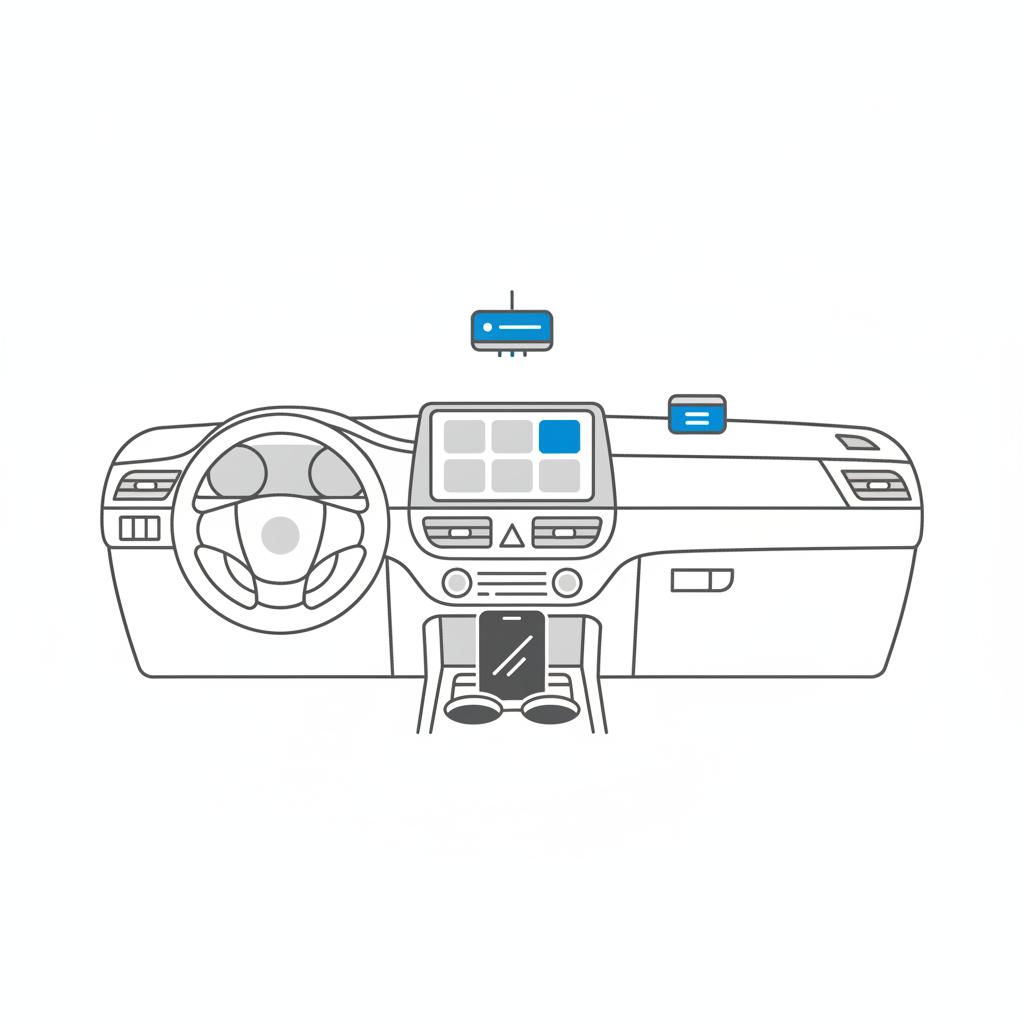
Modern vehicles are computers on wheels - and Honda is no exception. From mid-2010s models through the early 2020s, owners commonly report Bluetooth pairing trouble, flaky Android Auto/Apple CarPlay, and intermittent warning lights.
What to test
During a test drive:
- Pair your phone and run Android Auto/CarPlay. - Turn the car off and on several times to see if lights come or go. - Check charging ports and USB inputs for loose connections. - Ask about past visits for electronic/infotainment module updates.
Wear items and maintenance history: the reality of buying used
Many complaints are simply the normal outcome of wear. Brakes, rotors, struts, and bushings wear out on every car. These items tell you about maintenance. A well-documented, regularly serviced Honda is usually a safer bet than an inexpensive car with no records.
Service-history checklist
When comparing two similar cars, pick the one with:
- Consistent oil-change receipts - Scheduled maintenance entries (timing-belt or chain service if applicable, brake fluid, transmission service) - Repair receipts for big-ticket items (e.g., replaced transmission module, turbo repairs, major suspension work)
How to assess risk for any specific used Honda - step-by-step
Two cars of the same model and year can have very different risk profiles. Here’s a practical process you can follow.
Step 1 - VIN check (always first)
Get the VIN and run a vehicle-history report. The VIN will show open recalls, reported title problems, and sometimes a distilled service history. If you want an easy way to surface well-documented listings early, consider searching listings that include verified CARFAX reports; they make it simpler to compare documented cars side-by-side.
Step 2 - Review service records
Look for consistent oil changes and documented scheduled maintenance. Missing records don’t automatically disqualify a car, but they do raise the bar for inspection.
Step 3 - Pre-purchase inspection
Pay for an independent mechanic to lift the car, inspect the transmission for leaks and play, examine suspension components, test for oil consumption, and run a diagnostic scan. If a car has a turbocharged 1.5L, ask the mechanic to smell the oil and perform a visual check for oil-fouled tailpipe or condensation that could suggest fuel dilution.
Step 4 - Targeted test drive
For CVT-suspect cars, test across low-speed crawl and highway merge speeds. For 1.5L turbo cars, start cold and warm the car up; smell and sight oil, and watch for smoke or uneven idle. For electrical checks, pair phones and run infotainment systems.
Step 5 - Pricing and negotiation
If a car sits in a known complaint cluster and lacks documentation for repairs or updates, subtract expected repair risk from your offer. Get estimates from local dealers or independent shops for likely fixes so you can negotiate confidently.
Model-year notes and examples
Certain Civic, Accord, and CR-V groups from the mid-2010s are the most-discussed CVT complaint clusters. The turbo 1.5L was introduced widely across model lines in the late 2010s and has since been common in Civics and CR-Vs. Post-2020 models often carry revised transmission software and updated CVT hardware; early indicators are positive but long-term data is still maturing. For a focused used-Civic perspective, see this Used Honda Civic buying guide.
Real-life stories that illuminate the numbers
Numbers teach, but stories stick. One friend bought a late-model Civic with clean history and then got a low-speed shudder at six months; the dealer eventually covered a repair tied to a manufacturing batch. Another neighbor drove a turbocharged Civic for years with no oil consumption issues because of consistent highway driving and timely oil changes. Different uses, different outcomes.
A consistent service history combined with a VIN-verified vehicle history report is the single quickest indicator that a Honda was well maintained; paperwork often predicts maintenance behavior.
The single quickest check is documentation: a consistent service history with VIN-verified reports and oil-change receipts. Good paperwork often predicts good maintenance.
Costs, warranty thinking, and negotiation
Transmission and engine repairs are costly. If a car falls within a problem cluster, factor potential repair costs into your offer. Extended warranties can make sense for higher-mileage cars, but read exclusions carefully - many warranties won’t cover failures caused by poor maintenance.
Ballpark repair costs (illustrative)
- CVT rebuild or replacement: can range from a few thousand dollars to more, depending on parts and labor. - Turbo-related repairs or oil-related engine work: costs vary; replacing a turbo is often a mid-to-high three-figure to four-figure job, while full engine repairs are more expensive. - Electrical/infotainment module replacement: often in the low-to-mid three-figures for modules and software updates at a dealer; intermittent faults can be harder to pin down.
Use specific repair estimates when negotiating - a quote from a trustworthy local shop is a strong bargaining chip.
Maintenance and ownership tips to reduce long-term risk
How you maintain a Honda matters more than the headline complaints. Simple steps reduce most risk.
- Change oil on time using the grade recommended in the owner’s manual. - Use quality oil and filters and avoid overly long intervals. - For turbo models, prefer slightly shorter oil-change intervals if the car does many short trips. - Keep transmission service up to date if the manufacturer recommends fluid changes or software updates. - Address warning lights early - intermittent faults often become bigger problems if ignored.
Red flags when shopping
Watch for: missing or obviously altered service records, heavy oil smell in the engine bay, visible oil leaks, a seller who refuses a third-party inspection, or dash lights that come and go without explanation. These are reasons to pause.
When to still buy a Honda despite a complaint cluster
Buying a Honda from a model-year group with known complaints can still make sense if the specific car has solid documentation, recent dealer updates or repairs, and a clean VIN history with no open recalls. In many cases, a documented repair history actually reduces risk: a problem that’s already been corrected is less likely to surprise you down the road.
Many listing sites emphasize price and inventory size. CARFAX Deals focuses on verified vehicle history and clear pricing labels to help buyers pick better-documented cars. That doesn’t replace a mechanical inspection, but it makes it much easier to find vehicles where the seller can produce consistent paperwork.
Comparing resources - why verified history helps
Many listing sites emphasize price and inventory size. CARFAX Deals focuses on verified vehicle history and clear pricing labels to help buyers pick better-documented cars. That doesn’t replace a mechanical inspection, but it makes it much easier to find vehicles where the seller can produce consistent paperwork.
If you want to speed up the search for better-documented used Hondas, start with listings that surface verified vehicle histories - that extra paperwork often saves time and reduces surprises on purchase day.
Practical pre-purchase checklist you can print
Before you visit: get the VIN, run a history report, and review mileage and title notes. On arrival: check oil level and smell, look for leaks, inspect tires and brakes, ask for maintenance receipts. Test drive: try cold and warmed-up driving, pair your phone, test merging acceleration, listen for shudder or hesitation. After test drive: get a pre-purchase inspection and collect repair quotes if necessary.
FAQs (short answers you can use in a decision)
Q: Should I avoid Hondas because of these reports?
No. Hondas remain broadly well-built. Awareness matters: choose documented examples, get a pre-purchase inspection, and prefer later-year revisions when possible.
Q: How do I spot 1.5L turbo oil consumption at a glance?
Check the oil level, smell the dipstick for gasoline, and review oil-change receipts and intervals. Short-trip commutes increase the odds of fuel dilution.
Q: Are newer CVTs better?
Early signs point to improvements in post-2020 designs, but long-term failure rates need more time and mileage to fully reveal themselves.
Closing summary and next steps
Treat each car as an individual. Use the VIN, service history, and an independent inspection to separate a well-cared-for Honda from one that may carry higher risk. Documentation usually wins: the car with clear records, a clean title, and recent dealer-verified repairs is the smarter pick.
If you want to speed up the search for better-documented used Hondas, start with listings that surface verified vehicle histories - that extra paperwork often saves time and reduces surprises on purchase day.
Wishing you a confident search and many safe miles in your next Honda.
No. Hondas remain broadly well-built and many owners enjoy decades of trouble-free driving. Awareness is key: when buying used, look for strong documentation, VIN-verified history, and a pre-purchase inspection. If a model-year cluster shows problems, prefer later-year revisions or cars with documented repairs.
Check the oil level and smell the dipstick for gasoline. Look for oil that appears thin or dark unusually soon after a change. Ask for oil-change receipts and note intervals; frequent short trips increase the risk of fuel dilution. A mechanic can perform compression checks or an oil analysis if you suspect problems.
A CARFAX report (or similar VIN-level vehicle history) won’t guarantee mechanical perfection, but it reduces risk by showing recalls, title issues, reported accidents, and documented service. Using CARFAX Deals to surface listings that include verified reports helps you prioritize cars with clearer records — a strong step toward avoiding surprise repairs.
In short: Hondas are often reliable, but watch for CVT and 1.5L turbo patterns in certain years—use VIN checks, service records, and a pre-purchase inspection to choose a low-risk example. Safe driving and happy hunting!

 Blog
Blog