A clear, practical guide to judging used-car odometer numbers: what counts as “good mileage,” how to compare miles to market averages, why service history and usage type matter more than a single number, and step-by-step checks to turn an odometer reading into a trustworthy buying signal. Learn how vehicle class, highway vs. city miles, hybrids and EVs change the interpretation of mileage, when a low odometer is actually a red flag, and how documented maintenance can outweigh low miles. Includes a buyer-friendly checklist, real-world examples, and a calm way to use CARFAX Deals to find listings with verified history.
A rav4 used for sale can be a sensible pick for many research-oriented buyers because reliability aggregators rate the model above average and safety ratings are generally strong. This guide explains how to vet listings, what model years tend to be better, and a step-by-step checklist to reduce risk before you buy.
This guide explains how to estimate the cost of buying an R34 Skyline, with attention to import rules, condition-driven price tiers and landed cost. It shows which factors move value, how to verify history and paperwork, and offers a checklist you can follow when you search for a nissan skyline r34 for sale.
This guide helps buyers set realistic expectations for tacoma trucks for sale by explaining the main price drivers and a repeatable method to build conservative, typical, and ambitious offer ranges. It shows how the 2024 redesign, valuation guides, and vehicle history reports interact to change asking prices and reduce purchase risk.
This guide explains how to interpret used-car mileage: what counts as typical mileage, why context matters, which vehicle classes shift expectations, and a step-by-step checklist that turns an odometer reading into useful buying evidence.
1. Drivers average about 12,000–12,500 miles per year in the U.S.; industry guides often use 12,000–15,000 miles as the typical range.
2. A full service history often matters more than an unusually low odometer — documented maintenance can make a higher-mileage car the better buy.
3. CARFAX Deals listings pair VIN-based history reports with price labels (e.g., Great Deal), helping buyers quickly spot well-documented cars and avoid red flags.
Quick note: This guide helps you read the odometer as one signal among many so you can buy a used car with confidence.
Why the question matters: what mileage tells you - and what it doesn’t
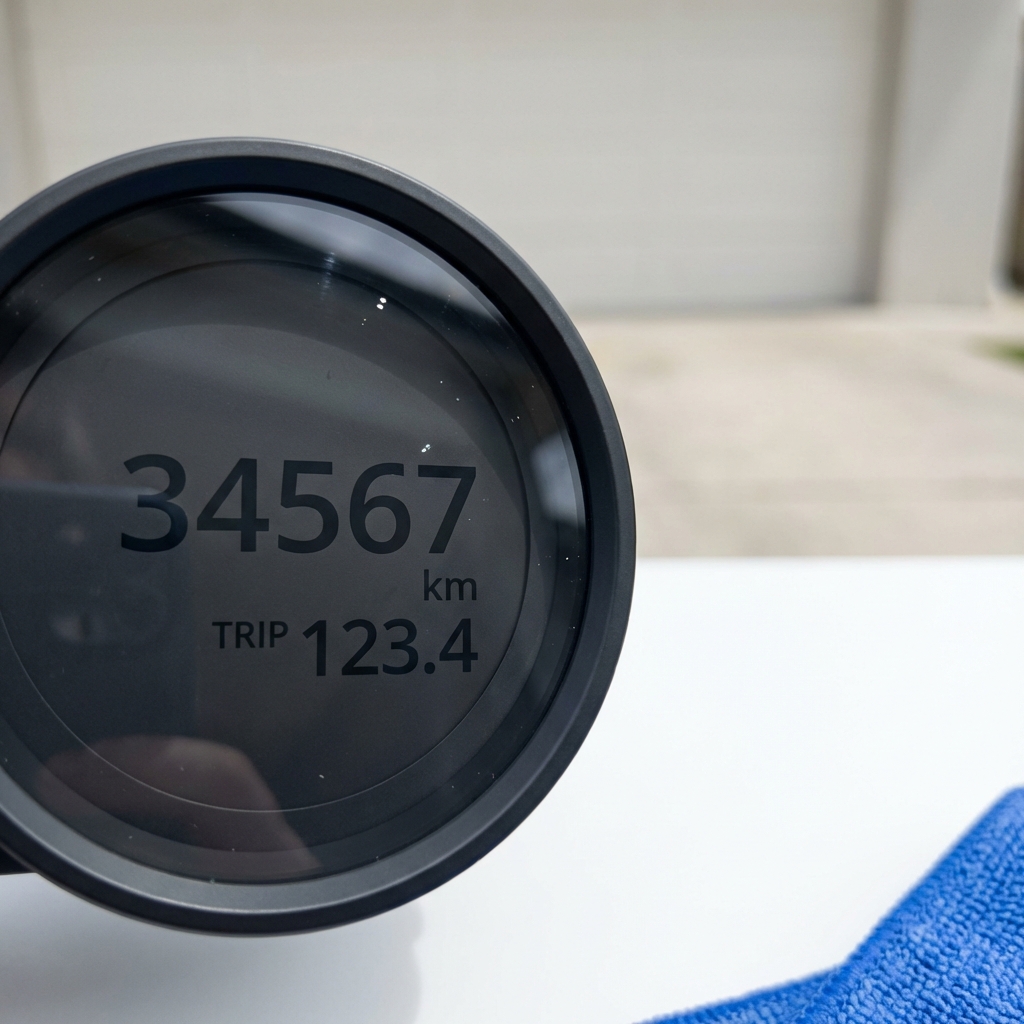
When someone asks, “What is a good mileage for a used car?” they’re usually trying to translate a single, neat number into an idea of remaining life and future cost. The odometer is useful, but it’s only one chapter in the car’s story. A figure that looks great on paper can hide years of sitting in a garage; a high number can reflect mostly highway commuting and careful maintenance. The trick is reading the mileage in context.
Typical mileage benchmarks
In the United States, the average driver logs roughly 12,000–12,500 miles per year. Many industry guides and pricing tools widen that to about 12,000–15,000 miles per year as "typical." Convert that to kilometres and you’re looking at about 19,300–24,140 km per year. Other sources cite averages near 13,700 miles per year. Those ranges are the yardstick most buyers and dealers use when deciding whether a car’s odometer is unusually low or unusually high.
So what is a good mileage for a used car?
Short answer: there isn’t one number that fits every buyer and every vehicle. Instead, ask: how does this car’s odometer compare with the model-year average, what kind of miles were most common (highway vs. city), and is there solid service documentation to back it up? Where possible, look for a vehicle that has miles that are at or a bit below the market average for its age and a transparent service history.
Run a CARFAX report for listings that attach verified vehicle history and service records — it’s a fast way to spot cars with transparent histories and avoid ones with red flags.
Think of mileage as a shorthand note on a long page. Low numbers can indicate light use and careful ownership, but they can also point to long-term storage issues. High numbers might represent heavy work use and more wear, or steady highway miles and thorough maintenance. So the right interpretation depends on vehicle type, service history, and how the miles were accumulated.
There’s no fixed cutoff — compare the car’s miles to the 12,000–15,000 miles-per-year typical band, check service records and usage type, and prioritise documented maintenance; a well-maintained higher-mileage car is often less risky than a low-mileage car without records.
How vehicle class changes the meaning of miles
Not all cars are measured by the same ruler. Pickup trucks, commercial vans and work vehicles often log far more miles each year than a commuter sedan. For example, a two-year-old pickup with 40,000 miles may be completely normal, while a two-year-old commuter car with the same figure could suggest unusually heavy use.
Hybrids and EVs add another layer: battery health, charge cycles and hybrid system history often matter more than raw odometer numbers. For EVs especially, manufacturers and diagnostics can report remaining battery capacity - a much more predictive measure than the odometer alone.
Practical rule of thumb by vehicle type
- Passenger sedans and hatchbacks: expect ~12,000–15,000 miles per year.
- Compact city cars: often below-average miles if used for short trips only.
- Pickup trucks and commercial vans: 15,000–25,000+ miles per year is common.
- Hybrids: miles matter, but battery history can outweigh small differences in odometer readings.
- EVs: prioritise battery health reports, charge-cycle history and remaining capacity.
How mileage affects price
Mileage influences value, but how much depends on model desirability, local demand, age and remaining warranty. Cars significantly below the 12,000–15,000 miles-per-year band often command a premium, and those well above it generally face greater depreciation. For desirable late-model vehicles, a 10,000-mile advantage might be worth several thousand dollars; on a common economy car, the dollar gap per 10,000 miles tends to be far smaller.
The best practical approach: compare the car you’re considering with similar local listings and adjust for how its odometer compares to the marketplace average for that age.
When maintenance trumps miles
One of the most important lessons is that maintenance often beats raw miles as a predictor of near-future reliability. A car with documented scheduled maintenance, recent timing-belt or chain service (when applicable), and consistent oil changes is usually a safer bet than a low-mileage car with few or no records. Usage type matters too: a car primarily driven on the highway tends to show different wear than one used in heavy urban stop-and-go traffic.
Visual and tactile clues that the odometer might be misleading
There are practical things you can see and feel. Examples of inconsistencies that deserve questions include:
New tires with heavily worn pedals or steering wheel - inconsistent wear patterns.
Pristine interior but deep scuffs on the door sills or heavily worn driver’s seat support - mismatch with claimed low miles.
Gaps in service records or a poorly maintained service book despite a low odometer reading.
Title brands like salvage, rebuilt, or lemon buyback - these are red flags to investigate closely.
Concrete steps to make mileage useful
Turn that raw number into a reliable decision point by following a repeatable routine:
1. Start with a VIN check and vehicle history report
A thorough VIN-based history report will flag title brands, accident history, service entries and odometer inconsistencies. You can also use a VIN decoder to confirm basics. These reports don’t replace a physical inspection but they narrow down the risks and can show whether the car’s recorded miles are consistent with its known history.
2. Ask for full service history
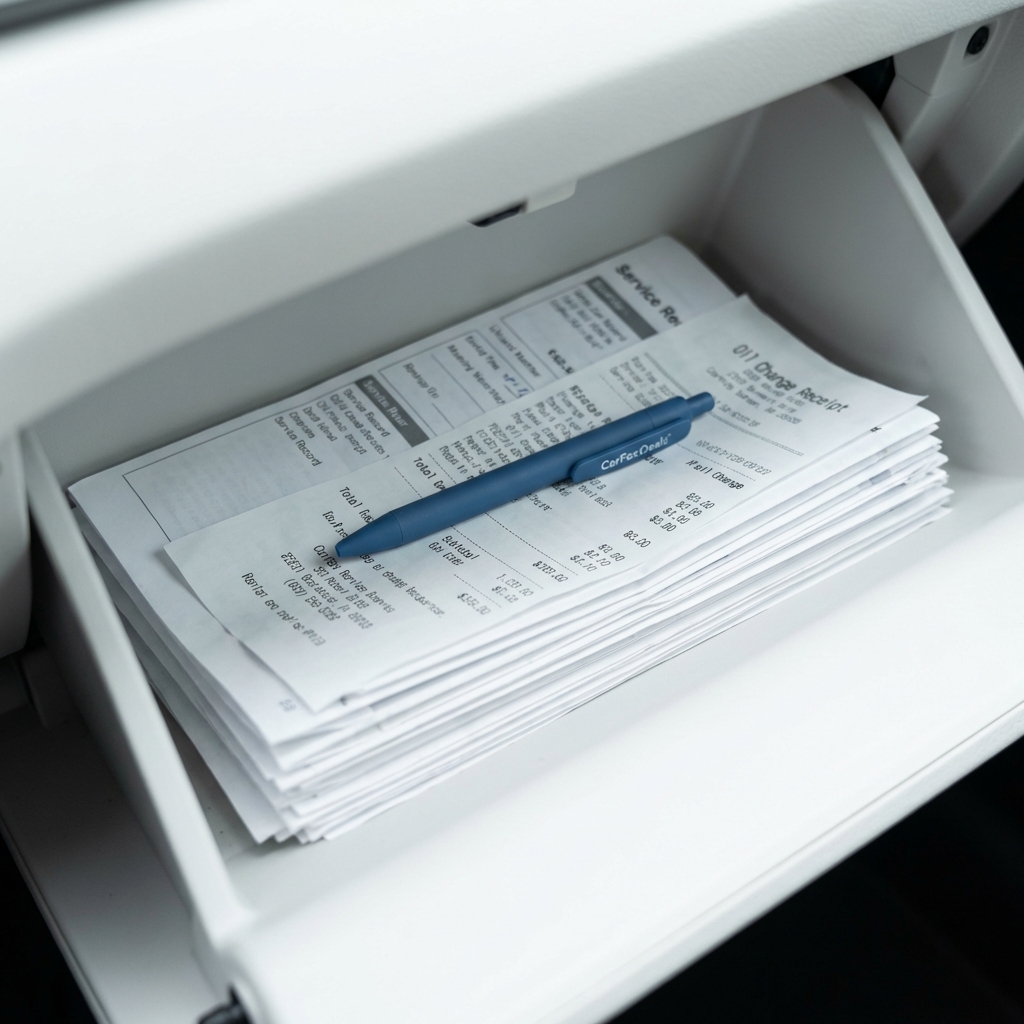
A stack of oil-change receipts, service invoices and records of major items like timing-belt replacements or transmission work is more reassuring than a low odometer alone. If these records are missing, that gap should affect your valuation and negotiating stance.
3. Do a careful test drive
Vary speed and conditions to check for noises, transmission behavior and steering feel. A short highway run, city stop-and-go stretches and acceleration checks will reveal a lot more than a 200-yard roll down the block.
4. Use diagnostics and compression checks
If possible, request a compression test and an OBD-II diagnostic scan. The scan can show pending or stored engine and transmission codes; compression measurements tell you how the engine’s cylinders are holding up - especially valuable for older, higher-mileage cars.
5. Get an independent inspection
An experienced mechanic or inspection service can spot hidden problems such as frame damage, fluid condition, flood signs or poor repairs. Independent inspections are often the best value in the buying process - they’re relatively inexpensive and they can save you from an expensive mistake.
How to value mileage using simple heuristics
For buyers who like rules of thumb, comparison is the most defensible approach. Look at what similar-year, similar-model cars with differing odometer readings are listed and sold for locally, and make proportional adjustments. Example: if five-year examples of a model typically have about 60,000 miles and a local listing shows 30,000 miles, that lower-mileage car is likely to command a premium.
Remember: how many dollars that premium equals varies by model. Premium brands or highly desirable late-model cars tend to show a bigger dollar difference for the same mileage gap than everyday economy cars.
When low mileage can be a disadvantage
Very low miles on an older car can indicate long, intermittent storage. Long storage without proper prep can dry out seals and gaskets, gum up fuel systems, and lead to battery degradation. Cars stored through harsh seasons may hide corrosion issues in areas that are easy to miss.
Specific guidance for hybrids and EVs
Hybrids and EVs require a different checklist. For hybrids, the interplay between the gasoline engine, electric motor and battery pack creates a more complex service profile. For EVs, battery health, charge cycles and remaining capacity are central. Many EV manufacturers or dealers can provide a battery health report or diagnostics that indicate remaining range and capacity - information that is often far more useful than the odometer alone.
If you’re considering an EV or hybrid, ask for detailed battery reports and seek a professional assessment of the pack’s condition if possible.
Two realistic examples that show the mileage paradox
Example 1: Two identical mid-size sedans. One has 45,000 miles and sparse service records; the other has 115,000 miles with a full dealer service history and recent timing-belt replacement. The lower-mileage car looks attractive at first, but the well-documented higher-mileage example often becomes the smarter buy because the maintenance history and mostly highway use reduce unknown risk.
Example 2: A two-year-old pickup with 40,000 miles vs. a two-year-old commuter hatchback with the same odometer. The pickup is within class norms; the commuter car may be overused for its type, which should influence your negotiation and inspection priorities.
Common red flags tied to mileage
Watch for these flags that raise the risk profile:
Signs of odometer tampering or mismatch between wear and claimed miles.
Unclear or missing title history, or salvage branding.
A surprisingly low number of service records for an otherwise older vehicle.
Mismatch between vehicle class and typical miles for its age.
A repeatable routine for mileage-aware buyers
Put mileage into a rhythm rather than treating it as a solitary fact. Here’s a quick routine you can follow every time:
Run a VIN-based history report.
Compare odometer to the market average for that model year.
Ask the seller for service records and receipts.
Take the car for a varied test drive.
Request diagnostic scans or compression tests as needed.
Order an independent inspection if you have lingering concerns or the miles are above typical for age.
Using marketplaces that attach history reports to listings can save time and reduce risk. Listings that display CARFAX reports and price analysis labels (e.g., Great Deal, Good Deal) help you prioritize vehicles with transparent service histories and avoid ones with obvious red flags. These tools don’t replace inspection, but they make your search more efficient and less risky.
Practical negotiation tips tied to mileage
When the odometer becomes a bargaining chip, use facts. If a car’s miles are several thousand below the model-year average and service records are clean, a modest premium is reasonable. If the car’s miles are low but service records are missing, use that gap to justify a lower offer or the cost of an inspection. For high-mileage vehicles with thorough maintenance, emphasize documented repairs and recent major items to justify your offer.
How much to adjust in dollars
There’s no fixed rule, but comparison works: look at local listings for similar cars and note the price difference tied to mileage gaps. On a mid-range model a 10,000-mile advantage might translate to a few hundred to a couple thousand dollars; on high-end models the spread can be larger. Use local comps, seasonality and the car’s condition to refine your estimate.
Final checks before you buy
Before you sign, confirm these items:
VIN check and vehicle history report are clean for title issues.
Service records cover regular maintenance and any major items (timing belt, transmission service).
Compression tests or OBD-II scans don’t reveal hidden problems.
An independent inspection has cleared the vehicle (or you’ve budgeted for possible repairs if it hasn’t).
Wrapping up: how to use mileage as a helpful signal
The odometer can be a strong signal when combined with service records, usage context and inspection results. If you keep one clear rule in mind it is this: compare to the market and prefer documented maintenance over a single low number. A well-documented, higher-mileage car with mostly highway use can be an excellent long-term buy; a low-mileage car with missing records may cost you in the long run.
Run a VIN check and view attached CARFAX reports before you buy
Ready to check a vehicle’s history? Find listings that attach verified CARFAX reports and run a history check today: Run a CARFAX report to see accident history, service entries and title status before you visit the seller.
Keep asking simple, direct questions of the seller: why the mileage is higher or lower than expected, how the car was used, and whether they can provide receipts. A clear timeline and visible care often indicate a seller who looked after the vehicle.
Copy this checklist into your notes app and use it every time you evaluate a listing:
Mileage is a starting point, not the whole book. Use a VIN check, compare to local market averages, insist on clear service records, and bring a mechanic’s eye when needed. With those steps, the odometer becomes a practical tool rather than a mystery number.
Happy and safe car hunting - and trust the paperwork as much as the odometer.
Typical annual mileage in the United States is roughly 12,000–12,500 miles per year; many industry tools use a broader typical range of about 12,000–15,000 miles per year. Use that band to compare a car’s odometer to what’s usual for its age and model.
Not always. Low mileage can mean careful ownership, but it can also indicate long-term storage, which brings its own problems such as dried seals, gummed fuel and battery degradation. Always check service records and get an inspection; sometimes a well-documented higher-mileage car is a smarter buy than a low-mileage vehicle with sparse records.
High mileage raises the likelihood of wear, but it isn’t an automatic deal breaker. A high-mileage car with full service history, recent major maintenance and mostly highway miles can be a reliable and economical purchase. Prioritise documentation and an independent inspection to evaluate the real condition.
In short: compare miles to market averages and prioritise documented maintenance — a high-mileage car with a full service history can be better than a low-mileage car with missing records. Safe hunting — and may your next car run smoothly!

 Blog
Blog