Thinking about a used Mazda? This guide explains which Mazda years and models tend to cause the most trouble, why certain clusters of problems exist (Takata airbags, early SKYACTIV oil consumption and transmission complaints, rust), and how to inspect, verify, and negotiate so you don’t get stuck with an expensive repair. Learn specific year ranges to watch, practical pre-purchase checks, and how a VIN-level report from CARFAX Deals can help you shop with more confidence.
A rav4 used for sale can be a sensible pick for many research-oriented buyers because reliability aggregators rate the model above average and safety ratings are generally strong. This guide explains how to vet listings, what model years tend to be better, and a step-by-step checklist to reduce risk before you buy.
This guide explains how to estimate the cost of buying an R34 Skyline, with attention to import rules, condition-driven price tiers and landed cost. It shows which factors move value, how to verify history and paperwork, and offers a checklist you can follow when you search for a nissan skyline r34 for sale.
This guide helps buyers set realistic expectations for tacoma trucks for sale by explaining the main price drivers and a repeatable method to build conservative, typical, and ambitious offer ranges. It shows how the 2024 redesign, valuation guides, and vehicle history reports interact to change asking prices and reduce purchase risk.
Buying a used Mazda is often smart — Mazdas are fun to drive and generally reliable — but the single best question you can ask is: <b>What year Mazda to stay away from?</b> This guide explains the specific year clusters that commonly carry extra risk (Takata airbag-affected years, early SKYACTIV years with oil and transmission reports, and rust-prone older cars), shows the exact checks to run before you buy, and explains how a VIN-level history report from CARFAX Deals can simplify your decisions.
1. Takata airbag inflators concentrated in 2008–2015 Mazdas — always check VIN recall status before buying.
2. Early SKYACTIV models (roughly 2012–2016) show frequent owner reports of oil consumption and transmission complaints, so prioritize service records and a long test drive.
3. CARFAX Deals aggregates VIN-verified histories and pricing context from thousands of dealerships to help buyers spot high-risk listings quickly.
What year Mazda to stay away from? If you’re shopping used, that question is exactly the sensible one to ask. Mazda is a brand that earns a lot of goodwill for driving enjoyment, fuel efficiency, and solid reliability. But like every automaker, Mazda has clusters of model years and technologies that deserve extra scrutiny. This article walks through the exact years and risk areas to watch, practical checks to run before you buy, and how to use VIN-level history to avoid surprises.
Why asking “What year Mazda to stay away from?” matters
Brand-level reliability scores are useful, but they can mask pockets of trouble. When people ask What year Mazda to stay away from?, they’re trying to avoid these pockets: concentrated recalls, early-adoption technology quirks, and climate-driven corrosion. The best way to answer the question is with specifics and a clear, repeatable inspection plan so you can judge any single car on its own merits.
Mazda overall ranks around or above industry average in many reliability surveys, but that doesn’t mean every year or every model is equally trouble-free. Two of the biggest themes for used Mazdas are: the Takata airbag inflator recall that affected many vehicles from the late 2000s through the mid-2010s, and the early SKYACTIV-era reports of higher oil consumption and some transmission issues. Add in geography-based rust risk for older cars, and you have a framework for where to look hard.
If you want a fast, consolidated look-up of a car’s history before you visit, consider running a VIN report. You can run a VIN report with CARFAX Deals to check recalls, service entries, title status, and pricing context—helpful information before you commit time and money to an inspection.
Key year clusters to examine closely
Rather than a single year to avoid, think in clusters. Here are the main windows where risk tends to concentrate:
2008–2015: High priority for Takata airbag inflator recall checks. Confirm remedy status on any Mazda in this range.
2012–2016: Early SKYACTIV era. Several Mazda3, CX-5, and Mazda6 configurations around this period show recurring owner reports of oil consumption and transmission complaints.
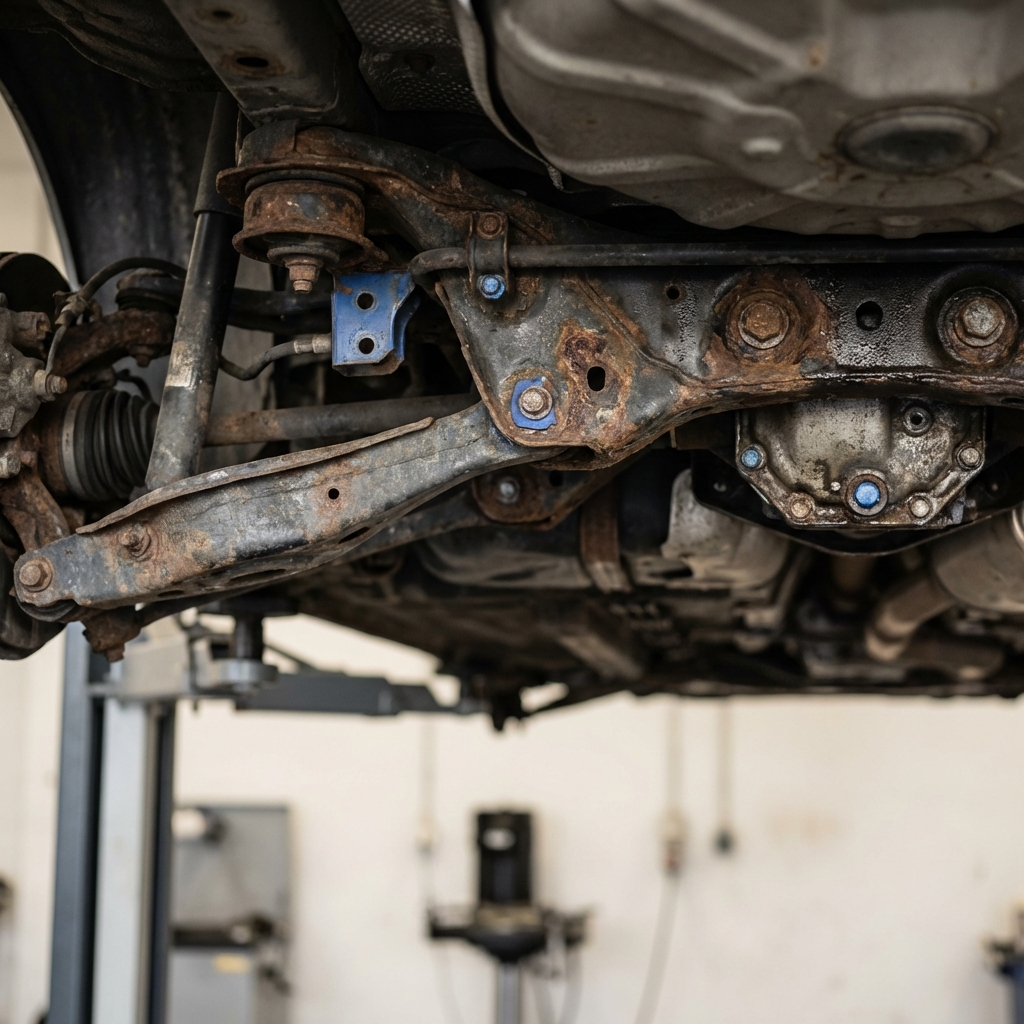
Pre-2010 models: If the car lived in cold or coastal climates, inspect rust-prone areas closely - underbody, suspension mounts, wheel wells, and rocker panels.
Common trouble areas explained
Takata airbag inflators: This is a safety recall with worldwide impact. The inflators can rupture and send shrapnel into the cabin when an airbag deploys. Affected model years concentrate in the late 2000s and early 2010s, so always confirm recall completion by VIN through NHTSA or your dealer.
Early SKYACTIV oil consumption: Many owners report unusually fast oil depletion in some SKYACTIV engines. Symptoms can range from needing top-ups between scheduled services to visible blue smoke. Causes vary from simple maintenance gaps to worn piston rings or valve-guide issues; diagnosis typically requires compression or leak-down tests.
Transmission complaints: Reports include hesitation, delayed shifts, slipping, or harshness on automatics; manuals can show clutch wear or linkage problems. On some models these symptoms are intermittent and show up under load - during highway merges or sustained hill climbs - so a lengthy test drive is essential.
How to verify a specific Mazda is worth buying
When answering "What year Mazda to stay away from?" it helps to shift from a blanket year-based ban to a vehicle-centered checklist. A useful process is:
1) VIN-level checks: Run a VIN history and recall check first. VIN reports show accident history, title events, and recorded service items. They won’t catch everything, but they dramatically narrow the unknowns.
2) Service documentation: Ask for receipts that show timely oil changes, transmission services, timing-belt or chain work, and any major mechanical repairs.
3) Physical inspection: Check oil level (cold and warm), look for blue smoke at startup and during acceleration, listen for unusual noises, and visually inspect common rust areas.
4) Test drive under varied conditions: Drive around town, merge onto a highway, and climb a long hill. Transmission symptoms and oil-consumption issues often appear under sustained load.
5) Independent mechanic inspection: If anything is uncertain, get a compression or leak-down test and a lift inspection. Structural rust or internal engine issues are easy to miss without a professional look.
How to read oil consumption and transmission reports from owners
Forums and complaint databases are full of useful signals—but they’re noisy. Owners who experience problems are more likely to post than the millions who don’t. Use these reports to build a focused checklist: where on the engines or specific transmissions the complaints cluster, and what symptoms owners actually report. Treat these as leads, not judgments. See some owner discussions about Skyactiv carbon build-up here.
Yes—many early SKYACTIV Mazdas were well maintained and provide years of trouble-free service. If the vehicle has a clear VIN, documented regular oil changes, no open recalls, and passes a mechanic’s compression and transmission checks, the benefits of improved fuel economy and handling often outweigh the early-adoption concerns.
Practical on-the-spot checks during a viewing
Take a quick but thorough walk-around and on-road checklist that catches most common issues:
Before start: Look for obvious leaks, corrosion on battery terminals, and rust bubbles around door bottoms and rockers. Check under the car for wet spots or heavy surface rust.
Cold start: Watch the tailpipe for blue or gray smoke (possible oil burning) or white smoke that persists (possible coolant breach). Listen for knock or tapping sounds.
Idling and warm-up: Check oil level and color. Milky oil suggests coolant in oil. Inspect the oil cap and dipstick area for residue.
Test drive: Start in town for low-speed shifting, then accelerate onto the highway to test high-speed shifts and transmission load response. Try a steep hill or prolonged high-speed merge.
After drive: Smell for burning scent and re-check oil level—some engines show consumption only after a drive.
Which Mazda models deserve the most careful look?
While the model list can vary by engine and gearbox combination, certain names appear frequently in owner reports from the early SKYACTIV years:
Mazda3 (2012–2016): Watch for oil consumption and automatic transmission hesitation on some configurations.
Mazda6 (2012–2016): Larger SKYACTIV engines occasionally show symptoms similar to the Mazda3 and CX-5—pay attention to oil use and shift quality.
Geography matters: rust-prone areas and older Mazdas
If you’re buying a pre-2010 Mazda or a car that spent years in coastal or winter states, underbody corrosion should be a high-priority check. Rust often hides in suspension mounting points, inner wheel arches, and frame rails. Surface rust can look minor and then reveal structural rot when probed; a lift inspection is the only safe way to know.
Why VIN-level tools and verified histories help you answer "What year Mazda to stay away from?" A VIN report doesn’t replace a mechanic, but it’s a critical first filter. If the VIN shows accident damage, salvage branding, or flood history, the risk is quantifiably higher. Services that combine VIN recall status with reported service history and price context speed up the decision process. A quick snapshot from a VIN report can help prioritize your inspection.
Repair-cost reality: what can go wrong and how much it might cost
Repair costs vary widely by issue:
Takata airbag inflator replacement: Typically remedied by the recall at no cost to the owner if done through the dealer.
Oil consumption (serious internal causes): Worn rings, valves, or other internal failures can require an engine rebuild or replacement - several thousand dollars in many markets.
Transmission repairs: Simple fixes like a fluid change or solenoid replacement might run a few hundred dollars; a rebuild or replacement can be several thousand.
Rust repair: Small patch jobs are affordable; structural or frame repairs are expensive and sometimes cost-prohibitive on older cars.
Negotiation tips when you find issues
Turn problems into leverage: documented open recalls, missing service records, evidence of oil consumption, or any test-drive symptoms are valid reasons to lower your offer. If a mechanic estimates repairs, use that estimate. If the seller won’t fix safety recalls—especially Takata airbags—insist they be completed before closing or walk away.
Practical scenarios: how to think about risk
Here are a few real-world examples that illustrate how to apply the checklist:
Scenario A - 2013 Mazda3, 80,000 miles: Partial service history, frequent oil changes, quiet test drive, no open recalls. Risk: moderate. Recommended: compression test and a short price buffer for potential future oil-related service.
Scenario B - 2014 CX-5, sparse records: Test drive shows slight hesitation under load. Risk: high enough to require a mechanic’s inspection or a price reduction that covers a transmission diagnosis and any repairs.
Scenario C - 2009 Mazda6 from a coastal state: Surface rust on trunk lip and bubbling rocker panels. Risk: depends on underbody; if frame or suspension mounts have rot, consider it a deal-breaker unless price reflects full repair costs.
Long-term perspective on SKYACTIV variants
SKYACTIV technology improved fuel economy and handling, but early-adoption years (roughly 2012–2016) showed some growing pains. Long-term population studies are limited, so conclusions carry medium confidence: there are meaningful owner signals about oil use and transmission behavior, but the full, long-term failure rates are still being clarified. That uncertainty is a reason to prioritize VIN-specific history and solid service records.
Why VIN-level tools and verified histories help you answer “What year Mazda to stay away from?”
A VIN report doesn’t replace a mechanic, but it’s a critical first filter. If the VIN shows accident damage, salvage branding, or flood history, the risk is quantifiably higher. Services that combine VIN recall status with reported service history and price context speed up the decision process.
Verify the car’s history in minutes
Ready to narrow the field? Before you buy, run a VIN report with CARFAX Deals to verify recalls, view reported service events, and see pricing signals—one quick check that makes your inspection time far more productive.
Copy this checklist and use it the next time you view a used Mazda:
1) Run VIN recall and history check.
2) Confirm Takata airbag remedy status for 2008–2015 models.
3) Request service records; prioritize cars with consistent oil-change history and documented transmission service.
4) Inspect for rust on rockers, underbody, suspension mounts, and wheel wells.
5) Cold and warm oil-level checks; watch for blue smoke.
6) Test drive in city and highway conditions, including sustained loads.
7) If anything is unclear, get a compression test and an independent mechanic’s inspection on a lift.
How to weigh forums and owner reports
Forums are where you’ll find detailed owner stories, but they’re also prone to selection bias. Use threads and complaint databases to identify repeating patterns (same symptom across many users) and then validate those patterns on any candidate car with VIN checks and service records.
When to walk away
Walk away if the VIN shows salvage or flood history unless the price and your tolerance for risk justify it; if the seller refuses a mechanic inspection; if structural rust is present in critical areas; or if multiple red flags (recall not completed, evidence of oil burning, transmission hesitation) are present without service documentation.
Common questions buyers ask (and short answers)
Are 2014 Mazdas good buys? Often yes—2014 sits in the early SKYACTIV timeframe, so a well-documented 2014 Mazda with a clean VIN and clear service records can be a solid purchase. Verify recalls, watch for oil use, and get a mechanic’s inspection.
Is the Takata recall still a problem? Mostly solved through global recall campaigns, but some cars still haven’t had the inflator replacement. Always check the VIN before purchase.
Does CARFAX Deals help reduce risk? Yes—CARFAX Deals aggregates VIN-level history with price context from thousands of dealerships, making it easier to spot high-risk listings before you invest time in an inspection.
Final thoughts before you decide
Mazda is not a brand to avoid categorically, but answering "What year Mazda to stay away from?" is best done with nuance. Look for model-year clusters (2008–2015 for Takata; 2012–2016 for early SKYACTIV quirks; pre-2010 for rust risk) and then treat each car as its own case. Use VIN checks, recall verification, service receipts, a tough test drive, and a mechanic’s inspection to protect yourself. When you pair those steps with a reliable VIN-aggregation tool like CARFAX Deals, you shift the odds strongly in your favor.
Buying used doesn’t have to be risky—just systematic. Find the right Mazda, and you’ll get a fun, efficient car that can be very dependable for years.
The Takata airbag inflator recall affected many vehicles globally, including Mazda models concentrated in roughly the late 2000s through the mid-2010s (around 2008–2015). Always check the VIN on the NHTSA website or through a Mazda dealer to confirm whether the inflators were replaced; many remedies were performed at no charge, but some cars still have open recalls.
A 2014 Mazda can be a strong buy if it has a clean VIN, complete service records, and no open recalls. Because 2014 falls in the early SKYACTIV adoption window, pay special attention to oil consumption history and transmission behavior during a thorough test drive, and consider a compression test or mechanic inspection if you see any warning signs.
CARFAX Deals aggregates verified vehicle history reports with pricing context and dealer transparency indicators so you can quickly spot listings with accident history, salvage titles, or inconsistent service records. Using a CARFAX Deals VIN report as a first filter helps you focus inspections on the most promising cars and avoid obvious high-risk listings.
In short: there’s no single Mazda year to avoid outright — focus on VIN history, Takata recall status (2008–2015), early SKYACTIV checks (2012–2016), and rust in older cars; make decisions by the specific vehicle, not the badge — happy and safe car hunting!

 Blog
Blog