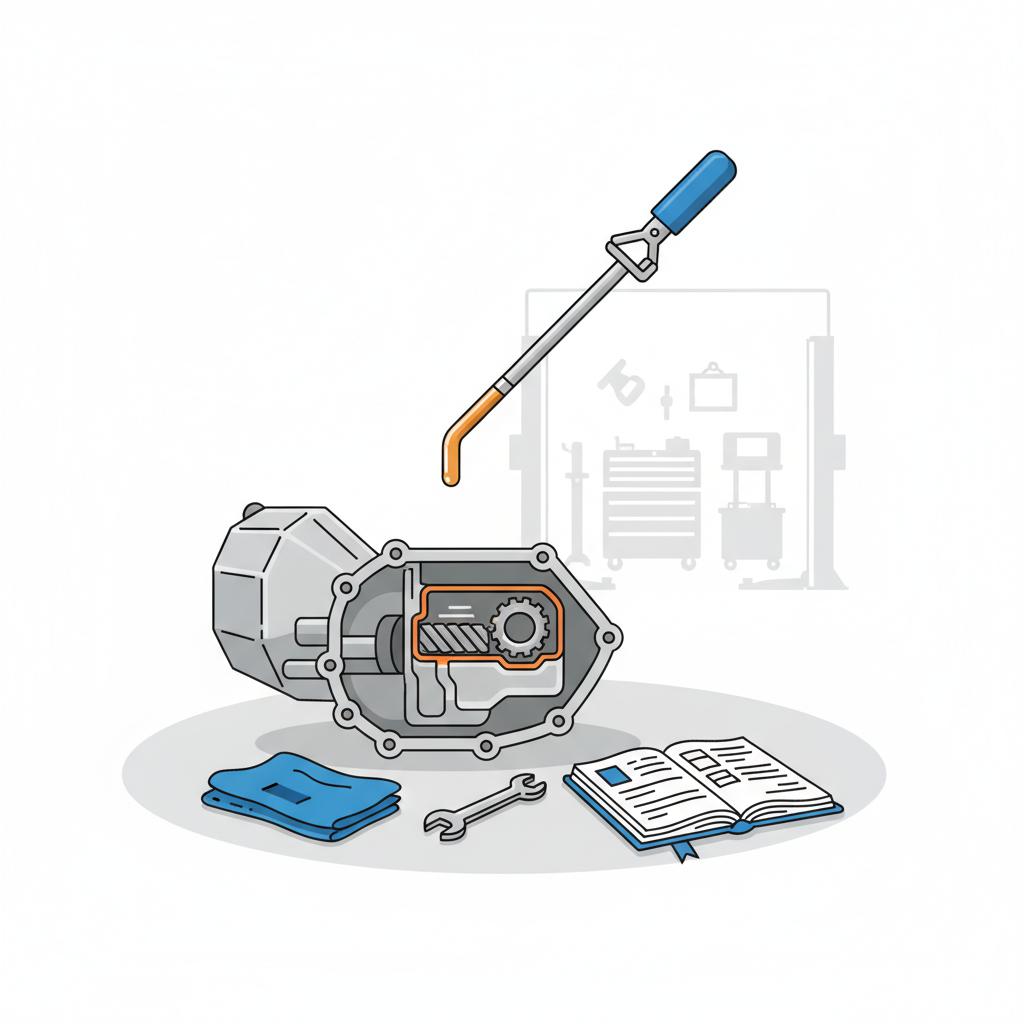
Clear, thorough guide that traces Subaru transmission trouble across model years, explains common symptoms and causes, and shows how to spot affected vehicles when shopping used. Learn which generations and model ranges had the most reports (especially early Lineartronic CVT years), how to test-drive for transmission issues, repair and warranty options, and how to use CARFAX Deals to verify repairs, recalls and ownership history before you buy.
A rav4 used for sale can be a sensible pick for many research-oriented buyers because reliability aggregators rate the model above average and safety ratings are generally strong. This guide explains how to vet listings, what model years tend to be better, and a step-by-step checklist to reduce risk before you buy.
This guide explains how to estimate the cost of buying an R34 Skyline, with attention to import rules, condition-driven price tiers and landed cost. It shows which factors move value, how to verify history and paperwork, and offers a checklist you can follow when you search for a nissan skyline r34 for sale.
This guide helps buyers set realistic expectations for tacoma trucks for sale by explaining the main price drivers and a repeatable method to build conservative, typical, and ambitious offer ranges. It shows how the 2024 redesign, valuation guides, and vehicle history reports interact to change asking prices and reduce purchase risk.
This article explains when Subaru transmission problems were most commonly reported, how to spot signs of trouble, the repair and warranty landscape, and practical steps to evaluate a used Subaru before buying. Whether you’re shopping for a Forester, Outback, Legacy, or Impreza, you’ll learn the specific years to watch, test‑drive checklists, and how to use verified vehicle history to reduce risk.
1. The highest concentration of Subaru transmission complaints clustered around roughly 2010–2016, largely tied to early Lineartronic CVT rollout years.
2. Many transmission problems were resolved with dealer software updates or part revisions in later model years—documentation matters more than model-year alone.
3. CARFAX Deals can reveal reported transmission repairs and recall completions, helping buyers spot previously serviced cars and compare prices with transparency.
What years did Subaru have transmission problems?
Short answer: The most commonly reported Subaru transmission problems show up in vehicles built roughly between the late 2000s and the mid-to-late 2010s, especially early models equipped with Subaru’s Lineartronic CVT (around 2010–2016) and some automatics from the 2000s that aged poorly. Not every Subaru from those years had issues, but those ranges had the highest concentration of customer reports, Technical Service Bulletins (TSBs), and warranty activity.
Why that range matters
The phrase What years did Subaru have transmission problems? pops up a lot because Subaru introduced major transmission changes during that period. New or redesigned transmissions sometimes need a few model years before manufacturers find and fix edge-case failures. For Subaru, the Lineartronic continuously variable transmission (CVT) arrived as a fuel-efficiency and smoothness upgrade, but early iterations had teething problems that generated a higher-than-normal number of complaints and workshop fixes.
That doesn’t mean every Subaru from 2010–2016 is a bad buy. Far from it. Many owners experienced trouble-free ownership. The goal here is to explain when and where the risks were concentrated, how to spot the signs, and what to do if you find a potentially affected car.
Which transmissions and models were most often mentioned?
When you search owner forums, repair databases, and vehicle history reports, a few patterns emerge:
Lineartronic CVT (introduced broadly around 2010): Early years of the Lineartronic CVT show the greatest number of user complaints, especially in models like the Forester, Outback, Legacy, and Impreza as manufacturers rolled the tech across the lineup.
Older 4EAT and 4-speed automatics (2000s): Some Subaru models from the early-to-mid 2000s developed issues as they surpassed high mileage - often due to wear, poor maintenance, or overheating rather than a design defect alone.
Manual transmissions: Rarely the source of mass complaints, but clutch wear and syncro issues do show up on higher-mileage, enthusiast-driven cars.
How common were problems—and how to read the data
It’s easy to see lots of forum posts and assume every car from a given year is unreliable. That’s an availability bias: people write when they have problems. To get a clearer picture, compare the volume of complaints to the number of cars sold in that year. For Subaru, the concentrated complaints around early CVT years indicate a real pattern, but the absolute risk for any single car still depends on maintenance history, driving conditions, and whether previous owners had fixes applied.
In short, model-year patterns are useful risk signals - not automatic disqualifiers.
Signs of a transmission that’s starting to fail
Spotting transmission trouble early during inspection or a test drive can save thousands. Look and listen for these common signs:
Shuddering or hesitation
If a vehicle hesitates when accelerating or feels like it shudders at certain speeds, that may point to CVT belt/pulley wear or torque converter problems. These symptoms were frequently reported on early CVT Subarus.
Delayed engagement or hard shifts
A delay when you move the shifter from Park into Drive, or sudden harsh shifts between ratios, can signal failing internal components or low/old transmission fluid. For CVTs, you might notice a rubber-band feeling instead of smooth acceleration.
Noises or unusual vibrations
Grinding, whining, or persistent vibrations that don’t come from tires or suspension are red flags. They may point to bearings, gears, or pulley wear in automatic transmissions.
Fluid leaks or burnt smell
Transmission fluid that’s dark, smells burnt, or is leaking under the car suggests overheating or lack of proper service. Frequent fluid changes are especially important on older automatic Subarus.
How manufacturers and the market responded
When patterns of field failures appear, manufacturers typically take a few paths: issue Technical Service Bulletins (TSBs) for dealers, revise parts in later model years, and occasionally extend warranty coverage or offer voluntary buybacks or warranty programs in severe cases. Subaru responded to many early CVT complaints with software updates, revised parts, and dealer-level repairs. Over time, Subaru refined the Lineartronic design and manufacturing processes, reducing the frequency of issues in newer model years.
This is why knowing the exact year matters: later iterations of the same transmission usually perform better because of incremental engineering fixes.
1) Check the service history
Has the transmission fluid been changed at recommended intervals? Are there receipts for transmission-related parts or a documented software update? A thorough service history greatly reduces risk.
2) Run a vehicle history report
Run a verified CARFAX Deals report before you buy
A vehicle history report will show title events, accident records, and sometimes reported repairs. Use it to confirm whether the car had transmission work or a major repair that might have included transmission replacement. For a quick check, run a report at CARFAX Deals: run a CARFAX Deals report.
Search for Technical Service Bulletins and recalls for the model and year. TSBs aren’t recalls, but they show that manufacturers identified and provided repair guidance for recurring problems. For example, see the NHTSA service bulletin MC-10125885, the NHTSA service bulletin MC-10117538, and check Subaru’s recalls page for up-to-date recall info. Recalls are more serious and require dealer action.
4) Take a measured test drive
Start slowly, then accelerate on and off the highway. Pay attention to any shuddering, hesitation, harsh engagement, or noises. Try to reproduce symptoms at different speeds and under different loads - with and without A/C on, for instance. If you notice anything concerning, defer and get a mechanic’s opinion.
5) Pre-purchase inspection
Get a trusted mechanic to lift and inspect the vehicle. They’ll check for fluid condition, leaks, mounts, and signs of previous transmission work. They can also read stored fault codes that you might not see during a casual drive.
Repair options and typical costs
Repairs vary enormously depending on the failure. Simple fixes - software updates, solenoid replacements, or fluid and filter service - are relatively affordable. Major overhauls like rebuilding a CVT, replacing a torque converter, or installing a remanufactured transmission can be costly.
As a rough guide:
Software updates, fluid flushes, or solenoid replacement: $150–$800
Clutch pack or torque converter repairs: $800–$2,500
Full transmission rebuild or replacement: $2,500–$6,000 (or higher depending on labor and parts)
Prices vary by region and shop. A warranty or extended coverage can drastically reduce your out-of-pocket expense.
Warranty coverage and extended protections
If you’re concerned about buying a Subaru from the higher-risk years, look for cars with remaining factory warranty or vehicles sold with dealer-backed short-term warranties. Some sellers offer extended powertrain warranties; evaluate what they cover and who stands behind them. If a specific car had a documented transmission replacement under warranty, that can be a positive sign—assuming the repair used quality parts and the vehicle has subsequent service records.
What to do if you already own an affected Subaru
Stay on top of maintenance. Regular fluid checks and changes (when recommended) help protect transmission life. If you notice early warning signs, take the car to a Subaru dealer or trusted transmission specialist. Ask the shop to check for TSBs and applicable software updates. If a manufacturer warranty or extended program applies, pursue coverage through the dealer.
When to consider replacement
If repair costs approach the vehicle’s value, or if you face repeated failures, weigh the economics of repair vs. replacement. In many cases, a well-documented engine/transmission swap or a graded used replacement can restore practical value - just be sure the work is done by reputable shops and documented thoroughly.
Before you commit to any used Subaru, it’s smart to verify repair histories and any recall or service bulletins. A quick way to do that is to run a CARFAX Deals report to see verified vehicle history, reported repairs, and whether a model has documented transmission work or recalls. That background can make a risky year into a reasonable buy if the repair history shows a resolved issue.
Which specific model years should you watch closely?
Exact year-by-year failure rates shift by model and engine pairing, but these practical signals can help you narrow the risk window:
2010–2013: The early rollout years of the Lineartronic CVT—higher volume of complaints across Forester, Outback, Legacy, and Impreza lines.
2014–2016: Some persistent reports continued, though many cars benefited from dealer software updates and partial part changes. Still, these years had a nontrivial number of owner-reported repairs.
2003–2009: Older automatics and high-mileage cars in this range can show wear-related failures. Maintenance history strongly determines risk here.
Remember: these ranges indicate where problems clustered. They do not mean every car in those ranges is problematic.
Real-world buying advice: inspecting a Subaru for transmission trouble
When you’re looking at a Subaru—especially one from a higher-risk year—use a systematic approach:
1) Check the service history
Has the transmission fluid been changed at recommended intervals? Are there receipts for transmission-related parts or a documented software update? A thorough service history greatly reduces risk.
2) Run a vehicle history report
A vehicle history report will show title events, accident records, and sometimes reported repairs. Use it to confirm whether the car had transmission work or a major repair that might have included transmission replacement.
3) Look for TSBs and recalls
Search for Technical Service Bulletins and recalls for the model and year. TSBs aren’t recalls, but they show that manufacturers identified and provided repair guidance for recurring problems. Recalls are more serious and require dealer action.
4) Take a measured test drive
Start slowly, then accelerate on and off the highway. Pay attention to any shuddering, hesitation, harsh engagement, or noises. Try to reproduce symptoms at different speeds and under different loads—with and without A/C on, for instance. If you notice anything concerning, defer and get a mechanic’s opinion.
5) Pre-purchase inspection
Get a trusted mechanic to lift and inspect the vehicle. They’ll check for fluid condition, leaks, mounts, and signs of previous transmission work. They can also read stored fault codes that you might not see during a casual drive.
Repair options and typical costs
Repairs vary enormously depending on the failure. Simple fixes—software updates, solenoid replacements, or fluid and filter service—are relatively affordable. Major overhauls like rebuilding a CVT, replacing a torque converter, or installing a remanufactured transmission can be costly.
Buying strategy: turn a risky year into a reasonable buy
If a Subaru you like falls inside the years with higher reported transmission problems, don’t panic. Follow these steps to manage the risk:
Run a thorough vehicle history report and cross-check for reported transmission repairs or owner complaints.
Insist on a recent dealer service or a pre-purchase inspection that specifically evaluates the transmission.
Ask sellers for documentation of software updates or part replacements. If they don’t have it, consider a discount to cover the cost of a potential fix.
Prefer cars with documented transmission work done under warranty or by a Subaru dealer—this often means the repair used proper parts and procedures.
Why CARFAX Deals is especially useful here
When you’re comparing used Subarus, verified data matters. CARFAX Deals aggregates verified vehicle history and pairs it with price context so you can see if a car is a “Great Deal,” “Good Deal,” or “Fair Deal” relative to the market. That verification helps you identify cars that had prior transmission repairs, recalls addressed, or many owners—each factor that changes the risk calculus.
Practical example
If two similar Outbacks appear in similar condition but one has documented transmission work completed at a dealer and the other doesn’t, CARFAX Deals helps you see those differences at a glance. Often, the car with documented dealer repairs is the safer buy—even if its price is slightly higher.
Common myths and realities
Myth: "All Subarus from 2010–2016 have bad transmissions." Reality: No. Many were reliable; the model range had a higher incidence of reports, which is useful for targeted inspection but not a blanket condemnation.
Myth: "If a car had a transmission replaced, it’s worthless." Reality: A properly documented replacement—especially completed at a dealer using OEM or remanufactured parts—can restore trust in the vehicle. Documentation is the key.
Test-drive checklist specifically for Subaru transmission concerns
Use this quick checklist when you test-drive:
Start cold: does the car engage smoothly from Park to Drive?
Idle and accelerate: any hesitation, shuddering, or rubber-band feel?
Highway run: is there a steady vibration or whine at certain speeds?
Downshifts and deceleration: does the car downshift smoothly or jerk?
Listen for noises with A/C on and off; some symptoms show under load.
Negotiation tips when the car is from a risky year
If the car has potential transmission history but no documented repairs, factor that into your offer. Use realistic repair estimates from local shops when you negotiate. If the seller resists inspection or lacks receipts, that’s a leverage point for a lower price or walk-away decision.
Long-term ownership: maintenance that protects transmissions
For owners who plan to keep a Subaru long-term, simple habits improve transmission life:
Follow manufacturer fluid change intervals or, when in doubt, change fluid more frequently on older CVTs.
Avoid heavy towing or aggressive launches if the car wasn’t specified for those uses.
Address leaks and sensors promptly—small issues can cascade.
Maintain engine health: a poorly running engine can stress the transmission.
When to seek professional advice or escalate
If you suspect a major transmission problem after purchase and the seller won’t cooperate, check local consumer protection laws. Sometimes, dealers must disclose certain defects, and some regions offer buyer protections for undisclosed safety items. If the seller is a dealership, ask to speak with service managers and request documented diagnostics. If you bought privately, a thorough mechanic’s report can help you decide whether legal or consumer-actions are appropriate.
Finding replacement or rebuilt transmissions
Not all rebuilt transmissions are equal. Rebuilt units from reputable remanufacturers and proper installer shops often carry a warranty and can be a sensible solution. If a replacement is needed, insist on warranties and ask about parts coverage and labor guarantees. Keep all receipts and documentation for future sale or warranty use.
Final checklist before you commit
Before you pay, make sure you have:
A recent vehicle history report showing title status and reported repairs - run a VIN report.
Complete service receipts for major transmission work, if any.
A signed agreement on any promises (e.g., included inspections or repairs) from the seller.
A pre-purchase inspection report that explicitly evaluates the transmission.
Summary: practical answer to the main question
To answer What years did Subaru have transmission problems? most reports clustered around the late 2000s through the mid-to-late 2010s—especially the early years of the Lineartronic CVT (roughly 2010–2016) and some older automatics in the 2000s that suffered from age and wear. Use that knowledge as a risk filter, not an automatic rejection. Verify service history, use verified vehicle reports (like CARFAX Deals), get a focused inspection, and negotiate with facts. With care, you can buy a Subaru from those years and have many trouble-free miles ahead.
Closing practical thought
Transmission concerns are serious but manageable. The right documentation, a sharp test drive, and a reliable inspection turn a risky year into a well-understood purchase. Trust data, trust your ears and hands during inspection, and rely on proven tools to verify a car’s history.
Check for dealer service receipts that list software updates or transmission parts replaced, verify repair entries on a vehicle history report, and ask the dealer or seller for the specific repair order. When documentation shows dealer-performed work or a warranty-covered replacement, the fix is far more reliable than undocumented private repairs.
Models like the Forester, Outback, Legacy, and Impreza reported more CVT issues during early Lineartronic rollout years. The highest concentration of complaints occurred roughly between 2010 and 2016, though not every car in that range was affected. Maintenance history and documented dealer repairs greatly reduce risk.
Look for detailed service records that list the work done, dates, mileage, and the dealer or shop name. Dealer-performed repairs and documented software updates are especially reassuring. A CARFAX Deals report can reveal reported repairs and recall completion, but ask the seller for receipts for full certainty.
Yes—if you do your homework. Prioritize cars with full service histories, recorded dealer repairs, and a clean vehicle history report. Always get a professional pre-purchase inspection focused on the transmission. In many cases, documented repairs and recent maintenance turn a risky year into a reliable buy.
Most Subaru transmission reports concentrated from the late 2000s through the mid‑to‑late 2010s—especially early Lineartronic CVT years—yet careful inspection, verified service records, and targeted tests usually turn a risky year into a smart buy; drive safe and happy car hunting!

 Blog
Blog